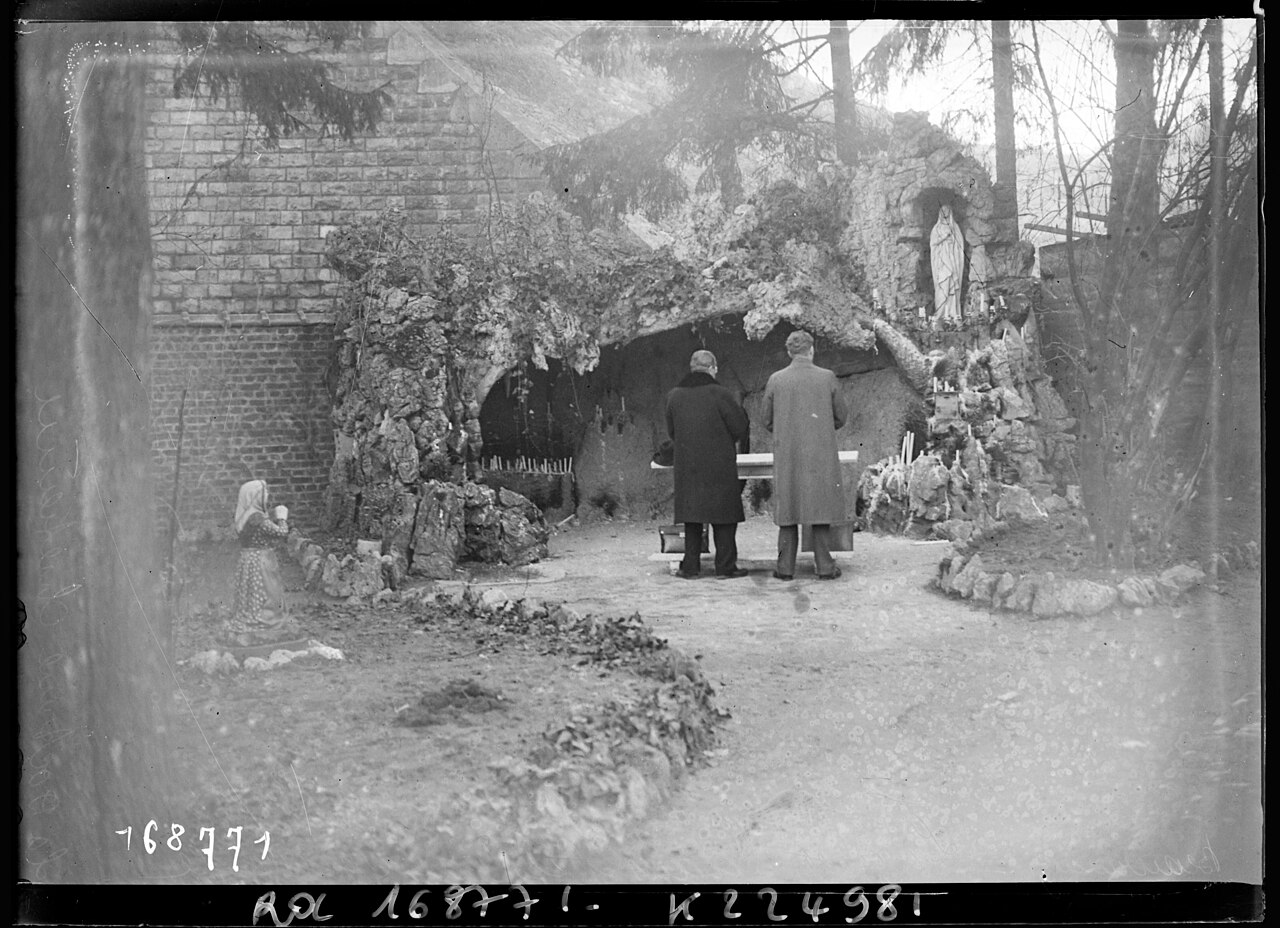
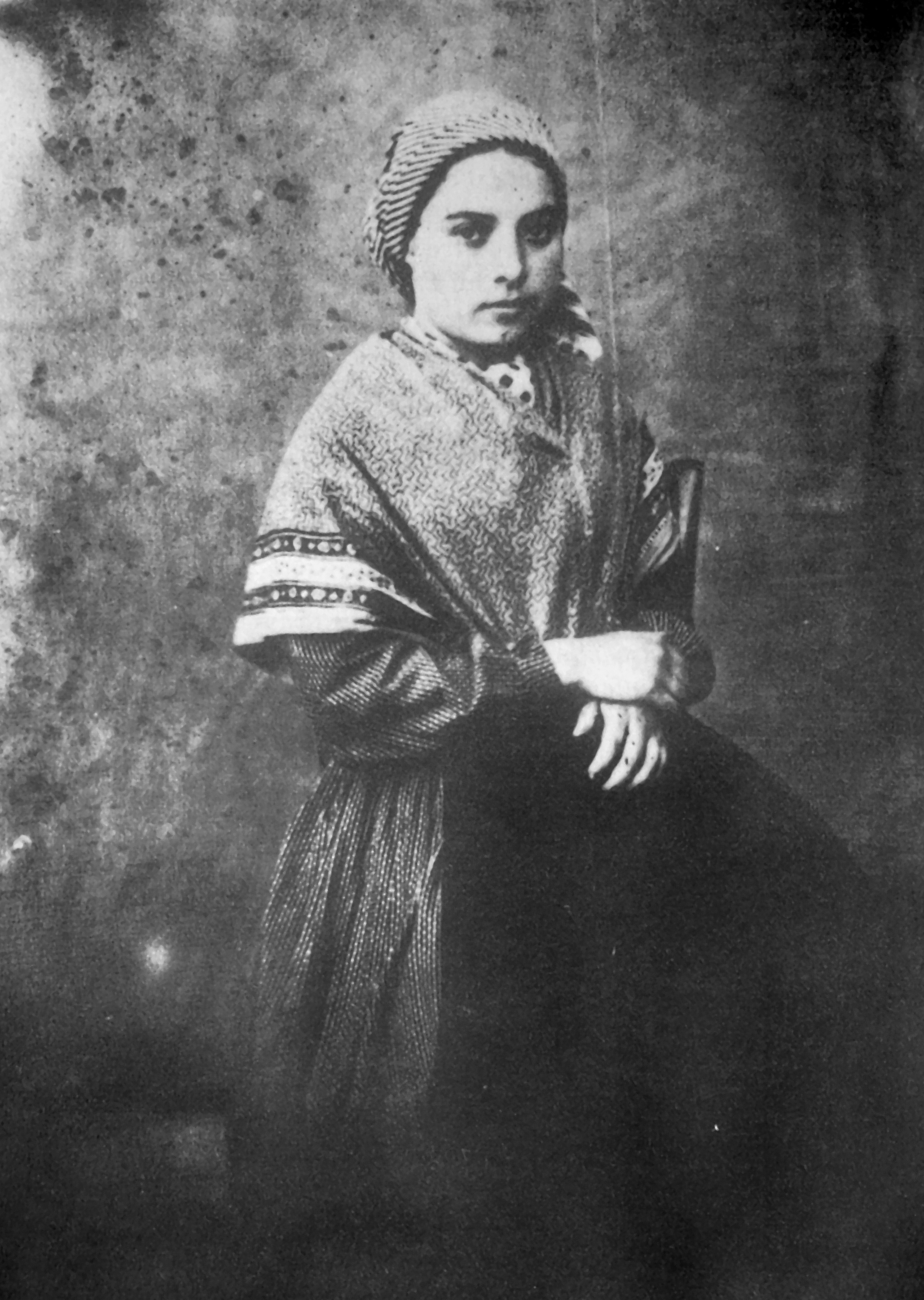
On January 15, 1933, the Mother of God appeared to eleven-year-old Mariette Beco outside her family home in Banneux. In a total of eight encounters, she led the girl to a spring, called herself the Virgin of the Poor, and asked for prayer and a small chapel. She dedicated the spring to all nations and the relief of suffering. Bishop Louis-Joseph Kerkhofs had the events investigated over years and, in 1949, recognized the reality of the eight apparitions without reservation. Banneux thus became a pilgrimage site especially devoted to the poor and the sick.
The Mother of God appeared to Mariette Beco as the Virgin of the Poor and led her to the spring. She called for prayer and asked for a small chapel. Mariette testified to eight encounters between January and March 1933.
Mary Appears outside the Family Home
The shrine's history preserves Mariette Beco's testimony. Her family lived in modest circumstances outside the village center. On January 15, 1933, the eleven-year-old saw a luminous woman in the garden from the house. Her mother initially would not let her go outside. At the following encounters, Mariette went outdoors; the Mother of God led her to the spring. The girl repeated the words she received. Her parents and others present observed her path and heard her statements. Mariette saw the apparition herself. Eight encounters took place by March 2.[1]
The Virgin of the Poor
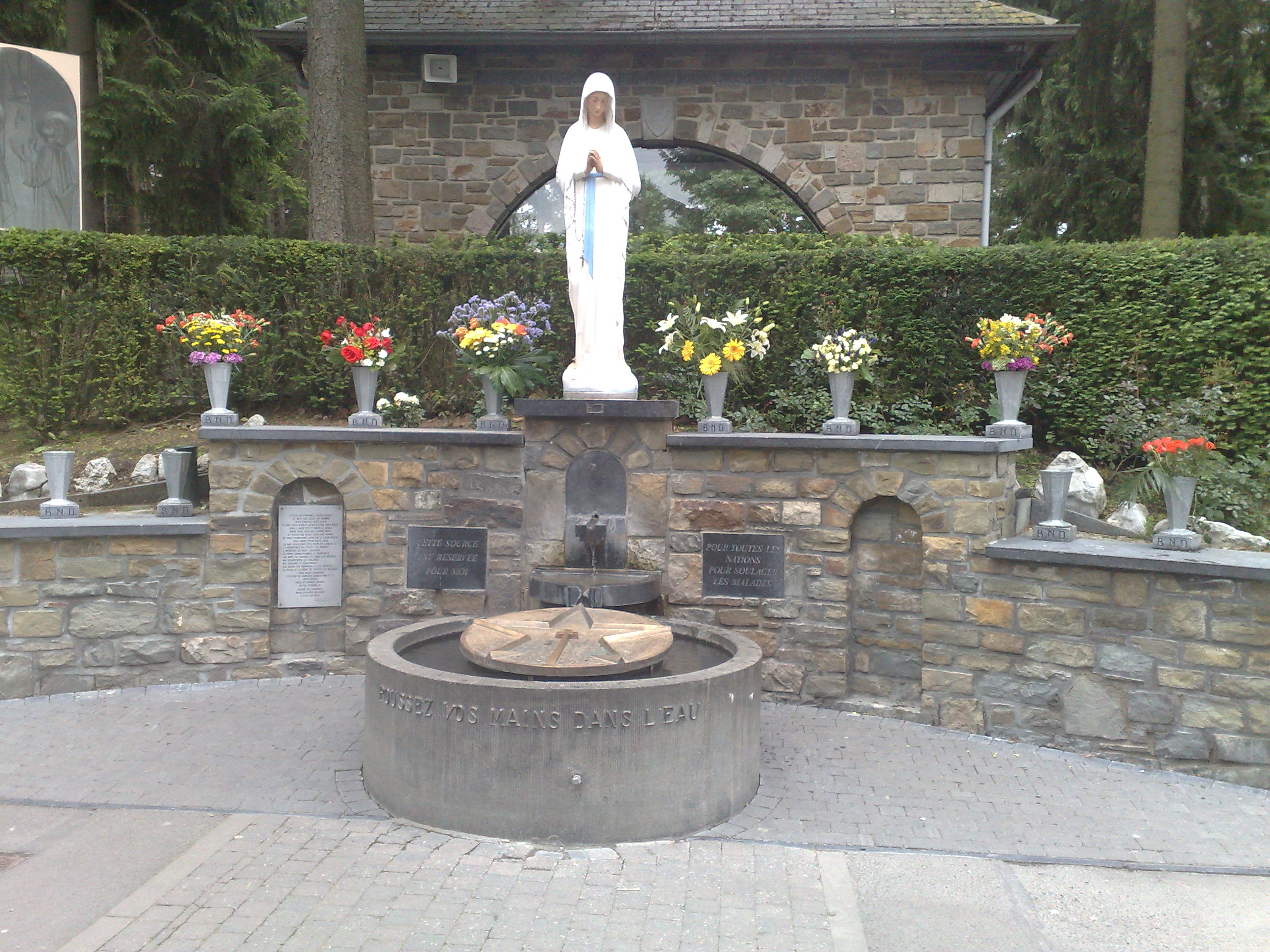
Mary called herself the Virgin of the Poor. She designated the spring for all nations and the relief of suffering. She asked for prayer and a small chapel. Through Mariette, the mission addressed people of every background: poverty and illness exclude no one from God's care. This maternal attention gave the small place its enduring mission. People were to come with their distress, to pray and seek help. The connection between spring, prayer, and care for those who suffer continues to shape Banneux today.[3]
Praying at the Spring
The prayer path leads pilgrims to the spring and connects the water with their plea to God. The outward action makes visible the trust with which a person brings distress before him. This includes the request for physical healing as well as prayer for consolation, patience, and support. Banneux regards the suffering person as a whole person. Those who remain ill belong equally to the community of pilgrims. The Virgin of the Poor addresses her invitation to everyone; the shrine's care also embraces those whose requested recovery does not come.[4]
Welcoming the Poor and the Sick
The title Virgin of the Poor and the dedication of the spring to all nations give the pilgrimage a concrete task. Those in need are to be welcomed, the sick accompanied, and people of different backgrounds united in shared prayer. This response puts the message into practice. Banneux leads to active care and a hope that sustains even in severe suffering. The spring remains the visible reference point of the path Mariette walked with Mary. The shrine invites people to take up this path with their own distress and in prayer for others.[3][4]
Mariette's Testimony and Its Examination
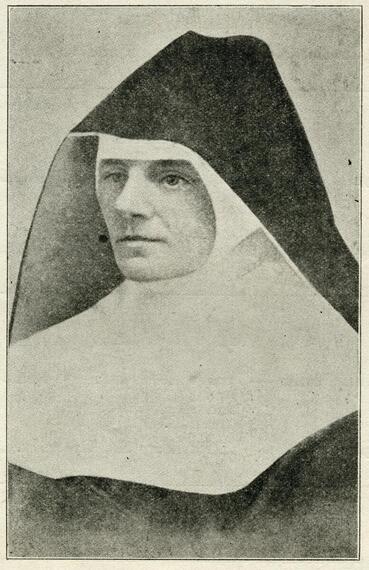
The shrine's chronology organizes the eight encounters, Mariette's actions, and the brief messages. Alongside her direct testimony stand the observations of relatives and others present. Abbé Jamin accompanied the events and had a request for confirmation conveyed. This tradition was examined in the ecclesiastical proceedings and underlies the favorable judgment. The published accounts make the course of events and the decision traceable. For details from medical or other specialist reports, the respective original records are decisive; the available sources identify the investigative path actually documented.[1][2]
The Explicit Recognition of 1949
Bishop Louis-Joseph Kerkhofs himself explained the path to his judgment. The first favorable steps in 1942 and 1947 still carried reservations. After further observation and examination, he recognized the reality of the eight apparitions without these reservations on August 22, 1949. His successors reaffirmed the decision. Banneux thus possesses a precisely identified ecclesiastical judgment on Mariette's encounters from January to March 1933. The years of examination and the final clear declaration give the testimony a firm ecclesiastical foundation.[2]
Witnesses & Investigators
The unfolding story
- First Apparition
Mariette sees the Mother of God in the garden outside her family home.[1]
- Spring and Request for a Chapel
Further encounters lead to the spring.[1]
- Conclusion
Eighth and final apparition.[1]
- Provisional Favorable Steps
Kerkhofs initially maintains reservations.[2]
- Recognition
The eight apparitions are recognized without reservation.[2]
Ecclesiastical assessment
On August 22, 1949, Bishop Louis-Joseph Kerkhofs recognized the reality of the eight apparitions to Mariette Beco without the previous reservations. His successors confirmed their ecclesiastical reception.
Objections & Answers
Was Banneux Merely an Imitation of Beauraing?
The closeness in time permits the question of mutual influences. Similarity alone, however, does not prove imitation. Banneux has its own witness, its own location, eight specific encounters, and separate ecclesiastical proceedings. Kerkhofs observed developments over years and finally recognized them without reservation. A shared Catholic language and world of images is by itself neither proof of authenticity nor a refutation. Mariette's specific statements and the examined sequence are decisive. A claim of imitation would therefore have to be supported by particular dependencies; a general reference to another apparition is not enough.[1][2]
Why Are Not All the Sick Healed at the Spring?
The message dedicates the spring to the relief of suffering; it does not promise physical healing without exception to every pilgrim. God's help can also work through consolation, inner strengthening, reconciliation, and human support. The Virgin of the Poor's invitation applies equally to someone who remains ill. The absence of a requested recovery does not make that person less faithful or less loved. Extraordinary healings are examined individually by medicine and the Church. Banneux's enduring mission is care for those who suffer and their trust in God's concern.[3][4]
Meaning for faith
Banneux is an expressly recognized Marian apparition with a clear mission. The Virgin of the Poor led Mariette to the spring and called people of every nation to prayer and trust. The examined testimony and the continuing service to the poor and sick belong together.[2][4]
How Apparitions and Private Revelations Are Examined
Testimony, messages, spiritual fruits, and ecclesiastical decisions.
Methods of examination and ecclesiastical procedure →Sources & Evidence
Information on accessibility and scope helps you assess the evidence for yourself.
- [1] Les apparitions (1933)Open source · banneux-nd.be ↗
- [2] Reconnaissance des apparitionsOpen source · banneux-nd.be ↗
- [3] Qui êtes-vous, belle Dame ?Open source · banneux-nd.be ↗
- [4] Chemin de prièreOpen source · banneux-nd.be ↗