Eucharistic Miracles
The Bread of Life

Eucharistic Miracles

From Lanciano and Bolsena to Legnica: Eucharistic miracles, their witnesses, surviving relics, and scientific examinations.

Understanding the subject

Christ affirms his presence in the sacrament.

At Holy Mass, through the consecration, bread and wine truly become the Body and Blood of Christ. Eucharistic miracles make this sacramental reality visible in an extraordinary way. Priests and the faithful testify to blood on the Host, preserved flesh, or the miraculous preservation of the Blessed Sacrament.

The cases have concrete histories: a doubting priest, a celebration of Mass, an accident, or an attack on the sacrament. The dossiers first present these events and name the witnesses who passed on the account or confirmed it before an ecclesiastical inquiry.

Where material has survived, laboratory findings are added. In Lanciano, for example, Odoardo Linoli published the results of histological, immunological, and biochemical examinations. The individual dossiers explain the findings and then address objections concerning provenance, tissue, and possible natural processes.

The investigation in detail
Discover · compare · read further

The dossiers in this category.

Choose a place, period, or subject. Explore the same selection as dossiers, on the map, or in the timeline.

Investigative approach and ecclesiastical judgment →

Dossiers: 20

Eucharistic Miracles

Alatri: The Host Made Flesh and Gregory IX's Letter

Alatri, Co-Cathedral of San Paolo · 1227/1228; papal letter of March 13, 1228

In Alatri, a young woman retained a consecrated Host to win someone back through a love spell. After three days, she found flesh in the hidden cloth. Frightened, she confessed to the bishop what had happened; the instigator also came forward. Gregory IX's letter of March 13, 1228, close to the event, takes up the matter, honors it as a divine miracle, and regulates the penance. With this papal response, Alatri possesses a particularly weighty early written testimony.

Favorable Papal Assessment of 1228 Close to the EventRead →
Eucharistic Miracles

Amsterdam: The Intact Host in the Fire

Amsterdam, Kalverstraat and Begijnhof · March 1345

In March 1345, a seriously ill man received Holy Communion in a house on the Kalverstraat. When he vomited afterward, the contents were placed in the fire. A woman found the Host intact within it. This testimony preserved by the Church gave rise to a major pilgrimage. Its memory survived the Reformation and prohibitions and continues to this day in the Silent Procession: the faithful walk in prayer through the city at night and venerate Christ in the Eucharist.

Historical pilgrimage with continuing ecclesiastical careRead →
Eucharistic Miracles

Blanot: The Particle of the Host and the Bloodstained Cloth

Blanot, Côte-d’Or · March 31, 1331

On March 31, 1331, the assistant Thomas Caillot noticed a fallen particle of the Host during Easter Communion in Blanot. He called the priest Hugues de la Baume back. At that spot on the Communion cloth, the priest saw blood. The tradition also names the communicant Jacquette and connects the event with an investigation under Bishop Pierre Bertrand and his official, Jean Jarossier. The venerated cloth preserves the memory of a miracle that sets before our eyes the whole presence of Christ even in the smallest Eucharistic species.

Historical Eucharistic miracle associated with an ecclesiastical investigationRead →
Eucharistic Miracles

Bolsena and Orvieto: The Bloodstained Corporal

Bolsena, Santa Cristina; Orvieto, Cathedral · 1263; local sources also give 1264

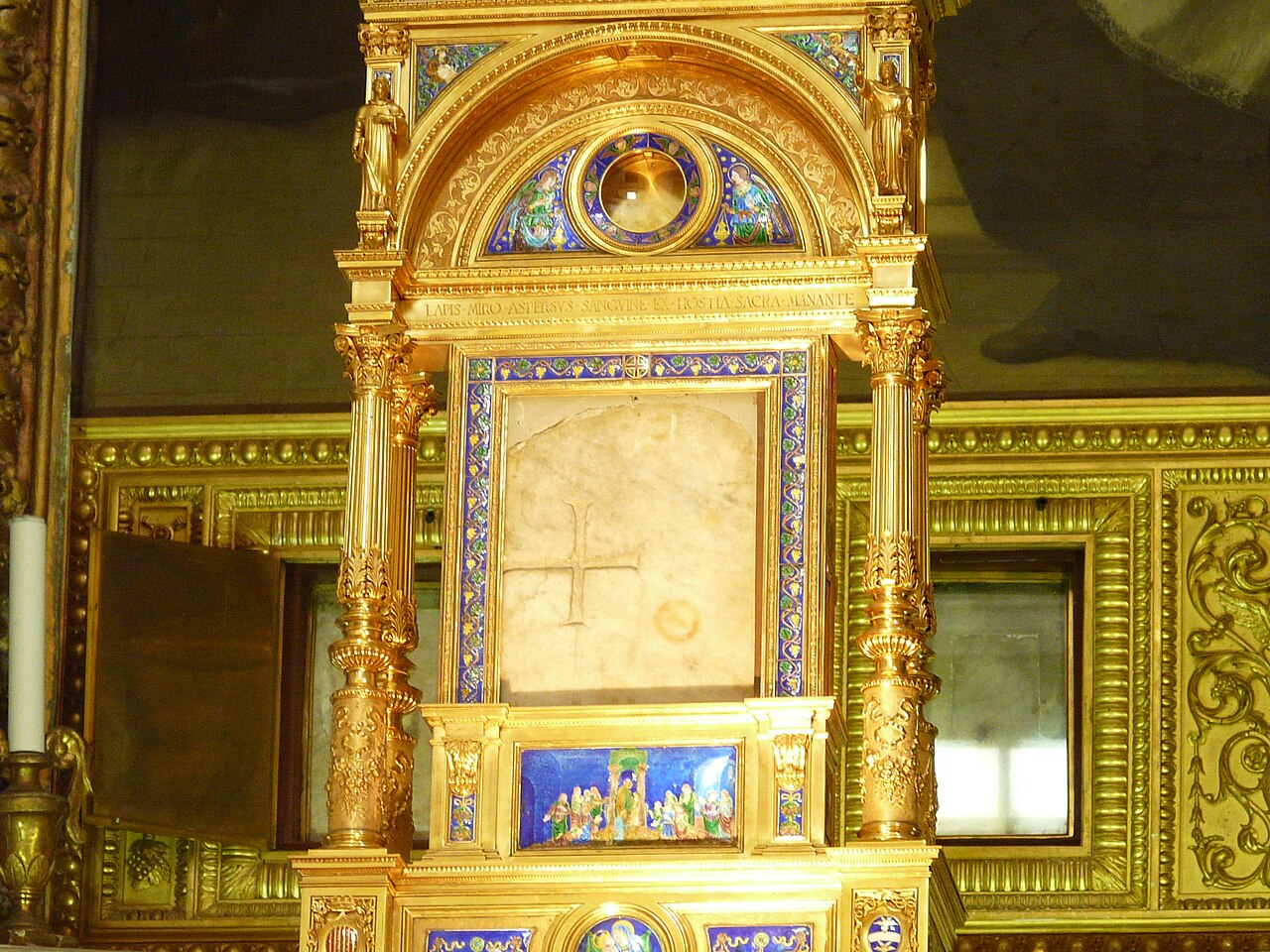
The Eucharistic miracle whose corporal is still venerated in Orvieto occurred in Santa Cristina at Bolsena: during Mass, drops of blood emerged from the Host and stained the linen cloth. The priest's journey to Urban IV, the solemn transfer, and the surviving relics connect the two cities. The medieval testimonies, introduction of the feast of Corpus Christi, and documented examination of the cloth in 2015 belong to the historical picture.

Eucharistic Shrine with Centuries of Ecclesiastical VenerationRead →
Eucharistic Miracles

Buenos Aires: The Eucharistic Miracles of Santa María

Buenos Aires, Santa María Parish, Avenida La Plata · 1992, 1994, and 1996

At Santa María parish, changes described as flesh and blood were observed on consecrated Hosts and Host fragments. The priest involved, Eduardo Pérez Dal Lago, attests to the beginning in May 1992 and names the other priests and the physician called in. The events of 1992, 1994, and 1996 led to investigations and to Eucharistic veneration maintained to this day. In 2024, Archbishop Jorge García Cuerva regulated their shared custody and presentation at Santa María.

Veneration Regulated by the Church at Santa MaríaRead →
Eucharistic Miracles

Cascia: The Bloodstained Breviary Pages

Siena; today Cascia, lower church of Saint Rita's Basilica · 1330

In 1330, a priest near Siena brought a consecrated Host to a sick person. He had placed it between the pages of his breviary. On opening the book, he found blood and the Host adhering to it. The frightened priest sought out the Augustinian Simon Fidati, who took charge of the leaves. The order's tradition and Simon's historical biography trace their journey to Perugia and Cascia. The relic is still preserved and venerated at Saint Rita's shrine.

Veneration at the Shrine of CasciaRead →
Eucharistic Miracles

Douai: Christ Appears in the Holy Host

Douai, formerly Saint-Amé; now venerated in Saint-Pierre · Easter 1254

At Easter 1254, priests and canons in Saint-Amé in Douai experienced an appearance of Christ in the Host. The news brought the Dominican Thomas of Cantimpré to the site. He attests that at first he saw only the white Host, then the thorn-crowned face of the suffering Lord, and finally a radiant face. His own account gives Douai a special historical standing: a named author describes his visit, his conversation with the dean, and what he perceived.

Veneration maintained by the Church with a medieval eyewitness accountRead →
Eucharistic Miracles

Faverney: The Monstrance Above the Burned Altar

Faverney, former abbey church · Pentecost 1608

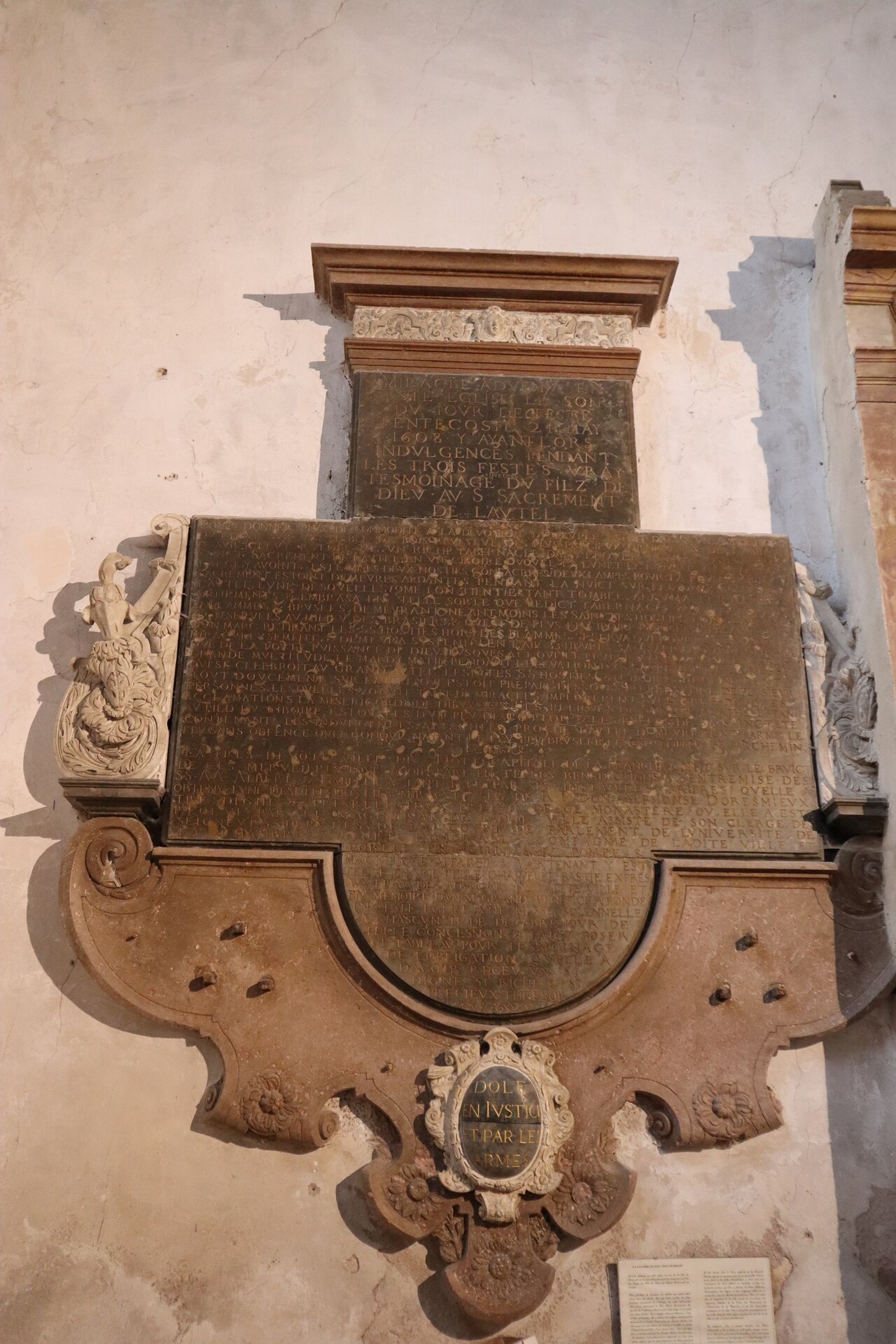
At Pentecost 1608, a fire destroyed the wooden structure for Eucharistic exposition in Faverney. According to the preserved testimonies, the monstrance containing two consecrated Hosts remained above the charred remains without visible support for approximately 33 hours. Monks, clergy, and laypeople observed the event. The investigation began that same May and led to ecclesiastical recognition on June 9, 1608. Its transmitted records can be traced in the public archive.

Prompt ecclesiastical recognition in 1608 documentedRead →
Eucharistic Miracles

Ferrara: The Blood Miracle in Santa Maria in Vado

Ferrara, Santa Maria in Vado · March 28, 1171

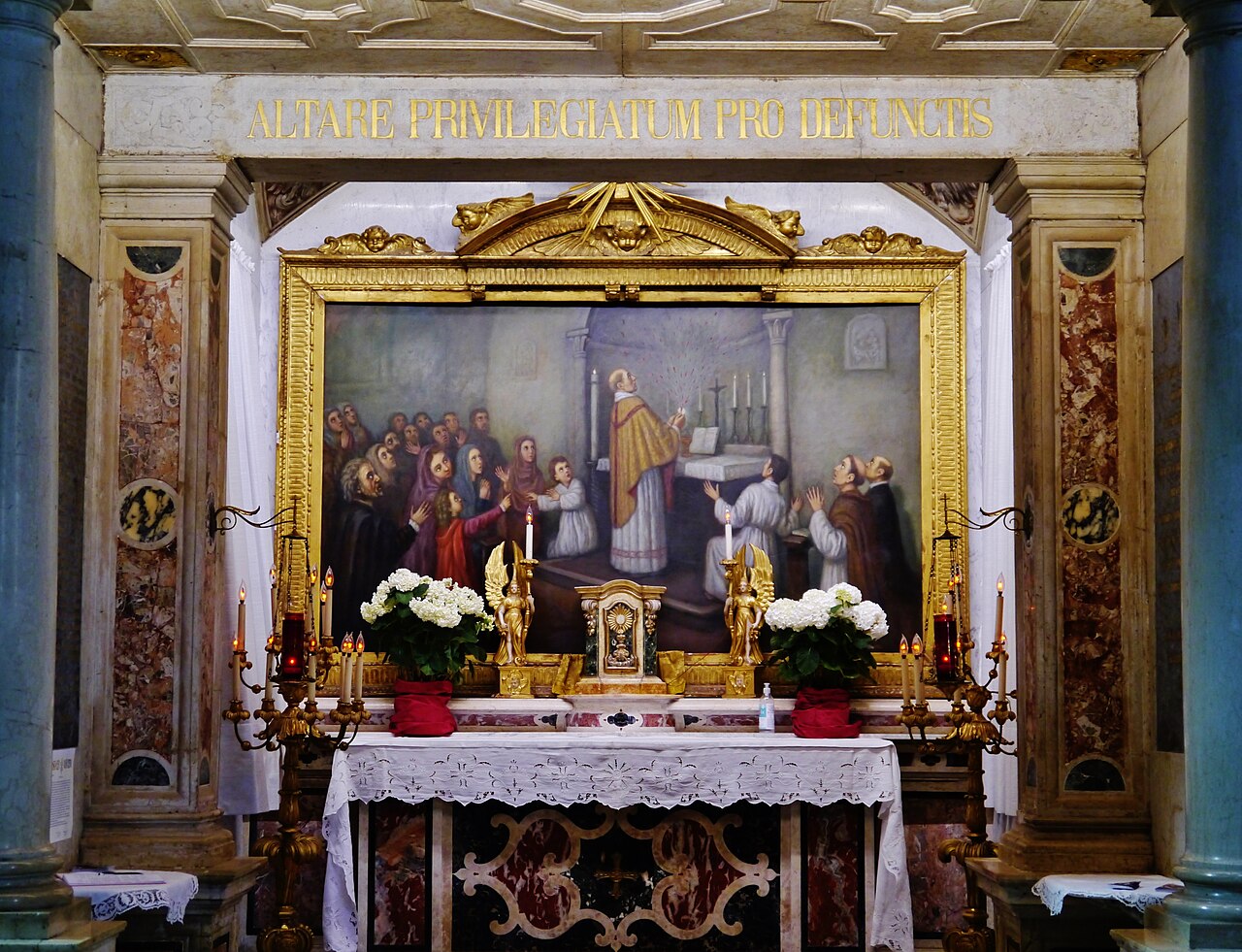
On Easter Sunday, March 28, 1171, Prior Pietro da Verona celebrated Holy Mass in Santa Maria in Vado. When he broke the consecrated Host, according to the testimony preserved by the archdiocese, blood emerged and struck the vault. Priests and the faithful witnessed the event. The affected area of the church was preserved even during its later rebuilding and given a special architectural setting. To this day, the archdiocese venerates the Precious Blood there and commemorates the Eucharistic miracle.

Continuing diocesan veneration of the Prodigioso SangueRead →
Eucharistic Miracles

Lanciano: Flesh and Blood in the Eucharistic Miracle

Lanciano, shrine in San Francesco · Tradition: eighth century; investigation: 1970–1971

A monk in Lanciano doubted Christ's real presence during Holy Mass. According to the testimony preserved at the shrine, flesh and blood appeared at the consecration in place of the previous visible species. The flesh and five blood clots are venerated to this day. Odoardo Linoli's medical examination produced a significant positive finding: he identified human heart muscle tissue and human blood of group AB. His work, published in 1971, includes methods and illustrations; the anatomist Ruggero Bertelli confirmed the histological assessment.

Ecclesiastical veneration and published medical findingsRead →
Eucharistic Miracles

Legnica: The Host of Christmas 2013

Legnica, Saint Hyacinth (św. Jacek) · December 25, 2013; communiqué 2016

On Christmas Day 2013, a consecrated Host fell to the floor in Saint Hyacinth's in Legnica. It was placed in water; reddish areas later appeared. An episcopal commission arranged material examinations. The published result describes fragments of striated muscle whose overall structure most closely resembled heart muscle, together with genetic indications of human origin. In 2016, after the involvement of the Congregation for the Doctrine of the Faith, Bishop Zbigniew Kiernikowski ordered the establishment of a fitting place for public veneration.

Public veneration ordered by the bishopRead →
Eucharistic Miracles

Ludbreg: The Holy Blood and the Priest's Doubt

Ludbreg, Shrine of the Precious Blood of Christ · Tradition: early fifteenth century; bull 1513

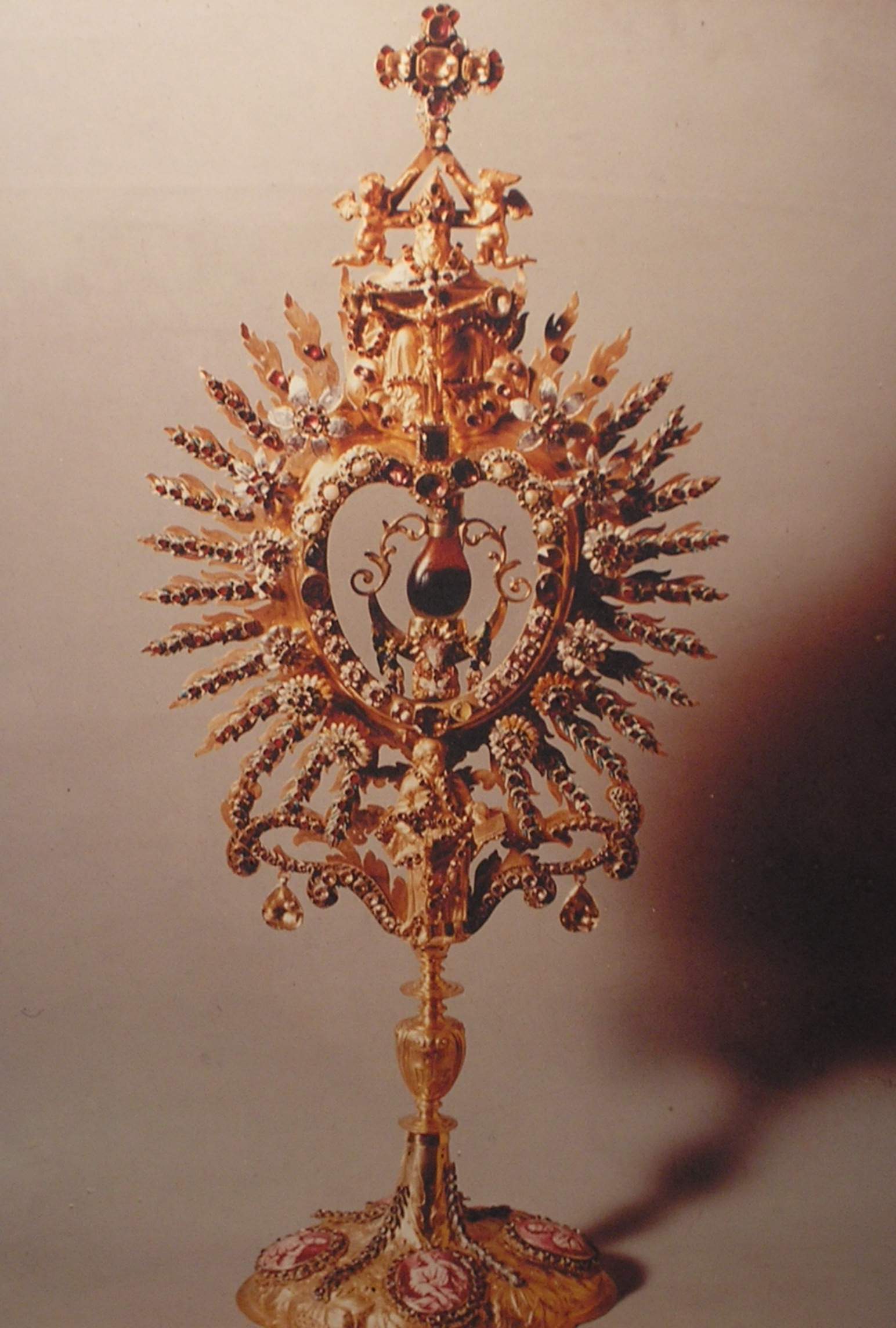
A priest in Ludbreg doubted during Holy Mass. According to the testimony of the shrine's tradition, the consecrated wine in the chalice visibly took on the form of blood. He initially concealed the extraordinary contents of the chalice and revealed the event only before his death. The ampulla containing the Holy Blood became the center of far-reaching veneration. Pope Julius II ordered an investigation; Leo X promoted the pilgrimage with his bull of 1513. Ludbreg remains a major shrine of the Precious Blood of Christ.

Pilgrimage to the Precious Blood promoted by the papacyRead →
Eucharistic Miracles

Offida: The Bleeding Host and Ricciarella's Confession

Lanciano; now Offida, Sant’Agostino · 1273–1280

In 1273, Ricciarella took a consecrated Host home in Lanciano in order to use it to restore peace in her marriage. When she heated the Host on a brick, blood emerged. She hid the objects until, seven years later, she confessed her deed to the Augustinian Giacomo Diotallevi. He recovered the relics and brought them to Offida in 1280. This event, preserved in local tradition, established the veneration there of the Holy Cross and the Eucharistic miracle.

Historical Eucharistic miracle in the diocesan shrineRead →
Eucharistic Miracles

Santarém: The Santíssimo Milagre

Santarém, Igreja de Santo Estêvão · Thirteenth century; 1247 often cited

A woman in Santarém, distressed by her marriage, took a consecrated Host home for a magical purpose. According to the locally preserved account, blood appeared on its wrapping; at night, light shone from its hiding place. The woman confessed to her husband and the parish priest what had happened. The Host was returned to the church and venerated thereafter. The shrine in Santo Estêvão has preserved this memory since the Middle Ages; its episcopal statutes of 2024 place prayer, the sacraments, and careful custody at the center.

Diocesan shrine with episcopal statutesRead →
Eucharistic Miracles

Seefeld: The Miracle of the Host and Oswald Milser's Conversion

Seefeld in Tyrol, Saint Oswald · Tradition: 1384

In 1384, Oswald Milser demanded a larger Host than the other faithful in Seefeld. According to the account preserved by the parish, the ground gave way beneath him when he received it. The altar stone on which he sought support also yielded. Only when the priest took the Host back did the event end; traces of blood appeared on it. Milser converted. The miracle established a major Tyrolean pilgrimage and was transmitted in images, architecture, and writing.

Historical pilgrimage with ecclesiastical, pictorial, and written traditionsRead →
Eucharistic Miracles

Siena: The Sacred Hosts Preserved since 1730

Siena, Basilica of San Francesco · Since August 1730

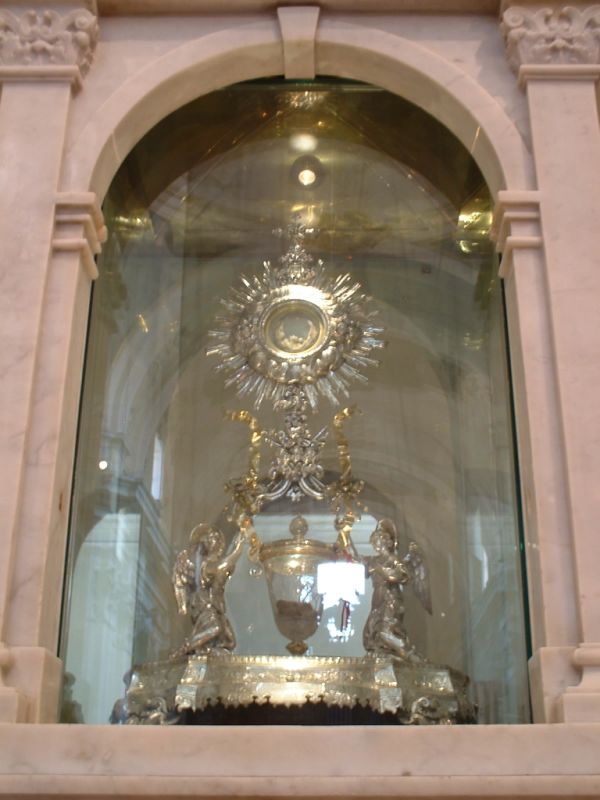
In August 1730, around 350 consecrated Hosts were stolen with their ciborium from San Francesco in Siena. Three days later, the Hosts were found in an offering box at Santa Maria in Provenzano and solemnly returned. Their extraordinary preservation has since been venerated as a Eucharistic miracle. Repeated inspections have described the collection. The examination of 2014 also confirmed its good state of preservation; the microbiological cultures prepared showed no growth after seven and fourteen days.

Eucharistic Miracle Venerated by the ArchdioceseRead →
Eucharistic Miracles

Sokółka: The Host and the Finding of Heart Muscle Tissue

Sokółka, Saint Anthony of Padua · October 12, 2008; ecclesiastical statement in 2009

On October 12, 2008, a consecrated Host fell to the floor in Sokółka. It was reverently placed in water. A week later, Sister Julia Dubowska discovered an intensely red area. The subsequent examination produced a remarkable finding: two pathologists independently assessed the material as heart muscle or as most closely corresponding to that tissue. The ecclesiastical commission confirmed that the sample came from the preserved Host and found no indications of outside interference. It has been publicly venerated since 2011.

Veneration Affirmed by the Church at the ShrineRead →
Eucharistic Miracles

Tixtla: The Blood on the Consecrated Host

Tixtla, San Martín de Tours Parish · October 21, 2006

On October 21, 2006, during the distribution of Communion in Tixtla, a religious sister noticed a reddish substance on a Host. The account names the priests involved, Leopoldo Roque and Raymundo Reyna Esteban. Subsequent examinations were summarized as detecting human blood and blood group AB. Bishop Alejo Zavala Castro assessed the event as a divine miracle in 2013. The observation, published investigative details, and later ecclesiastical procedural steps are presented in sequence below.

Favorable Assessment in 2013; Renewed Examination Confirmed in 2022Read →
Eucharistic Miracles

Trani: The Bleeding Host in Hot Oil

Trani, Sant’Andrea and the Chapel of the Miracle · Traditionally around 1000; early tradition requires closer examination

In Trani, a Host is venerated that, according to the account preserved by the Church, took on the form of flesh and blood when heated in oil. The woman involved was frightened; ecclesiastical authorities were called in. The relic, chapel, and local veneration keep the memory of this event alive. Written versions extend from the Adornos' travel account of 1470 to Bartolomeo Campi's detailed account of 1625. They reveal the common event and the details of its transmission.

Ecclesiastical veneration with a historical textual traditionRead →
Eucharistic Miracles

Walldürn: The Blood Image on the Corporal

Walldürn, Pilgrimage Basilica of Saint George · Tradition: around 1330; early examination 1408

Around 1330, the priest Heinrich Otto knocked over the chalice during Mass. Its consecrated contents spilled onto the corporal. According to the account preserved by the pilgrimage, the Crucified One and further images of Christ appeared on the cloth. The priest initially hid the corporal and revealed the event only before his death. His confession gave rise to the pilgrimage to the Holy Blood. An ecclesiastical investigation in 1408 and Eugene IV's indulgence privilege of 1445 are among its early documented milestones.

Ecclesiastical pilgrimage with early evidence of proceedings and privilegesRead →
Miracles · Catholon · EnglishUnderstand the relevant investigative approach · Image credits