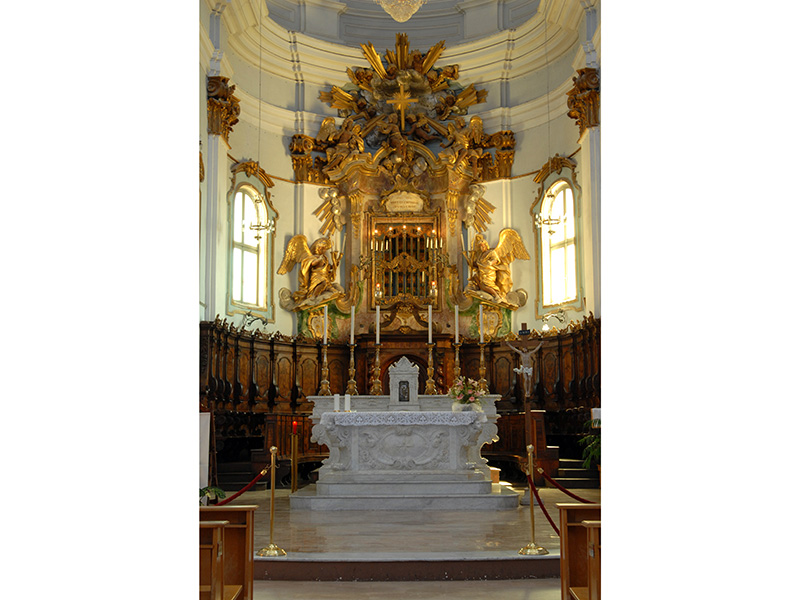
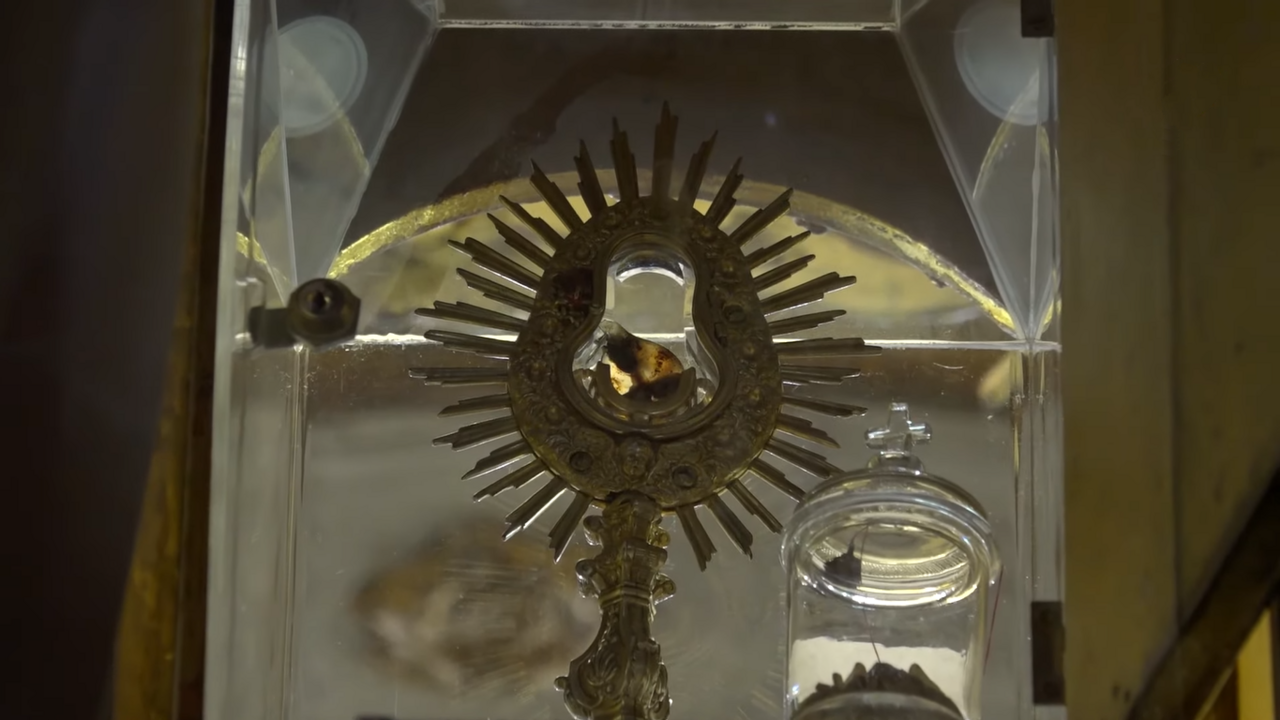
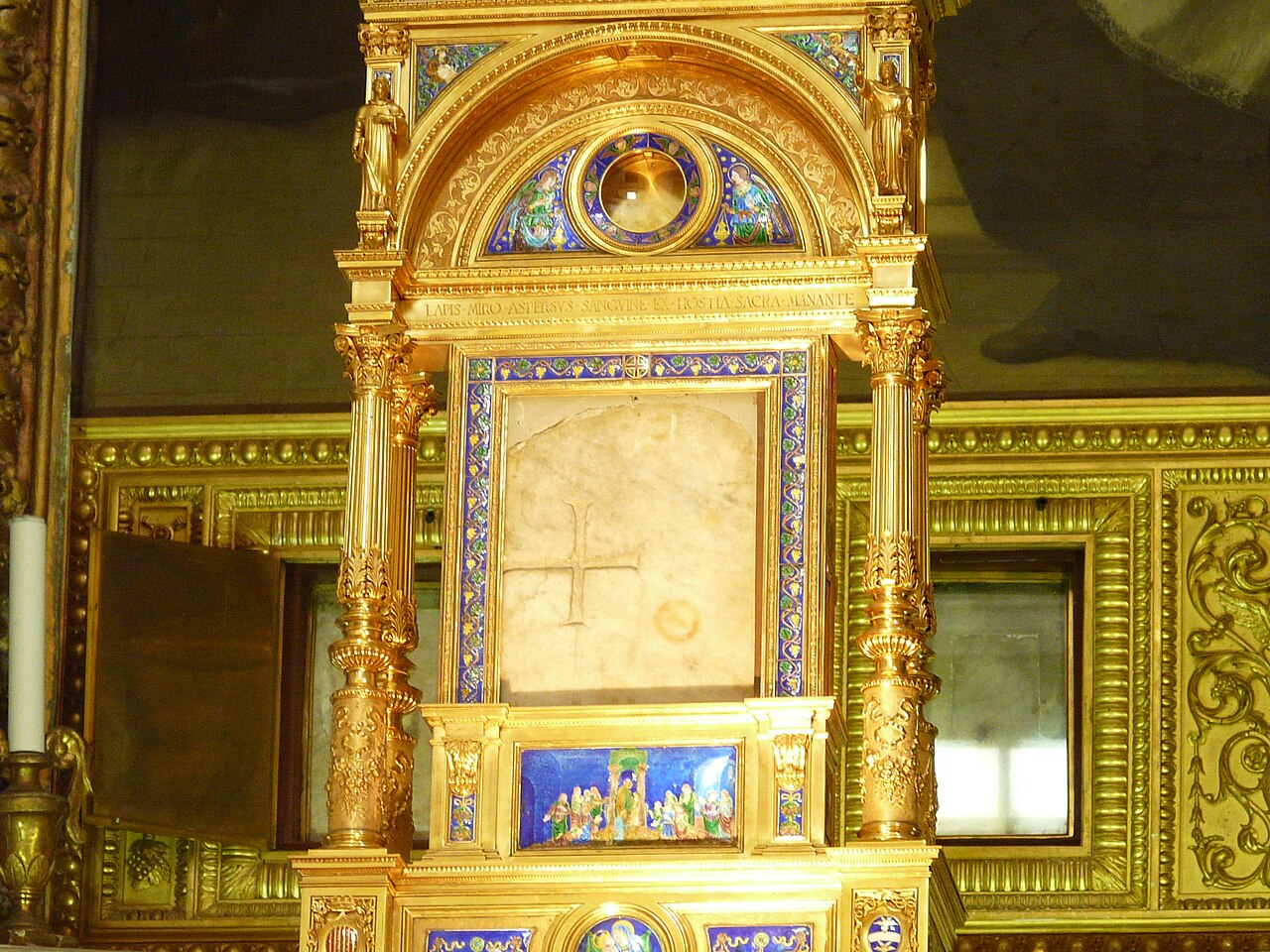
In Alatri, a young woman retained a consecrated Host to win someone back through a love spell. After three days, she found flesh in the hidden cloth. Frightened, she confessed to the bishop what had happened; the instigator also came forward. Gregory IX's letter of March 13, 1228, close to the event, takes up the matter, honors it as a divine miracle, and regulates the penance. With this papal response, Alatri possesses a particularly weighty early written testimony.
According to the testimony transmitted by the diocese and papal letter, the retained Host appeared as flesh after three days. The women involved confessed the sacrilege and the change that had occurred to the bishop.
Further original photographs from the publisher
The Hidden Host and the Confession
The diocese preserves the following sequence: a young woman wanted to regain a lost love. On another woman's advice, she retained a Host after receiving Communion and brought it home. There, she hid the Blessed Sacrament in a cloth. After three days, she opened it and found the Host in the form of flesh. Her plan ended in alarm and remorse. She turned to Bishop Giovanni of Alatri and confessed the act; the instigator was also included in the ecclesiastical assessment. The bishop submitted the matter to the Pope.[1]
Gregory IX Answers on March 13, 1228
The papal response addresses a specific inquiry from Alatri. Gregory IX honors the miracle and also decides on appropriate penance. He distinguishes the weak, now repentant young woman from the instigator and recommends gentler treatment for the former. The letter thus connects recognition of the event with an actual pastoral and juridical decision. Its Italian translation is reproduced in the international exhibition.[2]
Written Testimony from the Same Period
Its special historical value lies in proximity in time: the Pope's response belongs to the years of the event, not merely to an anniversary publication centuries later. It attests to the specific involvement of the bishop and Pope. Transmission ran from the women involved through Bishop Giovanni to Rome; Gregory IX judged the event presented to him. For the version examined here, the ecclesiastically published reproduction and translation are used. This does not involve an independent paleographic examination of the original document.[2]
What the Early Document Establishes
Alatri's particular strength is the early transmission of the letter. It provides access to the account of the changed Host, the women's confession, and the favorable papal treatment. Modern claims about heart muscle, blood groups, or DNA do not belong to this evidence. They would require separate material investigations. Further historical work can begin with editions of documents, records of ownership, and the custody of the Ostia incarnata. It deepens a case already specifically attested and its history of transmission.[2][3]
The Ostia Incarnata in San Paolo
The relic is preserved in San Paolo. The diocese documented the liturgical celebration and procession in 2024; in 2026, it announced a committee to prepare the eight-hundredth anniversary in 2028. This commemoration expressly refers to the date of the papal letter. Present-day veneration is thus tied to a specific object, a clear ecclesiastical location, and an identifiable early document.[1][3]
God's Grace Calls from Sacrilege to Conversion
The woman wanted to compel a person's love through a sacred object. The miracle instead led her to confession. This is its clear spiritual response: Christ cannot be made an instrument of human control; his grace calls to truth. The Church's treatment takes the sacrilege seriously while showing mercy to the repentant woman. The path leads from secret manipulation to reconciliation with God and renewed reverence for the Eucharist.[1][2]
Witnesses & Investigators
The Young Woman and the Instigator
Participants in the event addressed in the papal letter
Confessed the taking of the Host and the change that had occurred to the bishop.[2]
Gregory IX
Pope and author of the response of 1228
Assessed the event presented favorably and regulated penance for those involved.[2]
The unfolding story
- Event and Confession
The theft and change of the Host lead to confession before the bishop.[1][3]
- Gregory IX's Response
The papal letter regulates the Church's handling of the matter.[2]
- Annual Veneration
The diocese documents celebration and procession.[1]
- Anniversary Preparations
A committee prepares the commemoration of 2028.[3]
Ecclesiastical assessment
In his surviving letter, Gregory IX treats the event as a divine miracle and regulates the penance. The diocese traces its continuing veneration to this early papal response.
Objections & Answers
What Evidential Force Does the Papal Letter Have?
It is significant historical evidence: it comes from the same period, addresses a named bishop, and deals with specific participants and ecclesiastical measures. This clearly distinguishes it from an unattributable rumor. Its authority does not, however, turn every later detail into a dogmatically infallible judgment of fact. The letter must be assessed according to its wording and occasion. This very limited, clearly identifiable subject gives Alatri strong positive testimony without requiring later additions to claim the same standing as sources.[2]
Does the Miracle Confirm a Love Spell?
No. The sequence shows the opposite: the women achieve no magical control over a person but recognize their wrongdoing and seek forgiveness. The miracle interrupts misuse of the sacrament. The papal response concerns repentance and penance; it praises no successful technique. The Eucharist is Christ's gift, not a means of controlling another person. The connection between serious confession of guilt and mercy reveals the meaning of the event.[1][2]
Meaning for faith
In Gregory IX's letter close to the event, Alatri possesses an exceptionally early ecclesiastical testimony. The miracle leads from misuse of the sacrament to confession, penance, and mercy. Its enduring message is reverent reception of Christ, who calls the repentant person to conversion.[1][2]
How Eucharistic Miracles Are Examined
Securing the account of events, identifying the material, and reading the Church's judgment precisely.
Methods of examination and ecclesiastical procedure →Sources & Evidence
Information on accessibility and scope helps you assess the evidence for yourself.
- [1] Miracolo eucaristico di Alatri: le celebrazioni
Diocesan tradition and present-day veneration.
Open source · diocesianagnialatri.it ↗ - [2] Alatri: Italian rendering of Gregory IX's letter
Early primary text in modern translation; original document not independently examined paleographically.
Open source · miracolieucaristici.org ↗ - [3] Alatri: Comitato promotore per gli 800 anni del Miracolo Eucaristico
Names 1227–1228 and the letter's anniversary in 2028.
Open source · diocesianagnialatri.it ↗