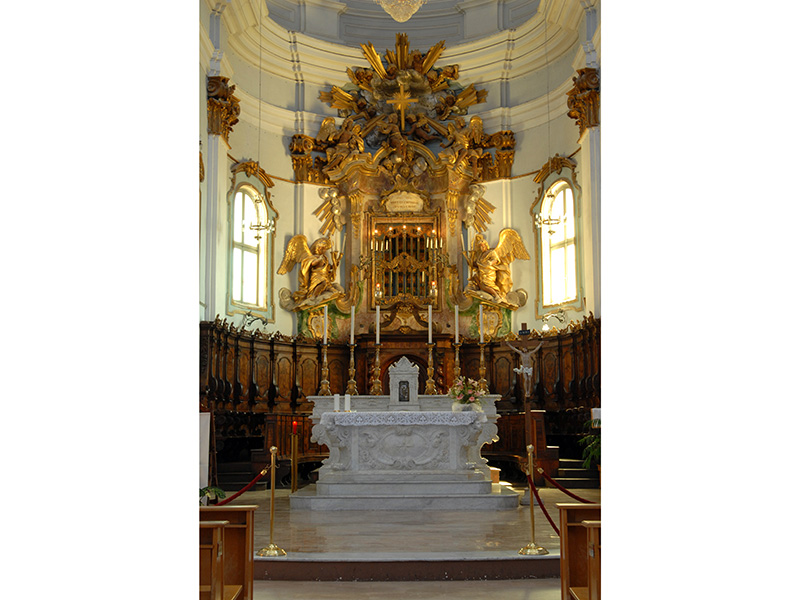
In Trani, a Host is venerated that, according to the account preserved by the Church, took on the form of flesh and blood when heated in oil. The woman involved was frightened; ecclesiastical authorities were called in. The relic, chapel, and local veneration keep the memory of this event alive. Written versions extend from the Adornos' travel account of 1470 to Bartolomeo Campi's detailed account of 1625. They reveal the common event and the details of its transmission.
The local miracle account attests that a consecrated Host taken from the church assumed the form of flesh and blood when heated in oil. The discovery led to ecclesiastical involvement and veneration.
The Host in Heated Oil
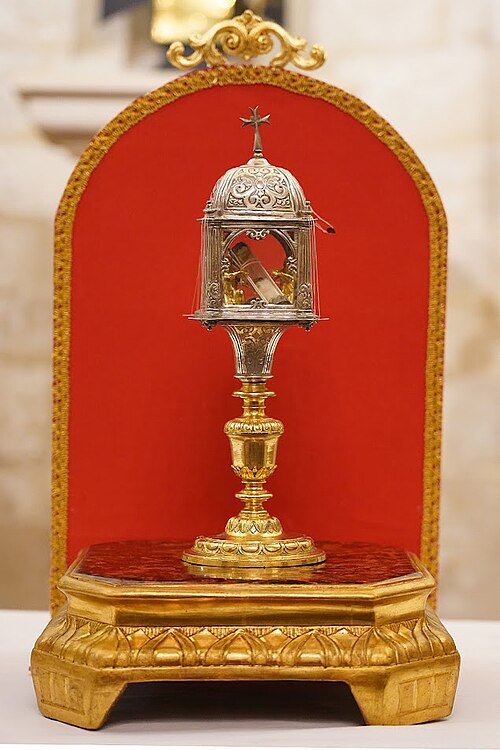
The international exhibition recounts the miracle narrative preserved in Trani: a woman took a consecrated Host from the church and heated it in oil. The Host took on the form of flesh and blood; the bleeding frightened the woman. Ecclesiastical authorities were called in. The event became the starting point for veneration of the relic and commemoration at the local shrine. The exhibition cites Bartolomeo Campi's L’innamorato di Gesù Cristo of 1625 for the detailed version.[1]
Relic and Ecclesiastical Site
The diocesan bulletin mentions veneration of the Eucharistic miracle at Sant’Andrea. The exhibition shows the reliquary and the chapel dedicated to commemorating the event. The story is thus tied to specific ecclesiastical places and objects. In older illustrations, the original site of the event, later presentation, and the respective place of custody must be distinguished. For a visit today, current Church information on its custody is authoritative.[3][1]
Comparing the Early Versions
A local publication refers to the travel account of Anselmo and Giovanni Adorno from 1470. The version reproduced there describes the woman's intention as less hostile than later accounts do. Campi's text of 1625 offers another detailed stage in the transmission. The traditional dating around 1000 predates these surviving textual witnesses and must remain identified as such. Comparison asks which details agree in the early versions and which motives appear later. This keeps the event itself distinguishable from changing attributions.[2]
Bringing Textual Witnesses and Custody Together
The travel account, Campi's presentation, and Church inventories offer concrete starting points for further research. A synoptic edition could set the individual statements side by side. Records of transfers and conservation documents would supplement the relic's journey. The sources consulted here contain no complete modern material analysis. The existing evidence is historical and ecclesiastical: identifiable texts, a specific object, and continuing veneration.[1][2][3]
Reverence for Christ's Presence
The miracle directs attention to the holiness of the sacrament. The Host is not an ordinary object that human beings may use as they please. Alarm leads to recognition of this reality and opens the way to conversion. Veneration in Trani lives from this turning toward Christ. Serious inquiry into sources and material serves the same truth toward which reverence for the Blessed Sacrament is directed.[1][2]
Witnesses & Investigators
The Unnamed Woman
Participant in the locally preserved miracle account
Her action is handed down in several historical versions; these give differing motives and dates.[1][2]
Anselmo and Giovanni Adorno
Travelers and authors of the 1470 account
Attest to the older tradition conveyed to them in Trani; they did not themselves observe the original event.[2]
Bartolomeo Campi
Author of the 1625 account
Preserves a detailed early modern version of the miracle account.[1]
The unfolding story
- Traditional Dating
The exhibition places the origin in the eleventh century.[1]
- Early Travel Account Cited
The local publication refers to the Adorno tradition.[2]
- Campi's Account
L’innamorato di Gesù Cristo preserves a detailed version of the miracle account.[1]
- Present-Day Church Life
The diocesan bulletin names Sant’Andrea as the place of veneration.[3]
Ecclesiastical assessment
The relic is venerated by the Church in Trani. Traditional dating places its origin around 1000; the written versions consulted come from a later period and are distinguished in the examination section.
What follows from the woman's changing motives?
The versions differ regarding the intention and religious affiliation of the woman who acted. These individual details must not be combined into a single direct eyewitness account without comparing the sources. Nor does one person's deed imply the guilt of her entire religion or community of origin. The ecclesiastical meaning of the miracle lies in the truth of the Eucharist and the call to personal conversion. It remains independent of collective accusations of guilt.[1][2]
Objections & Answers
Does the late written attestation disprove the event?
No. A later written account can preserve an older local memory. It does not, however, establish the precise time of the beginning on its own. The traditional dating around 1000 and the documented texts of 1470 and 1625 answer different questions. Comparison of the sources must show when particular dates and details first appear. Actual ecclesiastical veneration remains clearly distinguishable from this. An earlier date must not be treated as already established by a contemporary record if no such record has been located.[1][2]
Do later embellishments invalidate the entire tradition?
Not automatically. Individual motifs can change in transmission while the common core of the event remains. Which parts are affected must be determined by comparing the texts. An attribution concerning the woman that requires critical assessment does not, by itself, settle the origin of the relic or what happened to the Host. Trani's veneration can be presented in relation to its Eucharistic center while its dating and motives are examined through the sources. This requires neither images of an enemy nor the uncritical acceptance of every later detail.[1][2][3]
Meaning for faith
Trani preserves the Eucharistic miracle of the bleeding Host in a concrete ecclesiastical memory. Its textual witnesses and the veneration of the relic must be appreciated together. At its center is Christ in the Blessed Sacrament, whose presence calls for reverence and conversion.[1][2][3]
How Eucharistic Miracles Are Examined
Securing the account of events, identifying the material, and reading the Church's judgment precisely.
Methods of examination and ecclesiastical procedure →Sources & Evidence
Information on accessibility and scope helps you assess the evidence for yourself.
- [1] Trani: Italian exhibition panel
Secondary tradition; the early dating and later narrative version are distinguished.
Open source · miracolieucaristici.org ↗ - [2] Miracolo eucaristico, a Orvieto un affresco che richiama Trani?
Local reference to a source; the Adorno original was not itself consulted in full here. The speculative attribution of a fresco is not adopted.
Open source · ilgiornaleditrani.it ↗ - [3] In Comunione, marzo 2023
Diocesan publication documenting ecclesiastical veneration.
Open source · incomunione.it ↗