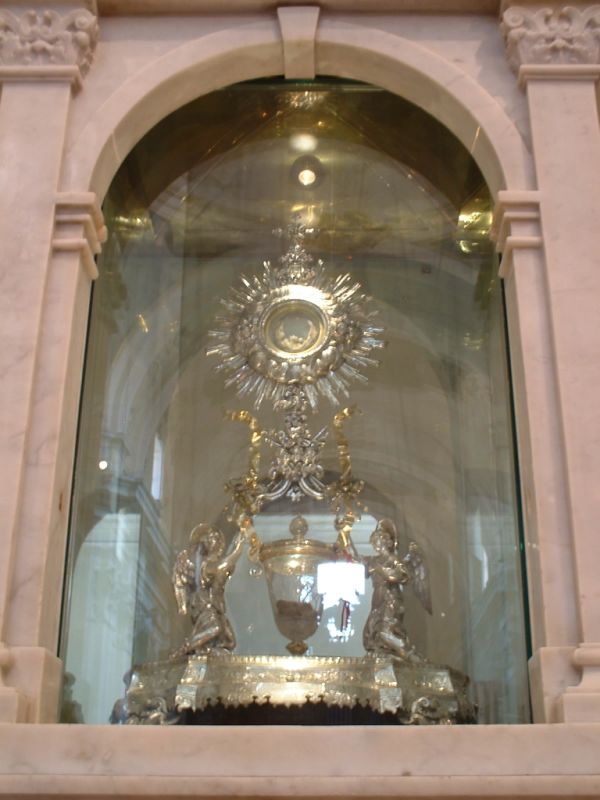
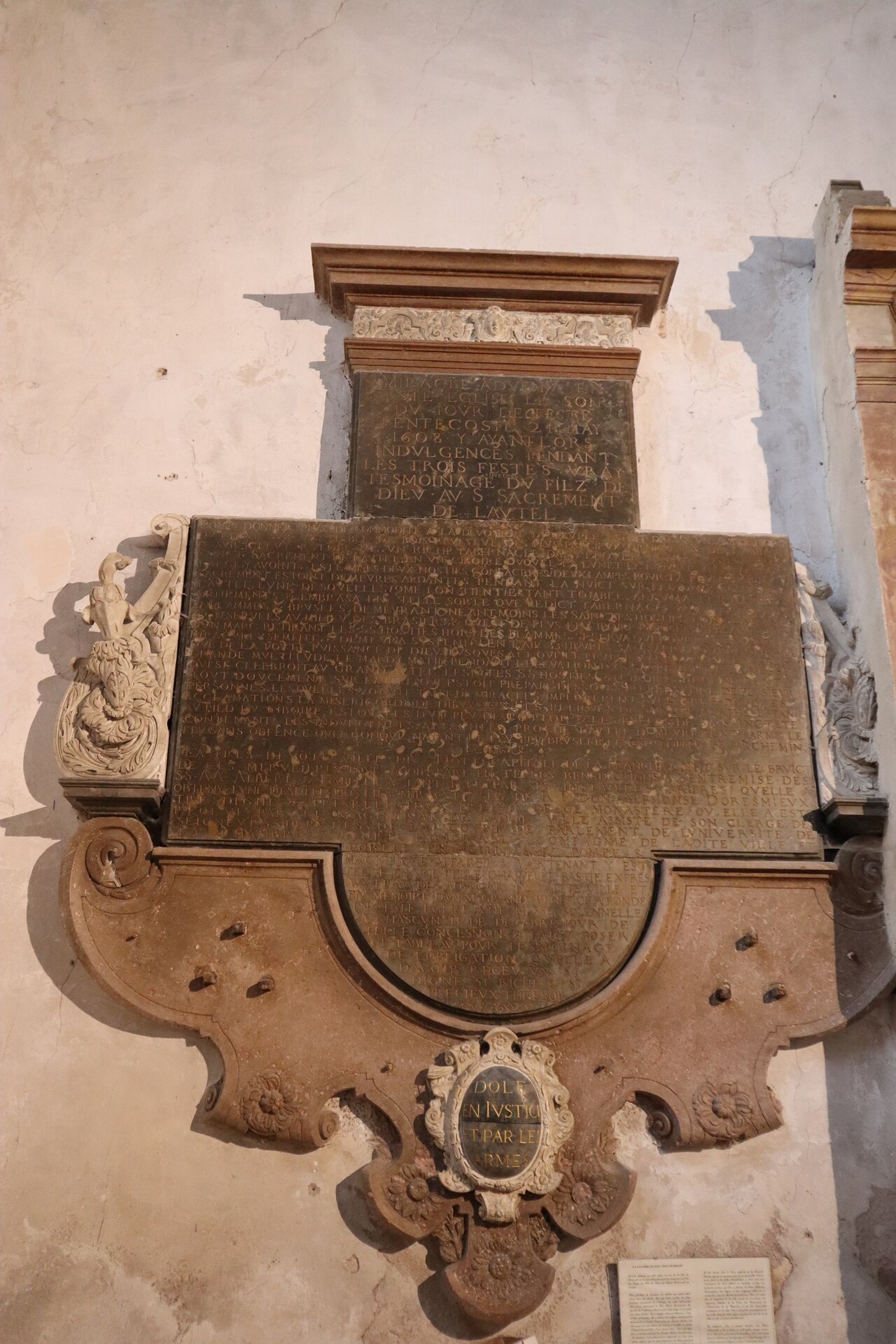
In August 1730, around 350 consecrated Hosts were stolen with their ciborium from San Francesco in Siena. Three days later, the Hosts were found in an offering box at Santa Maria in Provenzano and solemnly returned. Their extraordinary preservation has since been venerated as a Eucharistic miracle. Repeated inspections have described the collection. The examination of 2014 also confirmed its good state of preservation; the microbiological cultures prepared showed no growth after seven and fourteen days.
The Hosts rediscovered after the theft of 1730 remained preserved across generations. The collection examined in 2014 comprised 225 Hosts and some fragments in good condition.
Further original photographs from the publisher
From Theft to Solemn Return
The archdiocese describes the beginning: on the eve of the Assumption, August 14, 1730, a ciborium containing around 350 consecrated Hosts was stolen from San Francesco. The search ended at Santa Maria in Provenzano on August 17. The Hosts were discovered there in an offering box and solemnly returned. They continued to be preserved. Over time, their extraordinary preservation became apparent and led to repeated ecclesiastical inspections. From the return of the stolen Blessed Sacrament grew an enduring veneration.[1]
The Inspections Track the Collection
Later checks recorded different numbers and also fragments. The original figure of around 350 therefore refers to the theft of 1730, not the quantity remaining today. Removals and breakage can explain a reduction without overturning the provenance of the remaining Hosts. Dated inventories are decisive for the history. The archdiocesan outline also names a longer period of less dense documentation after the rediscovery; later canonical examinations make the transmitted collection concretely identifiable again.[1]
Early Examinations and Comparison Hosts
The question of whether ordinary preservation conditions could explain the finding arose early. The diocese recalls older comparisons with unconsecrated hosts and particularly the examination of 1914. These examinations belong to the place's positive testimony: the extraordinary preservation was repeatedly investigated. The materials, containers, and environmental conditions at the time are decisive for assessing individual comparisons. Historical control experiments must be assessed according to their actually documented conditions.[3]
The Finding of 2014
A further canonical examination took place on September 10, 2014. Selected samples were examined noninvasively, and the container was cleaned. The archdiocesan statement names the research group led by Cristiano Riminesi at the CNR's Institute for the Conservation of Cultural Heritage. It confirmed the good state of preservation. The cultures prepared showed no microbial growth after either seven or fourteen days. This is a specific scientific finding concerning the collection present at that time.[2]
225 Hosts and Fragments after Almost Three Centuries
In 2014, 225 Hosts and some fragments were counted. The examination thus describes precisely what was present at that time. Ecclesiastical custody and earlier inspections establish the long connection with the discovery of 1730; current measurements confirm the condition of the transmitted collection. The two belong together. The combination of centuries of history with repeated actual examination is precisely what makes Siena remarkable. For older inspections, the date, number of Hosts, and investigative method must each be considered. A single modern investigation cannot experimentally reproduce the environmental conditions of the entire preceding period.[2]
The Local Church Preserves the Memory
The archdiocese marks the anniversary of the rediscovery liturgically; a Eucharistic celebration with the bishop was also central in 2022. The Hosts belong to Siena's continuing worship. Remembrance connects joy at their return with reparation for the sacrilege and gratitude for their preservation. Public veneration unites the present community with the generations who guarded the Blessed Sacrament.[4]
Christ's Abiding Presence
Siena directs attention to Christ's faithfulness and the Church's persevering love. The same Lord is present in the old Host as in one just consecrated. Extraordinary preservation makes this abiding presence strikingly apparent. The pilgrim is led to gratitude and adoration; remembrance of the theft calls for reparation. The miracle here consists in preservation of the Eucharistic species and therefore has its own character alongside miracles of visible flesh or blood.[3][4]
Witnesses & Investigators
Tiberio Borghesi
Archbishop at an early canonical examination
Ordered the inspection and comparison with other hosts in 1789.[1]
Cristiano Riminesi and Research Group
Specialists in cultural heritage research
Conducted the analyses on the preserved collection described in the diocesan statement of 2014.[2]
The unfolding story
Ecclesiastical assessment
The archdiocese describes the preservation as a Eucharistic miracle and fosters public veneration. Its statement of 2014 documents the renewed examination of the collection, its good condition, and negative microbiological cultures.
Objections & Answers
Can Dry Bread Remain Preserved for a Long Time?
Yes, certain natural conditions can preserve organic material for a long time. This general possibility does not yet explain the specific collection in Siena, however. The recorded storage conditions, changing containers, inspections, and comparative experiments must be considered. The investigation of 2014 confirms remarkably good condition and negative cultures; it does not experimentally reconstruct all earlier environmental conditions. The positive case lies in the connection between history and repeated findings. Anyone seeking a natural explanation must account for this specific connection instead of referring only to the abstract possibility of dry storage.[1][2]
Why Were the Hosts Kept after Being Found?
The diocesan historical outline names possible hygienic reasons after their discovery in an offering box; the original motives are not fully documented. The subsequent course is certain: the Hosts remained in custody, their preservation drew attention, and the collection was later checked repeatedly. An unknown individual decision at the beginning does not invalidate these later observations. The preserved collection and inspections are decisive for continuity. A specific early instruction is therefore not invented; the actually attested history of preservation supports the account.[1]
Meaning for faith
The sacred Hosts of Siena connect remembrance of their rediscovery with centuries of custody and repeated examinations of their condition. The favorable finding of 2014 stands within this long history. The Church venerates their extraordinary preservation as a call to fidelity toward Christ in the Blessed Sacrament.[1][2]
How Eucharistic Miracles Are Examined
Securing the account of events, identifying the material, and reading the Church's judgment precisely.
Methods of examination and ecclesiastical procedure →Sources & Evidence
Information on accessibility and scope helps you assess the evidence for yourself.
- [1] La storia del Prodigio Eucaristico
Also names periods of weaker documentation and changed quantities.
Open source · arcidiocesi.siena.it ↗ - [2] Ricognizione Sacre Particole 2014
Official summary of the investigation; the linked complete report was not retrievable.
Open source · arcidiocesi.siena.it ↗ - [3] La storia del Miracolo Eucaristico di Siena
Overview of earlier investigations and veneration.
Open source · arcidiocesi.siena.it ↗ - [4] Siena: il 292º anniversario del ritrovamento delle Sacre Particole
Documents a celebration fostered by the bishop.
Open source · arcidiocesi.siena.it ↗