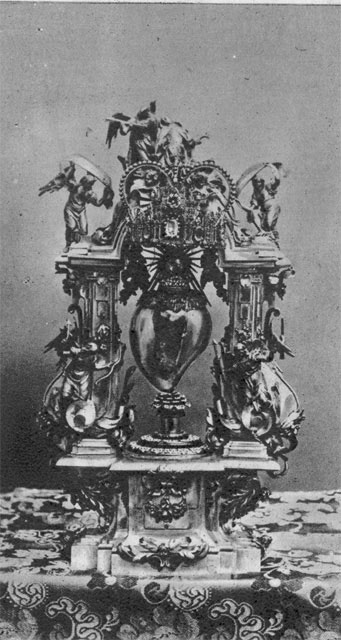
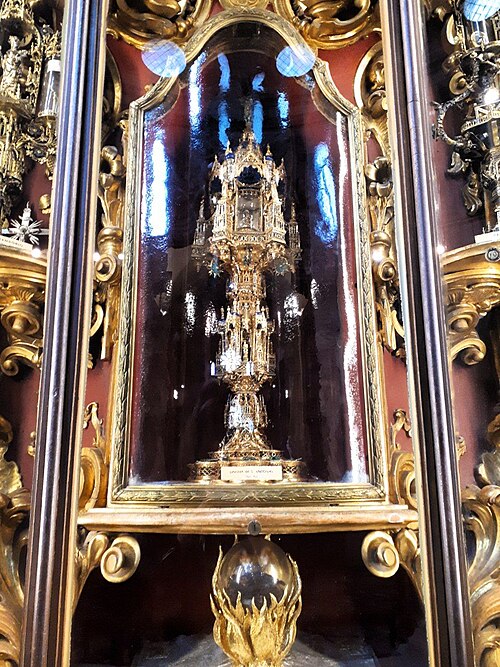
Around Pentecost 1544, Philip Neri prayed in the Roman catacombs for the gifts of the Holy Spirit. The early biographer Pietro Giacomo Bacci recounts how a ball of fire entered his chest and filled him with burning love for God. A conspicuous swelling and later powerful heartbeats accompanied the experience. After his death, physicians described changes to two ribs and the heart region. The grace stands at the beginning of his long work as the Apostle of Rome. Prayer, visits to the sick, spiritual guidance, and community life gave rise to the Oratory.
Pietro Giacomo Bacci recounts Philip's Pentecost experience: while he prayed for the Holy Spirit, a ball of fire entered his chest and filled him with ardent love. The tradition of his life describes associated bodily manifestations and a striking finding after his death.
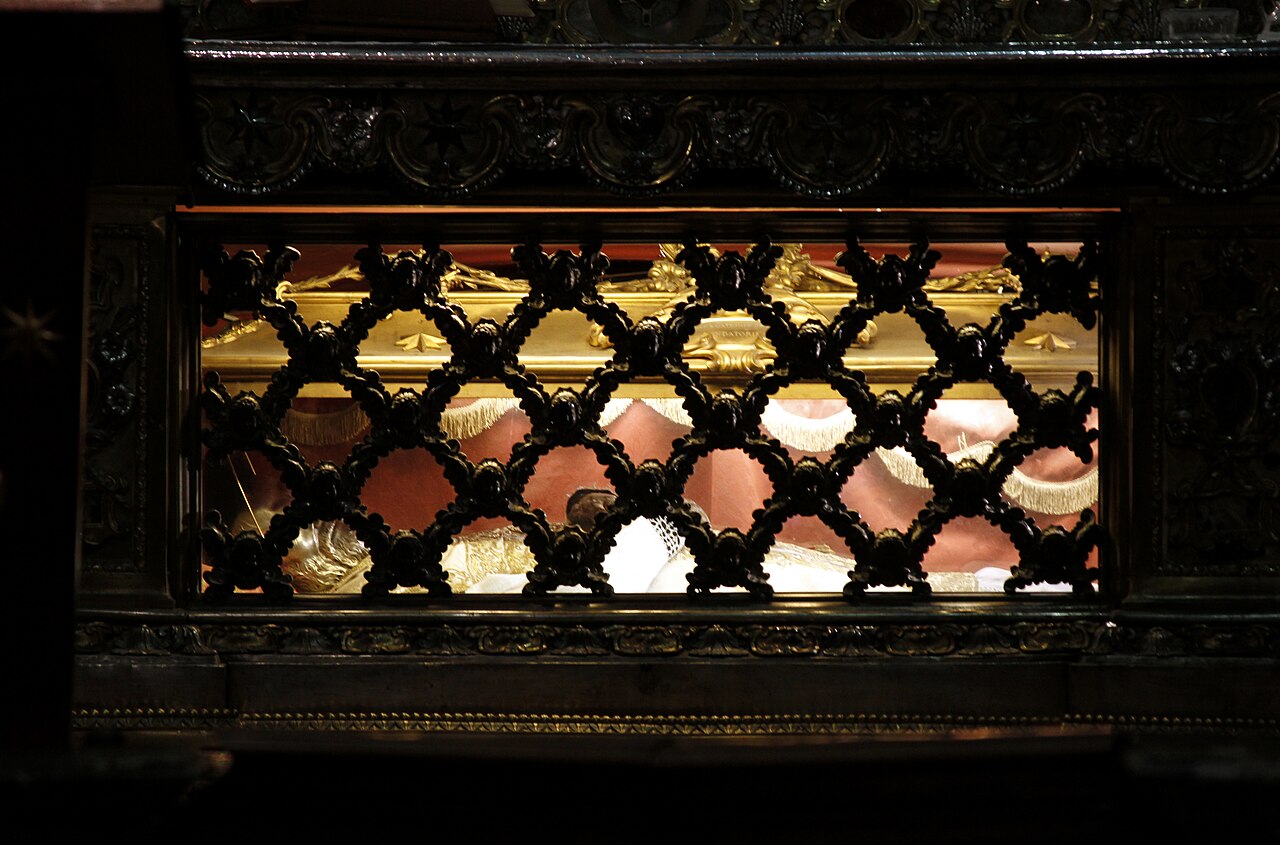
Philip's Prayer in the Catacombs
In Rome, Philip often visited churches and catacombs to pray at length. The early tradition of his life places the special Pentecost experience of 1544 at San Sebastiano. He was still a layman then; his ordination to the priesthood followed only in 1551. In recollection, he fervently asked for the gifts of the Holy Spirit. This petition forms the starting point of the extraordinary experience that would accompany his later life. The detailed account distinguishes the site from earlier confusions with San Callisto. The event belongs to Philip's Roman years before the later establishment of the Oratory.[1]
The Fire of Divine Love
Pietro Giacomo Bacci describes how, while praying, Philip perceived a ball of fire that entered his chest through his mouth. The ardor of love became so strong that he threw himself to the ground and bared his chest to find relief. Afterward, he felt a distinct swelling, without a corresponding external wound or the pain otherwise to be expected. The experience remained present to him as a special gift of the Holy Spirit. His love for God involved strong bodily participation; the tradition of his life connects the later unusual features in the chest region with this beginning.[1]
A Heart for the People of Rome
Philip's prayer led him to people. He visited the sick, offered spiritual guidance, and gathered people for common prayer. After his ordination in 1551, sacramental ministry, especially confession, was added. The Oratory grew from his circle, its life shaped by preaching, prayer, and a humane piety. In 1575, the community received its established ecclesiastical form. Philip's reputation as the joyful Apostle of Rome therefore belongs to the meaning of his heart sign: the love he received opened him to others' concerns and became effective in a long life of service.[1][2]
God's Love Takes Hold of the Whole Person
In Christian devotion, the heart signifies the center of the person: the human being in thought, will, and love. Philip's experience connects this spiritual meaning with a pronounced bodily experience. For him, love for God did not remain an abstract idea. It took hold of him and shaped his actions. The fruits become visible in his later life: joy, prayer, care for the sick, and accompaniment of many people. Veneration of his heart sign is directed toward this gift of God. It invites us to ask for the same love and to make room for it in our own service.[1][2]
Heartbeats and the Finding After Death
People around Philip noticed powerful heartbeats, particularly during spiritual activities. Unlike the personal vision, such bodily manifestations were perceptible to others. After his death in 1595, physicians described changes to two ribs and an enlargement of the heart region. This finding survives through the biographical tradition. It gives the account a bodily aspect extending beyond Philip's inner experience. A precise present-day diagnosis would, however, require the complete original examination records. The available account transmits the finding made at that time without replacing a modern cardiological examination.[1]
The Early Life and Its Transmission
The detailed account in the Catholic Encyclopedia draws on the early biographer Bacci and covers Philip's life, the Pentecost experience, and the associated bodily manifestations. The source used makes this route of transmission clear. It conveys the early life; it is not an independent new examination of the body. The Vatican City State's account also includes the Pentecost experience in the saint's biography. This documents continuing ecclesiastical reception. For assessing individual anatomical details, what matters is the earlier description on which each publication relies.[1][2]
Witnesses & Investigators
Philip Neri
Person healed
The vision and inner feeling of love are known through the tradition of his life.[1]
Pietro Giacomo Bacci
Early biographer
His account conveys the experience and its accompanying bodily manifestations.[1]
Physicians after Philip's death
Examiners known through the tradition
According to the biographical tradition, described changes to two ribs and the heart region.[1]
The unfolding story
- Birth in Florence
- Pentecost Experience
The tradition connects his prayer in the catacombs with the sign of fire.[1]
- Ordination to the Priesthood
Philip begins his priestly ministry in Rome.[2]
- Ecclesiastical Form of the Oratory
Papal recognition consolidates the community that arose from his apostolate.[1]
- Death and Examination
After his death, the unusual finding in his chest is recorded.[1][2]
Ecclesiastical assessment
Ecclesiastical tradition connects the experience with Saint Philip Neri's life. The transmitted postmortem bodily finding must not be presented as a present-day cardiological assessment or experimental explanation of the vision.
Objections & Answers
Were the heartbeats an expression of illness?
Palpitations can have natural medical causes. The general possibility, however, does not identify a specific illness in Philip and does not by itself explain all the details handed down. Complete modern findings are lacking for a retrospective diagnosis. Moreover, the case consists of several related testimonies: the personal Pentecost experience, other people's bodily observations, and the fruits of his long life. Spiritual appreciation rests on this context. A medical question may be asked; merely asking it does not refute the special grace.[1][2]
Do the changes to the ribs prove the vision?
The transmitted finding initially confirms a bodily anomaly, provided the description made at the time is reliable. It does not, by itself, identify the cause or the exact time it arose. In this case, the examination is conveyed through the early biography. Its details must therefore be identified with that source pathway. Its positive weight emerges from the connection with Philip's own experience, observations during his life, and his steadfast love of God and neighbor. The ribs are one part of this testimony; they do not carry the entire spiritual interpretation alone.[1]
Meaning for faith
Philip's heart sign connects an early account of a grace received with bodily observations and a fruitful holy life. The ardent love of 1544 led into his steadfast service to the people of Rome. The testimony derives its weight from this connection between prayer, body, and active love of neighbor.[1][2]
How Miracles in the Lives of the Saints Are Examined
Stigmata, bilocation, and material changes require different examinations.
Methods of examination and ecclesiastical procedure →Sources & Evidence
Information on accessibility and scope helps you assess the evidence for yourself.
- [1] St. Philip Romolo Neri
Public-domain historical account extensively conveying the early biographer; no direct examination of the original autopsy.
Open source · newadvent.org ↗ - [2] May 26: Saint Philip Neri
Current ecclesiastical reception of the tradition; not an independent medical report.
Open source · vaticanstate.va ↗