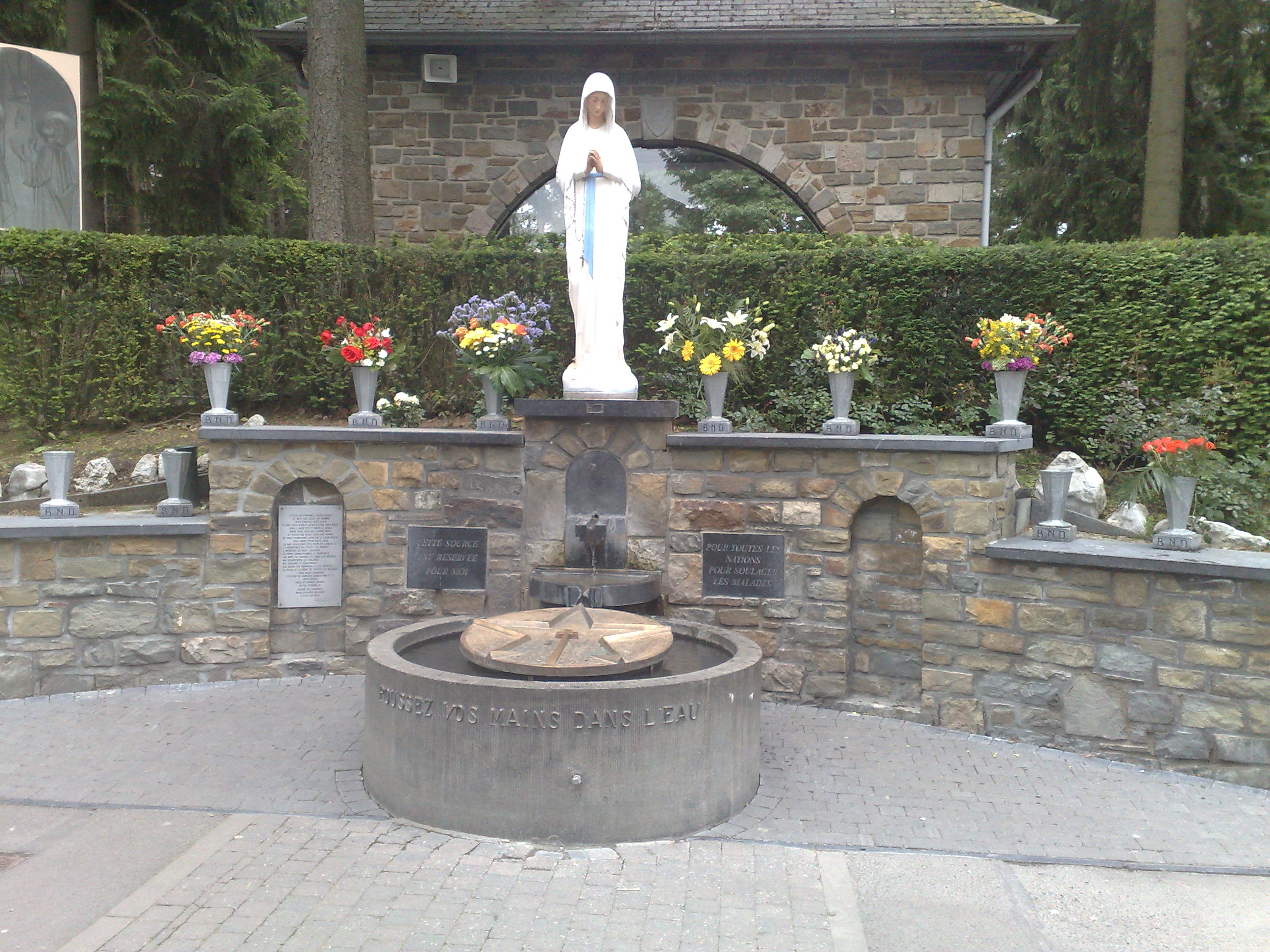
Between November 29, 1932, and January 3, 1933, the Mother of God appeared to five children from Beauraing a total of 33 times. Albert, Fernande, and Gilberte Voisin, along with Andrée and Gilberte Degeimbre, first saw her near the school and later by the hawthorn in the garden. Mary showed her golden heart and called for prayer, pilgrimage, and conversion. After years of investigation, the Church first permitted veneration. In 1949, Bishop André-Marie Charue expressly recognized the supernatural character of the apparitions; two examined healings also entered into his judgment.
The Mother of God appeared 33 times to five children in Beauraing and showed them her golden heart. She asked for prayer, a chapel, and the conversion of sinners. The children bore witness to the encounters.
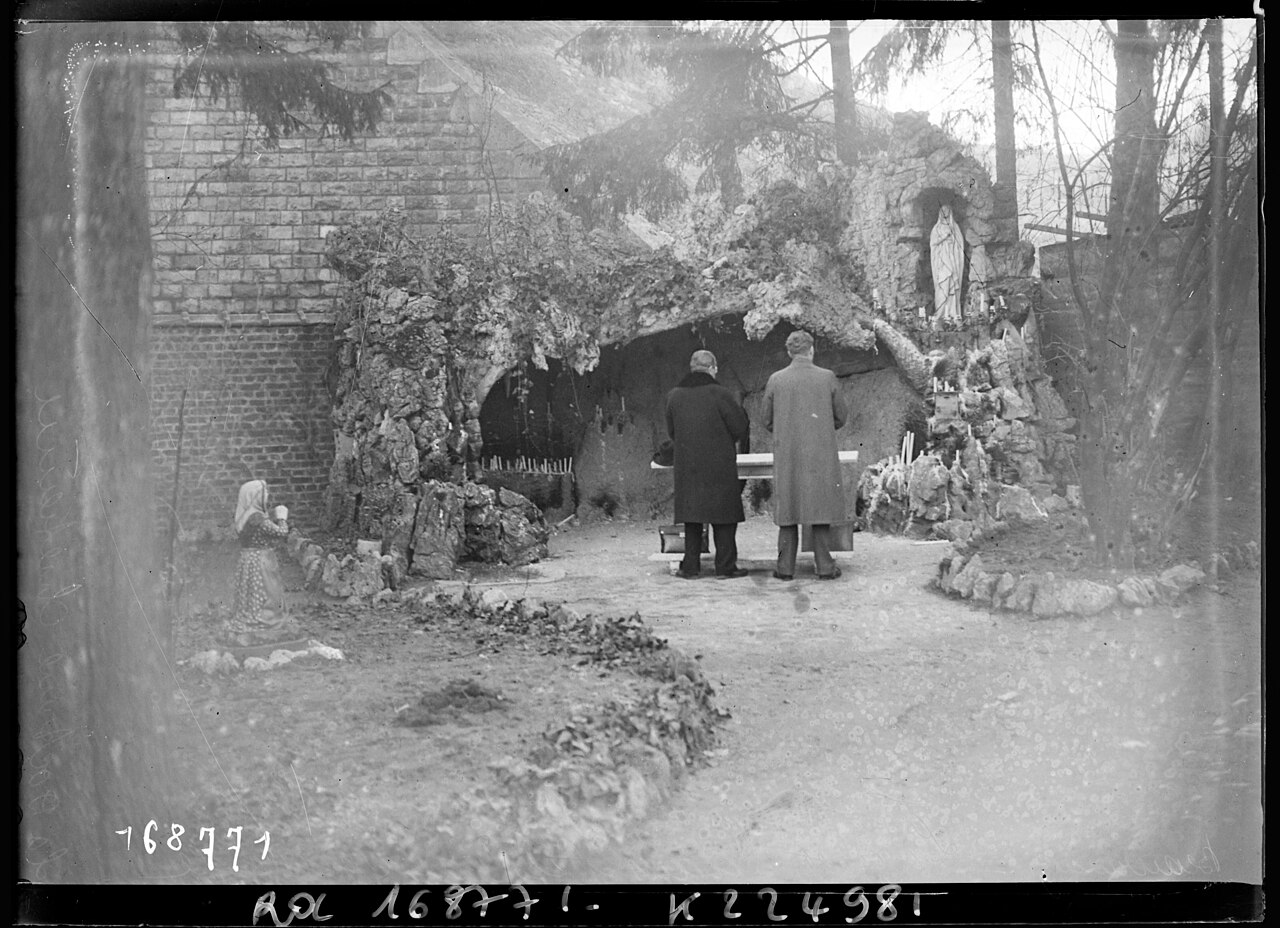
The First Encounter on the Way to School
The shrine preserves the statements of Albert, Fernande, and Gilberte Voisin and Andrée and Gilberte Degeimbre. The children were between nine and fifteen years old. On the evening of November 29, 1932, they went to the sisters' school to collect a child. There they saw a woman above the railway bridge. Further encounters followed; soon Mary appeared by the hawthorn in the garden. The children maintained their testimony even when relatives and sisters initially responded with reserve. A total of 33 apparitions took place through January 3, 1933.[1]
Mary Shows Her Golden Heart
During the apparitions, the Mother of God showed the children her shining golden heart. She called them to prayer, asked for a chapel, and invited people to come as pilgrims. The conversion of sinners stood at the center. The visible heart expressed her maternal love and intercession. The children thus received a simple and definite mission: to pray and lead people to God. Mary directed their attention toward conversion and a life turned toward Christ.[1]
The Call to Conversion
Prayer and conversion form the unity of Beauraing's message. The Mother of God leads the children and pilgrims to Jesus Christ. The golden heart makes her love visible; the request for a chapel gives shared prayer a place. The simplicity of this mission corresponds to its purpose: people are to orient their lives toward God again. The ecclesiastical investigation considered both the content and the testimonies and events. The favorable judgment confirms the credibility of an invitation still received at the shrine today.[2][3]
The Chapel as a Response to the Mission
The desire for a chapel received a public response. The cornerstone of the votive chapel was blessed in 1947; its inscription places conversion to Jesus Christ at the center. The chapel was consecrated in 1954. Pilgrimage thus received a permanent place of prayer. The building's history shows how the request addressed to the children entered the life of the Church. Pilgrims come to the shrine to pray before God and turn anew toward Christ. The golden heart remains the visible image of the maternal invitation.[3]
From Permission for Veneration to Recognition
In 1943, Bishop André-Marie Charue first permitted veneration while the final judgment on the reality and supernatural character remained outstanding. After further investigation, he pronounced recognition on July 2, 1949. In his letter, he names the work of the diocesan doctrinal commission and two healings recognized as miraculous. Both steps are thus precisely documented. The Church considered the events over a long period and reached an explicitly favorable judgment on the apparitions to the five children.[2]
The Published Grounds of the Judgment
The sources make accessible the course of the apparitions, the decision dates, and the bishop's main reasons. His letter of 1949 is particularly important because it distinguishes the earlier permission for veneration from the final judgment and expressly names the examined healings. Trust in Beauraing can rest on this documented decision. A deeper investigation of individual medical or psychological questions would require the corresponding original records. The documents presented here provide no complete new edition of those records, but they do offer clear access to the Church's assessment.[2][4]
Witnesses & Investigators
Fernande, Gilberte, and Albert Voisin
Three siblings
Three of the five witnesses to the apparitions; together with the Degeimbre sisters, they testified to the 33 encounters.[1]
Andrée and Gilberte Degeimbre
Two sisters
Further witnesses to the apparitions from the family they knew.[1]
André-Marie Charue
Bishop of Namur
Responsible for the distinct decisions of 1943 and 1949.[2]
The unfolding story
- First Apparition
The children see the Mother of God on the way to the sisters' school.[1]
- Conclusion
End of the 33 apparitions.[1]
- Permission for Veneration
Veneration permitted; substantive judgment still reserved.[1][2]
- Recognition
Charue affirms the supernatural character.[2]
- Votive Chapel
The chapel is consecrated.[4]
Ecclesiastical assessment
Bishop André-Marie Charue of Namur recognized the supernatural character of the events on July 2, 1949. The preceding permission for veneration in 1943 had expressly not yet included this judgment.
Objections & Answers
Does Their Shared Background Make the Five Children Unreliable?
No. The children belonged to two families acquainted with each other. This makes mutual influence possible but does not yet prove it as the cause of their statements. Several witnesses also permit comparison of their observations. The investigation had to assess their specific statements and the course of the encounters, not a statistical number of isolated experiments. After years of examination, the bishop reached an explicitly favorable judgment. This judgment and the named children support trust in Beauraing. The quality of each testimony matters more than the mere number five.[1][2]
What Role Did the Examined Healings Play in Recognition?
Charue names two healings judged miraculous as an important final element in his conviction. They stood alongside the work of the diocesan doctrinal commission and examination of the apparitions. The decision thus rested on an overall assessment, not on an arbitrary rumor of recoveries. Further medical study would require the individual records of the two cases. Their mention does not imply blanket recognition of all healings later reported at the site. The published letter does, however, explicitly state a specific, positive reason for the episcopal judgment.[2]
Meaning for faith
Beauraing is an expressly recognized Marian apparition. The testimony of the five children, years of investigation, and reasoned judgment of 1949 support its credibility. Mary's golden heart invites conversion to Christ and persevering prayer.[1][2][3]
How Apparitions and Private Revelations Are Examined
Testimony, messages, spiritual fruits, and ecclesiastical decisions.
Methods of examination and ecclesiastical procedure →Sources & Evidence
Information on accessibility and scope helps you assess the evidence for yourself.
- [1] Bref récit des apparitions de BeauraingOpen source · sanctuairedebeauraing.be ↗
- [2] Letter to the Clergy of the Diocese, 2 July 1949
Primary text in a later translation; not a facsimile of the signed original.
Open source · miraclehunter.com ↗ - [3] Chapelle votiveOpen source · sanctuairedebeauraing.be ↗
- [4] The Beauraing SanctuariesOpen source · beauraingtourisme.be ↗