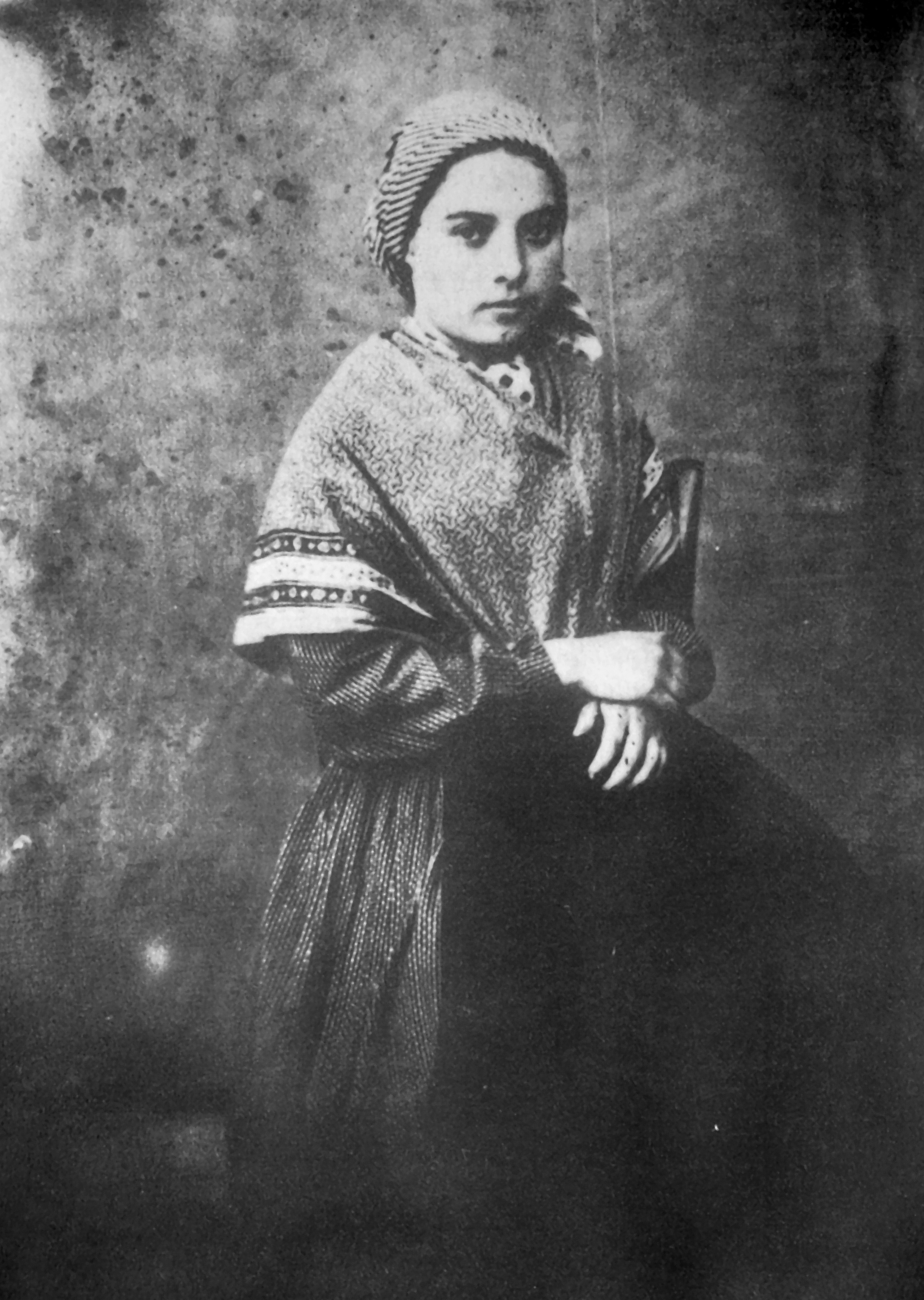
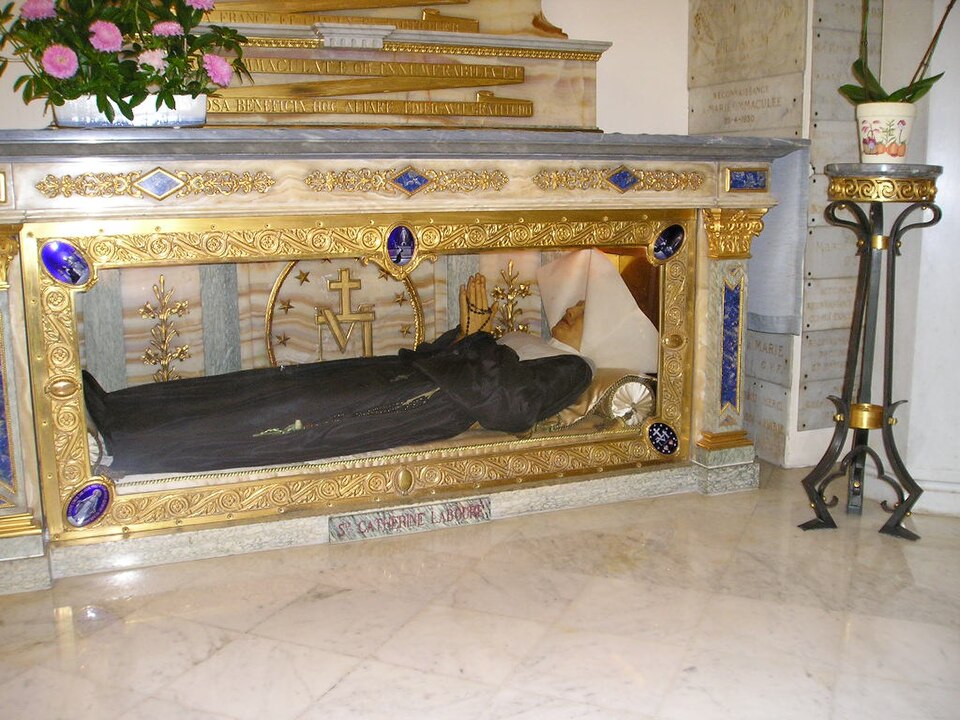
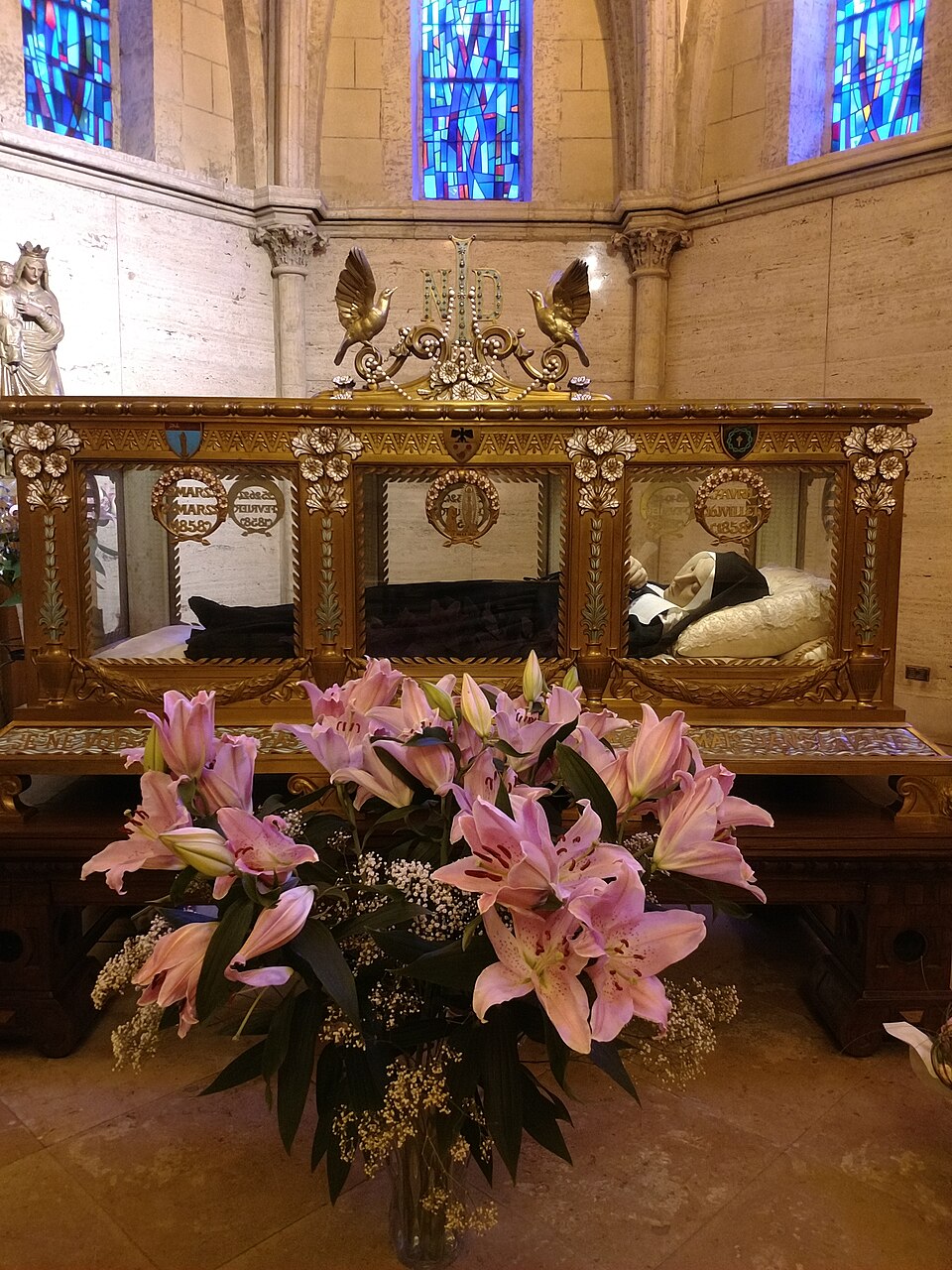
On 22 September 1909, physicians Charles David and Antoine Jourdan opened Bernadette's coffin in Nevers. After around thirty years, they found the body with its parts preserved. Further canonical examinations in 1919 and 1925 also documented internal tissues. The later wax coverings on the face and hands belong to the history of the public display; the first medical findings were recorded long before.
The examinations document preserved bodily structures decades after death: initially the whole body, and later muscle tissue and the liver as well. These findings predate the present display in the shrine.
22 September 1909: The First Opening After Thirty Years
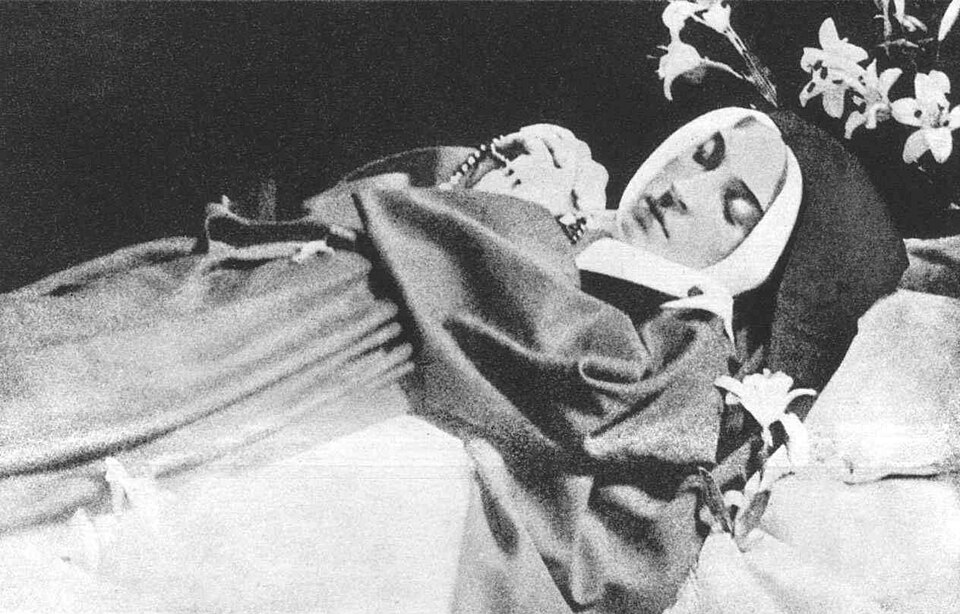
Physicians Charles David and Antoine Jourdan examined Bernadette's body in the presence of ecclesiastical and municipal representatives. Their records, reproduced by André Ravier, describe preserved hands, nails, and other body parts. The body was rigid and dried out; the clothing was damp and the rosary rusted. The physicians detected no odor of decomposition. There is thus a specific finding associated with a dated tomb opening.[2]
The Life of the Religious Sister of Nevers
Bernadette was born in Lourdes in 1844 and entered the Sisters of Charity in Nevers in 1866. After the Lourdes apparitions, she lived in the community, cared for the sick, and served as sacristan. Her own illness accompanied her until her death on 16 April 1879. She was 35 years old. In Nevers, the memory of the visionary is joined with the unobtrusive daily life of a religious sister.[1]
Burial Before the First Examination
Bernadette was buried without embalming in a sealed double coffin of lead and oak. Pieces of charcoal were also present when it was opened. The dampness of the habit and burial space belongs to the documented history preceding the preserved tissues' examination. The investigation concerned the condition after the period of burial, before later measures for public display were taken.[2]
1919 and 1925: Further Medical Findings
On 3 April 1919, Raoul Comte and Dr. Talon examined the body again. They now recorded mold, salt deposits, and localized skin loss. In 1925, Comte particularly described preserved muscular structures and the liver. Alongside desiccation and surface changes, internal structures thus remained recognizable. The successive records document both preservation and change.[2]
The Wax Coverings for the Shrine of 1925
For the display, the Paris firm Pierre Imans made thin wax coverings for the face and hands in 1925 using casts and photographs. They concealed the darkened surface and changes to the face. This work followed the examinations; it cannot have produced the tissues examined beforehand.[2]
The Person to Whom the Shrine Points
On 8 December 1933, Pius XI canonized Bernadette. Her shrine recalls the young woman of Lourdes and the sister who lived her faith in daily life at Nevers. Veneration combines gratitude for her testimony, requests for intercession, and Christian hope in the Resurrection.[1][3]
The Shrine of Lourdes explains relics as an enduring relationship with a real person. Bernadette's body recalls her faithfulness to Christ and her service to her neighbor. This relationship explains why the Church preserves the remains and makes them accessible to the faithful for veneration.[3]
Medical Records and Their Transmission
Relics were removed on 18 April 1925 by physicians Comte and Talon. Lourdes refers to the Latin records in Nevers and names portions of bone, muscle, and skin removed. The publicly available presentations thus lead to named investigators and a specific ecclesiastical procedure. This dossier is based on the published excerpts; the complete original records were not consulted in the archive.[3]
The Later Medical Assessment
In 2021, the Association Médicale Internationale de Lourdes referred to Comte's publication of 1928 and the pathographic studies of former Lourdes physician Roger Pilon. Pilon discusses the partial mummification and considers a hypothesis of natural origin. Alongside the exhumation findings, there is thus later medical consideration of their explanation.[4]
An explanation must account for the specific burial conditions and the individually described tissues. The general possibility of natural mummification does not yet reconstruct this case. Conversely, a surprising finding of preservation does not exclude natural causes merely by being extraordinary. The published excerpts from the records do not allow every biological condition to be fully determined retrospectively.[2][4]
Witnesses & Investigators
Charles David and Antoine Jourdan
Physicians at the first canonical examination in 1909
They described the body found at the first opening of the coffin and signed the findings.[2]
Raoul Comte and Dr. Talon
Physicians at the canonical examinations of 1919 and 1925
Comte described internal tissues, among other things; Lourdes names both physicians for the removal of relics.[2][3]
Roger Pilon
Later medical researcher
He examined Bernadette's medical history and discussed partial mummification.[4]
The unfolding story
- Death in Nevers
Bernadette dies at the age of 35.[1]
- First Canonical Examination
David and Jourdan examine the body.[2]
- Second Canonical Examination
Comte and Talon record findings.[2]
- Removal of Relics
Body parts are removed under ecclesiastical supervision.[3]
- Display in the Shrine
The body receives the form of presentation that remains characteristic today.[1]
- Canonization
Pius XI canonizes Bernadette.[3]
Ecclesiastical assessment
Bernadette's body is venerated in Nevers. The examinations of 1909, 1919, and 1925 are documented through named physicians and published excerpts from the records. Pius XI canonized Bernadette in 1933.
Objections & Answers
Do the Wax Coverings Explain the First Preservation Findings?
No. They were made for the display in 1925. The first examination in 1909 and the second in 1919 preceded them. The coverings explain the present appearance of the face and hands; the preservation of the tissues examined earlier is a separate question.[2]
Does Canonization Also Settle the Cause of Preservation?
Canonization concerns Bernadette's holiness. The cause of bodily preservation is assessed through the medical findings and their scientific analysis. The available sources contain no separate ecclesiastical decree excluding every natural explanation. Veneration and the medical question of causation each have their own specific subject.[1][4]
Do Later Changes Rule Out an Earlier Sign?
No. Even temporary extraordinary preservation can be appreciated as a sign. Its end does not negate the earlier observation. For Bernadette, the findings of 1909, later tissue changes, and the display of 1925 must therefore each be assessed according to their own documentation.[2]
Meaning for faith
Bernadette's first canonical examination documents unusual preservation after thirty years. Later examinations extend this finding to internal tissues. In Nevers, the body points to her hidden religious life, her faithfulness, and hope in the Resurrection.[1][2][3]
Examining Incorruption: Bodily Preservation and Its Causes
The state of preservation, burial conditions, and later interventions must be investigated together.
Methods of examination and ecclesiastical procedure →Sources & Evidence
Information on accessibility and scope helps you assess the evidence for yourself.
- [1] Sainte Bernadette — Son corps
Custodian of the body: biographical dates, canonical examinations, and ecclesiastical veneration.
Open source · sainte-bernadette-soubirous-nevers.com ↗ - [2] The Body of St. Bernadette of Lourdes
Accessible reproduction of the earlier medical records; original records not personally consulted.
Open source · ewtn.com ↗ - [3] What are the relics?
Official presentation of the removal of relics, transmission, and theological significance.
Open source · bernadette-usa.lourdes-france.com ↗ - [4] Editorial — N° 351
Medical institution: reference to Comte 1928, pp.33–46, and Pilon's pathographic work; not a new examination record.
Open source · amilourdes.com ↗