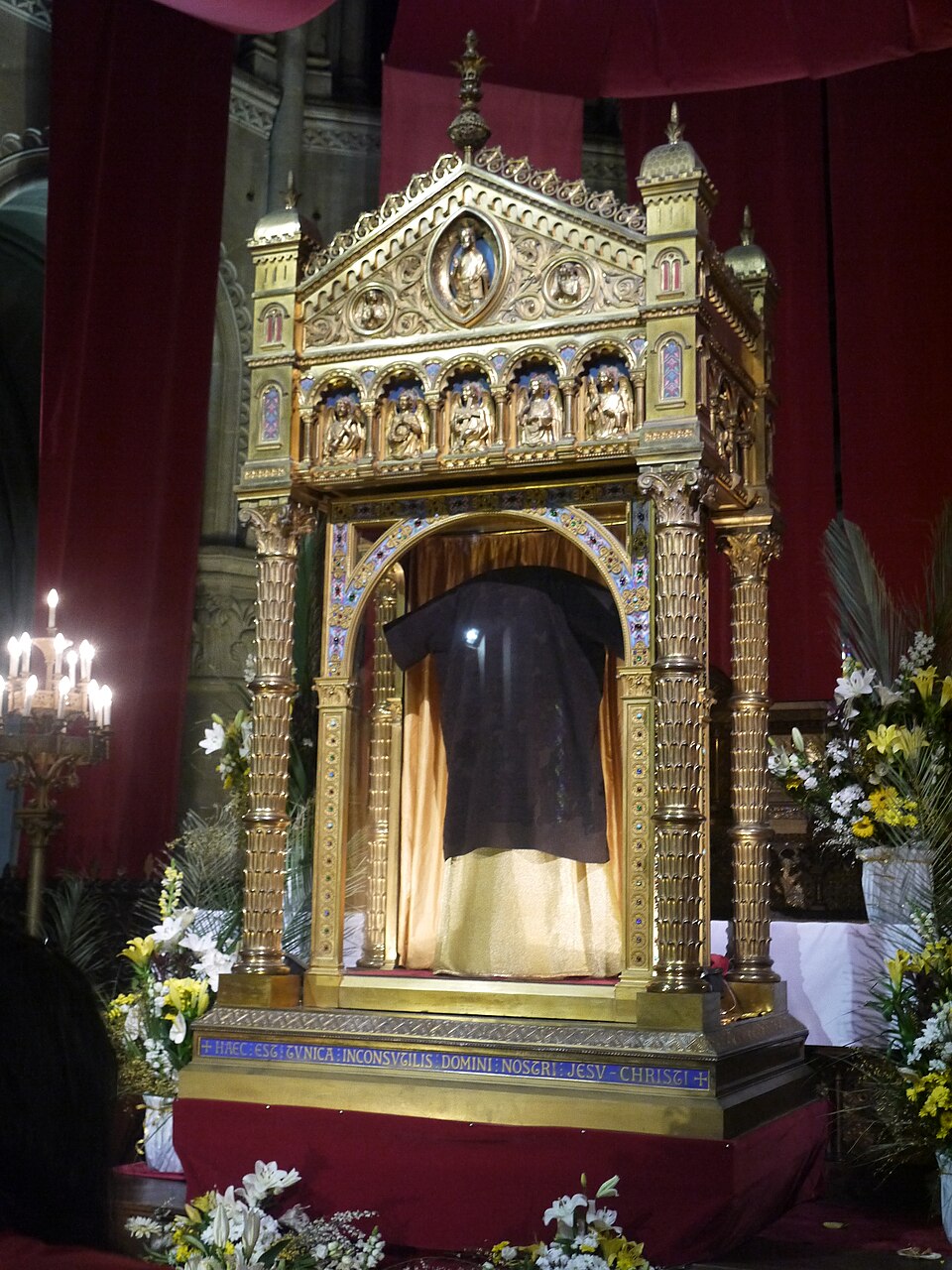
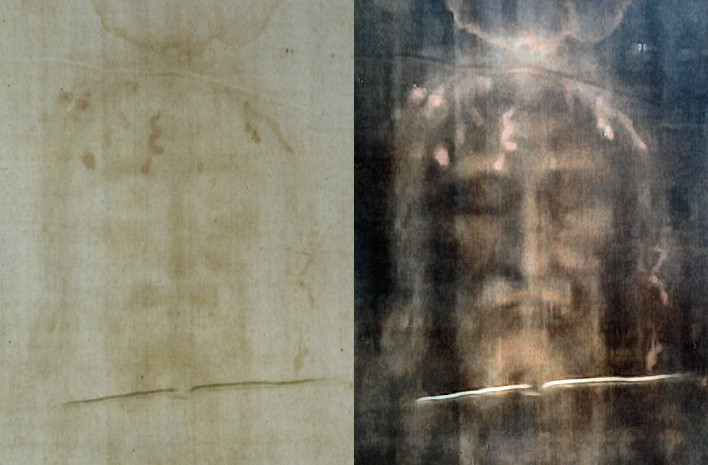
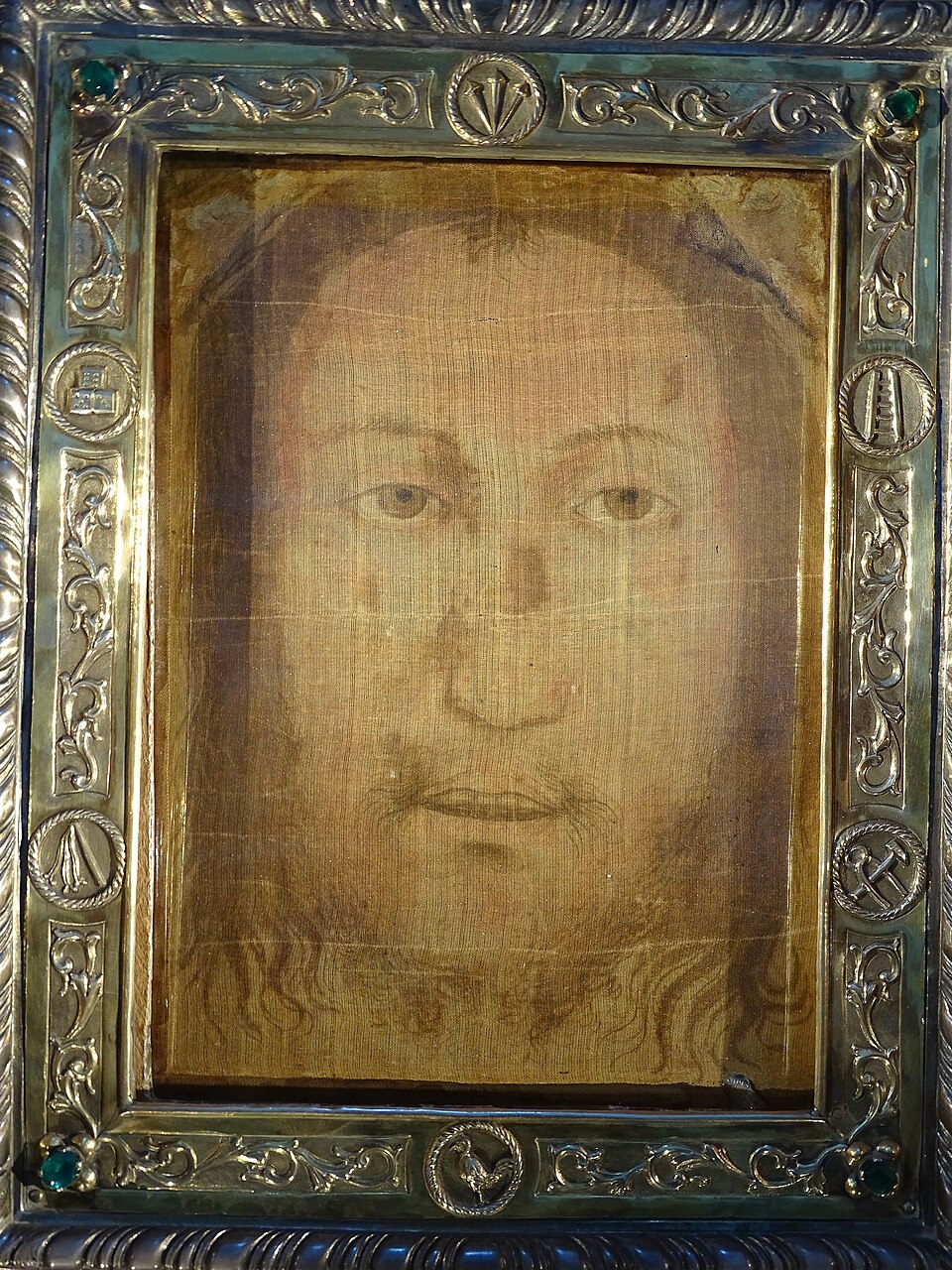
The Holy Robe is among the most important relics of the Passion in the German-speaking world. Within its traditional garment form, it preserves an ancient woolen textile core. Trier's tradition connects it with Saint Helena and with Christ's tunic, for which the soldiers cast lots beneath the cross. Its veneration has been documented since the Middle Ages; the public display of 1512 established a pilgrimage with a wide reach. The textile's history and Saint Cyprian's interpretation together lead to the image of the undivided garment and the unity of the Church.
Trier's tradition connects the old textile core with Christ's seamless garment. Protective fabrics and later additions form the garment shape visible today.
An Ancient Textile Core within a Protective Garment Form
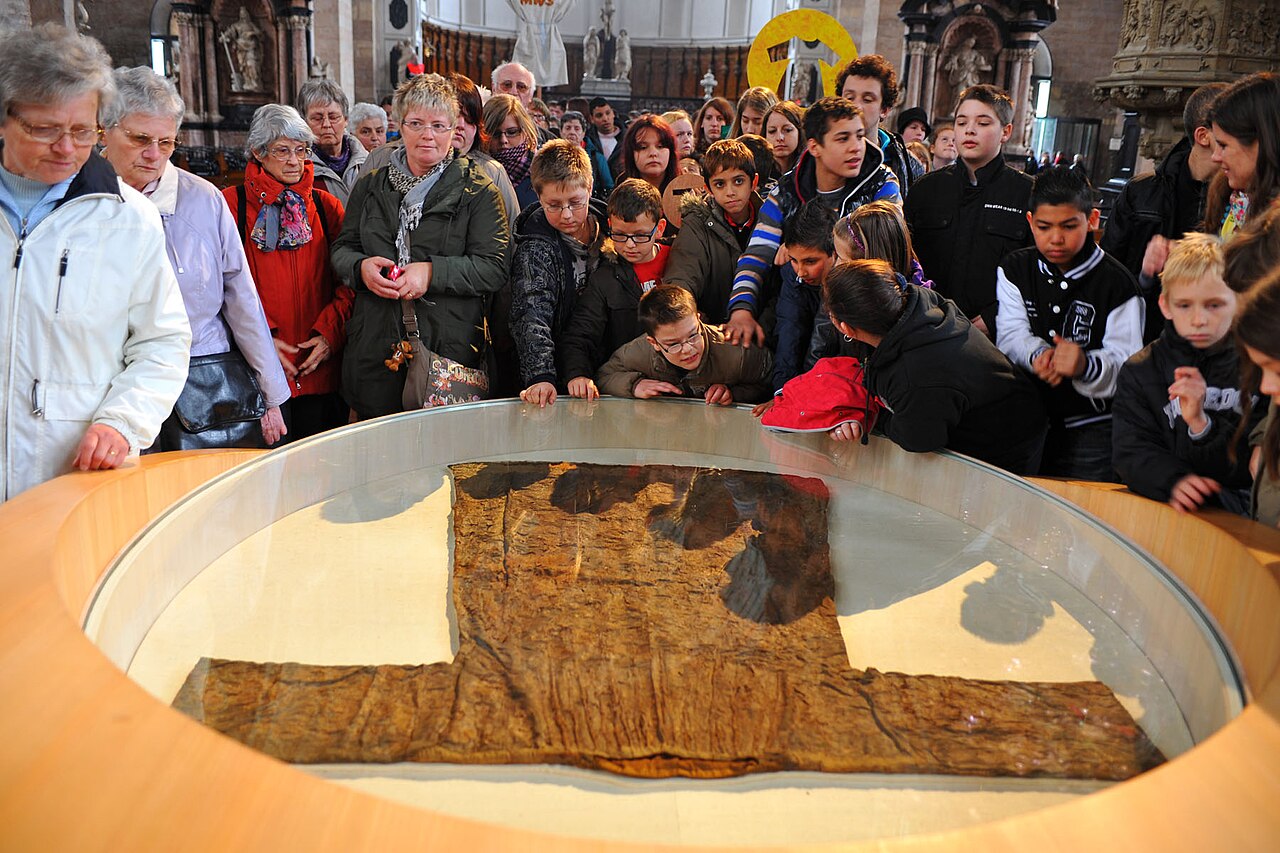
An old remnant of woolen cloth lies in the back of the Holy Robe. Other fabrics protect it and give the whole its visible tunic shape. According to the diocese's textile-archaeological summary, this supporting form originated in the 16th century and was repaired later. It preserves the older material much as a reliquary preserves its precious contents. The various layers thus also tell of the care with which generations have preserved the relic.[2]
The Undivided Garment beneath the Cross
John describes how the soldiers divide Jesus' clothing at the crucifixion. His tunic is woven continuously from the top. It remains undivided because the soldiers cast lots for it. The Evangelist connects this event with Holy Scripture and Christ's real humiliation. This is the biblical point of reference for the garment relic: it recalls the Lord from whom even his clothing is taken beneath the cross.[6]
Saint Helena in Trier's Tradition
Local tradition attributes the bringing of the tunic to Saint Helena. Constantine's mother visited the Holy Land in the 4th century; Trier preserved the memory of its close connection with the imperial family. Medieval written testimonies, including the Gesta Treverorum, connect Helena with the garment relic. In this tradition, the Robe's path leads from the holy sites of the Passion to the cathedral city on the Moselle.[3]
From the High Altar to Public Pilgrimage
According to Trier's documentation, the relic was transferred to the new high altar in the east choir on May 1, 1196. This event is a secure reference point in the object's history. During the Imperial Diet in 1512, Emperor Maximilian I requested that the altar be opened; Archbishop Richard von Greiffenklau of Trier complied. The public display became the starting point of a significant pilgrimage tradition.[1][4]
More frequent displays were followed by longer interruptions. Political and ecclesiastical circumstances shaped the rhythm of pilgrimages. The great pilgrim events of the 19th and 20th centuries, including 1844, made Trier widely known and also sparked public controversy. Records of custody, treatment, and display document how the relic was preserved through changing eras.[4]
Cyprian and the Sign of the Church's Unity
Saint Cyprian interpreted the undivided garment in his work on the unity of the Catholic Church. For him, the tunic woven from above became an image of a unity whose origin lies in God. What Christ gives his Church should not be torn apart by human division. This interpretation from the 3rd century reveals the spiritual meaning the garment has for Christians.[7]
Contemplation therefore connects fidelity to the faith with love and reconciliation. The garment recalls shared belonging to Christ and calls people to love his Church in truth. This patristic interpretation gives the Trier pilgrimage a depth extending far beyond contemplation of a historical textile.[7]
Pilgrimage with Christ in View
For the opening of the Holy Robe Pilgrimage in 2012, Benedict XVI addressed Bishop Stephan Ackermann of Trier. He interpreted the tunic in relation to Christ and the Church. For the pilgrim, the visible garment is connected with the plea for mercy, conversion, and unity. Reverent attention thus leads from the preserved fabric to the incarnate and crucified Lord.[5]
Witnesses & Investigators
Saint Helena
Figure in the tradition of the relic's arrival
Trier's tradition associates her with the garment relic's journey from the Holy Land.[3]
Maximilian I and Richard von Greiffenklau
Emperor and Archbishop of Trier in 1512
Their initiative and responsibility shape the opening of the high altar and the public display of 1512.[4]
Saint Cyprian
Church Father
Interprets the biblical tunic in the 3rd century as a sign of the Church's unity given by God.[7]
The unfolding story
- Helena Tradition
Local tradition connects Helena's journey to the Holy Land with the garment relic in Trier.[3]
- Transfer to the East Choir
A secure reference point in the history of Trier's relics.[1]
- First Public Display
The opening of the high altar around the time of the Imperial Diet leads to pilgrimage.[4]
- Great Pilgrimage
The display becomes a widely noted and controversial event.[4]
- Five Hundred Years of Public Veneration
A new pilgrimage is accompanied by a message from Benedict XVI.[5]
Ecclesiastical assessment
The cathedral preserves the Holy Robe as a traditional sign of closeness to Christ. Its veneration is connected with pilgrimage, prayer, and the plea for the unity of the Church.
Objections & Answers
What can be said about the age and origin of the core?
According to the official textile-archaeological summary, the woolen core is old but not securely dated. Whether it belonged directly to a garment of Jesus or was preserved as a contact relic remains open. The attribution to Helena survives in medieval tradition; no contemporary testimony of transfer from the 4th century has been preserved. The secure history of the object begins in 1196. John's Gospel attests to Christ's tunic but names neither Trier nor Argenteuil as a later place of preservation.[1][2][3][6]
How should the later layers of fabric be understood?
A younger supporting garment can preserve older textile material. The present overall form therefore does not correspond to an unchanged tunic surviving from Jesus' lifetime; it serves as a textile container. The diocese expressly explains this construction. The later covering proves neither that all the material is a forgery nor that the core originated with Jesus. In both questions, the particular fabric examined is decisive. The official summary must also be distinguished from a complete textile-archaeological laboratory report.[2]
What meaning does veneration have when the question of origin remains open?
The diocese obliges no one to accept material authenticity as an article of faith. The pilgrim venerates Christ, whom the traditional relic recalls. Benedict XVI's message and Cyprian's interpretation reveal this religious meaning; they are not material assessments. No divine or automatically effective power is attributed to the fabric itself. Veneration leads to prayer, conversion, and ecclesial unity.[2][5][7]
Meaning for faith
The Holy Robe connects carefully preserved textile history, centuries of pilgrimage, and an early ecclesiastical interpretation of the Gospel. In the undivided garment, the pilgrim encounters the memory of the Passion and the plea for unity. Veneration is directed to Christ, who gathers his Church and calls it to fidelity in truth and love.[2][5][7]
How Relics Are Examined
Tracing provenance, material, age, and ecclesiastical custody.
Methods of examination and ecclesiastical procedure →Sources & Evidence
Information on accessibility and scope helps you assess the evidence for yourself.
- [1] Der Heilige Rock – ÜbersichtOpen source · trierer-dom.de ↗
- [2] What Is the Holy Robe? – FAQ
Official information on the material form; not a complete original textile-archaeological report.
Open source · bistum-trier.de ↗ - [3] From the Holy Land to TrierOpen source · trierer-dom.de ↗
- [4] PilgrimagesOpen source · trierer-dom.de ↗
- [5] Message for the Opening of the Holy Robe PilgrimageOpen source · vatican.va ↗
- [6] Evangelium secundum IoannemOpen source · vatican.va ↗
- [7] De catholicae ecclesiae unitate / On the Unity of the Church
Historical patristic text; no use of modern editorial commentary.
Open source · newadvent.org ↗