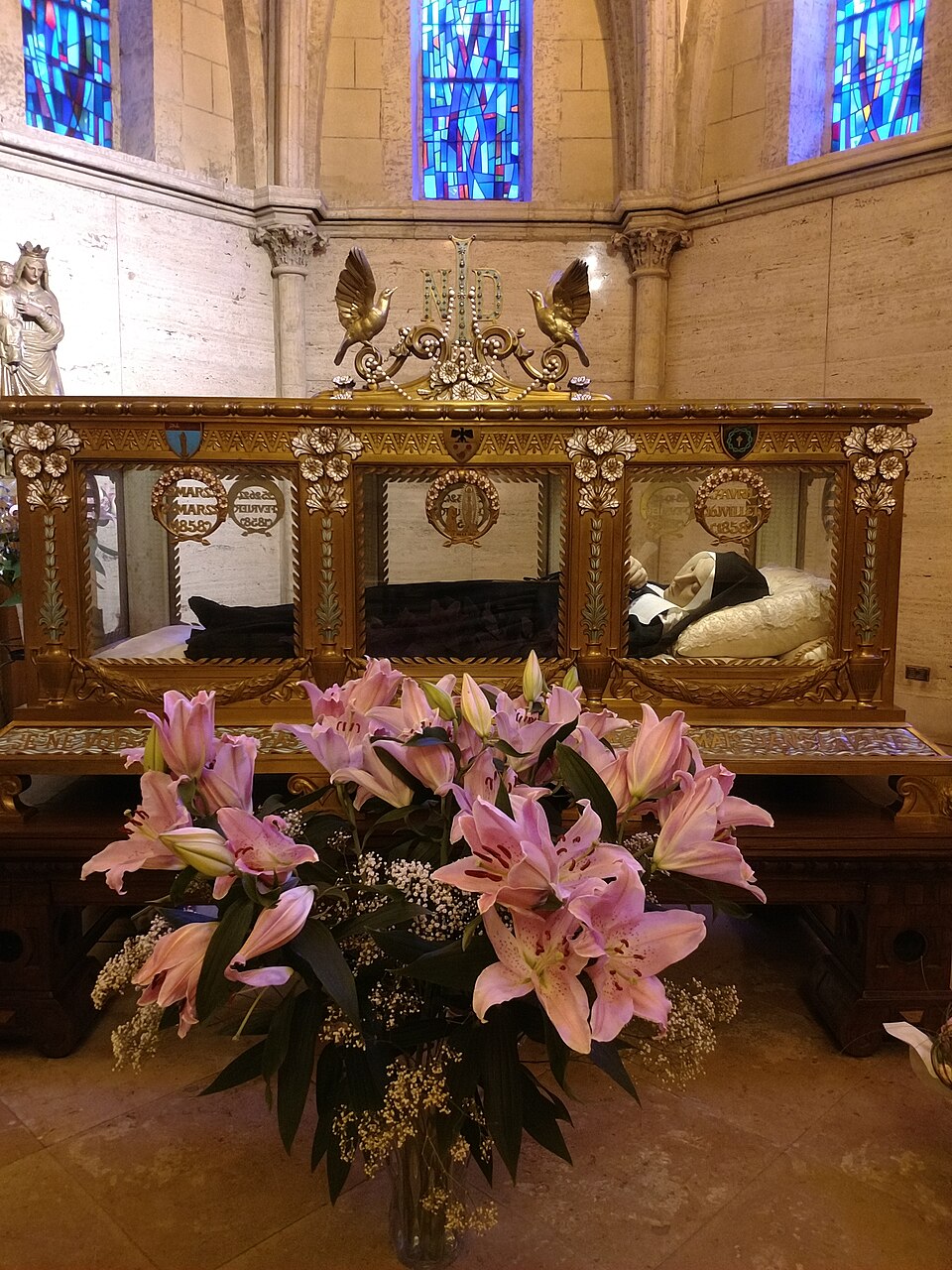
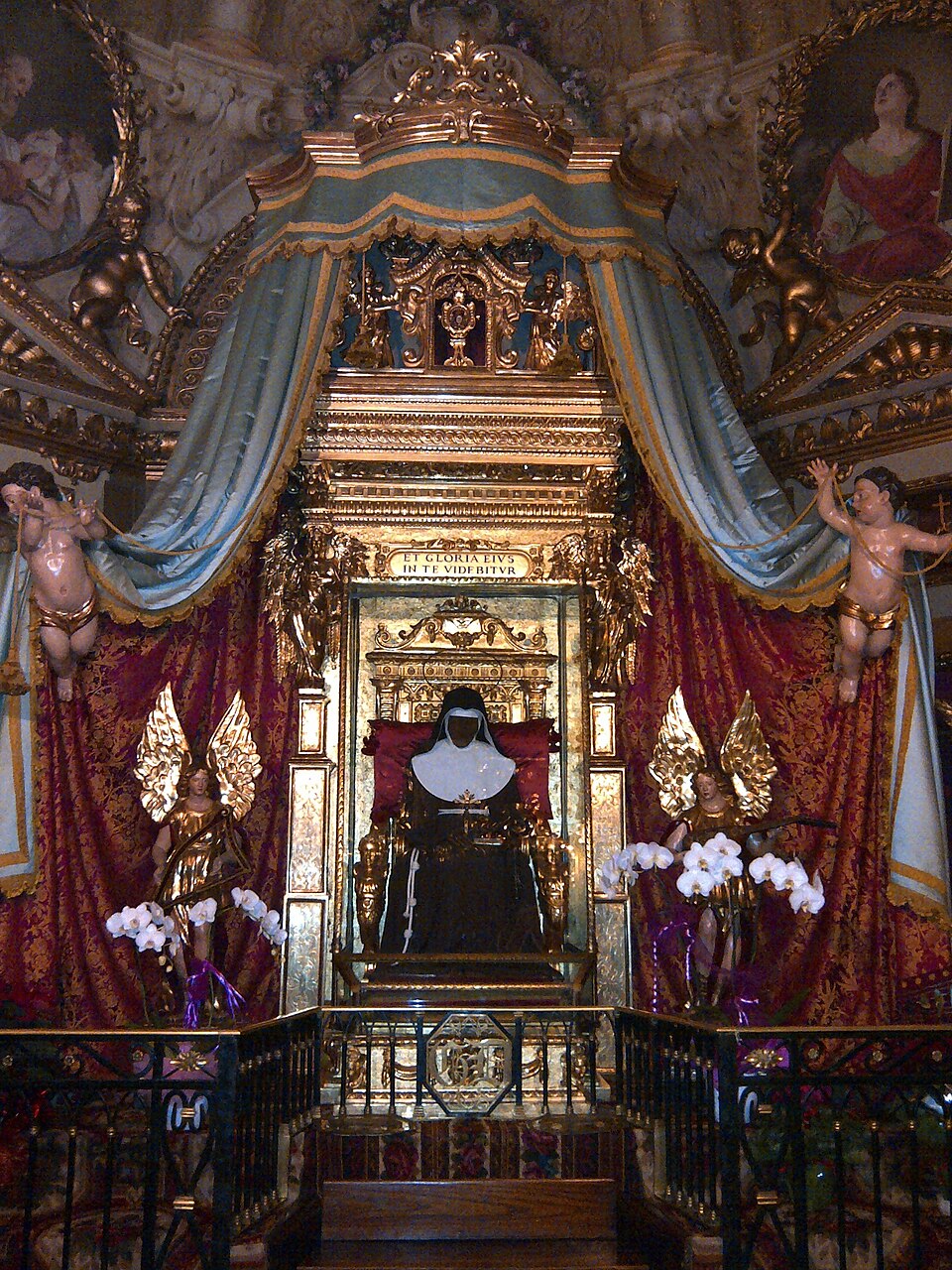
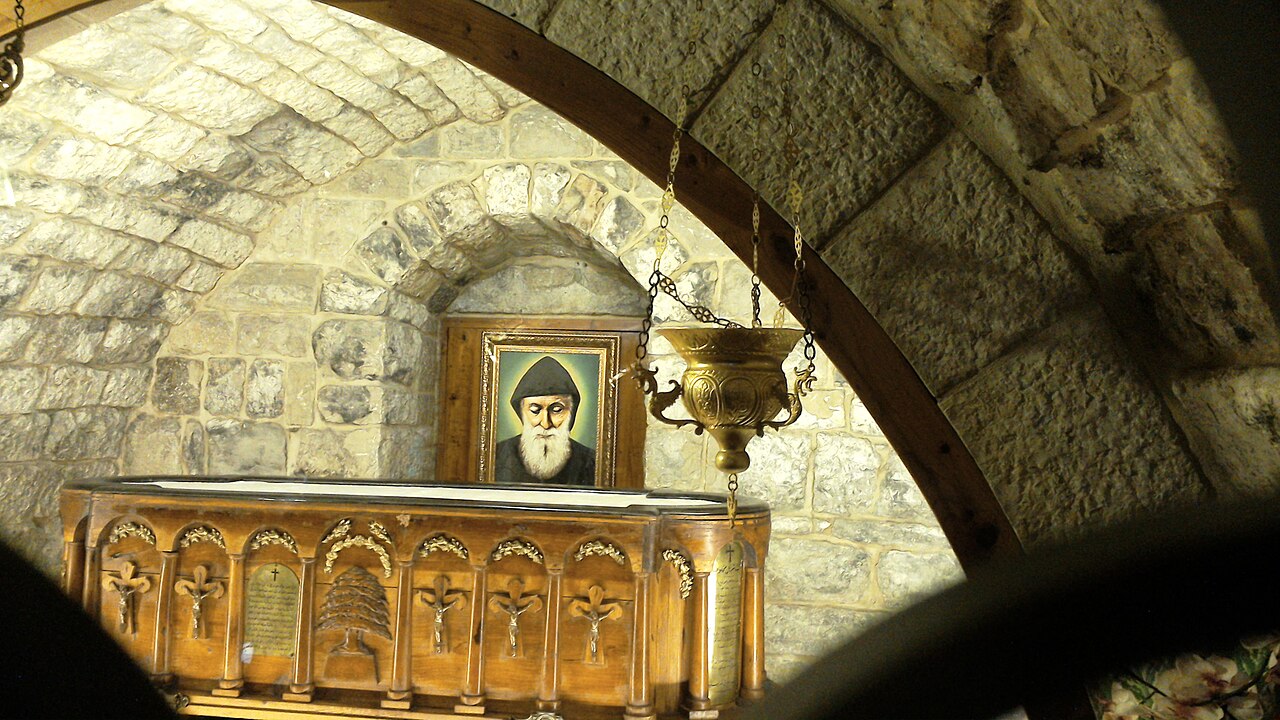
At the tomb opening on 21 March 1933, physicians, clergy, and sisters found Catherine Labouré's body preserved after around 56 years. Fr. Baeteman's account names the very damp crypt in Reuilly and also describes the preserved eyes and clothing. Cardinal Jean Verdier attended the ecclesiastical identification. The body was then transferred to the chapel on the Rue du Bac.
The account preserved by the Medal Association describes the body found fully preserved in 1933, including eyes and clothing, after decades of burial in a damp crypt.
21 March 1933: The Discovery in the Crypt at Reuilly
Fr. Baeteman's account, published by the Association de la Médaille Miraculeuse, forms the basis of the sequence that follows. Catherine was buried on 3 January 1877 beneath the chapel of her house in the Rue de Reuilly. The crypt was very damp. At the opening on 21 March 1933, the physicians, clergy, and sisters present found the body fully preserved. The account also emphasizes the eyes and preserved clothing.[1]
Ecclesiastical Identification and Translation
The tomb opening was connected with the approaching beatification. Ecclesiastical identification took place in the presence of the Archbishop of Paris, Cardinal Jean Verdier. Afterwards, the body was brought to the Chapel of the Apparitions on the Rue du Bac. The sister's veneration thus received its enduring home where the story of the Miraculous Medal had also begun.[1]
From Burgundy to Service of the Poor
Catherine was born in Burgundy in 1806. After family opposition, she entered the Daughters of Charity in 1830. That same year, she received the Marian apparitions from which the Miraculous Medal arose. From 1832, the medal was distributed with the Archbishop of Paris's approval. Catherine spent the following decades serving the people of the hospice at Reuilly. Prayer and daily help shaped her path until her death in 1876.[2]
The Relics on the Rue du Bac
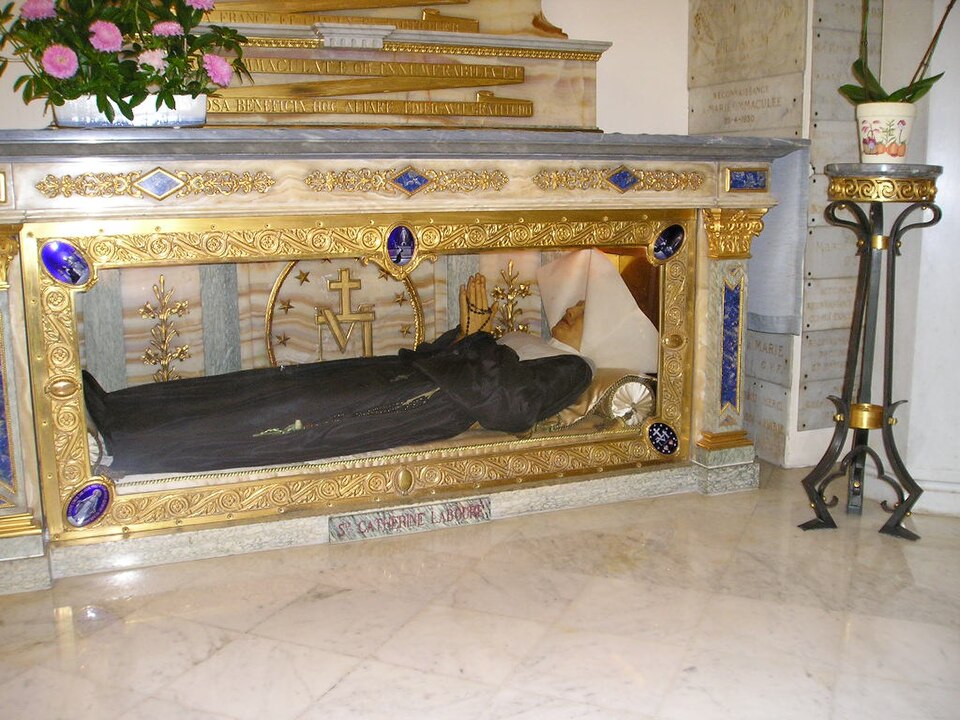
The chapel preserves Catherine's relics in the public devotional space. The shrine belongs to the memory of her life and the apparitions. The visible display and the condition established at the first tomb opening are different stages of the same history: the first observation preceded the subsequent translation and care of the body.[3][1]
Canonization on 27 July 1947
Pius XII canonized Catherine on 27 July 1947. Her veneration centers on a religious sister who remained in hidden service after extraordinary encounters. The Miraculous Medal and relics recall her relationship with Mary and Christ, as well as her humility and active charity.[1][2]
The Hands That Served the Poor
Catherine's body recalls a faith expressed in physical work: nursing the sick, carrying, helping, and remaining with those in need. The shrine makes this connection between prayer and active charity tangible. The unusual preservation thus stands within a life story whose fruit also became visible in unobtrusive daily life.[2]
Transmission and Open Questions for Investigation
The accessible publication is Baeteman's account in an ecclesiastical devotional publication. It names the date, place, groups present, and Cardinal Verdier, but does not contain the complete signed medical records. Nor do the sources used here provide an unbroken description of coffin material, air access, any treatments, and later conservation.[1][3]
For the question of causation, these details would need to be assessed together with the individually described body parts. Dampness is an important historical circumstance; it does not replace investigation of the entire burial environment. Likewise, present-day photographs alone cannot determine which surfaces remain natural and which have been cared for or prepared.[1][3]
Witnesses & Investigators
Physicians, Clergy, and Sisters at the Tomb Opening
Groups present named in the account
Baeteman describes their observation of the preserved body. The accessible version does not name the physicians individually.[1]
Cardinal Jean Verdier
Archbishop of Paris
Present at the ecclesiastical identification of the body.[1]
Fr. Baeteman
Author of the transmitted account
His presentation is preserved by the Medal Association; the accessible version does not establish his own eyewitness observation.[1]
The unfolding story
- Birth
Catherine's life begins in Burgundy.[2]
- Rue du Bac
Entry into religious life and the apparitions recounted in the ecclesiastical biography.[2]
- Reuilly
Long service in the hospice shapes her hidden daily life.[2]
- Tomb Opening and Translation
The preservation account belongs to the context of beatification.[1]
- Canonization
The Church confirms her public veneration as a saint.[1]
Ecclesiastical assessment
Catherine Labouré's relics are venerated in the chapel on the Rue du Bac. The Medal Association's account describes the state of preservation at the tomb opening in 1933. Pius XII canonized Catherine in 1947.
Objections & Answers
Can the Initial Findings Be Assessed from Today's Appearance in the Shrine?
The contemporary account is decisive for the discovery of 1933. The present display has a subsequent history of presentation and care. The chapel descriptions used here contain no complete conservation record; neither a particular wax mask nor an unchanged natural surface can be securely established from them.[1][3]
What Does the Absence of a Complete Medical File Mean?
It limits scientific assessment of the accessible material. The date, place, and transmitted preservation findings remain ascertainable; the composition and condition of all tissues cannot be retrospectively reconstructed from them. The next historical step would be to examine the original records of identification and translation.[1]
Would the Body Have to Remain Permanently Unchanged to Be a Temporary Sign?
No. An earlier unusual condition is assessed according to its own time and documentation. Later changes or conservation interventions do not explain it retrospectively. Whether the preservation of 1933 should be interpreted supernaturally remains distinguishable from how the body was subsequently displayed and cared for.[1][3]
Meaning for faith
The preservation account of 1933 leads to the first opening of the crypt at Reuilly and the translation to the Rue du Bac. Catherine's relics preserve the memory of the recipient of the Miraculous Medal and her decades of service to the poor.[1][2][3]
Examining Incorruption: Bodily Preservation and Its Causes
The state of preservation, burial conditions, and later interventions must be investigated together.
Methods of examination and ecclesiastical procedure →Sources & Evidence
Information on accessibility and scope helps you assess the evidence for yourself.
- [1] Merveilleuse préservation du corps de sainte Catherine Labouré
Official devotional publication containing an exhumation account; not a complete original medical record.
Open source · medaille-miraculeuse.fr ↗ - [2] Sainte Catherine Labouré
Diocesan biography and ecclesiastical assessment; not a tissue examination.
Open source · dioceseparis.fr ↗ - [3] La chapelle aujourd’hui
Official chapel description consulted through the search index; direct retrieval was impaired during checking. Not a complete conservation history.
Open source · dev.chapellenotredamedelamedaillemiraculeuse.com ↗