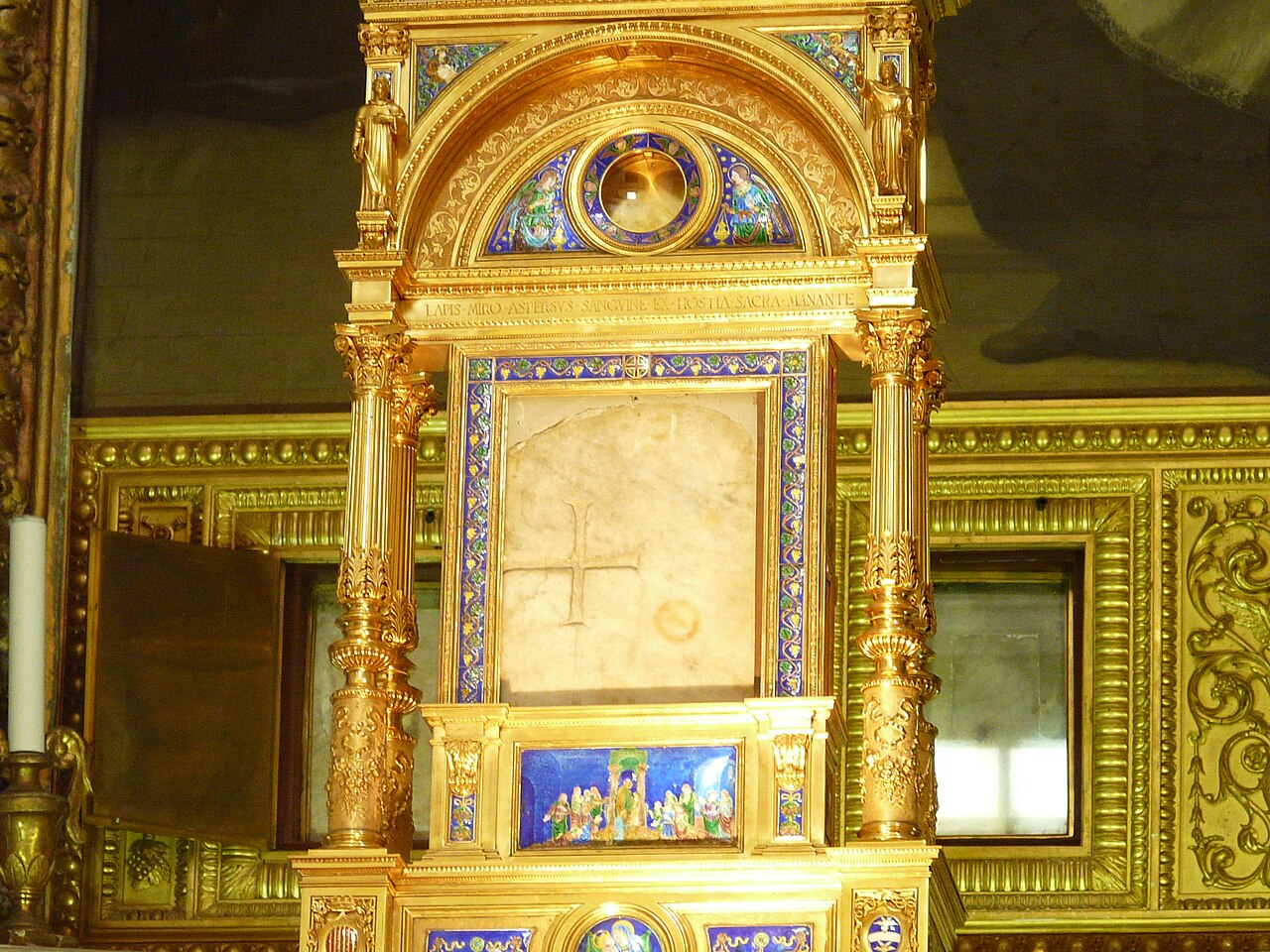
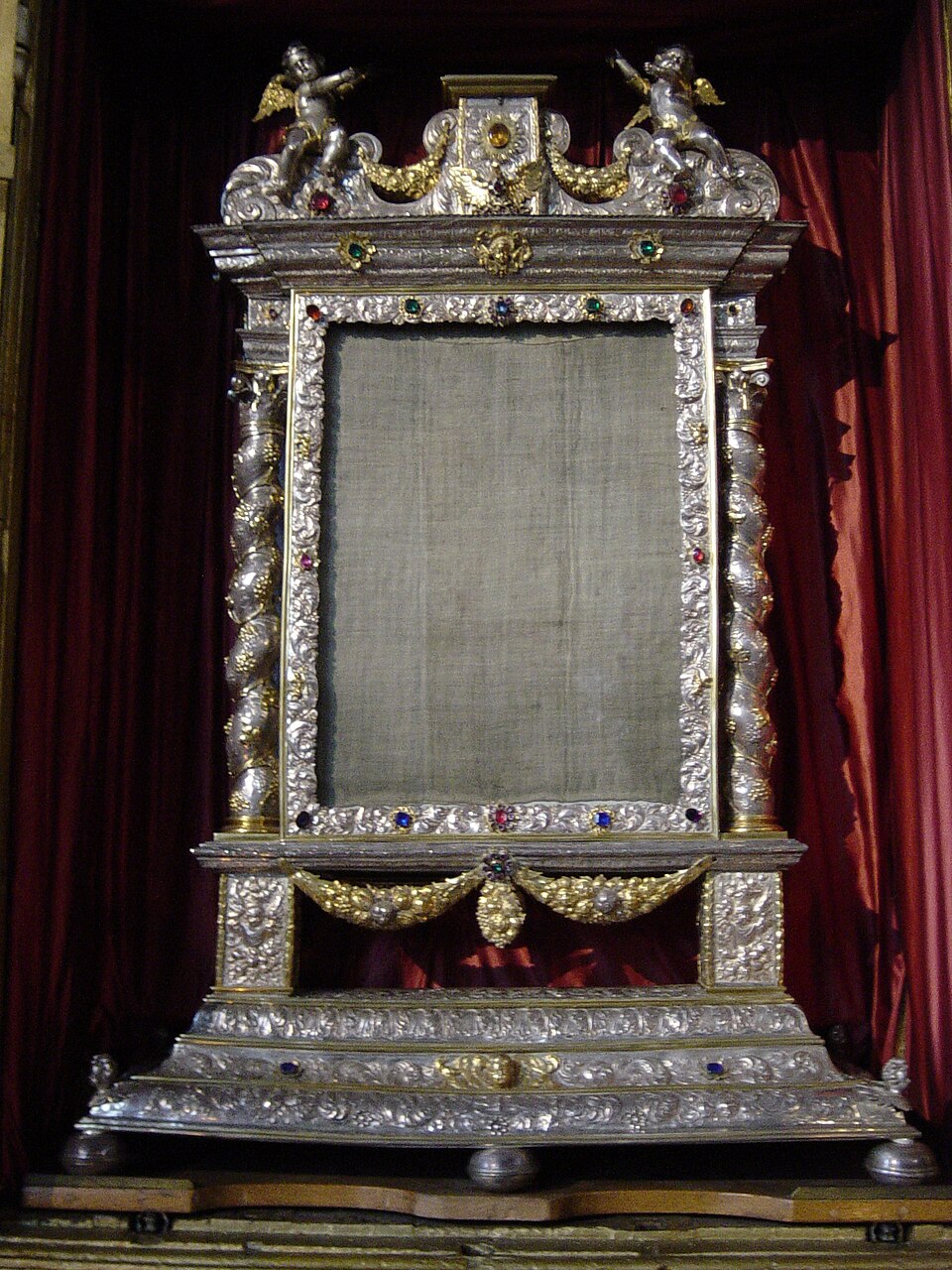
A priest in Ludbreg doubted during Holy Mass. According to the testimony of the shrine's tradition, the consecrated wine in the chalice visibly took on the form of blood. He initially concealed the extraordinary contents of the chalice and revealed the event only before his death. The ampulla containing the Holy Blood became the center of far-reaching veneration. Pope Julius II ordered an investigation; Leo X promoted the pilgrimage with his bull of 1513. Ludbreg remains a major shrine of the Precious Blood of Christ.
The shrine's tradition attests to the visible transformation of the consecrated wine into blood, the priest's confession, and preservation in an ampulla. The later pilgrimage is documented through papal and diocesan records.
The Answer in the Chalice
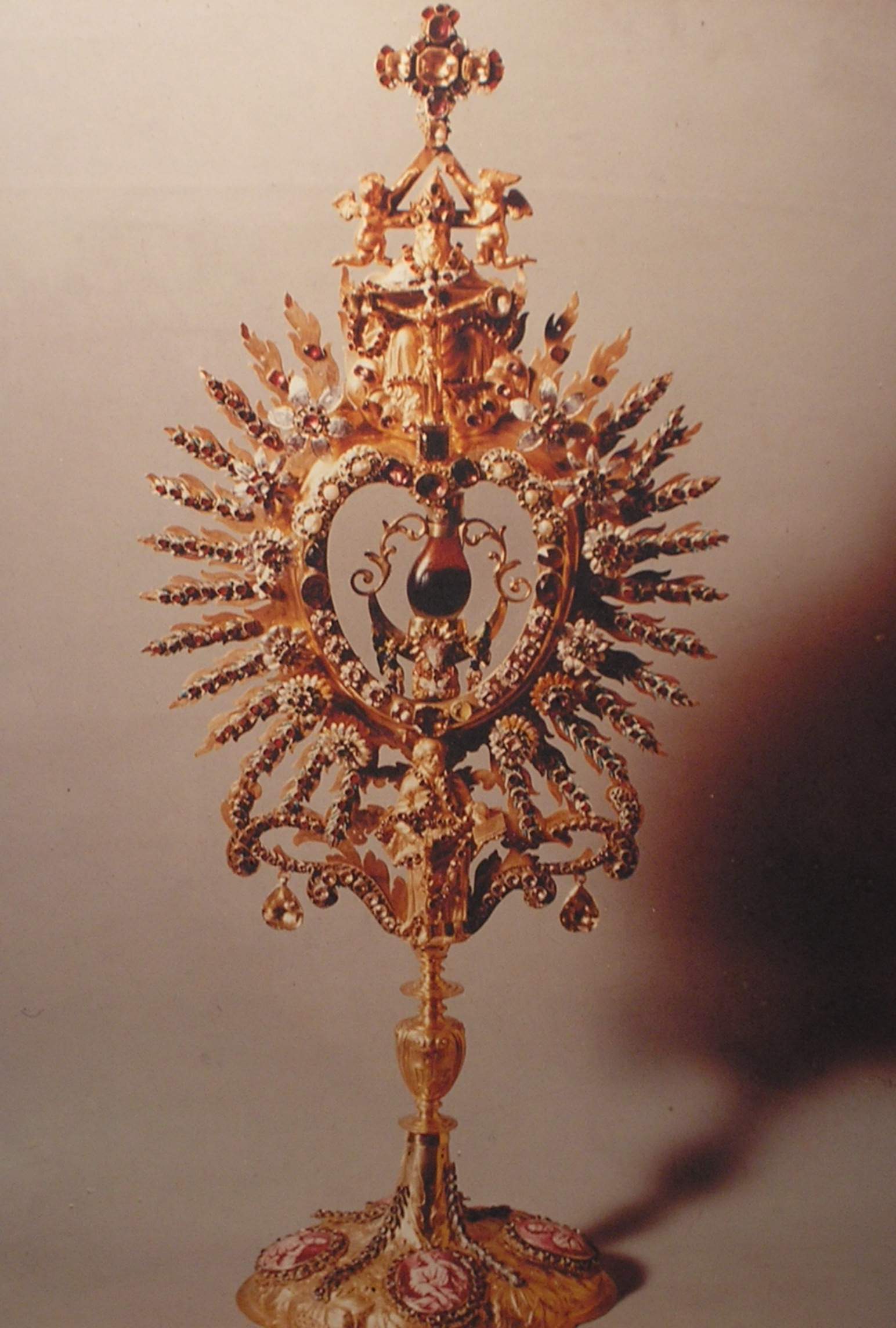
The diocese preserves the account of the doubting priest: during Holy Mass, the consecrated wine visibly took on the form of blood. The miracle answered his doubt about the Eucharist. The priest initially concealed the contents of the chalice and disclosed what had happened only before his death. The preserved ampulla became an object of public veneration; accounts of answered prayers spread its memory. The visible change is the particular miracle. It must be distinguished from the sacramental change at every Mass, in which the outward species remain.[2]
Julius II and Leo X's Bull
The shrine's account names Julius II as the pope who commissioned an investigation and Leo X as the issuer of the bull of 1513. The subjects investigated also included testimonies of later answers to prayer. The papal decision gave the pilgrimage explicit ecclesiastical regulation and support. The witnesses to these later answers each attest to their own event; they must not be confused with eyewitnesses to the origin, placed approximately a century earlier.[3]
The Early Documents and Dating
The research overview published by the diocese in 2010 names a document from 1410 concerning a parish dedicated to the Blood of Christ and an explicit mention of the miraculous relic from 1510. These early documents do not establish the exact original year, the priest's name, or the location within Ludbreg. The frequently cited year 1411 and the castle chapel are therefore details from later local tradition. The bull of 1513 has a different, clearly documented standing. This attribution of sources makes the development of the veneration traceable.[1]
The Vow of the Croatian Sabor
In 1739, during a threat of plague, the Croatian Sabor vowed to build a chapel. Fulfillment was long delayed. In the twentieth century, Archbishop Alojzije Stepinac also worked toward it; in 1994, Cardinal Franjo Kuharić finally blessed the new chapel. The long memory of the vow shows the shrine's national significance and the felt obligation to fulfill a promise made to God. It belongs to the history of the influence of devotion to the Holy Blood.[2]
Ecclesiastical Research Explores Its Own History
The diocese expressly commissioned historical research into the sources of devotion to the Holy Blood. This distinguishes early documents, later identifications of location, and the custody of the ampulla. The research report makes important documents accessible without treating every later detail as having the same weight. For the original event, a record drawn up directly during the occurrence is lacking. Present-day questions about the material also require their own scientific investigations. The concrete papal and ecclesiastical documentation of the pilgrimage remains clearly identifiable.[1]
Christ's Life Given for Us
Veneration of the Precious Blood is directed toward Christ and his real self-giving for humanity. The ampulla is venerated because of this relationship; its significance cannot be separated from the person of the Redeemer. The pilgrimage leads to Mass, reconciliation, and gratitude. The five hundredth anniversary of the papal bull in 2013 expressed this ecclesiastical bond anew. The pilgrim's journey is a response to the redemption the Lord gives his Church.[4]
Witnesses & Investigators
The unnamed priest
Celebrant in the shrine's tradition
Experienced the change in the chalice and confessed the event before his death; his name is not established by the early sources.[1]
Investigators appointed by the pope
Ecclesiastical examiners in the early sixteenth century
According to the shrine's account, they also heard witnesses to later answers to prayer.[3]
Alojzije Stepinac
Later ecclesiastical promoter
Worked for the fulfillment of the chapel vow of 1739.[2]
The unfolding story
- Traditional Origin
The usual dating to 1411 must be distinguished from the precise source evidence.[1]
- Explicit Mention of the Relic
The historical overview identifies a Roman document.[1]
- Leo X's Bull
Papal support for the pilgrimage is documented.[3]
- Vow of the Sabor
A chapel in honor of the Precious Blood is promised.[2]
- Chapel Blessed
The new pilgrimage chapel is brought into ecclesiastical use.[2]
- Anniversary of the Bull
The shrine celebrates five hundred years of papal support.[4]
Ecclesiastical assessment
Leo X's bull of 1513 regulates and promotes the veneration. Ecclesiastical research distinguishes this documented papal act from the less precisely documented chronology of the early event.
Objections & Answers
Does an uncertain year disprove the miracle?
It limits certainty about an exact chronology. It does not prove that the reported event did not happen. Ludbreg has a clearly documented history of veneration and papal support; the details of the early beginning are less densely documented. The traditional year 1411 and the castle chapel are therefore not stated with the same certainty as the bull of 1513. This distinction protects the actual historical evidence from being made dependent on a single uncertain date.[1][3]
What should be made of doubts about the ampulla's contents?
The diocesan research overview mentions an inspection in 1896 by Ivan Nepomuk Likević. On the basis of its appearance, he doubted the identity of the contents. The ampulla was not opened; no analytical identification took place. His impression is therefore an objection that deserves historical attention, but not chemical proof of forgery. A reliable material assessment would require documented provenance, suitable samples, and transparent methods. Examination of the present contents and the history of the papally supported pilgrimage are related but different questions.[1]
Meaning for faith
Ludbreg preserves the testimony of the blood in the chalice and a substantially documented history of papal veneration. The investigation under Julius II and Leo X's bull of 1513 provide concrete ecclesiastical points of reference for the pilgrimage. Its center remains Christ's Precious Blood and gratitude for his redemption.[1][2][3][4]
How Eucharistic Miracles Are Examined
Securing the account of events, identifying the material, and reading the Church's judgment precisely.
Methods of examination and ecclesiastical procedure →Sources & Evidence
Information on accessibility and scope helps you assess the evidence for yourself.
- [1] U Ludbregu o 600 godina štovanja Krvi Kristove s povijesnog gledišta
Detailed ecclesiastical summary of critical research; the underlying original documents were not all examined here as facsimiles.
Open source · biskupija-varazdinska.hr ↗ - [2] Ludbreško svetište
Distinguishes tradition from the absence of original documentation.
Open source · biskupija-varazdinska.hr ↗ - [3] Pape i ludbreško proštenište
Ecclesiastical account of the Roman decisions. Inconsistently reported day dates for the bull are not adopted.
Open source · svetiste-ludbreg.hr ↗ - [4] U Ludbregu na Svetu nedjelju proslavljena 500. obljetnica papinske bule
Documents the anniversary and present-day ecclesiastical integration.
Open source · biskupija-varazdinska.hr ↗