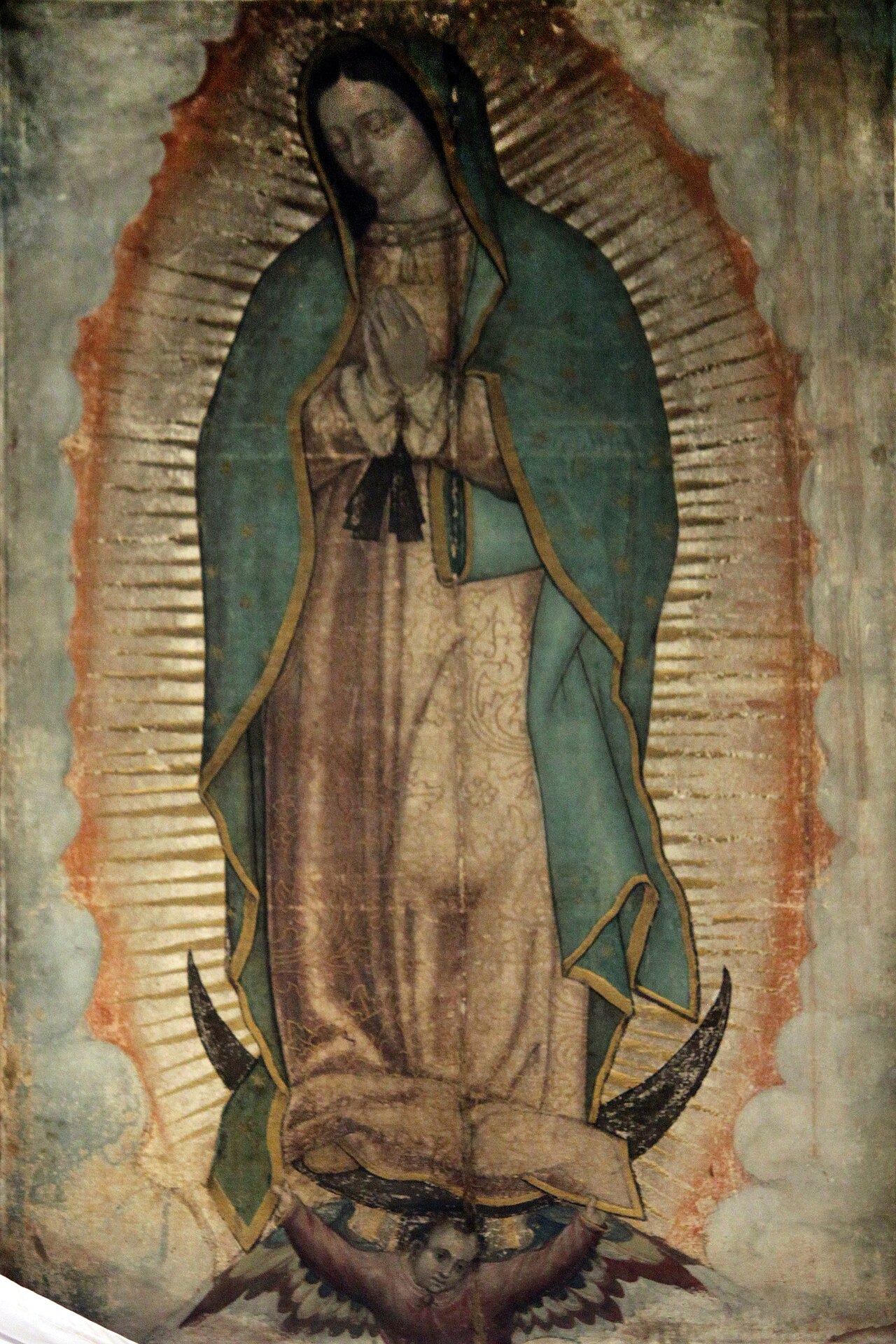
On September 25, 1983, the Mother of God encountered Gladys Quiroga de Motta in San Nicolás. The mother of two daughters confided in a priest and passed on the messages received: praying the Rosary, conversion, and fidelity to Christ. In an older statue of Our Lady of the Rosary, she recognized the figure from her encounters. From the events grew a major pilgrimage with its own shrine. After many years of ecclesiastical accompaniment and consultation with specialists and witnesses, Bishop Héctor Cardelli recognized the supernatural character of the Marian events in his diocese in 2016.
Gladys Quiroga de Motta testifies to apparitions of the Mother of God and messages calling for the Rosary, conversion, and the establishment of a shrine. Mary led her to turn toward Christ and into the Church's accompaniment.
The First Encounter on September 25, 1983
The recorded chronology begins with Gladys Quiroga de Motta, a married mother of two daughters. On September 25, 1983, the Mother of God encountered her in San Nicolás. Gladys recorded the messages and sought contact with a priest early on. In October, she also met the bishop at the time, Antonio Rossi. The city already knew devotion to Our Lady of the Rosary. The new encounter connected with this ecclesial life and led Gladys to a mission centered on prayer, conversion, and trust in Christ.[2][4]
Recognizing Our Lady of the Rosary
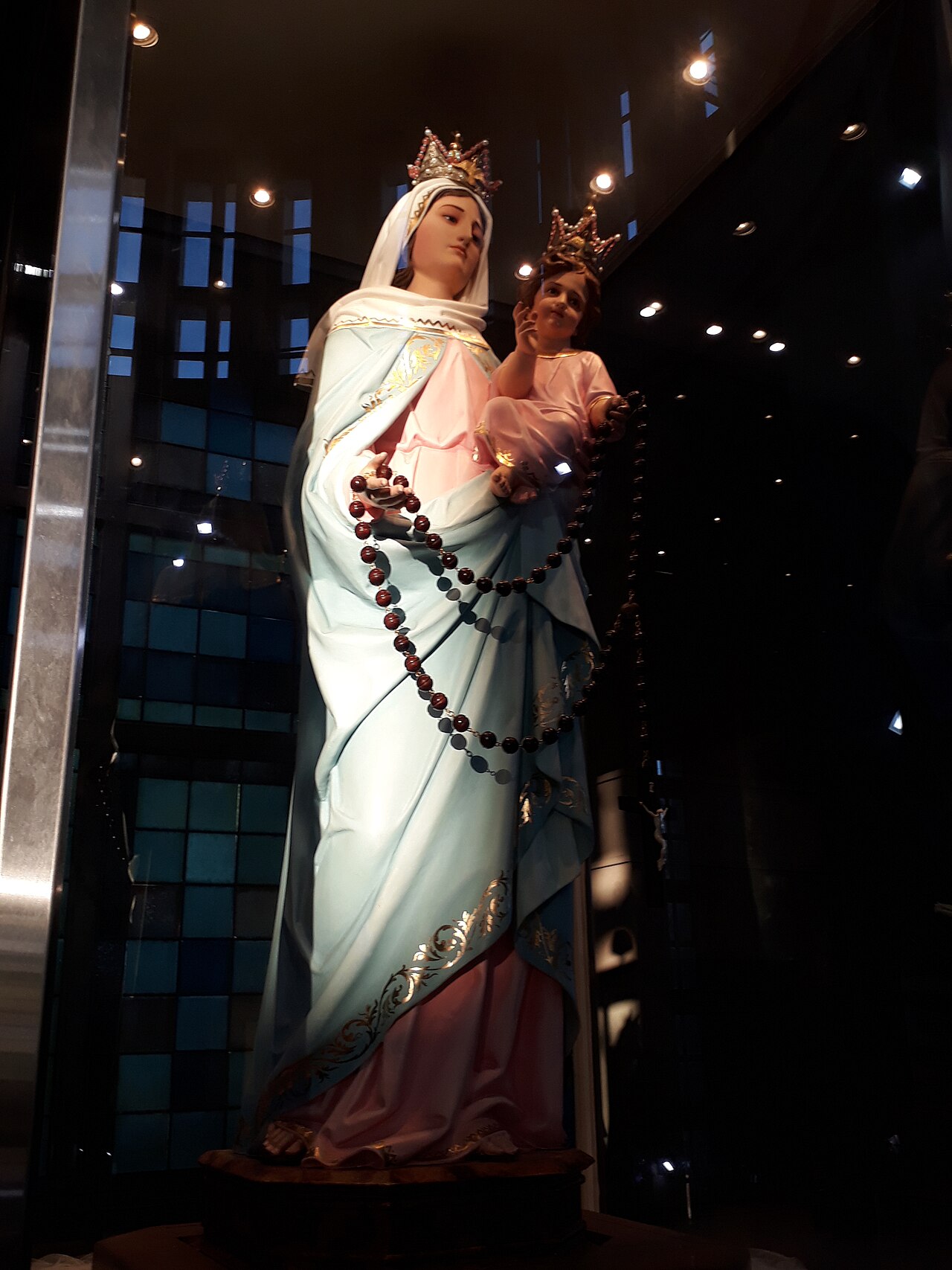
An older statue of Our Lady of the Rosary was in the cathedral. Because of its condition, it had been stored in the bell tower area. Gladys recognized in it the figure who had appeared to her. The chronology gives November 27, 1983, for this. The statue thus became the visible reference point of the emerging devotion. Its rediscovery connected the community's older Marian devotion with the mission of establishing a shrine. In 1989, it was transferred to the completed first part of the shrine.[2][3]
A Pilgrimage Grows from the Encounter
A pilgrimage site developed around Our Lady of the Rosary that continues to shape San Nicolás today. The city's public history traces its beginning to Gladys's testimony. Pilgrims come to pray; the shrine gives shared veneration a permanent place. This development belongs to the visible fruits of the events. The statue, ecclesiastical accompaniment, and construction of the shrine connect the personal starting point with the life of an entire community. The call to the Rosary and conversion remains the center of the pilgrimage.[4]
The Testimony Is Entrusted to the Church
Gladys confided in a priest early on; Carlos Pérez is among the companions and transmitters of her statements. Later, Bishop Domingo Salvador Castagna oversaw further ecclesiastical accompaniment, publications, and the shrine's development. A study commission was established in 1985. This path made the statements accessible to an orderly examination. The communications were recorded, submitted to the Church, and read in the context of pastoral care. Over years, a traceable connection thus developed between the personal testimony, investigation, and public life of the pilgrimage.[3]
Cardelli's Recognition of May 22, 2016
On May 22, 2016, Bishop Héctor Sabatino Cardelli declared the supernatural character of the Marian events in his diocese. He spoke of moral certainty and referred to consultation with specialists and witnesses and to the spiritual fruits. His Spanish text presents Christ as the culmination of revelation. The Marian events are thus expressly ordered toward him. The published declaration reproduces the reasoned judgment; it does not publish in full all the expert reports consulted. The specific episcopal decision is nevertheless unambiguously identified.[1]
Reading the Messages in Context
The recorded messages call for praying the Rosary, conversion, and fidelity to Christ. Their collection forms an extensive body of material with specific dates and editions. These details matter for careful reading: a statement should be read in its documented version and within the context of its spiritual mission. Cardelli's judgment concerns the events examined. It grants no automatic advance approval to arbitrary later online texts or interpretations. Careful attribution preserves the original call and clarifies which words actually belong to the material accompanied by the Church.[1][2]
Witnesses & Investigators
Gladys Herminia Quiroga de Motta
Witness to the apparitions
Married mother of two daughters and direct witness to the apparitions; entrusted her communications to ecclesiastical accompaniment early on.[2][4]
Carlos Pérez
Priest and spiritual companion
Associated with transmission of the accounts and later pastoral care at the shrine.[2]
Domingo Salvador Castagna
Episcopal guide
Responsible for earlier pastoral steps and publications.[3]
Héctor Sabatino Cardelli
Bishop responsible for the judgment
Published the favorable diocesan judgment in 2016.[1]
The unfolding story
- First Encounter
- Contact with the Church
She confides in a priest and meets the bishop at the time, Antonio Rossi.[2]
- Recognition of the Image
The older statue of Our Lady of the Rosary is connected with her account.[2]
- Study Commission
The historical overview records the appointment of a commission.[2]
- First Part of the Shrine
The statue is transferred to the completed part of the shrine.[2]
- Diocesan Judgment
Cardelli declares the Marian events supernatural in character.[1]
Ecclesiastical assessment
Bishop Héctor Sabatino Cardelli recognized the supernatural character of the Marian events in his diocese in 2016. The published text refers to consultation with specialists and witnesses. This does not claim a separate papal authentication of all present or future messages.
Objections & Answers
What Significance Does Gladys's Limited Schooling Have?
It shows that the testimony did not come from someone particularly distinguished socially or academically. A person's credibility does not depend on an educational qualification. Limited schooling, however, also does not by itself prove a supernatural origin for every sentence: religious knowledge can be acquired through prayer, family, and preaching. Cardelli's judgment refers to an overall assessment involving specialists and witnesses. What matters are the actual communications, their transmission, her conduct, and ecclesiastical accompaniment. These specific reasons support the favorable judgment.[1][3]
Does the Judgment Automatically Recognize All Later Messages?
An ecclesiastical judgment concerns the subject examined at a particular point in time. It grants no automatic approval to unknown future texts. Especially in a large collection, the date, edition, and authorization must be established. This serves fidelity to the actual testimony. Cardelli's favorable recognition remains clearly in place. The messages are read in connection with prayer, conversion, and Christ; arbitrary later online contributions cannot claim the same authority merely by using the name San Nicolás. Precise textual attribution protects the original mission.[1][2][3]
Meaning for faith
San Nicolás possesses an explicit diocesan judgment on the supernatural character of the Marian events. Gladys's testimony, many years of ecclesiastical accompaniment, and the growing pilgrimage belong to its history. The mission remains directed toward Christ: to pray, convert, and live in faith.[1][4]
How Apparitions and Private Revelations Are Examined
Testimony, messages, spiritual fruits, and ecclesiastical decisions.
Methods of examination and ecclesiastical procedure →Sources & Evidence
Information on accessibility and scope helps you assess the evidence for yourself.
- [1] Declaración del obispo referida a la sobrenaturalidad del acontecimiento mariano en San Nicolás
The Spanish text is used; the faulty English translation is not adopted as the basis.
Open source · miraclehunter.com ↗ - [2] María del Rosario de San Nicolás
Catholic account of the tradition, not an independently published investigative file.
Open source · corazones.org ↗ - [3] Aprueban las apariciones de la Virgen en San NicolásOpen source · radiomaria.org.ar ↗
- [4] Nuestra Señora del Rosario en San Nicolás: la historia que conmovió al paísOpen source · cdn-sp.radionacional.com.ar ↗