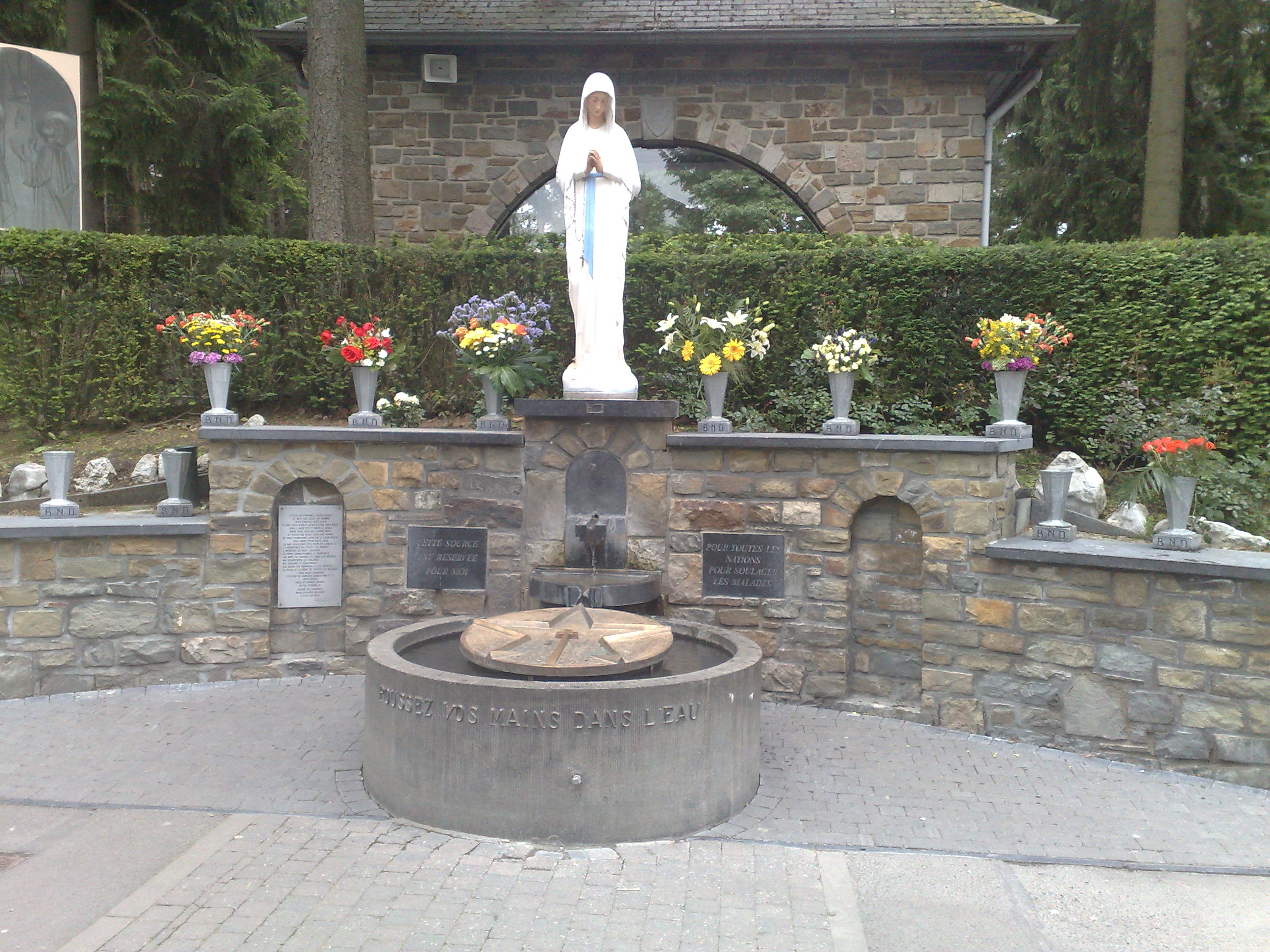
In 1859, Belgian immigrant Adele Brise encountered the Mother of God three times in Wisconsin. Mary gave her a concrete mission: to instruct the children of settler families in the faith and pray for the conversion of sinners. Adele accepted the task. From her service grew instruction, a chapel, and a lasting pilgrimage. The shrine survived the great Peshtigo Fire of 1871 and became a place of special gratitude for the people. Following specialist examination, Bishop David Ricken recognized the supernatural character of the essential apparition events of 1859 in 2010.
Adele Brise testifies to three encounters with the Mother of God. Mary charged her with instructing the children of settler families in the faith, leading them to sacramental life, and praying for the conversion of sinners.
The Encounter on the Way to Church
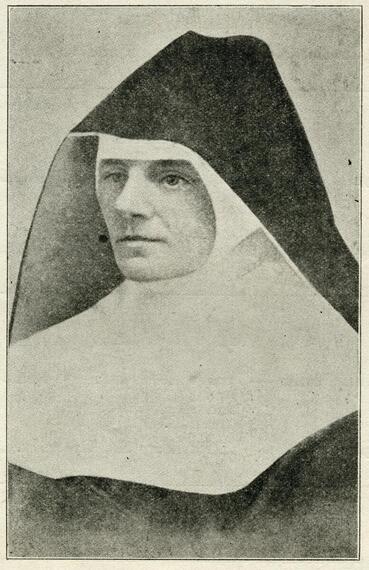
The shrine preserves Adele's testimony and the history of her service. She had come from Belgium to Wisconsin in 1855. In October 1859, on her way to church, she encountered a silent woman among the trees. Adele sought advice from a priest. At another encounter, she addressed the woman and received the Mother of God's mission: she was to teach the faith to the children of settler families. Three encounters formed part of these events. The response addressed a specific need of immigrants whose children required religious instruction.[1]
Instructing the Children in the Faith
The mission encompassed the foundations of the faith, the Sign of the Cross, and preparation for life with the sacraments. Adele was to pray and help the children come to know Christ. Despite her own limited education, she accepted the service. The personal encounter thus became an enduring task for others. Instruction, the chapel, and the emerging community formed part of her response. Adele passed on the Catholic faith she had received and devoted her energies to the children of the settlement area. This constant commitment shapes her biography.[4]
A Life for the Children
Adele remained faithful to the mission she had received. Remembrance of her centers on prayer, teaching, and accompanying the children. Her life shows how an extraordinary encounter led to a demanding service lasting many years. In a growing immigrant society, she taught young people the faith and helped build a shared ecclesial life. This is an essential fruit of Champion. The pilgrimage site preserves this connection between Marian prayer and Christian instruction and reminds pilgrims of their responsibility for the next generation.[4][5]
Protection during the Peshtigo Fire
On October 8, 1871, the great Peshtigo Fire devastated the region. People sought refuge at the shrine. Local history preserves their rescue and the chapel's survival as special help for which the community gave thanks. This protection shaped the pilgrimage site's subsequent history. It occurred twelve years after the apparitions and belongs to the distinct testimonies of local history. Anyone examining its course more closely must therefore also consult sources concerning the fire, the surroundings, and those seeking shelter at the time.[3]
Specialist Examination and Episcopal Recognition
Bishop David Ricken opened a formal investigation in 2009 and had the surviving documents and written testimonies examined by specialists in apparitions. He considered the message's content, Adele's conduct, and the spiritual fruits. On December 8, 2010, he declared with moral certainty that the essential events of 1859 were supernatural in character and worthy of belief. His decree also identifies the limited written tradition from the frontier and settlement area of the time. The judgment is thus explicitly reasoned and also describes the historical foundation on which it was reached.[2]
The Decree's Precise Subject
Recognition in 2010 applies to the essential apparition events of 1859. The decree also states that the healings and favors mentioned in it had not at that time been individually recognized as miracles. Examination of Adele's personal holiness is likewise a separate process. This substantive distinction preserves the strength of the favorable judgment: the bishop considered her testimony and expressly pronounced his decision. Further healing accounts and the biography can be studied more deeply on their respective source foundations without conflating the different ecclesiastical proceedings.[2][5]
Witnesses & Investigators
Adele Brise / Brice
Witness to the apparitions
Belgian immigrant; spellings of her name vary in older and present-day accounts.[1][4]
David L. Ricken
Bishop responsible for the judgment
Had the surviving sources examined by specialists and published the reasoned decree of recognition in 2010.[2]
John F. Doerffler
Diocesan chancellor
Signed the decree as an ecclesiastical official.[2]
The unfolding story
- Immigration
Adele comes from Belgium to Wisconsin.[1]
- Three Encounters
- Peshtigo Fire
The shrine's preservation shapes its subsequent history.[3]
- Adele's Death
She is buried at the shrine.[1]
- Formal Investigation
Ricken opens the proceedings.[1]
- Episcopal Decree
The essential apparition events are declared worthy of belief.[2]
Ecclesiastical assessment
Bishop David L. Ricken declared with moral certainty that the essential events of 1859 were supernatural in character and worthy of belief. Belief remains voluntary. The decree did not individually declare the healings and favors mentioned to be recognized miracles.
Objections & Answers
Can a Judgment after around 150 Years Still Be Well Founded?
Historical judgments are possible even at a distance in time when their sources and degree of certainty are clearly identified. Ricken had the surviving documents and testimonies examined by specialists and considered Adele's conduct, the content, and the spiritual fruits. His decree itself names the limited written tradition. The decision is expressed as moral certainty, meaning a responsible overall judgment on the reasons available. New questioning of eyewitnesses to 1859 was no longer possible. This distance limits certain forms of evidence but refutes neither the surviving testimony nor the reasoned ecclesiastical judgment.[1][2]
What Significance Does Protection during the Fire of 1871 Have?
The rescue of the people gathered at the shrine and the chapel's survival shape Champion's gratitude. The population recognized special help in them. This event, however, has its own historical questions: the course of the fire, wind, terrain, and contemporary statements. The apparition decree of 2010 does not replace their investigation. Conversely, a precise question about the fire's history does not deprive gratitude of its meaning. The apparitions are assessed chiefly through Adele's testimony and life; protection during the fire belongs to the shrine's history as a further event to be examined separately.[2][3]
Meaning for faith
Champion possesses an explicitly favorable judgment on the apparitions and a clear mission that shaped Adele's life. The Mother of God led her to prayer and service to the children. The specialist investigation and reasoned decree of 2010 give trust in her testimony an identified ecclesiastical foundation.[2][4]
How Apparitions and Private Revelations Are Examined
Testimony, messages, spiritual fruits, and ecclesiastical decisions.
Methods of examination and ecclesiastical procedure →Sources & Evidence
Information on accessibility and scope helps you assess the evidence for yourself.
- [1] Our StoryOpen source · championshrine.org ↗
- [2] Decree on the Authenticity of the Apparitions of 1859
Primary text reproduced on a documentation portal.
Open source · miraclehunter.com ↗ - [3] TimelineOpen source · championshrine.org ↗
- [4] About Adele BriceOpen source · adelebrice.org ↗
- [5] Adele Brice: Cause for Sainthood
Initiation of proceedings is not an already completed beatification or canonization.
Open source · adelebrice.org ↗