KATHOLON 3.91.0 DOSSIER islam-hadith-sunna-legal-authority.html START

Islam · Qurʾān, prophetia et persona Christi

Hadith, Sunna and Legal Authority

How reports about Muhammad became normative sources of worship, law and doctrine.

Early Quranic manuscripts, Arabia and the prior apostolic testimony concerning Christ
Source-led study within Islam: chronology, primary evidence and explicit objections.

START HERE · FOR THE SEARCHER

What does “Hadith, Sunna and Legal Authority” teach, and can it lead the person to the final truth about God and salvation?

This study begins with the tradition’s own texts and categories. It then tests the claim by reason and history before comparing its promised liberation or salvation with creation, revelation, Christ and eternal communion with God.

1 · UNDERSTAND

What is this teaching?

How reports about Muhammad became normative sources of worship, law and doctrine. Hadith collections are indispensable to historic Islam but were canonized through later scholarly methods whose probability is not equivalent to direct eyewitness certainty; their authority must be assessed separately from the Qurʾān and from modern selective use.

2 · WHY IT MATTERS

Why does it affect your final end?

The issue concerns the identity of God and Jesus, the meaning of the Cross and the authority of revelation. A later message that revises the apostolic witness must provide proportionate public grounds.

3 · WHERE THE EVIDENCE LEADS

Where does the evidence lead?

Catholic comparison should grant the intellectual seriousness of Muslim hadith science while refusing to equate later authenticated attribution with apostolic eyewitness evidence. A tradition’s internal grade is evidence about reception, not a supernatural guarantee. Catholic judgement begins with the shared propositions and inherited points of comparison: Muslims profess one creator, revere Abraham, pray, fast, give alms and honour Jesus and Mary in distinctive ways. These facts deserve exact description and do not erase decisive contradictions.

READ IN THIS ORDER

  1. Understand the teachingIdentify what it says about ultimate reality, the person, suffering, worship, death and salvation.
  2. Examine the evidenceDistinguish ancient source, later development, philosophical claim and devotional practice.
  3. Ask whether the promise is completeSee whether the path preserves personal identity, moral responsibility and reconciliation with the Creator.
OPTIONALSource notes and argument map · Hadith, Sunna and Legal Authority

This optional layer verifies the conclusion instead of merely repeating it. It identifies the controlling terms, dates the decisive witnesses, links the primary texts and states which premise the strongest contrary case must deny.

TERMS AND SCOPE

What authority should be attributed to hadith and the Sunna?

Hadith collections are indispensable to historic Islam but were canonized through later scholarly methods whose probability is not equivalent to direct eyewitness certainty; their authority must be assessed separately from the Qurʾān and from modern selective use.

Open What authority should be attributed to hadith and the Sunna?

CHRONOLOGICAL CONTROL

The historical sequence behind Hadith, Sunna and Legal Authority

Keep the layers distinct: the seventh-century Qurʾānic proclamation, early manuscripts and inscriptions, the later Sīra and Hadith collections, classical law and theology, and modern apologetic harmonisations. A later tradition cannot silently be inserted into the earliest documentary layer.

Open The historical sequence behind Hadith, Sunna and Legal Authority

PRIMARY EVIDENCE

Sources for checking the conclusion

The routes below lead to the primary texts, official sources and Katholon readers required to verify the claims made about Hadith, Sunna and Legal Authority. They also place the dossier within a chain of adjacent questions so that no conclusion is detached from the evidence that qualifies it.

STRONGEST CONTRARY CASE

The strongest objections answered

The replies concerning Hadith, Sunna and Legal Authority do not answer weaker substitutes. Each objection is stated in a form an informed adherent could recognize before the premise or distinction on which the answer turns is identified.

Open The strongest objections answered

Argument map

  1. Claim to test. What does “Hadith, Sunna and Legal Authority” teach, and can it lead the person to the final truth about God and salvation?
  2. Why it matters. The issue concerns the identity of God and Jesus, the meaning of the Cross and the authority of revelation. A later message that revises the apostolic witness must provide proportionate public grounds.
  3. Evidence-bearing step. The routes below lead to the primary texts, official sources and Katholon readers required to verify the claims made about Hadith, Sunna and Legal Authority. They also place the dossier within a chain of adjacent questions so that no conclusion is detached from the evidence that qualifies it.
  4. Conclusion reached. Catholic comparison should grant the intellectual seriousness of Muslim hadith science while refusing to equate later authenticated attribution with apostolic eyewitness evidence. A tradition’s internal grade is evidence about reception, not a supernatural guarantee.

Degree of certainty. Metaphysical contradictions can be judged by reason; dates, authorship and transmission receive historical degrees of certainty. The final religious judgement is cumulative: a later claim must not contradict truths already established by reason or a prior public revelation without proportionate evidence.

Start with the question

What authority should be attributed to hadith and the Sunna?

Hadith collections are indispensable to historic Islam but were canonized through later scholarly methods whose probability is not equivalent to direct eyewitness certainty; their authority must be assessed separately from the Qurʾān and from modern selective use.

Hadith collections are indispensable to historic Islam but were canonized through later scholarly methods whose probability is not equivalent to direct eyewitness certainty; their authority must be assessed separately from the Qurʾān and from modern selective use.

The argument turns first upon need for sunna and isnād criticism. The Qurʾān commands prayer and obedience but often lacks detailed procedure. Communities therefore rely on remembered practice and reports to specify ritual, law and prophetic example. Muslim scholars evaluate chains of transmitters for continuity and character. This is a sophisticated historical discipline, yet a formally sound chain does not guarantee that every attribution escaped earlier projection or common-source dependence.

The remaining evidence—matn and content, canonical collections, law and schools, and modern contest—must be read in chronological order. The Catholic conclusion follows only after the tradition’s own texts, schools and institutions have been identified, and after the philosophical premises at issue have been stated rather than assumed.

Historical setting

The historical sequence behind Hadith, Sunna and Legal Authority

The sources relevant to hadith, sunna and legal authority belong to different periods and institutions. The sequence below prevents a late synthesis from being read back into an earlier witness.

c. 570–632

Muhammad and the first community

Islamic tradition locates Muhammad’s preaching first at Mecca and then at Medina, where a religious community also acquired political and military form. The Qurʾānic corpus contains material associated with both settings and must be read with chronology in view.

7th century

Conquest, caliphate and Qurʾānic codification

Rapid expansion under the first caliphs created an empire from Arabia into Byzantine and Persian territories. Islamic reports associate a standard written consonantal text with the caliph ʿUthmān; surviving manuscripts illuminate early transmission without by themselves settling every traditional narrative.

8th–10th centuries

Hadith, law, theology and philosophy

Major Sunni hadith collections, legal schools and theological debates took written shape generations after the first conquests. Shiʿi traditions developed their own accounts of authority and succession. The result is not a religion reducible to the Qurʾān alone.

Medieval to modern

Civilizations, reform and modern nation-states

Islamic societies developed philosophy, mysticism, jurisprudence, art and institutions across many cultures. Colonialism, reform movements, modern states and migration altered the relation of religious law, political authority and individual conscience.

Plain language

Key words in ordinary language

Before arguing about hadith, sunna and legal authority, the principal terms must be used in the sense given by the relevant texts and schools. A definition identifies the claim; it does not settle it.

The definitions used in the question of Hadith, Sunna and Legal Authority are deliberately limited. They prevent equivocation while leaving the historical and metaphysical case to the sections that follow.

Where a term changes meaning between the schools or periods relevant to Hadith, Sunna and Legal Authority, the dossier names the difference instead of forcing every witness into one modern definition.

Qurʾān

The Arabic recitation regarded in Islam as God’s final speech communicated to Muhammad. Its status, chronology, textual transmission and interpretation differ fundamentally from Christian accounts of inspiration and Incarnation.

Sunna and hadith

The normative example attributed to Muhammad and reports transmitting his words and acts. Hadith criticism examines chains and contents, but canonical authority varies across Sunni and Shiʿi communities.

Tawḥīd

The affirmation of divine unity. Catholic theology agrees that God is one, while rejecting the premise that Trinitarian monotheism introduces three gods or composition in the divine essence.

Sharīʿa

The divinely ordered way as interpreted through Qurʾān, Sunna, jurisprudential reasoning and legal schools. It includes worship and ethics as well as legal and social norms.

Public evidence

What the evidence shows

Each movement in the study of hadith, sunna and legal authority joins a textual witness to its historical setting and doctrinal consequence. None is treated as an isolated quotation capable of carrying the entire argument.

Evidence 01

Need for Sunna

What authority should be attributed to hadith and the Sunna?

The Qurʾān commands prayer and obedience but often lacks detailed procedure. Communities therefore rely on remembered practice and reports to specify ritual, law and prophetic example. This evidence fixes the point of departure and prevents a later summary from being mistaken for the earliest witness.

Evidence 02

Isnād criticism

What authority should be attributed to hadith and the Sunna?

Muslim scholars evaluate chains of transmitters for continuity and character. This is a sophisticated historical discipline, yet a formally sound chain does not guarantee that every attribution escaped earlier projection or common-source dependence. Its significance becomes clear only when wording, ritual setting and institutional reception are considered together.

Evidence 03

Matn and content

What authority should be attributed to hadith and the Sunna?

Content criticism considers contradiction, language and doctrine, though methods and weight vary. Political, legal and sectarian disputes could create incentives for attribution. The point does not by itself decide the whole controversy, but it narrows the possible explanations and excludes several popular caricatures.

Evidence 04

Canonical collections

What authority should be attributed to hadith and the Sunna?

Sunni communities privilege collections such as Bukhārī and Muslim; Shiʿi communities use different corpora and evaluate transmitters through different authority structures. “The hadith says” is therefore insufficient without specification. Here chronology matters: a later school may develop an earlier insight, yet it may not silently be projected back into sources that use different categories.

Evidence 05

Law and schools

What authority should be attributed to hadith and the Sunna?

Hanafi, Maliki, Shafiʿi and Hanbali jurisprudence weigh text, practice, analogy and consensus differently. Classical law is a juristic tradition, not a single code mechanically copied from one book. The comparison with Catholic doctrine must therefore address the proposition actually asserted, not a modernized version chosen because it is easier to reconcile.

Evidence 06

Modern contest

What authority should be attributed to hadith and the Sunna?

Qurʾān-only movements reject much hadith, reformers reinterpret it and Islamists invoke selected reports. Historical Islam cannot be reduced either to modern minimalism or to every medieval ruling as one uncontested command. Taken with the preceding evidence, this final layer shows where historical description ends and metaphysical or theological judgement must begin.

The Catholic answer

What the Catholic faith affirms—and why

Catholic comparison should grant the intellectual seriousness of Muslim hadith science while refusing to equate later authenticated attribution with apostolic eyewitness evidence. A tradition’s internal grade is evidence about reception, not a supernatural guarantee.

Catholic judgement begins with the shared propositions and inherited points of comparison: Muslims profess one creator, revere Abraham, pray, fast, give alms and honour Jesus and Mary in distinctive ways. These facts deserve exact description and do not erase decisive contradictions.

The Qurʾānic account of Jesus denies or obscures truths already publicly attested in earlier apostolic sources: divine sonship, crucifixion, redemptive death and resurrection. A later text cannot overturn earlier evidence merely by claiming correction; it must supply historical grounds.

The Trinity is one divine essence in three distinct persons, not a triad of gods and not a biological generation. Polemics that answer a tritheistic or corporeal doctrine do not yet answer Nicene Christianity.

The judgement of Islam concerns doctrines, laws and historical claims; it does not license hatred or injustice toward Muslim persons. No outward force can produce the supernatural act of faith. Yet error possesses no moral right as error, and civil toleration of false worship, when grave reasons of the common good require it, is a prudential permission rather than recognition of equal religious rights. The Church must therefore proclaim Jesus Christ openly and refute doctrines that deny His divinity, Cross, Resurrection and Church.

The appropriate response to hadith, sunna and legal authority is neither contempt nor vague admiration. It is accurate quotation, patient distinction, positive proof of the Catholic position and an invitation to the fullness of truth and sacramental life in Christ.

Why the conclusion follows

Why the conclusion follows

The evidence concerning Hadith, Sunna and Legal Authority is now rendered as explicit inferences. Formalization does not replace the sources; it shows exactly where agreement, denial or a scholastic distinction is required.

1

Argument from coherent truth

Major. If a determinate claim concerning hadith, sunna and legal authority contradicts a truth established by reason or by reliable public evidence, both claims cannot be true in the same respect.

Minor. Normative Islam depends upon reports beyond the Qurʾān.

Therefore. A Qurʾān-alone description cannot account for historic ritual and law.

Limit of the inference. The inference concerns the proposition examined in this study, not every practice, adherent or moral insight associated with hadith, sunna and legal authority.

2

Argument from historical priority

Major. When an interpretation of hadith, sunna and legal authority contradicts earlier and multiply attested sources, the later corrective claim bears a proportionately greater evidential burden.

Minor. Major written collections postdate Muhammad by generations.

Therefore. Their authentication methods cannot eliminate every historical uncertainty.

Limit of the inference. Chronological priority alone does not establish the truth of hadith, sunna and legal authority; it prevents a later assertion from serving as its own proof against an earlier witness.

3

Argument from adequate salvation

Major. An account of hadith, sunna and legal authority can function as a sufficient path of salvation only if it diagnoses the real human predicament and preserves every genuine good of the person while healing the evil that disorders him.

Minor. Some hadith-grounded norms conflict with natural justice, the limits of temporal authority and Christian anthropology.

Therefore. Internal authenticity does not settle moral truth.

Limit of the inference. This comparison concerns the objective adequacy of the claims surrounding hadith, sunna and legal authority; it is not a judgement about the subjective guilt or final destiny of an individual adherent.

Questions answered

The strongest objections answered

The replies concerning Hadith, Sunna and Legal Authority do not answer weaker substitutes. Each objection is stated in a form an informed adherent could recognize before the premise or distinction on which the answer turns is identified.

1

Isnād science guarantees authenticity better than Gospel transmission

Every narrator is named and graded.

Open reply

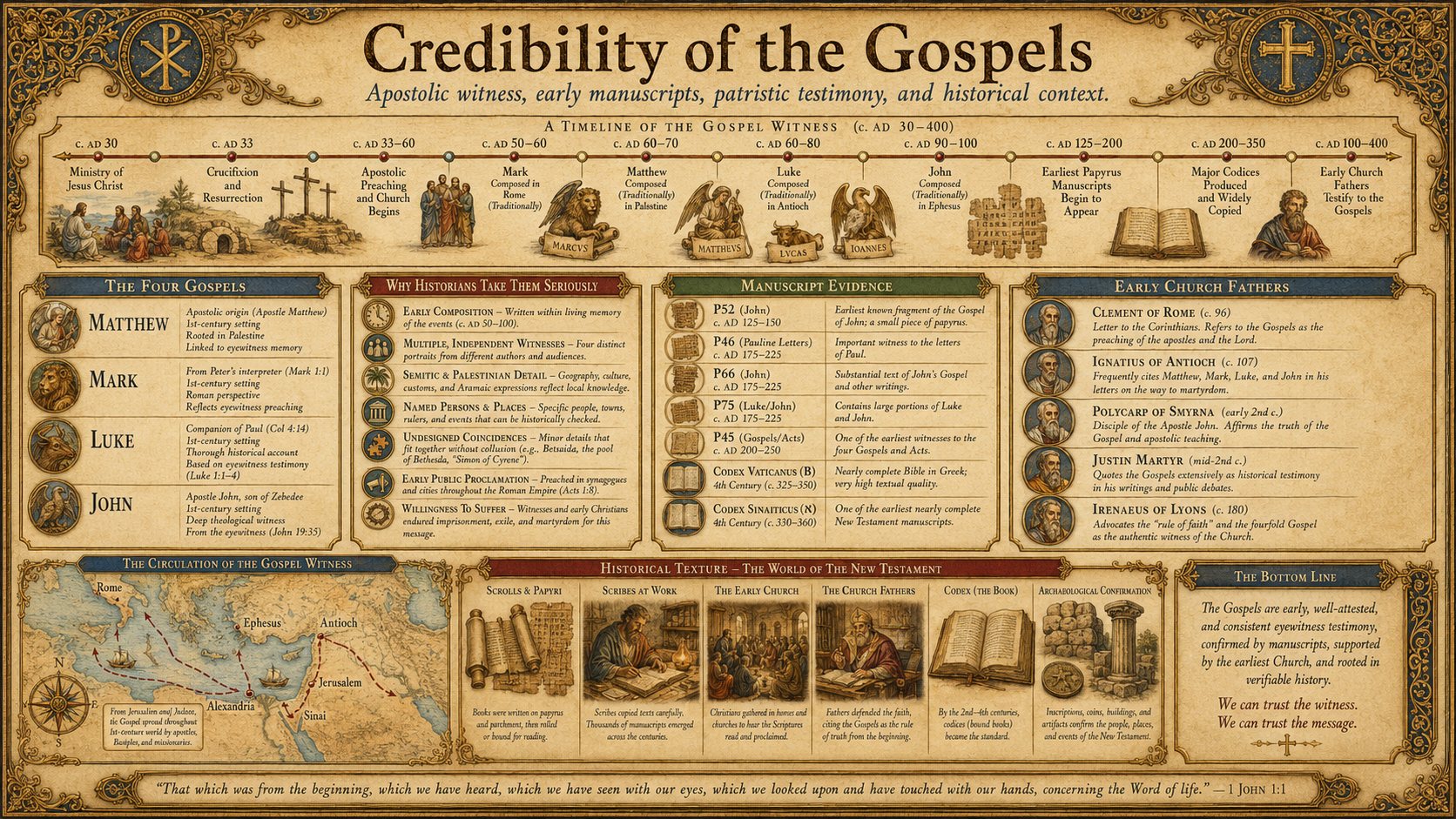
Objection stated at full strength. Named chains are valuable but can be back-projected, share common sources or contain unreliable assumptions about meetings. The Gospels also rest in early communal and apostolic contexts rather than anonymous free-floating legend.

Catholic reply. Compare whole transmission environments, dates and corroboration rather than one formal feature.

Necessary distinction. Distinguish a later recorded chain from contemporaneous documentary proximity.

2

Problematic hadith can simply be discarded

They are cultural accretions unrelated to true Islam.

Open reply

Objection stated at full strength. Muslim reform may re-evaluate reports, but historically authoritative collections and legal traditions cannot be erased without explaining the criteria and consequences for Sunna.

Catholic reply. A modern moral intuition may be correct yet still expose tension in the inherited authority system.

Necessary distinction. Distinguish historical Islam, theological ideal and contemporary reform proposal.

3

The Qurʾān corrects corrupted earlier Scriptures

Differences from the Bible prove that Jewish and Christian texts were altered.

Open reply

Objection stated at full strength. Differences from the Bible prove that Jewish and Christian texts were altered.

Catholic reply. A corruption thesis requires manuscript and historical evidence. Jewish and Christian manuscripts, citations and translations predate Islam and witness substantially to the same central narratives Islam later contests.

Necessary distinction. Distinguish interpretive disagreement, textual variants and a wholesale loss of the original Gospel; they are not the same claim.

4

Trinity is disguised polytheism

Father, Son and Spirit are three beings beside one another.

Open reply

Objection stated at full strength. Father, Son and Spirit are three beings beside one another.

Catholic reply. Nicene doctrine confesses one undivided divine nature, one act and one source of being, with real personal relations. Rejecting a triad does not refute this doctrine.

Necessary distinction. The numerical word “three” answers the question of persons, while “one” answers the question of divine essence; the predicates are not applied in the same respect.

Check the evidence

Sources for checking the conclusion

The routes below lead to the primary texts, official sources and Katholon readers required to verify the claims made about Hadith, Sunna and Legal Authority. They also place the dossier within a chain of adjacent questions so that no conclusion is detached from the evidence that qualifies it.

Shiʿi hadith text route

Major Twelver collections in translation.

Open source

Acts and apostolic tradition

Comparison with early Christian transmission.

Open source

Islam main dossier

Return to the historical and doctrinal dashboard for the whole tradition.

Open source

The Gospels

Katholon or primary-source route for the broader question.

Open source

The Trinity

Katholon or primary-source route for the broader question.

Open source

The Resurrection

Katholon or primary-source route for the broader question.

Open source

Pius XI · Mortalium animos

Mission and the unity of religion without indifferentism or the equality of contradictory creeds.

Open source

Dominus Iesus

Katholon or primary-source route for the broader question.

Open source

Early Church and Christology

Katholon or primary-source route for the broader question.

Open source

Continue the argument

Related dossiers in the same proof path

Follow the questions adjacent to Hadith, Sunna and Legal Authority before drawing a judgement about the whole tradition.

Related dossier

The Qurʾān: Collection and Textual History

Islam

Continue study

Recitation, codex, consonantal text, readings and manuscript evidence.

Related dossier

Prophecy and the “Seal of the Prophets”

Islam

Continue study

Muhammad’s claim in relation to biblical prophecy and the finality of Christ.

Related dossier

Hebrew Scripture, Septuagint and Canon

Judaism

Continue study

How Hebrew, Aramaic and Greek Jewish Scriptures entered the Christian Bible.

Related dossier

Scripture, Tradition and Religious Authority

World Religions

Continue study

How canons arise, commentaries govern meaning and institutions claim the right to teach.

Study in order

The question continues in the adjacent dossiers

Hadith, Sunna and Legal Authority cannot be judged in isolation. Its full meaning depends upon neighbouring questions of authority, the human person, salvation and the historical claim of Christ. The related studys continue one ordered inquiry rather than supplying optional background.

Return to Islam

WHAT THIS MEANS FOR YOUR SEARCH

What does this mean for your search?

Catholic comparison should grant the intellectual seriousness of Muslim hadith science while refusing to equate later authenticated attribution with apostolic eyewitness evidence. A tradition’s internal grade is evidence about reception, not a supernatural guarantee. Catholic judgement begins with the shared propositions and inherited points of comparison: Muslims profess one creator, revere Abraham, pray, fast, give alms and honour Jesus and Mary in distinctive ways. These facts deserve exact description and do not erase decisive contradictions.

This judgement concerns propositions and evidence, not the human worth of every person who holds them. Truth, personal culpability and pastoral charity must be distinguished without treating contradictory claims as equally true.