The dispute
Must Gentile converts receive circumcision and the whole Mosaic law?
Concilia Oecumenica · Apostolicity, doctrine and ecclesial order
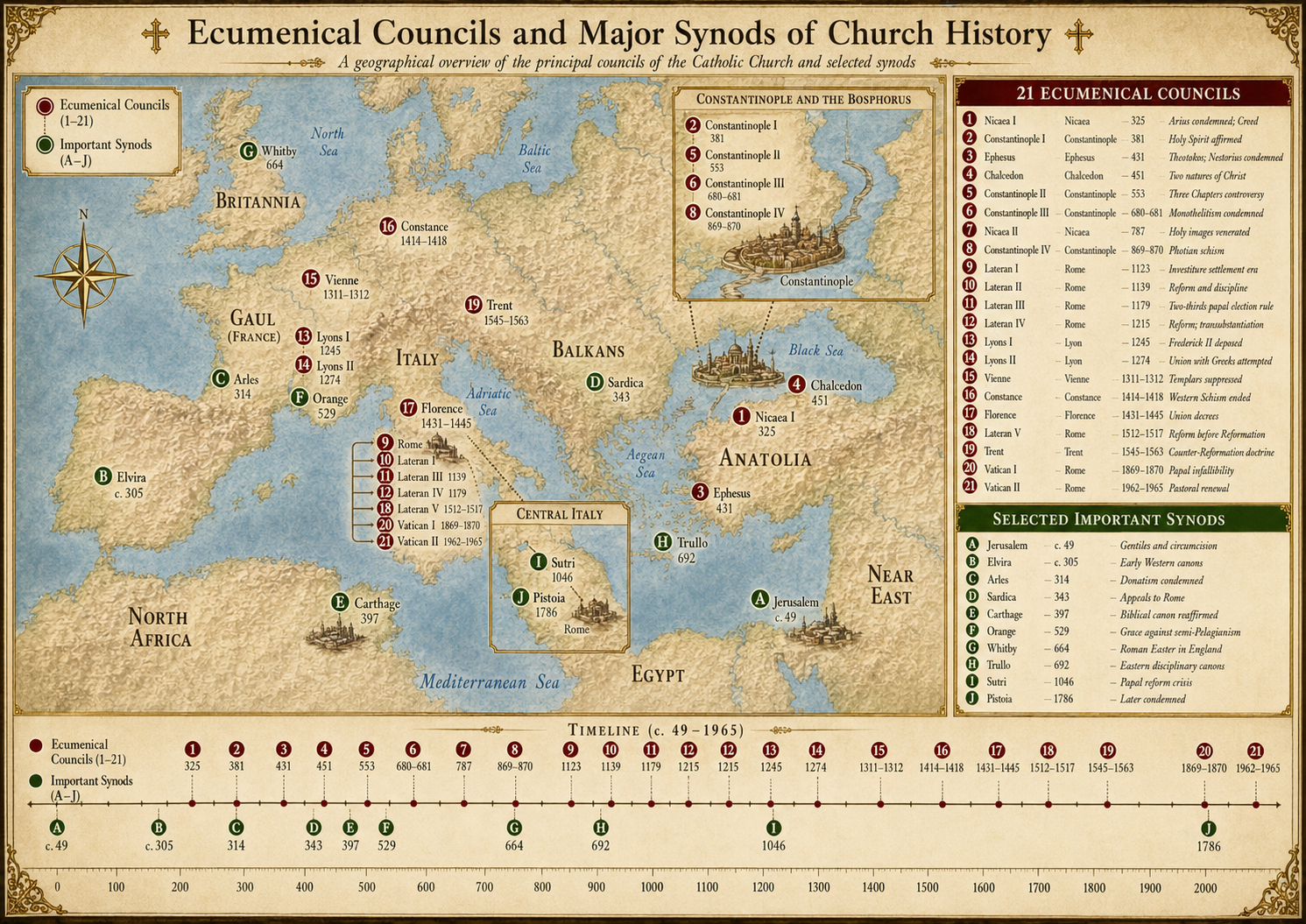
From the apostolic assembly of Jerusalem to the twenty-one councils recognised by the Catholic Church: controversies, definitions, canons, papal confirmation and historical reception.
The apostolic archetype · Acts 15
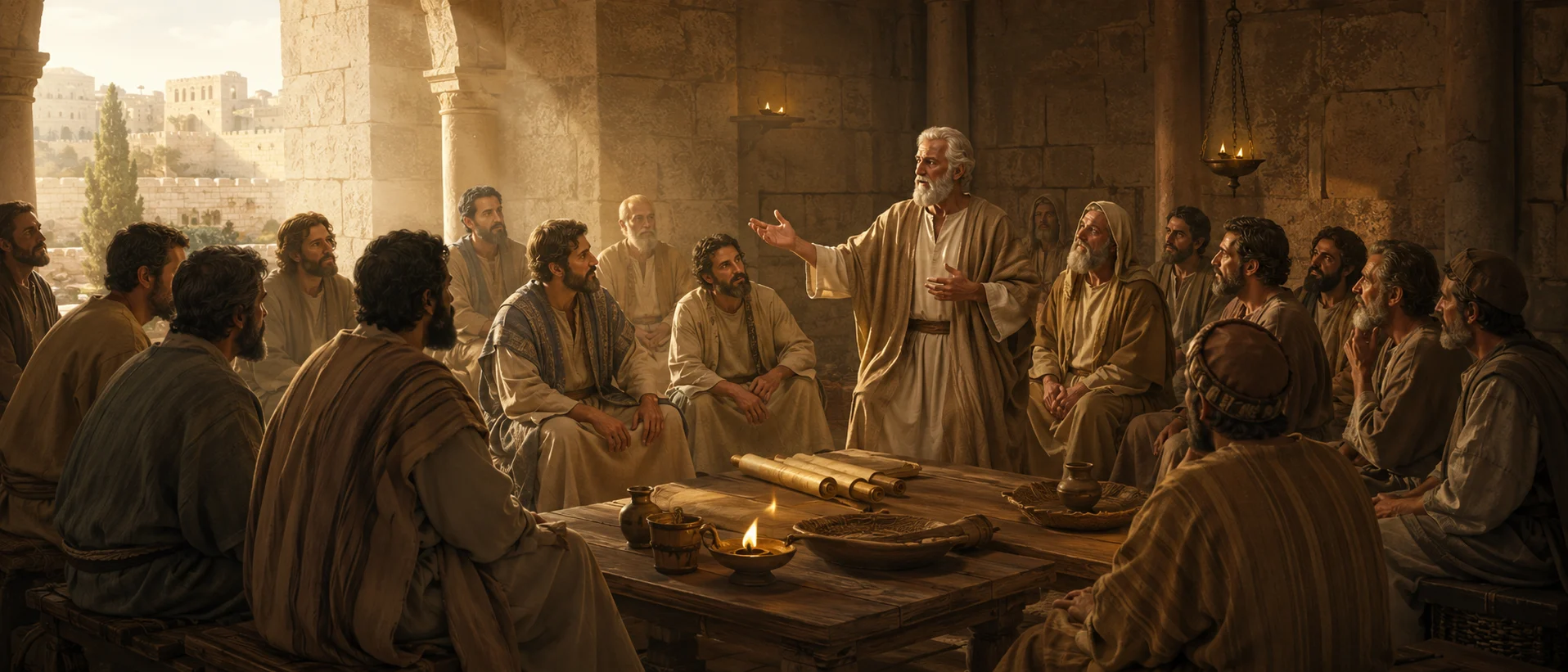
The assembly in Jerusalem is not counted as one of the twenty-one post-apostolic ecumenical councils, because it belonged to the foundational age of the apostles themselves. Yet it manifests the essential conciliar pattern: a grave doctrinal and disciplinary dispute is brought before the apostles and elders; there is public debate; Peter bears decisive testimony; Paul and Barnabas report the works of God; James formulates the judgment; and the Church sends a binding apostolic letter.
“It has seemed good to the Holy Spirit and to us…” — Acts 15:28
Must Gentile converts receive circumcision and the whole Mosaic law?
The apostles and elders assemble and the matter is openly disputed.
Peter recalls God’s action among the Gentiles and rejects imposing an unbearable yoke.
Paul and Barnabas report; James gives the practical sentence rooted in Scripture.
The common decision is transmitted in the name of the Holy Ghost and the apostolic Church.
From the apostolic age to the episcopal councils
Acts 15 belongs to the foundational authority of the apostles themselves. The later ecumenical councils do not replace or supplement revelation. They are solemn exercises of the episcopal teaching office, in communion with and confirmed by the Roman Pontiff, when the inherited apostolic faith must be defended, defined or applied.
The Church gathers around a disputed question, hears testimony and argument, judges the matter according to the received faith, and issues a public decision for ecclesial communion.
Jerusalem was an assembly of apostles and elders during the age of revelation. Nicaea and the councils after it were assemblies of bishops who had received the apostolic ministry by succession; their authority must therefore be read together with papal communion, confirmation and reception.
Nicaea is the first post-apostolic council recognised by the Catholic Church as ecumenical. Its creed did not invent the divinity of the Son; it excluded an interpretation incompatible with the faith already confessed in baptism, worship and Scripture.
A council dossier may include creeds, dogmatic definitions, disciplinary canons, anathemas, synodal letters, session records, imperial documents and papal confirmation. These genres do not all carry the same juridical or doctrinal weight.
The twenty-one ecumenical councils
Open one council at a time or use the explicit expand-all mode. Every entry now includes convocation, papal representation, political context, opposed positions, authority and confirmation.
How a Catholic reads a council
Dogmatic definitions, doctrinal chapters, disciplinary canons, historical acts and papal confirmation must be distinguished without separating them from the Church’s living reception.
A dogmatic definition proposes revealed truth or a truth necessarily connected with revelation. A disciplinary canon orders ecclesial life and may later change without making the earlier law false.
An assembly does not become ecumenical merely by size or imperial convocation. Union with and confirmation by the Roman Pontiff belong to the Catholic account of ecumenicity.
The exact decree, its genre, intended object, later interpretation and degree of confirmation matter more than slogans detached from the acts.