
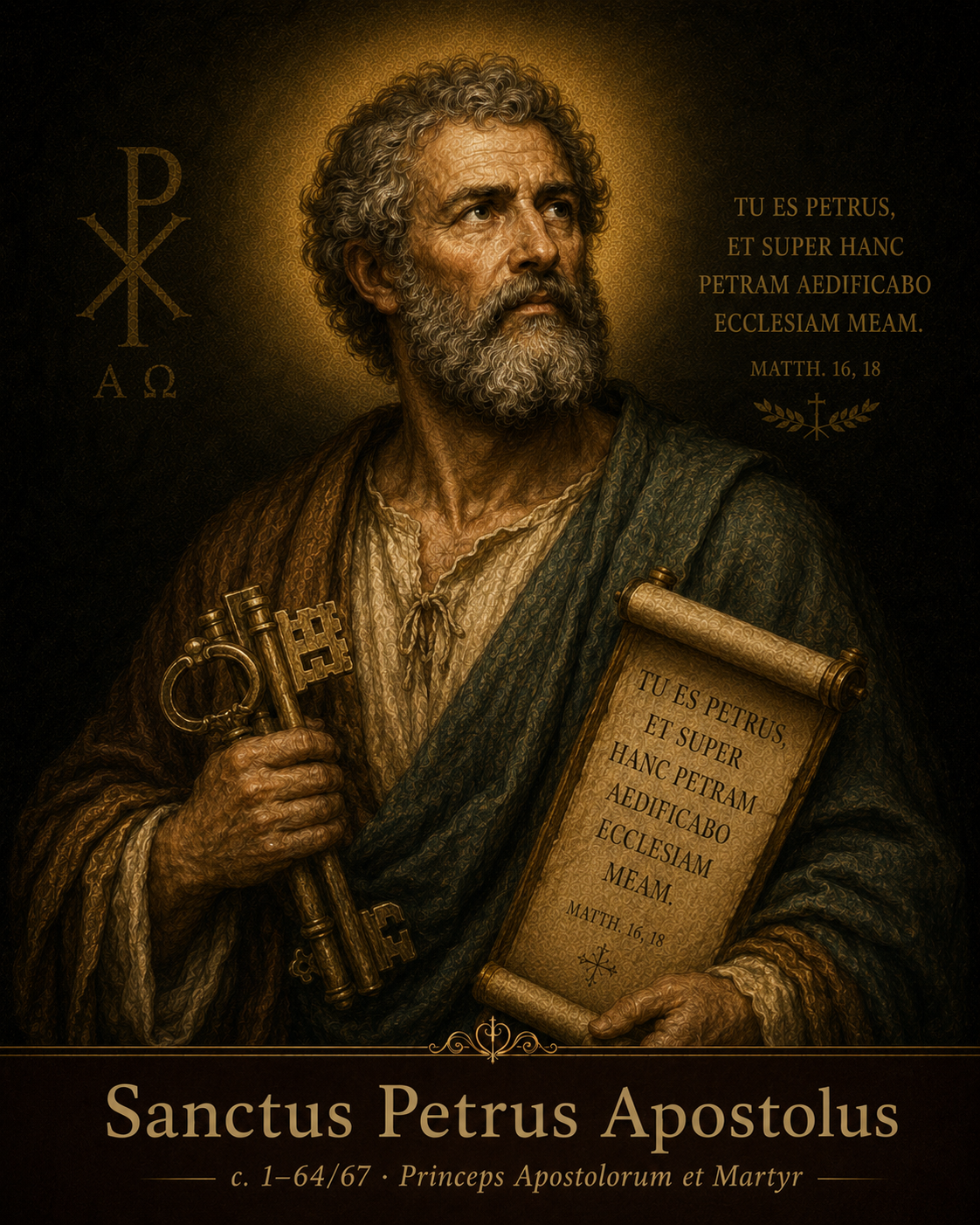
Matth. 16, 18
Tu es Petrus
Christ founds the visible Church upon the apostolic foundation.
Historia Ecclesiae
Explore the Church through apostolic witness, councils, worship, reform and mission. Follow a period, read its sources, and distinguish the Catholic understanding of continuity from the changing circumstances of institutions and peoples.
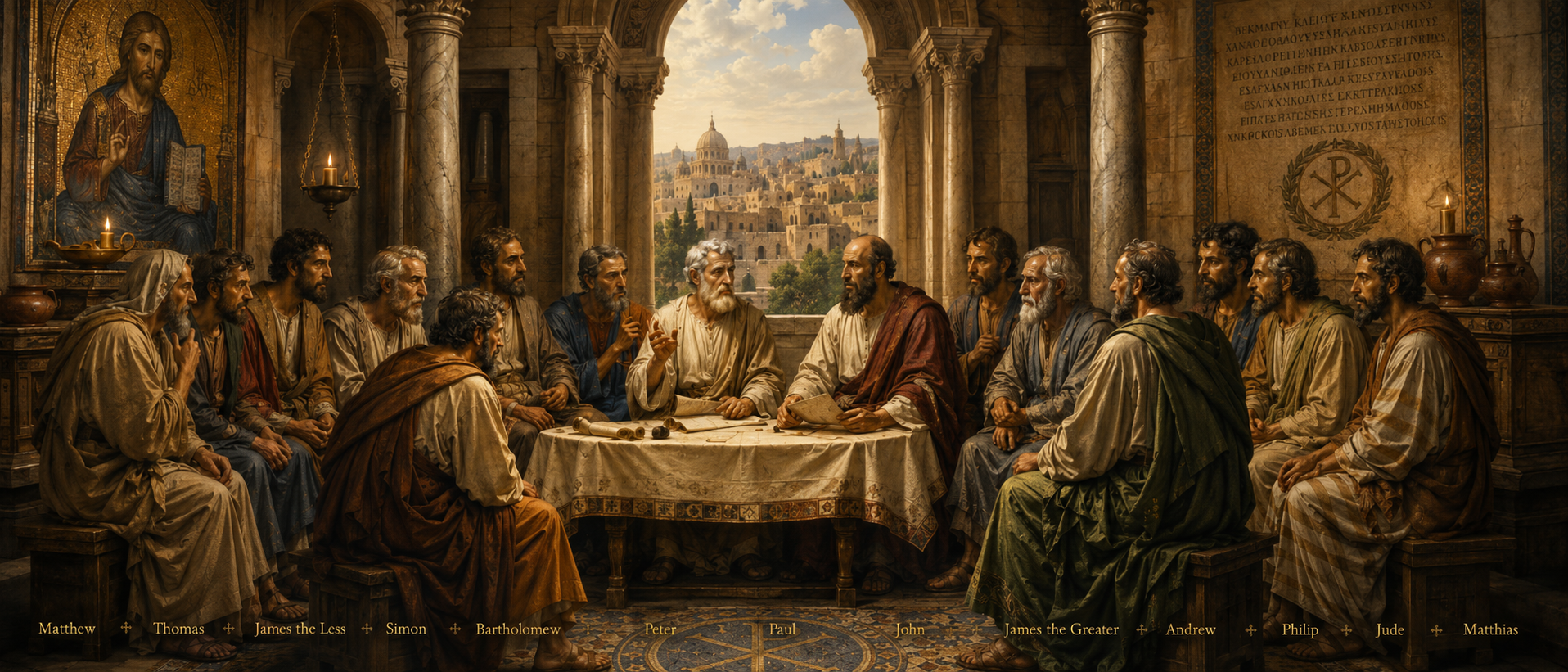
Matth. 16, 18
Christ founds the visible Church upon the apostolic foundation.
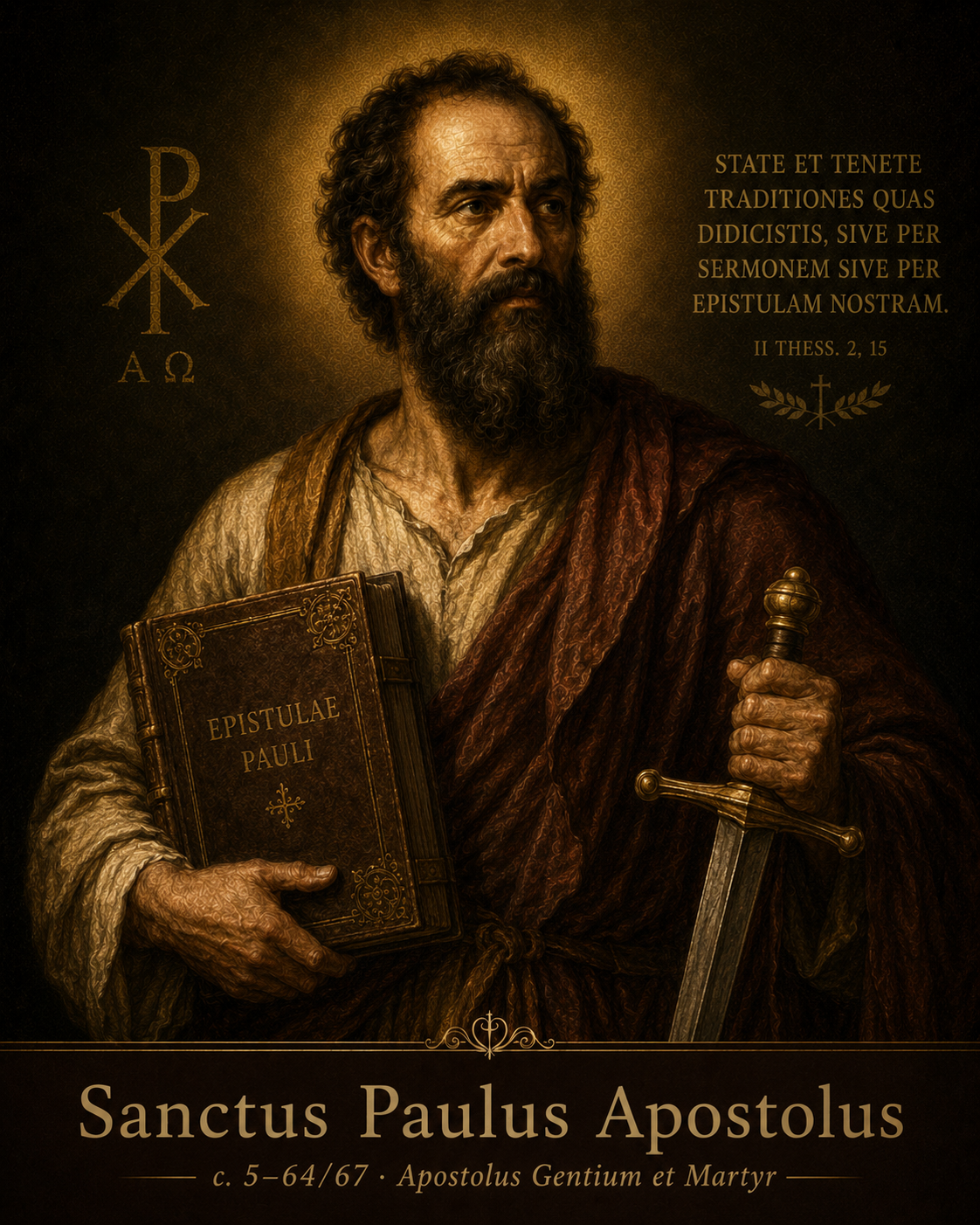
II Thess. 2, 15
Paul witnesses that apostolic tradition is received both orally and in writing.
Apostolic Fathers, councils and doctrinal continuity from the first centuries.
Open Church FathersMonastic renewal, scholastic theology, crusades, ecclesiastical courts and disputed historical dossiers.
Open CrusadesReformation, missions, revolutions, persecution and modern apologetic questions.
Open timelinePatres Ecclesiae
The Fathers wrote as pastors, teachers and participants in disputes across several centuries. Read their biblical interpretation, sacramental teaching and accounts of succession in their own settings. Their individual opinions and the Church’s later definitions must be distinguished.
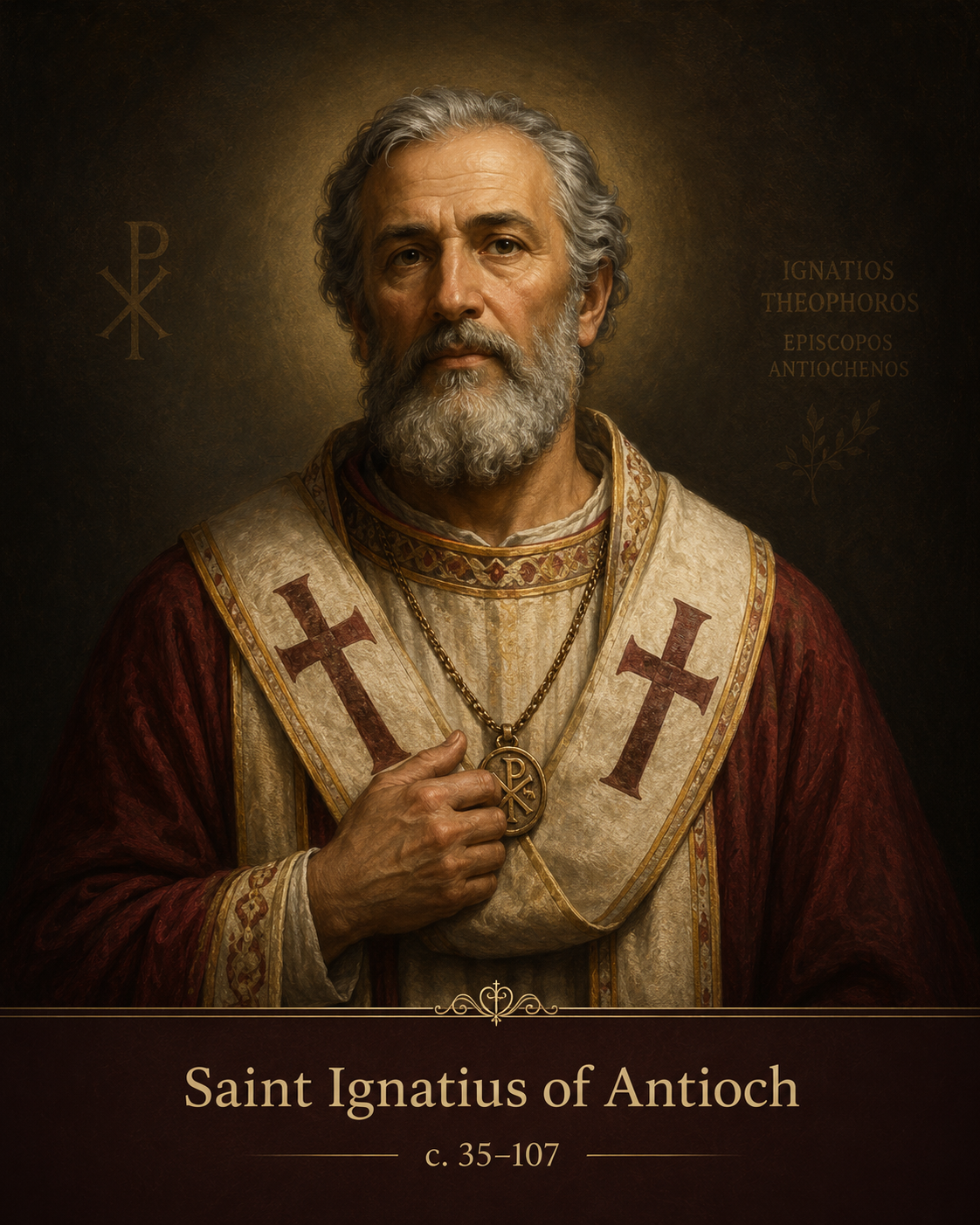 Sanctus Ignatius Antiochenusc. 35–107Patres Ecclesiae
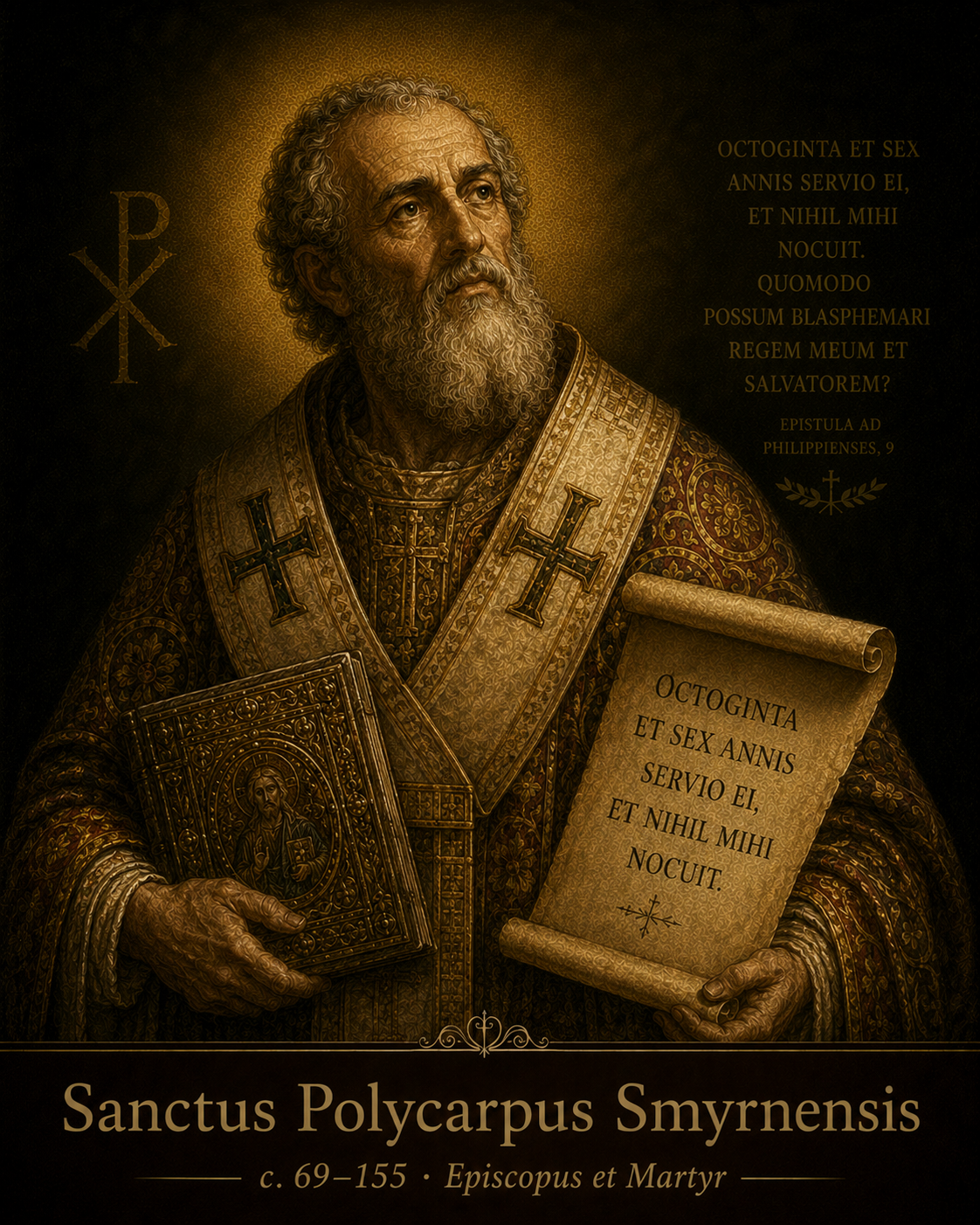 Sanctus Polycarpus SmyrnensisSecond centuryPatres Ecclesiae
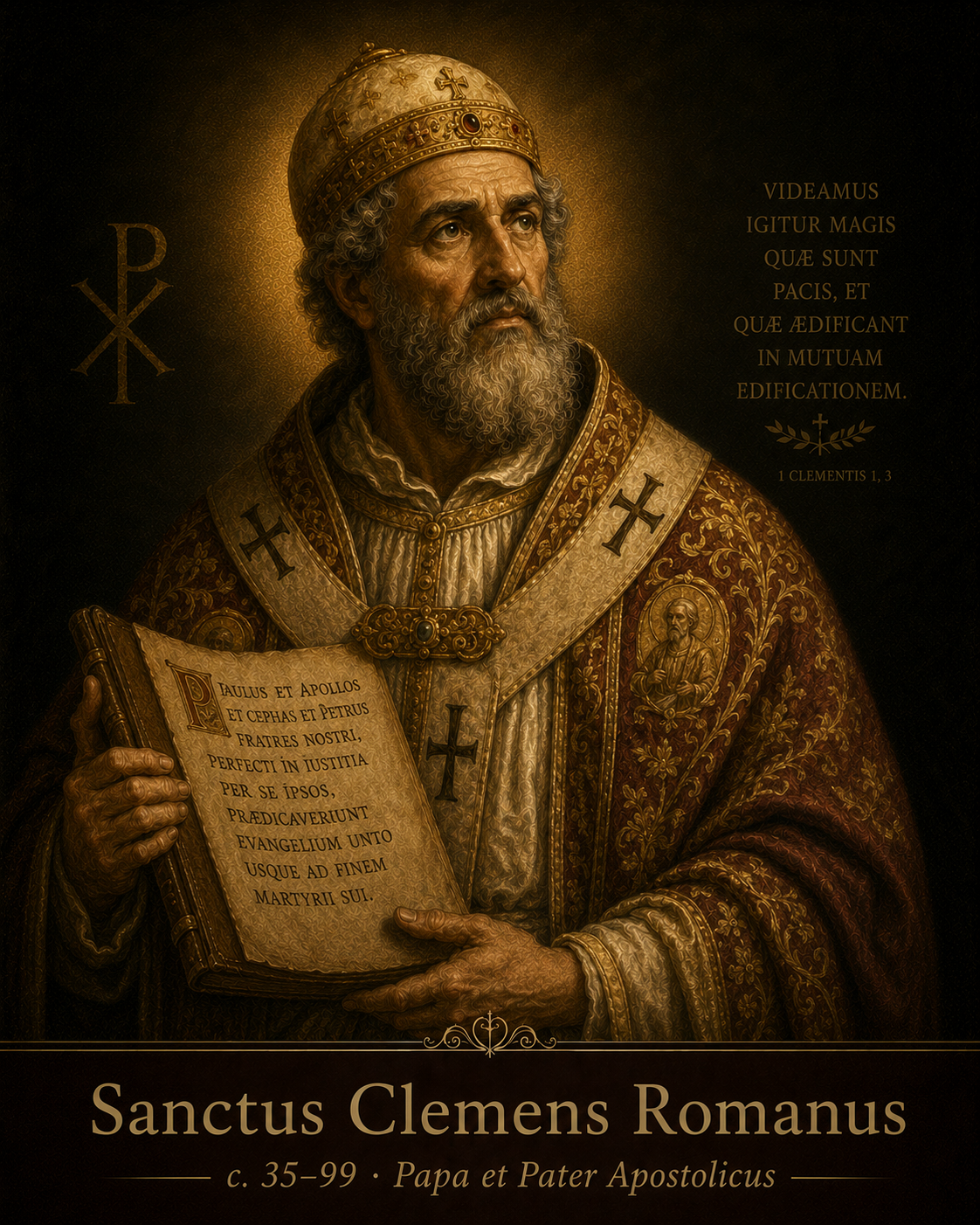 Sanctus Clemens Romanusc. 35–99Patres Ecclesiae
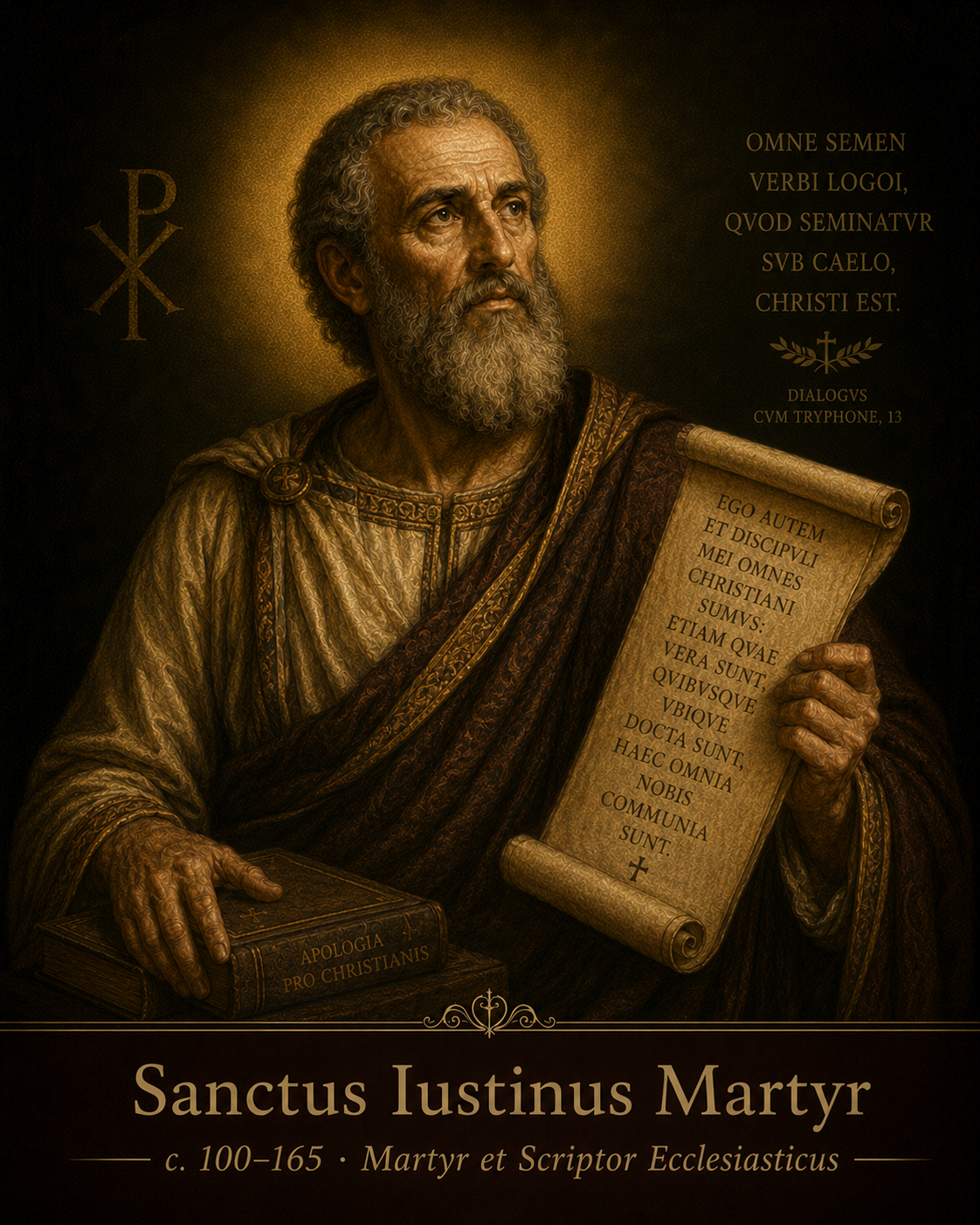 Sanctus Iustinus Martyrc. 100–165Patres Ecclesiae
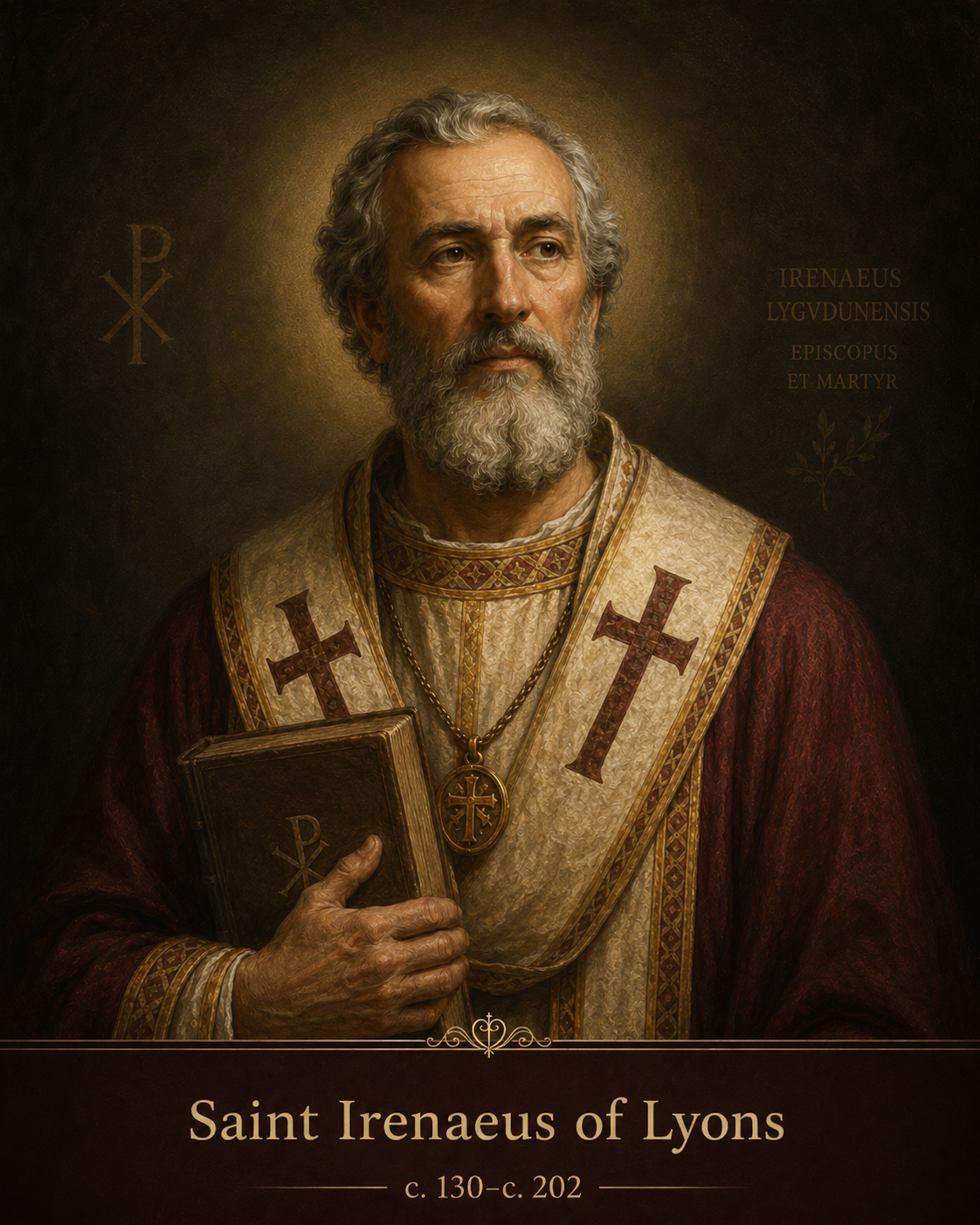 Sanctus Irenaeus Lugdunensisc. 130–202Patres Ecclesiae
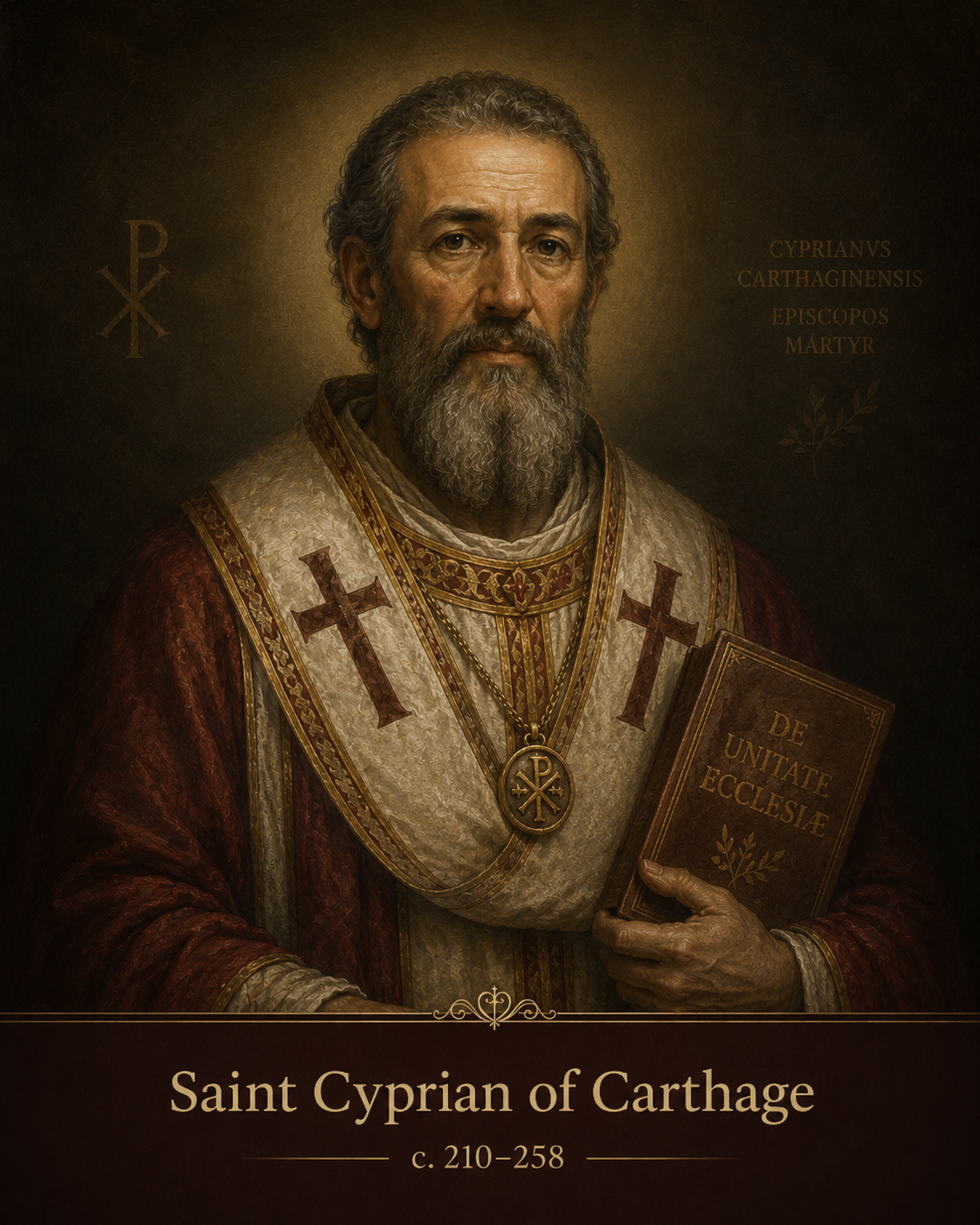 Sanctus Cyprianus Carthaginensisc. 210–258Patres Ecclesiae
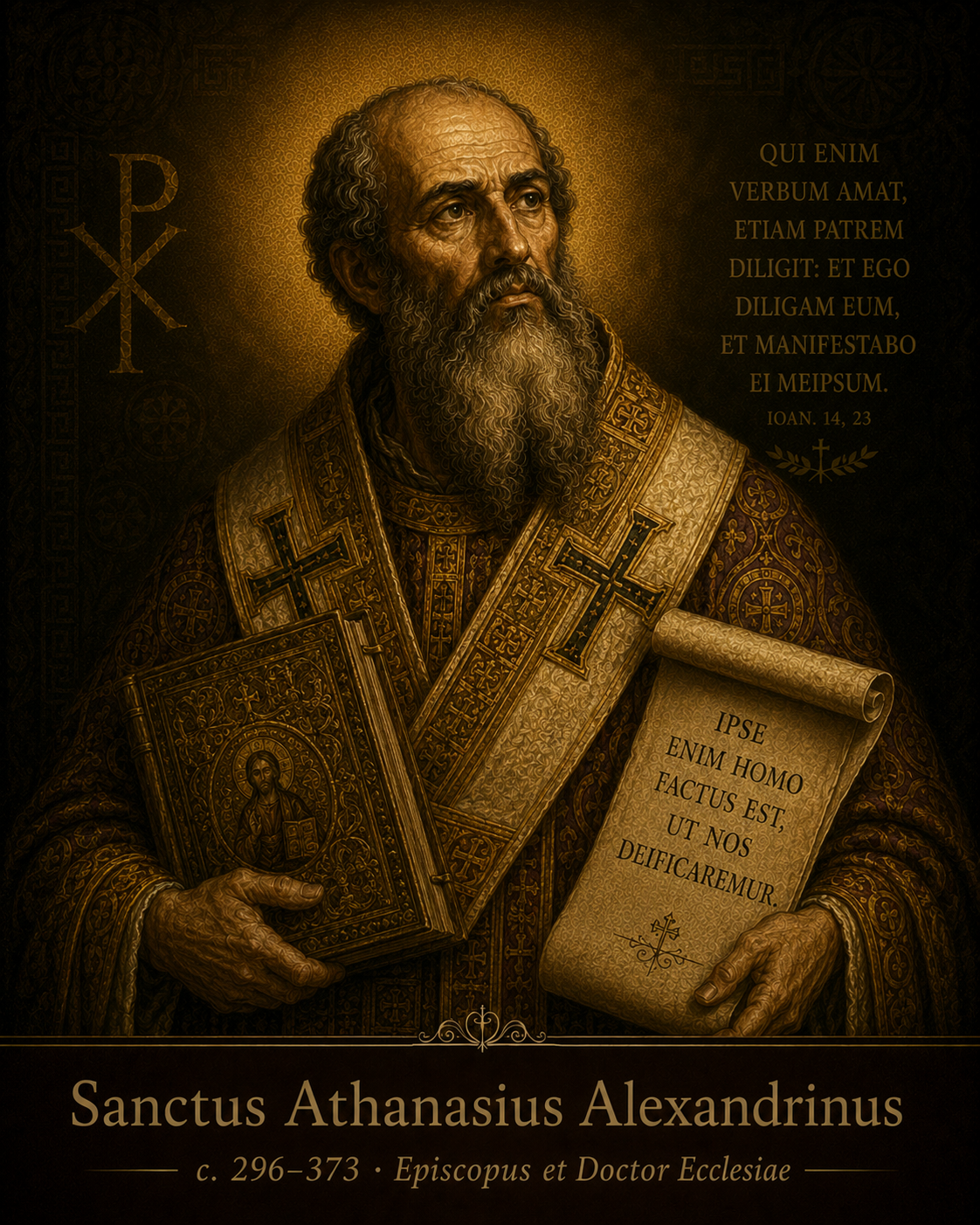 Sanctus Athanasius Alexandrinusc. 296–373Patres Ecclesiae
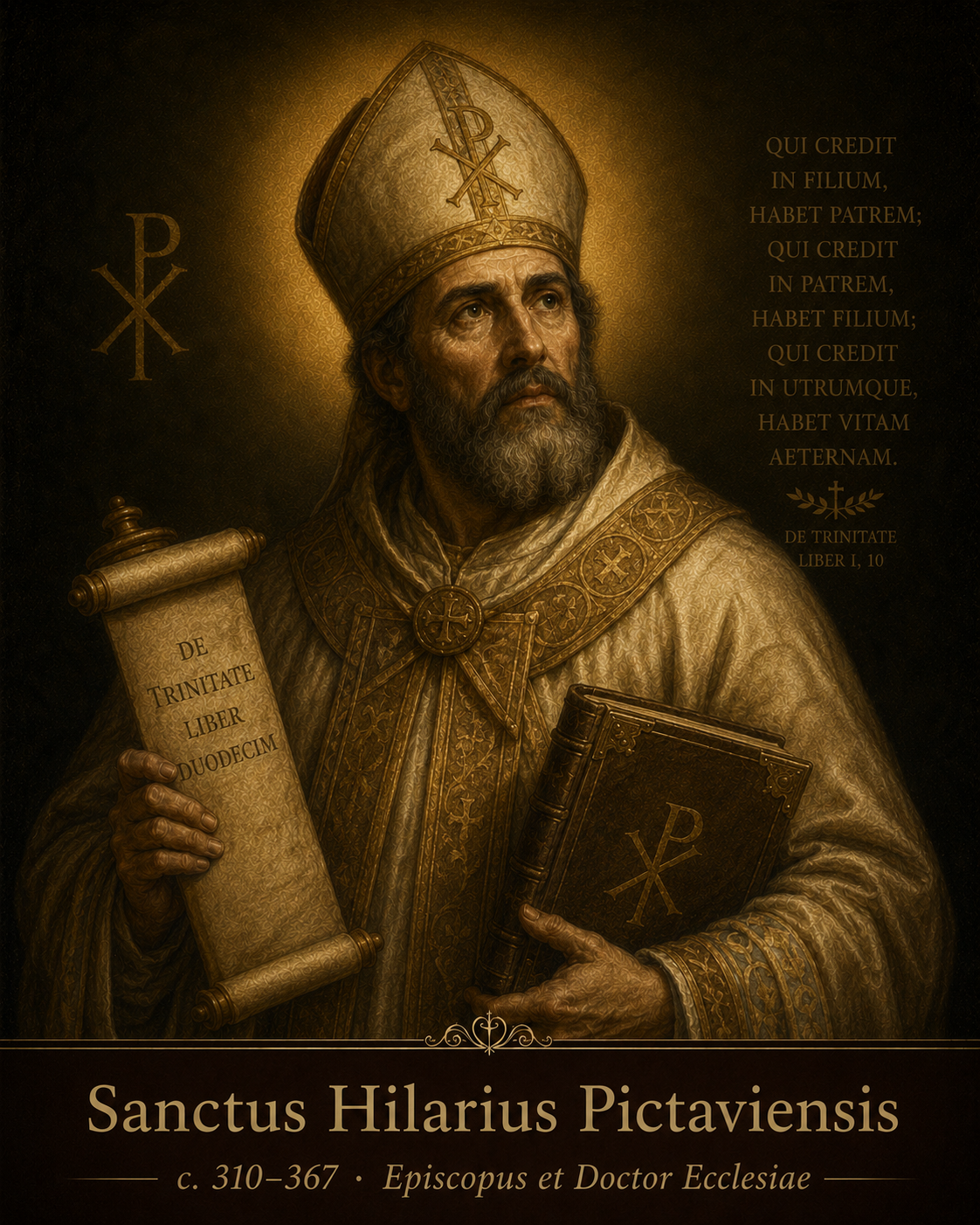 Sanctus Hilarius Pictaviensisc. 310–367Patres Ecclesiae
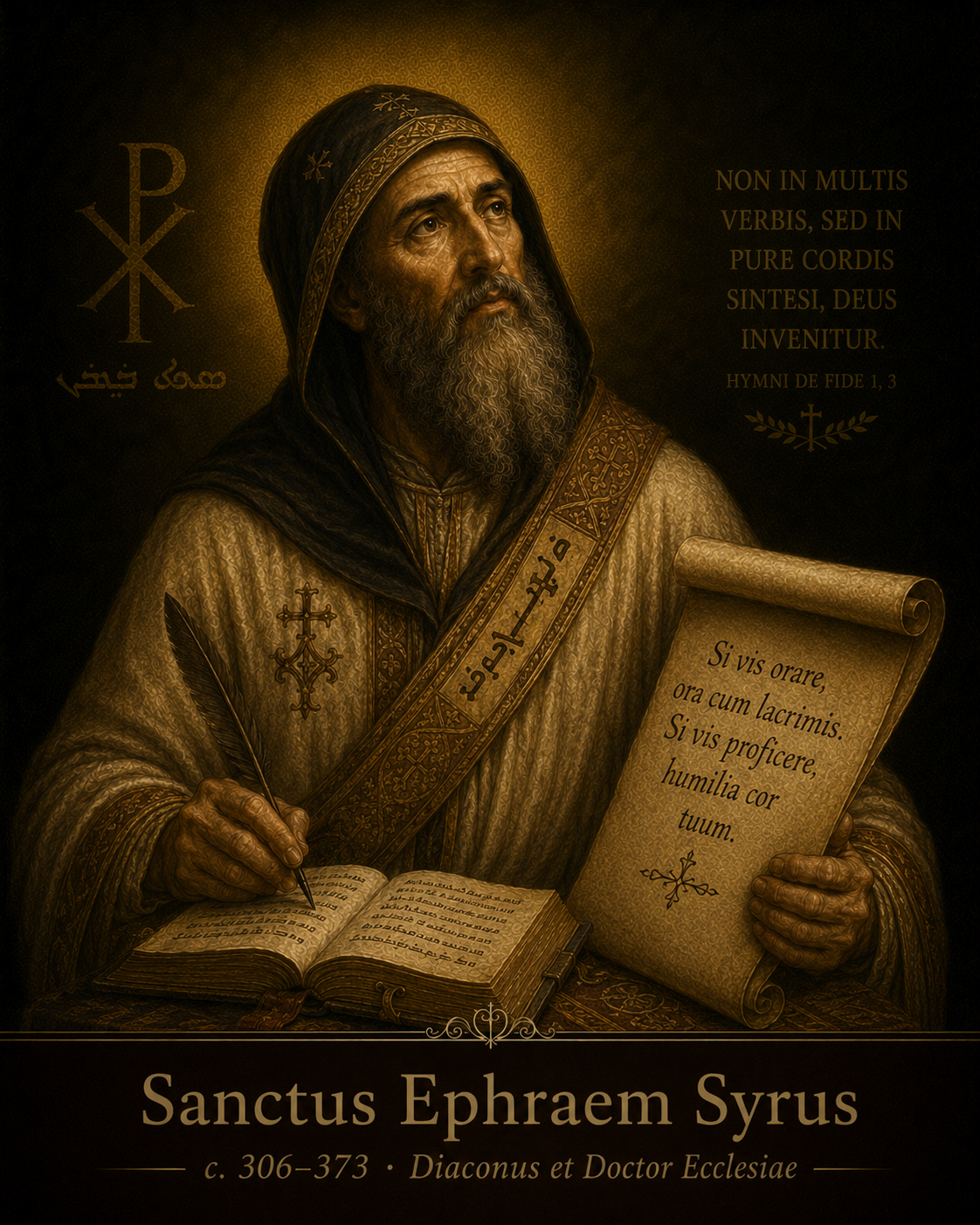 Sanctus Ephraem Syrusc. 306–373Patres Ecclesiae
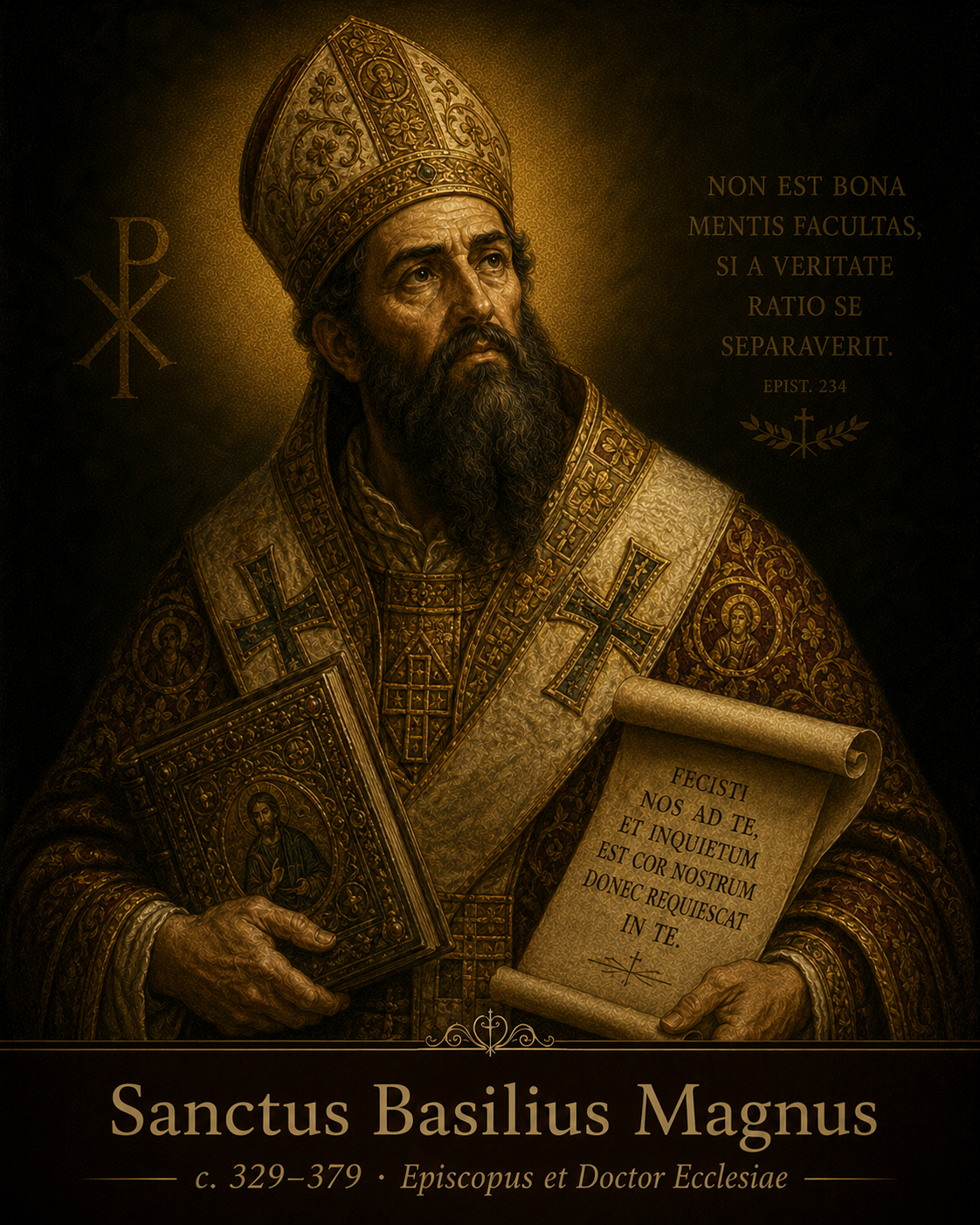 Sanctus Basilius Magnusc. 329–379Patres Ecclesiae
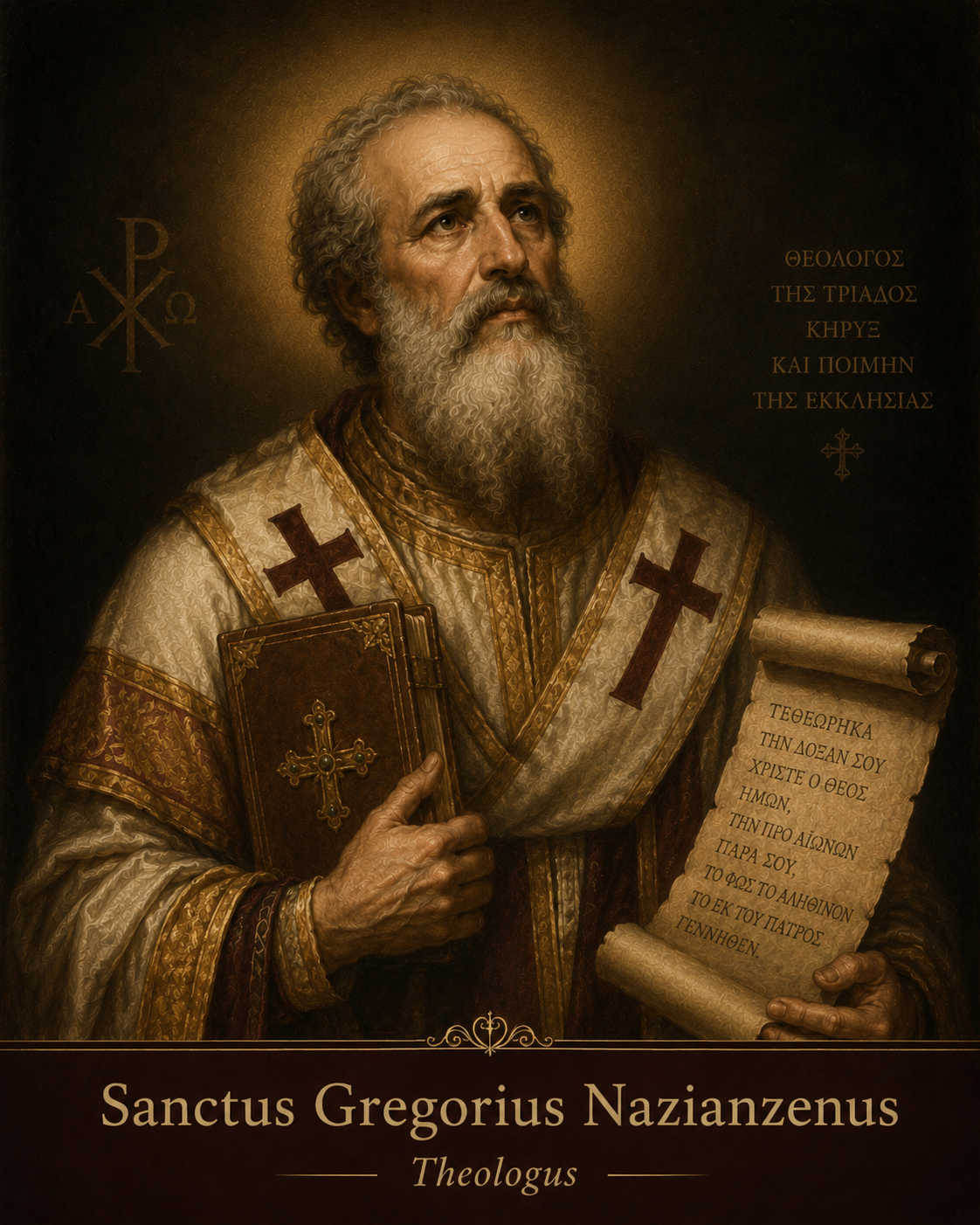 Sanctus Gregorius Nazianzenusc. 329–390Patres Ecclesiae
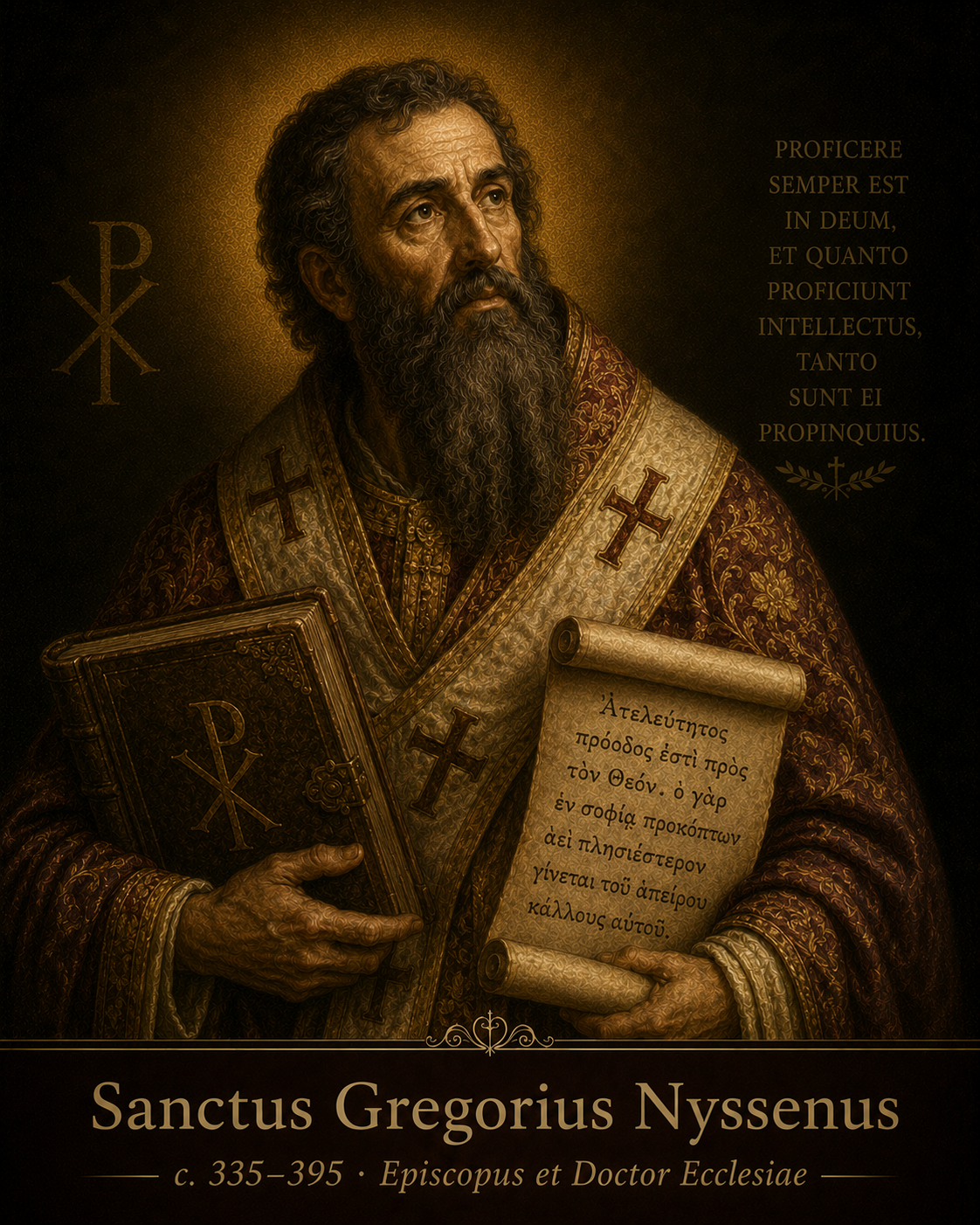 Sanctus Gregorius Nyssenusc. 335–395Patres Ecclesiae
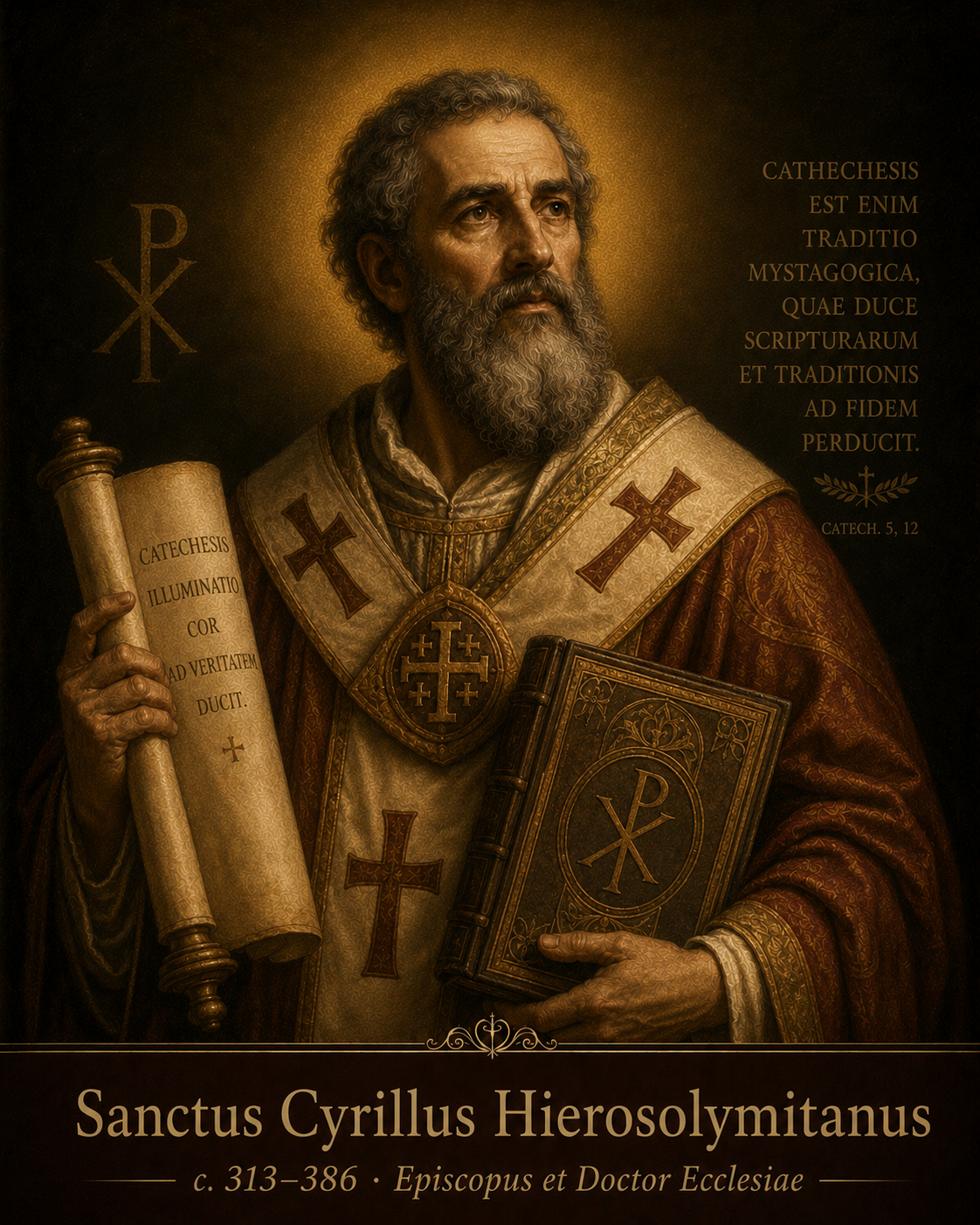 Sanctus Cyrillus Hierosolymitanusc. 313–386Patres Ecclesiae
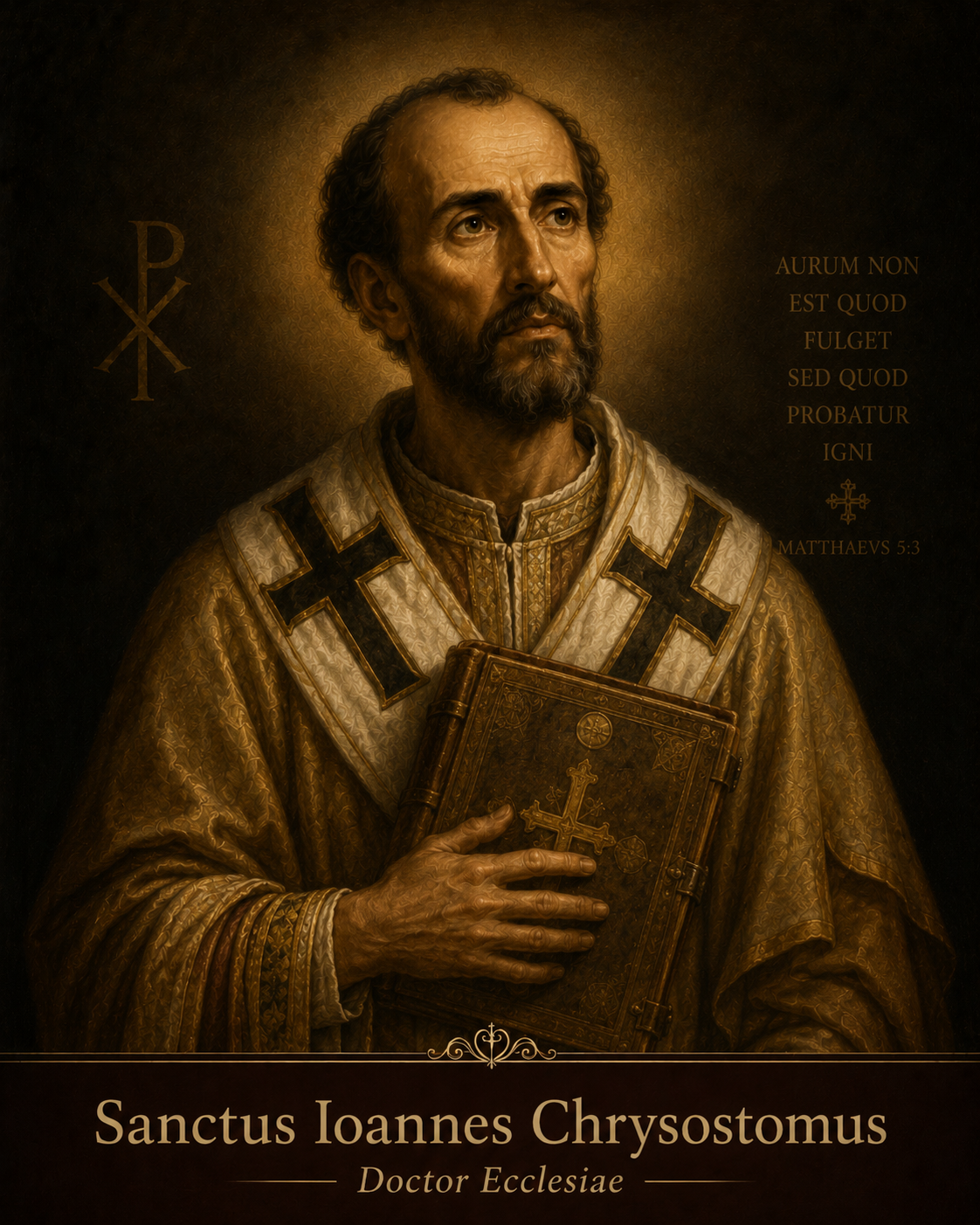 Sanctus Ioannes Chrysostomusc. 347–407Patres Ecclesiae
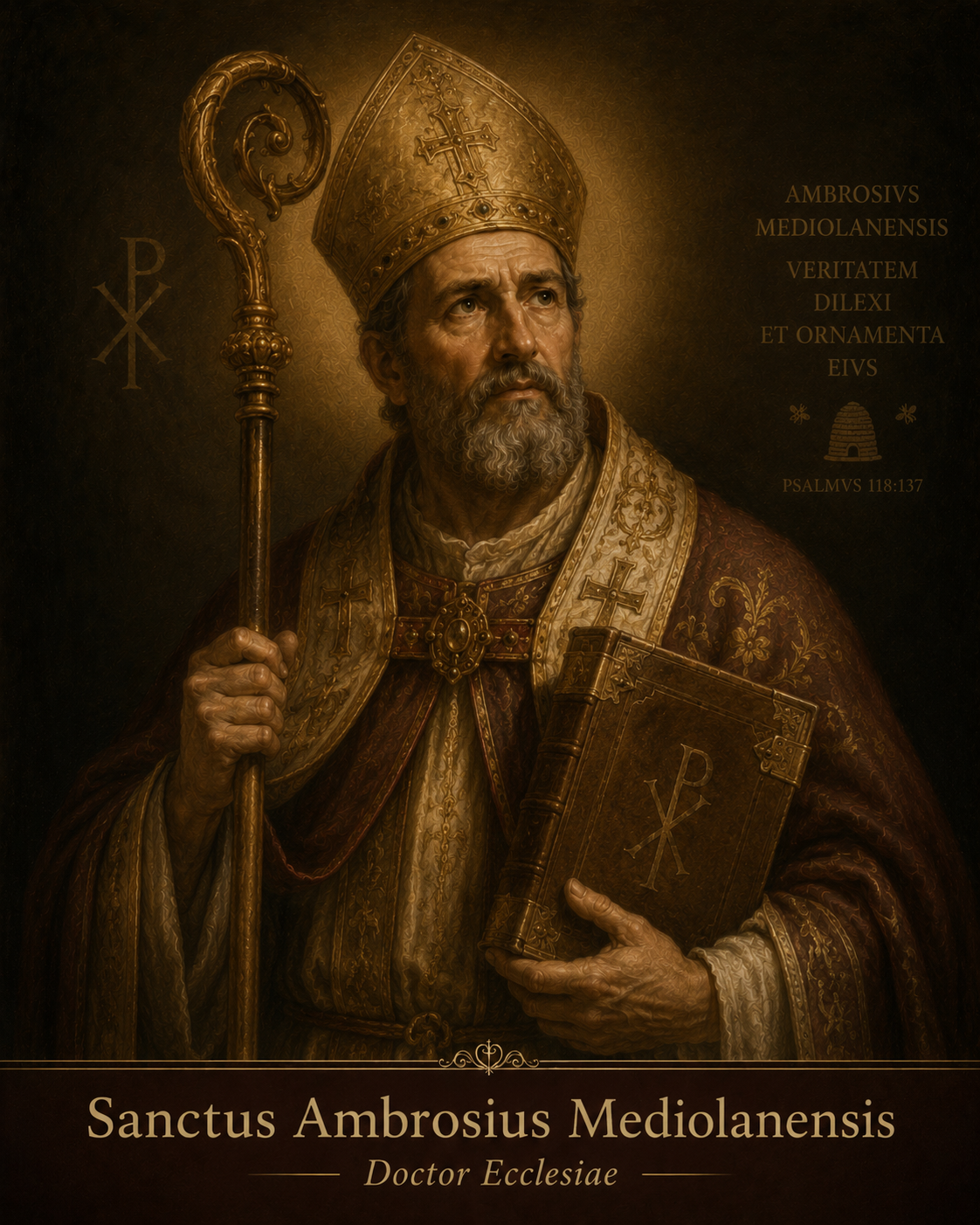 Sanctus Ambrosius Mediolanensisc. 339–397Patres Ecclesiae
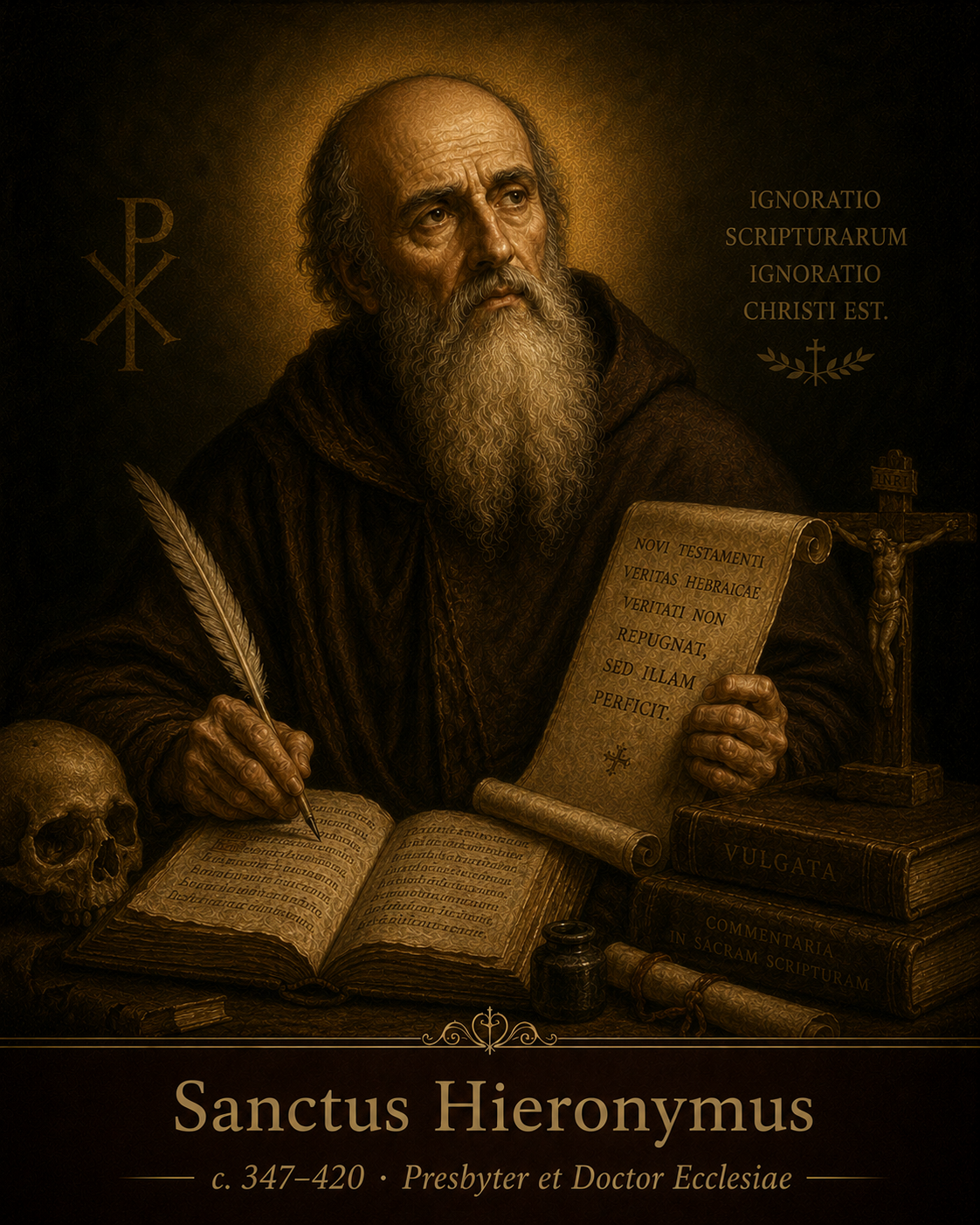 Sanctus Hieronymusc. 347–420Patres Ecclesiae
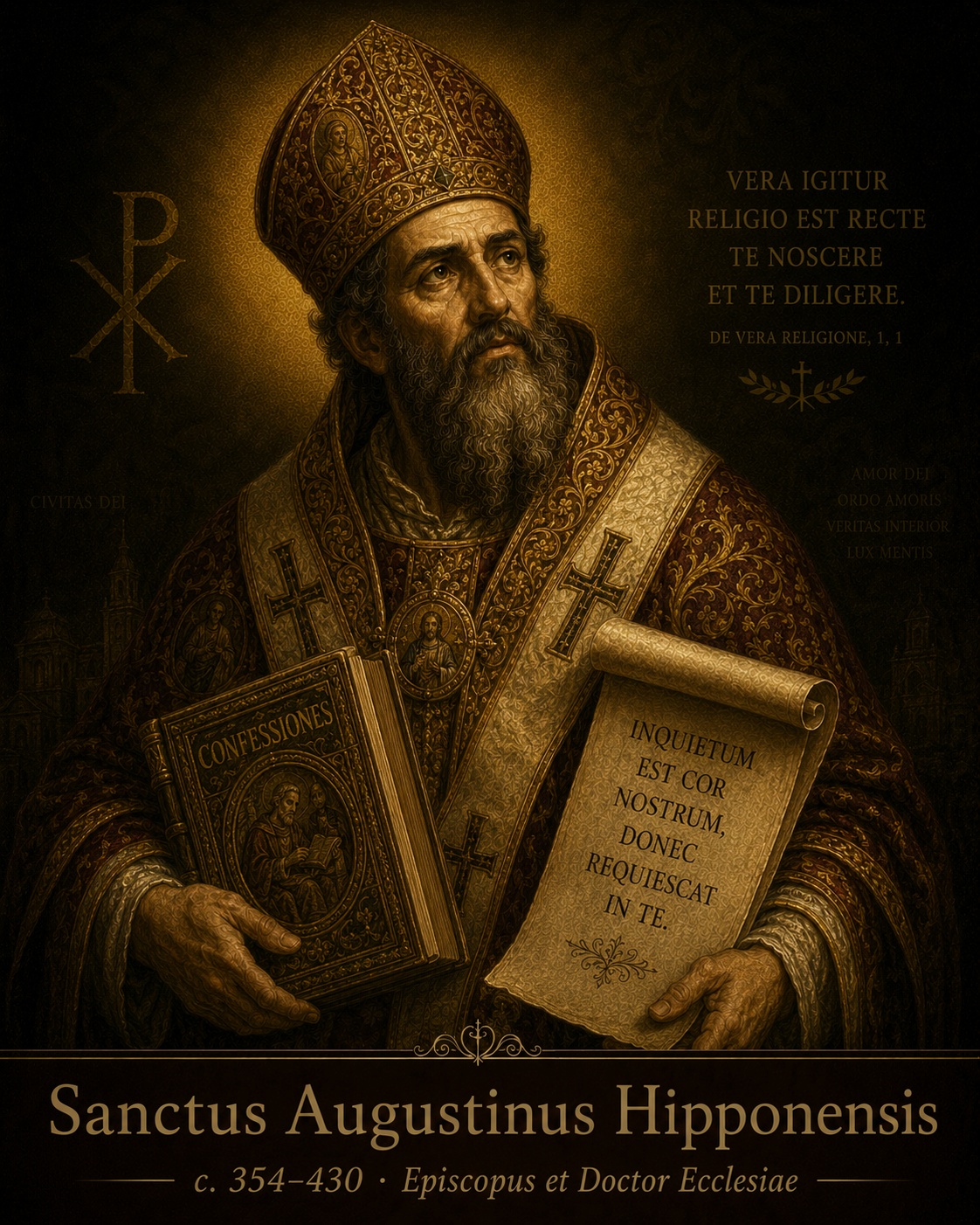 Sanctus Augustinus Hipponensisc. 354–430Patres Ecclesiae
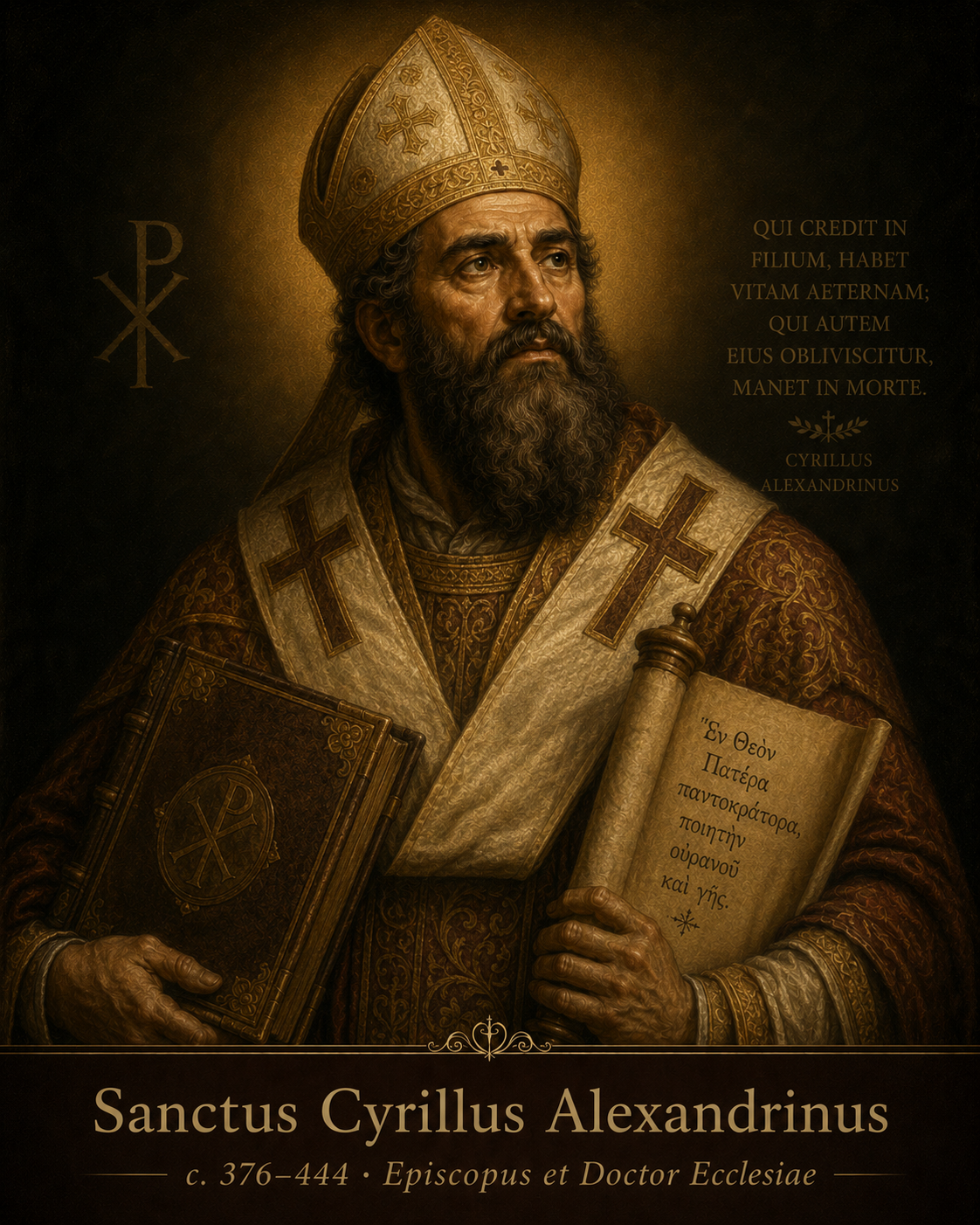 Sanctus Cyrillus Alexandrinusc. 376–444Patres Ecclesiae
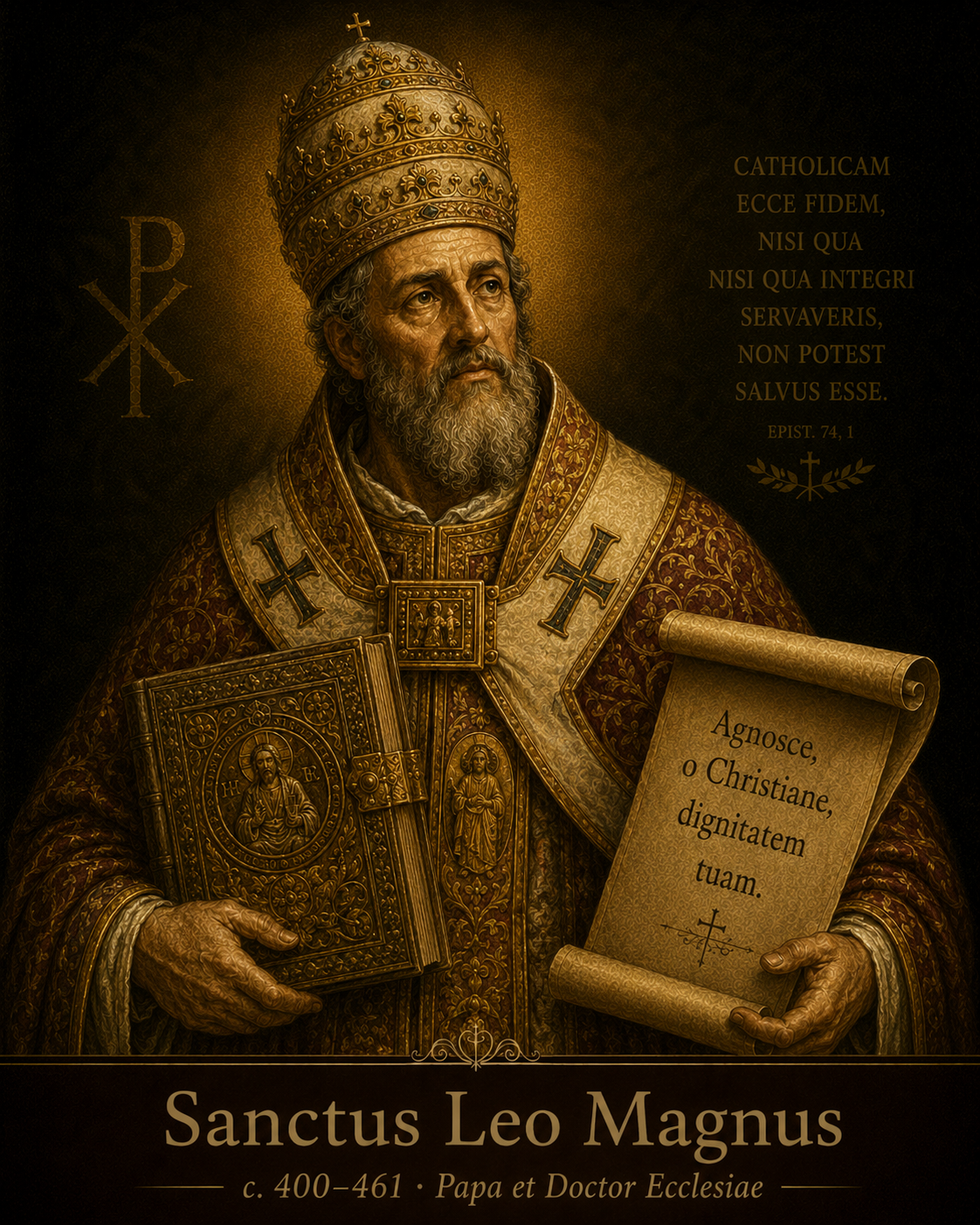 Sanctus Leo Magnusc. 400–461Patres Ecclesiae
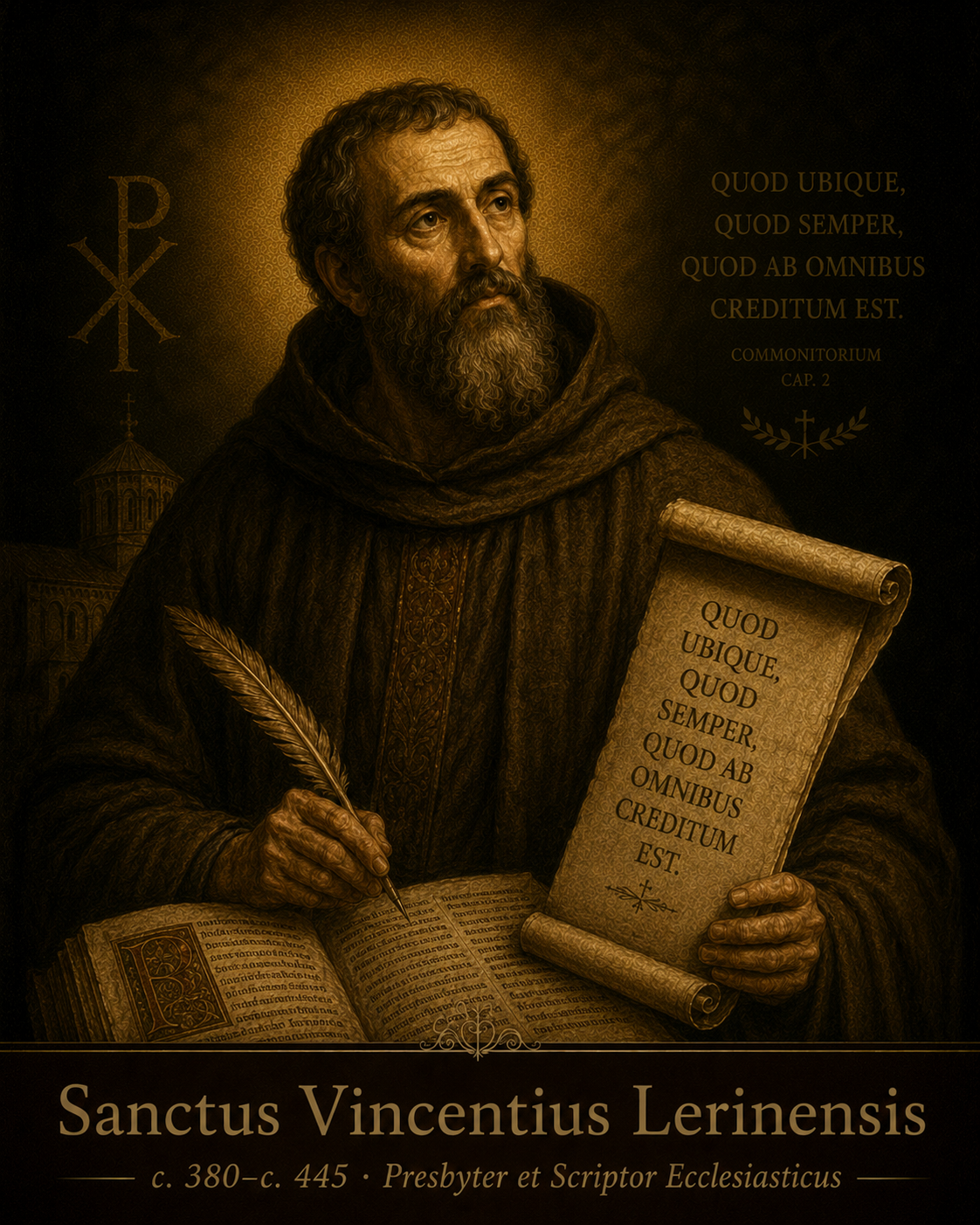 Sanctus Vincentius Lerinensisc. 380–445Patres Ecclesiae
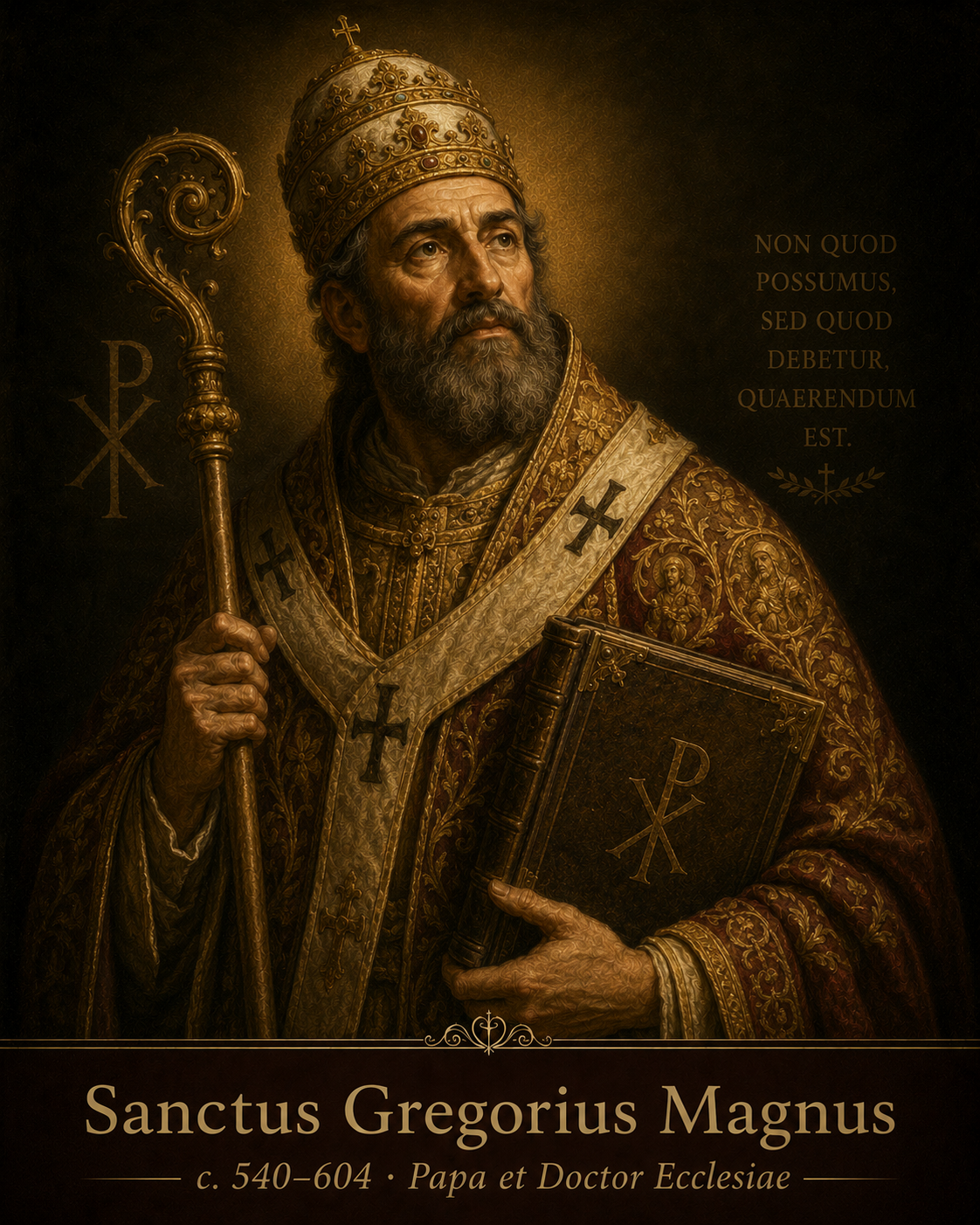 Sanctus Gregorius Magnusc. 540–604Patres Ecclesiae
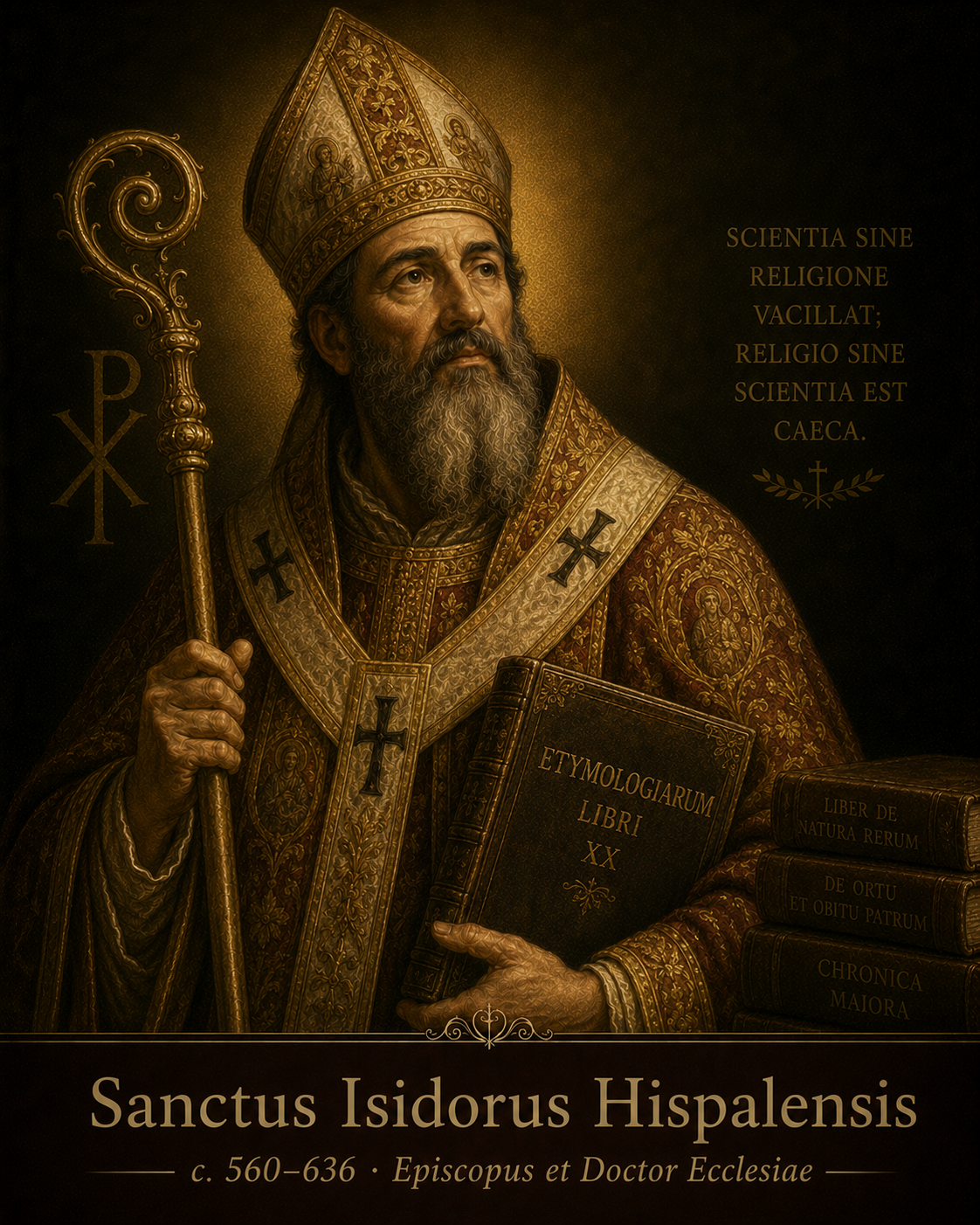 Sanctus Isidorus Hispalensisc. 560–636Patres Ecclesiae
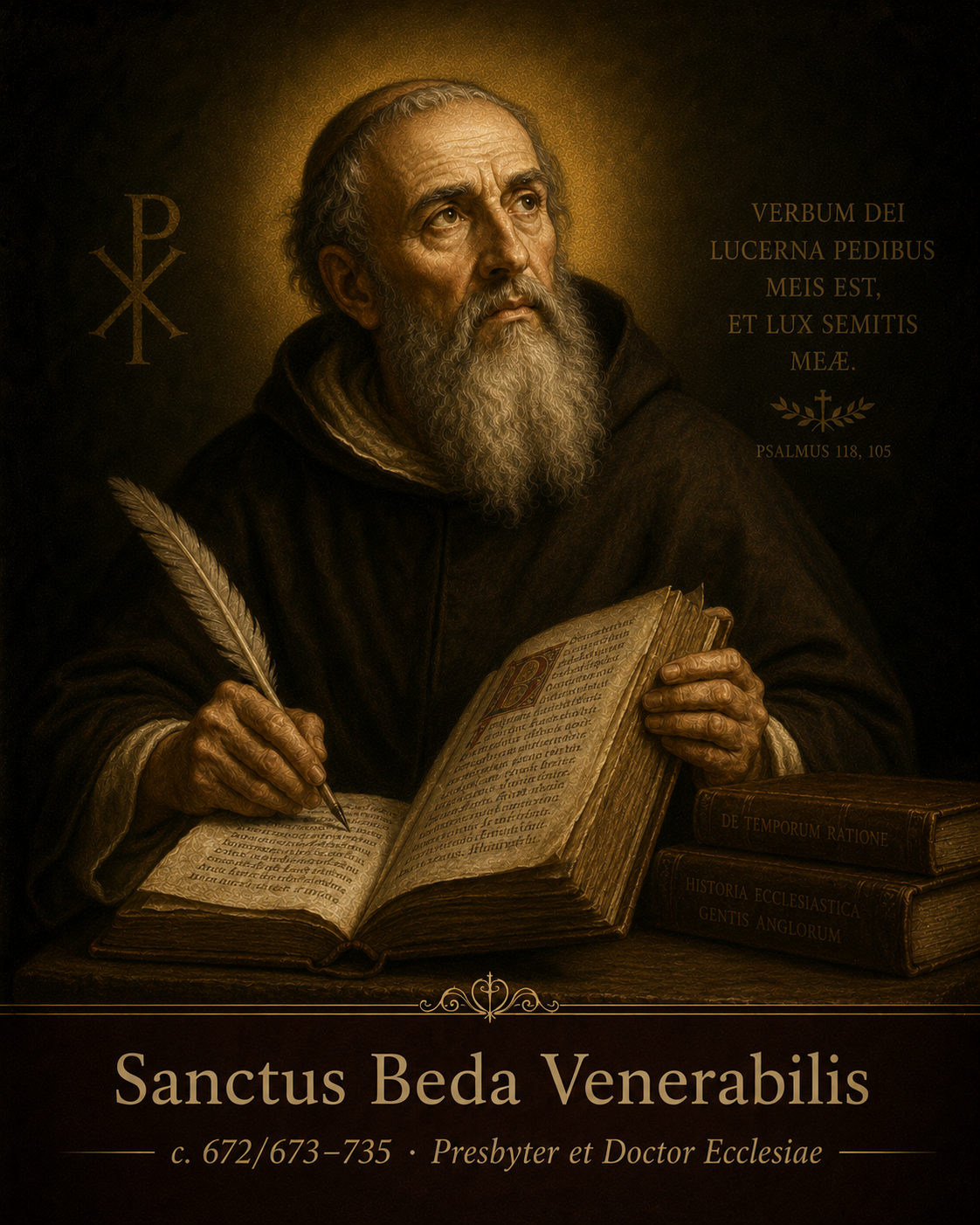 Sanctus Beda Venerabilisc. 672–735Patres Ecclesiae
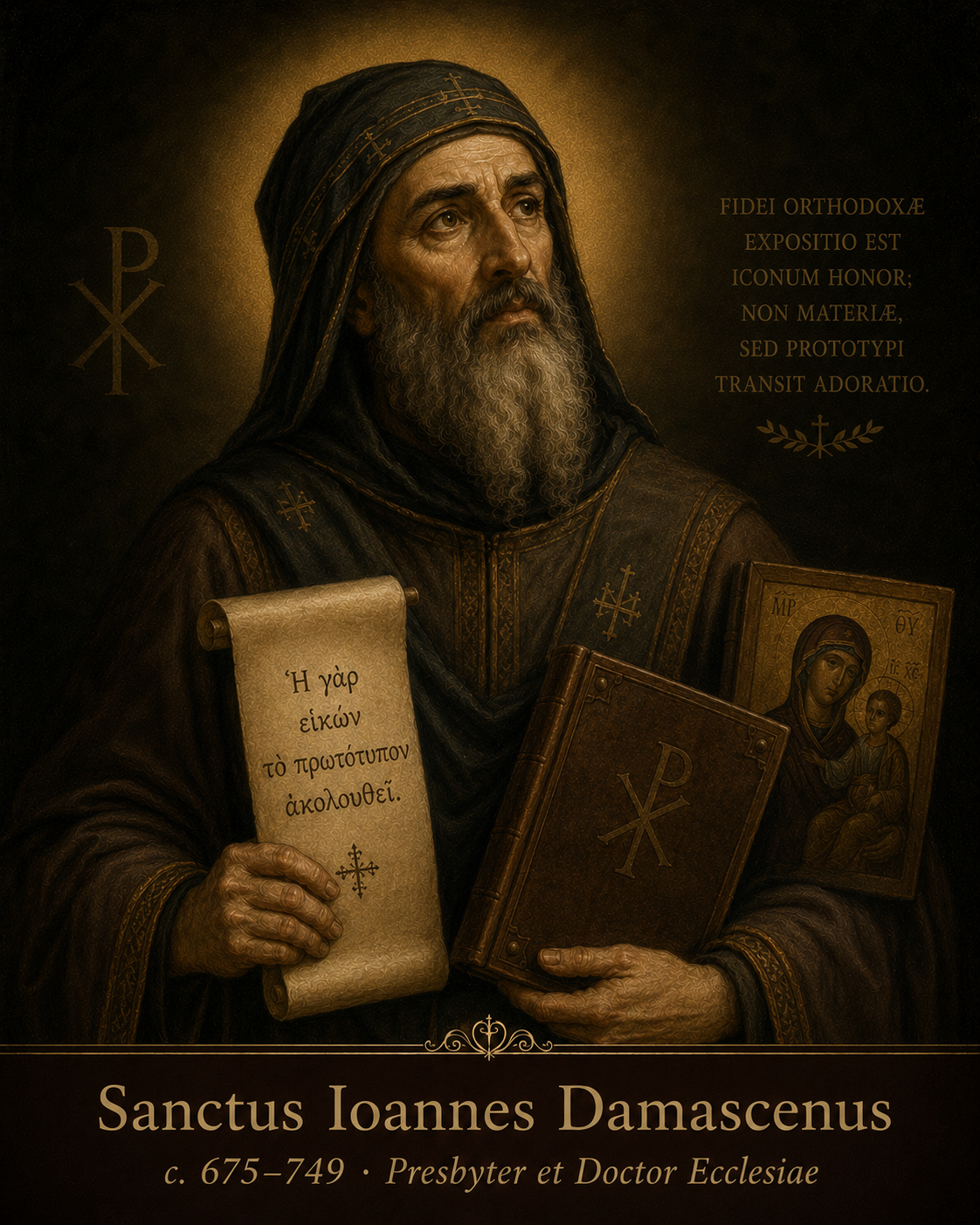 Sanctus Ioannes Damascenusc. 675–749Patres Ecclesiae
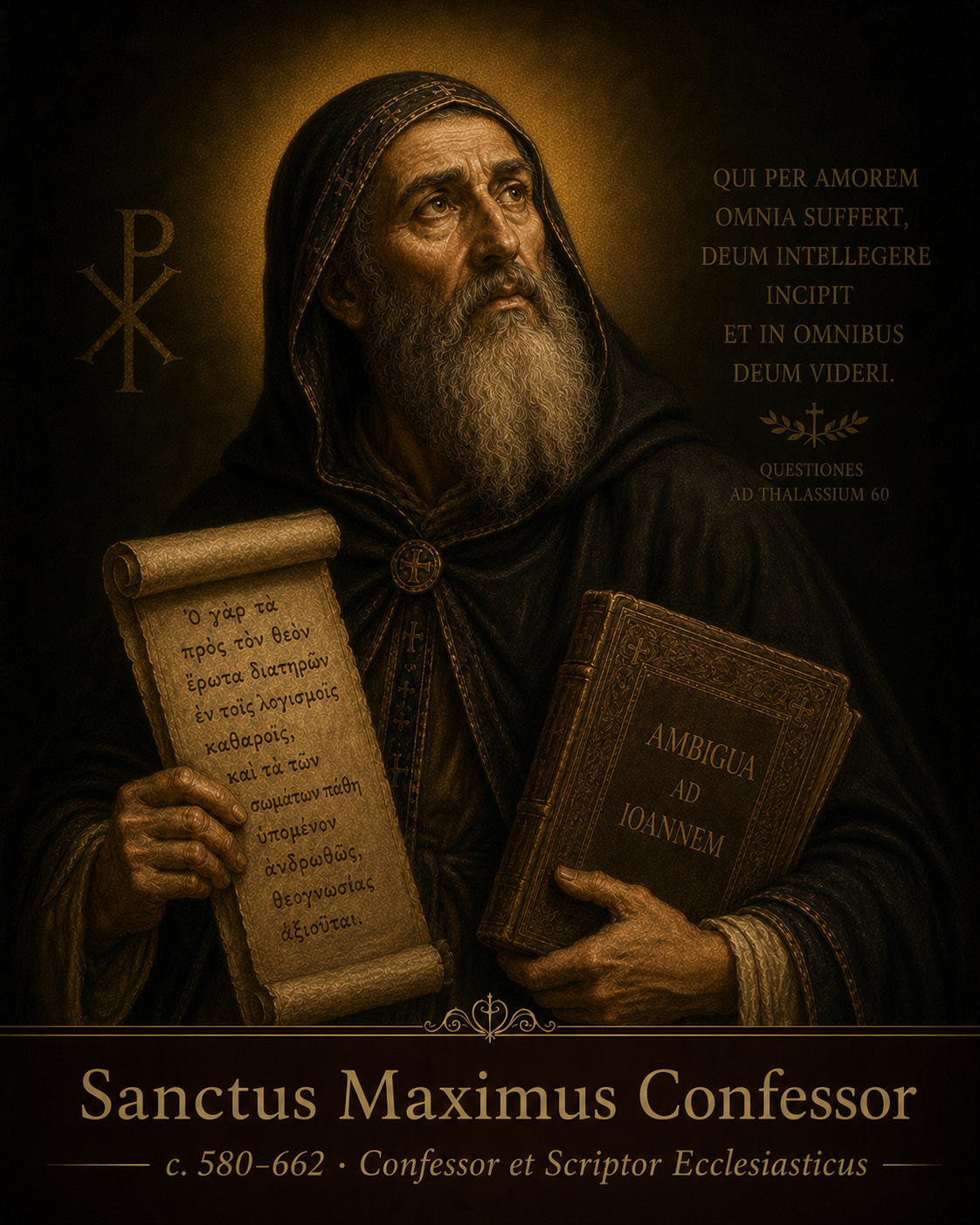 Sanctus Maximus Confessorc. 580–662Patres Ecclesiae
Historia Ecclesiae · reading key
Catholic history studies a community that understands itself as receiving the apostolic faith. That claim must be explored through identifiable witnesses: letters, conciliar texts, liturgical books, laws, material remains and the lives of local churches. A theological account of continuity does not settle every historical question about dates, motives or responsibility.
Genesis, Abraham, Moses, David and the prophets prepare the mind for a visible people of God. Covenant, priesthood, sacrifice, law, kingship, temple and prophecy are not discarded themes. They become intelligible in Christ and continue as the grammar by which the Church understands herself.
The Incarnate Word calls the Twelve, gives Peter a primatial role, institutes the Eucharistic sacrifice and sends the apostles to all nations. The Church therefore begins not as an idea but as a visible society formed by Christ, gathered at Pentecost and ordered around apostolic witness.
History becomes most legible in moments of conflict: persecution, Gnosticism, Arianism, schism, reform, modern revolution and missionary expansion. The Catholic question is always the same: where does the apostolic faith remain visible, sacramental, doctrinal and governed in communion?
I. Apostolic age
The apostolic age is the root from which later history must be read. The Church appears publicly in Jerusalem through preaching, baptism, Eucharist and communion under the apostles. From there the Gospel moves through Judea, Samaria, Syria, Asia Minor, Greece, Rome and beyond.
Acts presents the Church as a public body: the apostles teach, the faithful are baptised, the breaking of bread gathers the new people, and discipline is exercised. This is already more than private discipleship. It is visible communion.
Antioch becomes a major missionary centre and the place where the disciples receive the name Christian. Rome receives the blood of Peter and Paul and becomes the principal apostolic see of the West. The Church's geography becomes doctrinal: communion is not invisible, but embodied in sees, bishops, liturgy and public profession.
II. Fathers and councils
The Fathers do not invent another religion after the apostles. They receive the rule of faith, defend the Scriptures against false interpretations, explain the sacraments, witness to episcopal succession and prepare the doctrinal precision of the ecumenical councils.
The early Church answers Gnostic secrecy by public confession: one God, creation, incarnation, passion, resurrection, judgement and visible apostolic succession.
The Church receives apostolic writings within living worship and teaching. Scripture is never separated from the Church that reads it in the rule of faith.
Bishops are not decorative administrators. They are visible custodians of the apostolic deposit, sacramental order and communion of churches.
Nicaea, Constantinople, Ephesus and Chalcedon clarify the faith against reductions of Christ, the Trinity and the Incarnation.
III. From Christendom to modern mission
Later Church history cannot be reduced either to politics or to spirituality alone. Monasticism preserves prayer and learning; missionaries evangelise peoples; canon law orders public life; scholastic theology clarifies doctrine; councils answer crises; saints renew practice from within.
Freedom from persecution opens public Christian culture, while doctrinal crises require precise confession of the Trinity and Christ.
Benedictine life, papal mission and local churches shape education, worship, agriculture, manuscripts and Christian identity.
Gregorian reform, universities, mendicant orders and scholastic theology deepen the visible Catholic synthesis of faith and reason.
Trent, seminaries, catechisms, liturgical discipline and missionary expansion answer rupture with renewal and global proclamation.
Historical reading path
The panorama of Church history is not a loose row of disconnected epochs. Each age receives what came before, defends what is threatened, purifies what has become weak, and hands on doctrine, worship and apostolic order to the next generation.
Christ founds the Church, sends the apostles, establishes baptism, Eucharist, preaching, discipline and visible communion.
Explore this periodMartyrs, bishops and local churches confess the same rule of faith while the canon and liturgical life become publicly visible.
Explore this periodAgainst Gnostic, Arian, Nestorian and other reductions, the Church speaks precisely about Trinity, Christ and salvation.
Explore this periodMonasticism, mission, schools, canon law, universities and scholastic synthesis form a Christian civilisation of prayer and reason.
Explore this periodRupture forces the Church to clarify Scripture, Tradition, justification, sacraments, sacrifice and ecclesial authority.
Explore this periodThe Church confronts secular revolutions, nationalism, ideologies, missions, social questions and the crises of modern belief.
Explore this periodKeys of continuity
A purely political history of the Church becomes flat; a purely spiritual history becomes vague. Catholic history is clearest when the reader follows the visible bonds by which Christ keeps His Church in time.
Heresy often forces the Church to say more exactly what she already believes. Nicaea does not invent Christ's divinity; it protects the apostolic confession from reduction. Chalcedon does not create a new Christ; it guards the one Lord confessed in Scripture and worship.
The liturgy preserves history in visible form: Scripture proclaimed, sacrifice offered, saints commemorated, feasts celebrated, rites handed down. Even when political powers rise and fall, the Church remembers by praying, baptising, consecrating and teaching.
Apostolic succession is not an abstract claim. It is the historical form in which teaching, sacramental order and discipline remain public. The bishops, in communion with the Roman See, make the Church visible across geography and centuries.
Every crisis produces calls to return to the sources: Scripture, liturgy, poverty, learning, preaching, holiness and discipline. Benedict, Gregory, Francis, Dominic, Thomas, Catherine, Teresa, Ignatius and countless others renew the Church without founding another religion.
Crisis and renewal
Persecution, doctrinal disputes, reform and mission belong to this history alongside failures of leadership and abuses of power. Catholic belief in the Church’s enduring mission does not excuse wrongdoing by Christians. Assess particular actions from the evidence and distinguish moral responsibility from broad claims about an entire age or people.
The early martyr does not merely die for an idea. He witnesses that Christ is Lord, that the body will rise, and that no civil power can replace the worship owed to God.
Read the positions actually defended, the texts adopted by councils and the course of their reception. The Church’s doctrinal judgement and the historical explanation of a dispute answer related questions; neither licenses inventing motives for the people involved.
Authentic reform restores Catholic life to its sources. It deepens doctrine, purifies morals, strengthens clergy, renews liturgy and increases missionary zeal.
The Church moves from Jerusalem to the nations without ceasing to be one. Catholic history is therefore geographical, linguistic and cultural, yet ordered by one faith and one sacramental life.
Study bridges
Church history becomes more useful when the reader can move from period to source, from controversy to doctrine, and from event to visible Catholic continuity.
Historia Ecclesiae · guided entrance
Church history is the history of Christ’s visible Church acting through saints and sinners, doctrine and institutions, worship and mission, grace and human freedom. It cannot be reduced either to a list of popes and councils or to a political chronicle. The modules below teach the visitor to move from a broad period to concrete events, persons, documents and primary sources.
What did Christians confess, which errors forced clarification, and how were definitions received in preaching, liturgy and discipline?
How did bishops, the Roman See, councils, monasteries, orders, universities and canon law govern real communities?
How did Mass, the Divine Office, sacramental practice, devotion, asceticism and the cult of saints form Catholic life?
How did empires, kingdoms, cities, economies, wars, migrations and intellectual movements condition—not determine—the Church’s action?
Source laboratory
A trustworthy history page should let the reader see why a claim is made. Use this sequence whenever a controversy, miracle report, political accusation or doctrinal development is examined.
Read the evidence
A source answers a particular question from a particular setting. Read its argument, audience and limits before using it to explain a whole century.
In Against Heresies III.3, Irenaeus appeals to public episcopal succession against claims to secret teaching. He names the succession at Rome and recalls Polycarp, whom he had seen in his youth. This is evidence for Irenaeus’s understanding of continuity; it is not a complete administrative record of every early church.
Read Irenaeus, Against Heresies III.3Justin’s First Apology 65–67 describes baptismal initiation, the Eucharist, Sunday readings, prayer and help for people in need. Addressed to imperial authorities, the work explains and defends Christian practice. Compare it with other witnesses before treating its account as a complete service book for all regions.
Read Justin, First Apology 65–67Begin with the council’s text, identify the disputed question, and distinguish its doctrinal definitions from disciplinary measures. At Trent, Session XIV treats penance and extreme unction; its teaching on contrition, confession and satisfaction should be read within that sacramental argument. A definition and its later implementation are related but distinct subjects of study.
Read Trent, Session XIVLeo XIII’s Rerum novarum (1891) addresses workers, employers, property, public authority and associations. It supplies a concrete entry into the modern social question. As a normative teaching document, it explains principles and obligations; it does not by itself establish how every workplace or government behaved.
Read Rerum novarumA structured path through the whole history of the Church
Choose among twenty overlapping periods. Search for a person, event or theme, then open a period to compare doctrine, institutions, worship and social setting. Each period leads to focused dossiers and its source gateway. Dates and period boundaries are guides, not claims that every region changed at the same time.
The Church reads Israel's history as real history ordered by divine providence and as preparation for the Incarnation. Covenant, sacrifice, priesthood, kingship, prophecy, exile and restoration supply the language in which the New Testament proclaims Christ. Historical study must respect the literary forms and ancient Near Eastern setting of the biblical books without dissolving their theological claim.
Primary-source gateway: Biblia Sacra iuxta Vulgatam Clementinam, Genesis–Malachi, cited chapters; Flavius Josephus, Antiquitates Iudaicae, books I–XII; Septuaginta, ed. A. Rahlfs–R. Hanhart, relevant books; Mishnah, tractates Pesahim, Yoma and Avot, relevant passages
The apostolic age begins with the Incarnation and reaches the death of the last apostolic witnesses. The Gospels, Acts, letters and earliest post-apostolic texts reveal a Church already marked by doctrine, sacrament, hierarchy, mission and conflict. The decisive question is not whether later institutions appeared from nothing, but how apostolic structures developed while preserving identity.
Primary-source gateway: Novum Testamentum Graece, 28th ed., Gospels and Acts, cited chapters; Clement of Rome, Epistula ad Corinthios 42–44; Ignatius of Antioch, Epistulae, especially Smyrn. 8 and Rom.; Eusebius, Historia ecclesiastica I–III
Roman policy toward Christians shifted from local accusation to empire-wide coercion. Martyr acts, apologetic texts, imperial rescripts and later histories must be distinguished by date and genre. Persecution shaped discipline, the cult of martyrs and the theology of witness, while periods of peace were often longer than popular summaries suggest.
Primary-source gateway: Eusebius, Historia ecclesiastica III–IX; Herbert Musurillo (ed.), The Acts of the Christian Martyrs, relevant act; Lactantius, De mortibus persecutorum; Cyprian of Carthage, Epistulae, relevant letters
The Fathers interpreted Scripture, defended the rule of faith and created the theological vocabulary used by later councils. Their writings arose from preaching, controversy, catechesis, monasticism and episcopal government. Patristic consensus is not mechanical uniformity; it is a recognisable communion of faith across languages, schools and local disputes.
Primary-source gateway: Patrologia Graeca / Patrologia Latina, cited author and work; Irenaeus, Adversus haereses III.3–4; Augustine, De civitate Dei and Epistulae, relevant books; Vincent of Lérins, Commonitorium 2–3
Imperial patronage allowed public councils and basilicas but also introduced coercion and political interference. The ecumenical councils clarified Trinitarian, Christological and iconological doctrine through complex procedures, rival parties and long reception. Their dogmatic authority must be distinguished from every prudential act of emperors or council majorities.
Primary-source gateway: Acta Conciliorum Oecumenicorum, relevant council volume; J. D. Mansi, Sacrorum Conciliorum nova et amplissima collectio, relevant volume; Denzinger–Hünermann, Enchiridion symbolorum, relevant definitions; Theodoret, Historia ecclesiastica, relevant books
The transformation of the Roman world redistributed political power without erasing ecclesiastical continuity. Bishops, monasteries and the Roman see mediated law, charity and culture amid new kingdoms and conquests. Christianization was gradual, often negotiated through royal courts, local cults and missionary networks.
Primary-source gateway: Gregory of Tours, Historia Francorum, relevant books; Gregory the Great, Registrum epistularum; Bede, Historia ecclesiastica gentis Anglorum; Liber Pontificalis, relevant lives
Between the Mediterranean world and the Carolingian empire, missions, papal diplomacy, monastic learning and royal conversion formed new Christian societies. Liturgical and canonical diversity remained considerable. The period cannot be reduced either to cultural darkness or to an uncomplicated age of faith.
Primary-source gateway: Bede, Historia ecclesiastica gentis Anglorum; Liber Pontificalis, relevant papal life; Monumenta Germaniae Historica, Scriptores and Epistolae, relevant text; Carolingian capitularies in MGH Capitularia
Carolingian and Ottonian rulers used ecclesiastical institutions to reform education, worship and administration. The alliance strengthened schools and missions but also bound episcopal office to royal power. Cluny, Slavic missions and Roman reform currents prepared the eleventh-century contest over freedom and investiture.
Primary-source gateway: Monumenta Germaniae Historica, Capitularia and Epistolae; Annales regni Francorum; Alcuin, Epistolae, MGH Epistolae IV; Vitae and diplomata in MGH, relevant text
The reform papacy attacked simony, clerical incontinence and lay domination of ecclesiastical office. Its claims for Roman primacy and libertas Ecclesiae transformed law and politics. The investiture conflict was not a modern struggle between private religion and secular state, but a dispute over sacramental office within a Christian social order.
Primary-source gateway: Gregorii VII Registrum, MGH Epistolae selectae II; Decretum Gratiani, relevant causa and distinctio; Jaffé, Regesta Pontificum Romanorum, relevant entries; Monumenta Germaniae Historica, Libelli de lite
Crusading joined pilgrimage, penance, warfare, papal policy and aid to Eastern Christians. It produced new states, orders and legal institutions, but also massacres, coercion and deeper East-West estrangement. A serious account neither imposes anachronistic motives nor excuses actions contrary to justice.
Primary-source gateway: Fulcher of Chartres, Historia Hierosolymitana; Gesta Francorum et aliorum Hierosolimitanorum; Ibn al-Athir, al-Kamil fi al-taʾrikh, crusading passages; Regesta Regni Hierosolymitani, relevant charter
Universities and mendicant orders reorganized intellectual and pastoral life in expanding cities. Scholastic method disciplined questions through authorities, objections and distinctions; it did not oppose faith to reason. The same period saw cathedral culture, canon law and inquisitorial institutions whose benefits and abuses require separate judgment.
Primary-source gateway: Thomas Aquinas, Summa theologiae, cited question and article; Peter Lombard, Sententiae in IV libris distinctae; Constitutiones of the Dominican or Franciscan order, relevant chapter; Lateran IV canons in Conciliorum Oecumenicorum Decreta
Plague, war, fiscal strain and papal residence at Avignon formed the background to the Western Schism. Councils restored unity but generated theories placing a council above the pope. Reform movements were numerous before 1517, though they did not achieve a universal settlement of doctrinal and institutional grievances.
Primary-source gateway: Acta Concilii Constantiensis, relevant volume; Conciliorum Oecumenicorum Decreta, Constance–Florence; Theoderic of Niem, De schismate; Letters of Catherine of Siena, relevant letter
The sixteenth-century rupture combined doctrinal rejection, political protection, print culture and confiscation of ecclesiastical structures. Lutheran, Reformed and Anglican settlements differed sharply from one another. Catholic reform cannot be understood merely as reaction, yet Protestant challenges forced precise definition of disputed doctrines.
Primary-source gateway: Martin Luther, D. Martin Luthers Werke (WA), relevant text; Confessio Augustana (1530), relevant article; Acta of the Diet of Worms and imperial Edict (1521); Thomas Cranmer, Acts of the English Reformation, relevant document
Trent joined dogmatic definition to episcopal, clerical and liturgical reform. New and renewed orders, catechesis, seminaries, missions and sacred art reshaped Catholic life. Roman institutions defended doctrine but also employed censorship and coercive procedures that require exact institutional rather than legendary treatment.
Primary-source gateway: Concilium Tridentinum: Diariorum, actorum, epistularum, tractatuum nova collectio; Canones et decreta Concilii Tridentini; Acta Sanctae Sedis / papal bulls cited in dossier; Catechismus Romanus (1566), relevant part
Mission crossed imperial routes but was never identical with empire. Missionaries defended indigenous peoples in some contexts and cooperated with colonial systems in others; local catechists, families and converts were essential agents. Accommodation controversies show the difficulty of distinguishing legitimate cultural forms from religious practices incompatible with the faith.
Primary-source gateway: Monumenta Missionum Societatis Iesu, relevant region; Propaganda Fide, Acta and instructions, relevant document; Bartolomé de las Casas, Apología and Brevísima relación; Missionary letters in Monumenta Historica Societatis Iesu
Confessional states sought to subordinate the Church while Enlightenment criticism challenged revelation, religious orders and inherited privilege. Revolution then confiscated property, redrew dioceses and persecuted clergy and laity. Concordats restored public worship but often at the price of close governmental control.
Primary-source gateway: Pius VI, Quod aliquantum (1791); Concordat of 1801 and Organic Articles; French revolutionary legislation, relevant decree; Pius VII, correspondence and consistorial acts
Nineteenth-century Catholics faced nationalism, liberal constitutionalism, anti-clerical legislation and the end of papal temporal rule. Ultramontane unity around Rome culminated in Vatican I's definitions. The council's suspension left much of its program unfinished but did not weaken the authority of the constitutions actually promulgated.
Primary-source gateway: Acta et decreta sacrosancti oecumenici Concilii Vaticani; Pius IX, Ineffabilis Deus, Quanta cura and Syllabus; Vatican I, Dei Filius and Pastor aeternus; Acta Pii IX, relevant volume
Industrial society, historical criticism, nationalism and total war confronted the Church with unprecedented questions. Social doctrine, Thomistic renewal, codification and anti-modernist measures developed together. During the world wars Catholic responses ranged from martyrdom and rescue to compromise, nationalism and institutional failure.
Primary-source gateway: Acta Apostolicae Sedis, relevant year and document; Leo XIII, Rerum novarum (1891); Pius X, Pascendi dominici gregis (1907); Vatican diplomatic archives and episcopal documents, cited file where available
The postwar Church entered Vatican II with strong institutions and significant intellectual ferment. The council's texts, their official interpretation and their later implementation must be distinguished. The postconciliar decades combined missionary expansion and new movements with liturgical conflict, doctrinal dissent and rapid secularization.
Primary-source gateway: Acta Synodalia Sacrosancti Concilii Oecumenici Vaticani II; Vatican II, constitutions, decrees and declarations; Acta Apostolicae Sedis, 1962–2005, relevant document; Paul VI and John Paul II, cited allocution or apostolic constitution
The contemporary Church is global, digitally connected and exposed to intense scrutiny. Papal transitions, synodal projects, liturgical regulation, abuse accountability and persecution belong to history even while evidence is still accumulating. Dossiers in this period therefore mark provisional judgments more explicitly than earlier articles.
Primary-source gateway: Acta Apostolicae Sedis and Holy See Press Office, relevant date; Code of Canon Law (1983), relevant canon; Papal document cited in dossier; Official Vatican biography, bulletin or liturgical act, relevant date
Integrated research paths
The period guide remains the spine of the page. These panels open the documentary and geographic layers at the point where each historical period is already being studied, rather than sending the reader to a detached replacement portal.
Read salvation history as preparation for Christ, then follow the visible apostolic Church from Jerusalem through Antioch, Asia Minor, Greece and Rome. The historical question is not merely when Christian ideas appeared, but how preaching, baptism, Eucharist, apostolic authority and local churches formed one public body.
The period pages connect the biblical line of promise with Pentecost, the Council of Jerusalem, Pauline mission and the Roman witness of Peter and Paul. Apostolic biographies and source records can then be opened without leaving the chronology.
The early centuries must be read through three connected movements: public witness under persecution, the growth of episcopal and sacramental life, and the conciliar clarification of doctrine. Martyr acts, apologetic writings, baptismal catecheses, episcopal letters and council records illuminate different aspects of the same Church.
The map and place profiles help distinguish Rome, Antioch, Alexandria, Carthage, Jerusalem and the Cappadocian centres, while the period and dossier links place each controversy in its own sequence.
Medieval Church history is not a single rise or decline. It joins missionary expansion, monastic renewal, cathedral and university culture, papal-imperial conflict, canon law, crusading, mendicant preaching and repeated reform. Each institution must be dated and located before it is judged.
The research layer therefore connects the narrative to cities, sees, routes, councils and dossiers on the Gregorian reform, crusades, scholasticism and conciliarism.
The Reformation era is studied through doctrine, political authority, liturgy, printing, confessional law and the Catholic renewal centred on Trent. At the same time, missionary expansion moved the Church into the Americas, Africa and Asia, creating new questions of language, patronage, colonial power and local reception.
Use the period pages together with dossiers, biographies and source cards so that theological claims, civil measures and missionary practice are not collapsed into one judgement.
Modern Church history requires parallel attention to revolution, nationalism, industrial society, social teaching, modernism, totalitarianism, the world wars, the two Vatican Councils and the global transformation of Catholic life. Contemporary records are marked as provisional where historical distance is still short.
Controversial histories—persecution of Jews, coercion, institutional failures and postconciliar conflict—belong inside the same chronology, but must be analysed by period, agent, jurisdiction and documentary evidence.
A period becomes intelligible when the reader can move between narrative and evidence. Biographies identify actors and offices; place profiles anchor events geographically; source cards distinguish text, catalogue record and later witness; maps place routes, boundaries and institutions in time. These are supporting layers of the existing history, not a second history beside it.
No periods match this search. Choose Whole history or try a different search term.