
Not one phenomenon
Germany, Scotland, France, Switzerland, Spain, Italy and New England did not share one identical legal culture. Local panic could matter more than central theology.
Witch trials are a further and darker theme adjacent to the Inquisition. They cannot be reduced to one Church tribunal, one country, or one cause. They belong to early modern fear, local law, demonological theory, social accusation, evidence, confession, politics and popular panic.
This page is built as a bridge from the Inquisition dossier: where inquisitorial structures appear, where civil courts dominate, why some ecclesiastical authorities urged caution, and how a Catholic reader can judge the history without denying the reality of evil or excusing unjust proceedings.
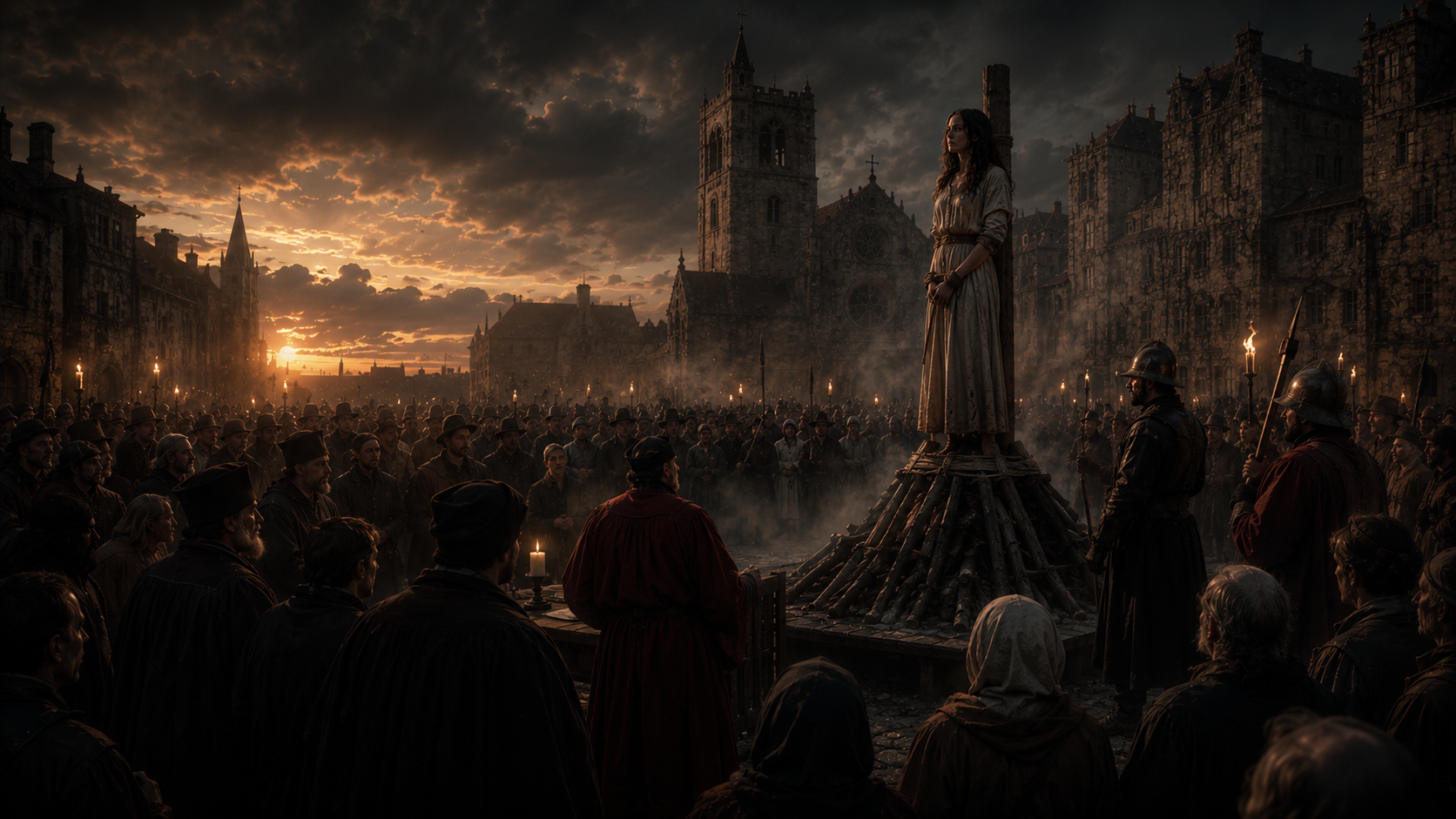
The two themes overlap in public memory, but the overlap must be carefully explained. Some witchcraft cases came before ecclesiastical or inquisitorial institutions; many others were prosecuted by secular courts. The legal logic, evidentiary standards and number of executions differed sharply by region.
Germany, Scotland, France, Switzerland, Spain, Italy and New England did not share one identical legal culture. Local panic could matter more than central theology.
Many large witch persecutions were driven by territorial, municipal or secular courts. The word “Inquisition” is often used too broadly.
Christian doctrine recognizes demonic evil, superstition and occult sin; it does not thereby validate every accusation or every method of proof.
Some Catholic jurisdictions were more restrained than surrounding courts, especially where procedure required stricter proof and suspicion of mass panic.
A structured history of relation, chronology, law, theology, argumentarium and bridges.
The witch trials are related to the Inquisition because both concern courts, religious fear, heresy, confession, penance, coercion and the boundary between Church and civil authority. But they are not the same thing.
The medieval inquisition was primarily concerned with heresy among the baptized. Witch trials, especially in the early modern period, often concerned alleged harmful magic, pact with demons, maleficium, nocturnal assemblies, social misfortune and local accusation. In many places these cases were heard by secular courts, and mass panics could grow without direct ecclesiastical control.
It is therefore historically false to say simply: “The Inquisition burned witches.” It is also too easy to say: “The Church had nothing to do with the problem.” Catholic Europe shared assumptions about sin, demons, sacrilege and social order. Clergy, theologians, judges and lay magistrates all participated in the culture that made accusations plausible. The task is to distinguish responsibility without falsifying the map.
Scripture condemns sorcery, divination and occult practice, but biblical condemnation is not identical with every later legal theory of witches’ sabbaths or mass conspiracy.
Several early medieval ecclesiastical texts were skeptical toward claims that women physically rode through the night with pagan spirits. The Church often treated such claims as superstition rather than proof of a vast conspiracy.
Demonological speculation intensifies. Learned theories about demonic pact and harmful magic combine with local fears and legal developments.
The main European witch-hunt period unfolds unevenly. Large clusters occur in some German-speaking and French-speaking territories, in Scotland and in other regions. Spain and Italy often show more restrained patterns under stronger procedural oversight.
Legal skepticism, centralizing states and changing evidentiary standards contribute to the decline of prosecutions. The end comes unevenly, but the intellectual climate has changed.
Many cases began not from abstract theology but from misfortune: illness, crop failure, death of animals, family conflict, unexplained harm or social resentment. A vulnerable person could become the focus of fear.
Once torture entered a case, confession could produce names of accomplices, and those names could generate chains of accusation. This mechanism explains how local suspicion became mass panic.
Where central legal review was stronger, accusations could be controlled. Where local courts were autonomous and fear was intense, prosecutions could multiply quickly.
Trials often confused rumor with proof, misfortune with malice, folk belief with crime and confession under pressure with truth. A Catholic account can affirm that occult sin is real while still rejecting unjust evidentiary methods.
The deepest juridical lesson is that zeal without disciplined proof becomes dangerous. This is why canon law, due process, stable doctrine and sober pastoral judgment matter.
Christian doctrine does not explain away the devil, temptation, occult sin or spiritual danger. The Church warns against magic, divination and superstition because they turn the soul away from trust in God.
The reality of evil does not give a court permission to believe every rumor. The Catholic tradition requires justice, prudence, protection of the innocent, sober evidence and resistance to panic.
Some accused persons were likely mentally ill, socially marginal, isolated, widowed, poor or trapped in local conflicts. The Christian response should have been pastoral protection rather than crowd-driven fear.
When real occult practice exists, the first desire of the Church is repentance, confession, renunciation and restoration to sacramental life, not spectacle or vengeance.
This accusation collapses many pre-Christian, folk, legal and social elements into a single religious cause.
Christian doctrine condemned sorcery, but the early modern witch-hunt phenomenon arose from a convergence of law, fear, social conflict, demonology, torture procedure and local politics. Religion was part of the world in which it happened; it was not the only cause.
No. Belief in demons is doctrinal; belief in every accusation is credulity. Catholic theology can affirm spiritual warfare while condemning reckless evidence, torture-induced confession and unjust execution.
The geography of witch trials shows wide variation. Many major persecutions were civil or local. Some inquisitorial jurisdictions were comparatively skeptical. The relation to the Inquisition must be studied, not assumed.
This dossier should be read together with Inquisition, canon law, demonology, moral theology, confession, superstition and historical apologetics.
Belief, panic and criminal process
Early modern prosecutions varied by territory and were frequently driven by secular courts, local accusation and exceptional criminal procedure. Catholic and Protestant lands must be compared, as must regions with intense trials and regions where church courts or central authorities restrained them.
Illness, death, crop failure, feud and reputation could generate a local charge.
Learned constructions of pact and sabbath changed the interpretation of alleged harm.
Torture, cumulative accusation and rules for exceptional crimes could multiply confessions and names.
Magistrates sought moral order, while jurisdictional rivalry affected restraint or escalation.
Canonists, theologians, confessors and higher courts questioned evidence and curtailed prosecutions in different settings.