
Scripture
The inspired books are the written apostolic and prophetic witness, read within the canon and life of the Church.
Doctrina Catholica
Doctrine is the ordered form of revealed truth: received from God, handed on by the Apostles, guarded by the Church, defined when necessary, worshipped in the liturgy and lived in charity.
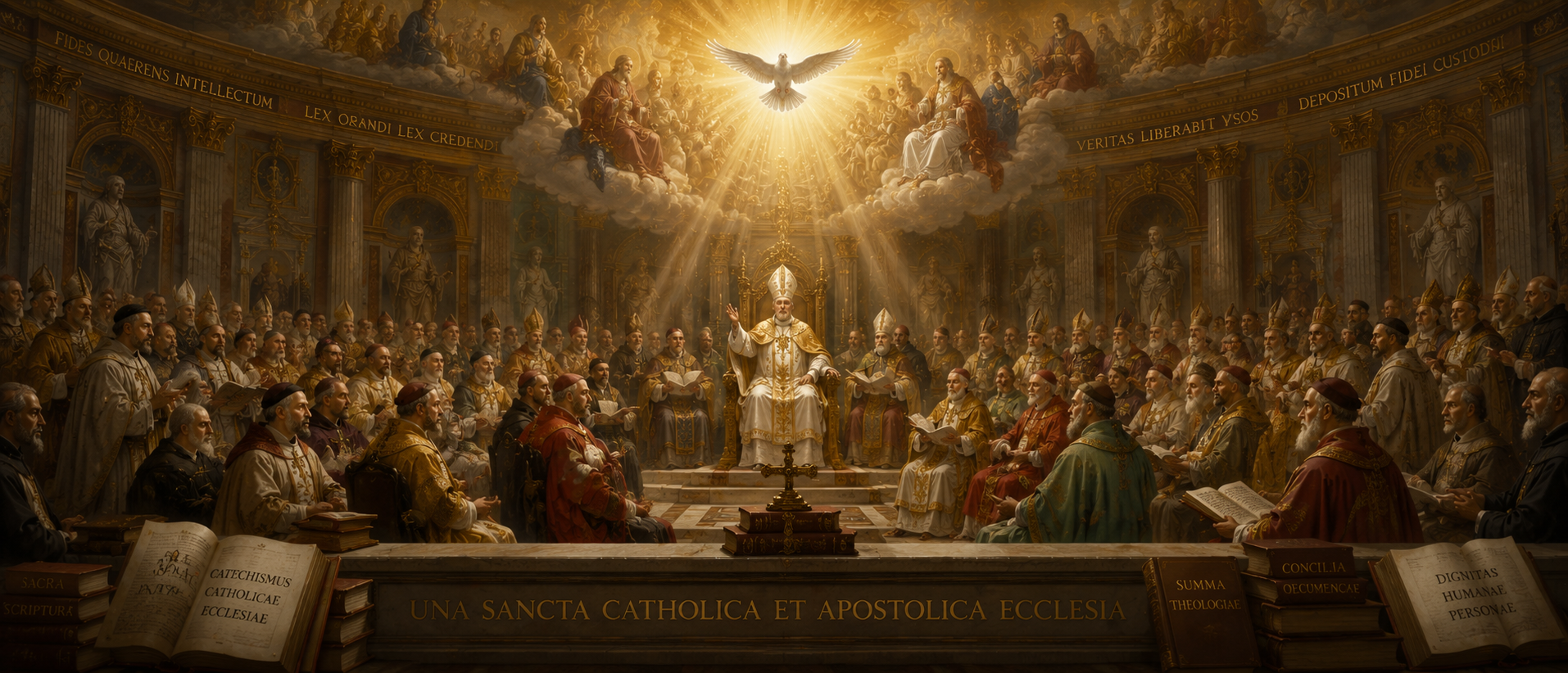
I · Source and order
Catholic doctrine begins with divine revelation. The Church does not create the faith from below; she receives, guards, explains and hands on what God has revealed in Christ through the Apostles.
The inspired books are the written apostolic and prophetic witness, read within the canon and life of the Church.
Apostolic Tradition is not rumor or custom alone; it is the living transmission of worship, doctrine, discipline and sacramental life.
The teaching office serves the Word of God by authentically guarding and explaining the deposit entrusted to the Church.
II · Apostolic continuity
The doctrine of the Church is historical, sacramental and public. It is not detached from the Apostles, the episcopate, the Roman See, councils, liturgy and the witness of the saints.
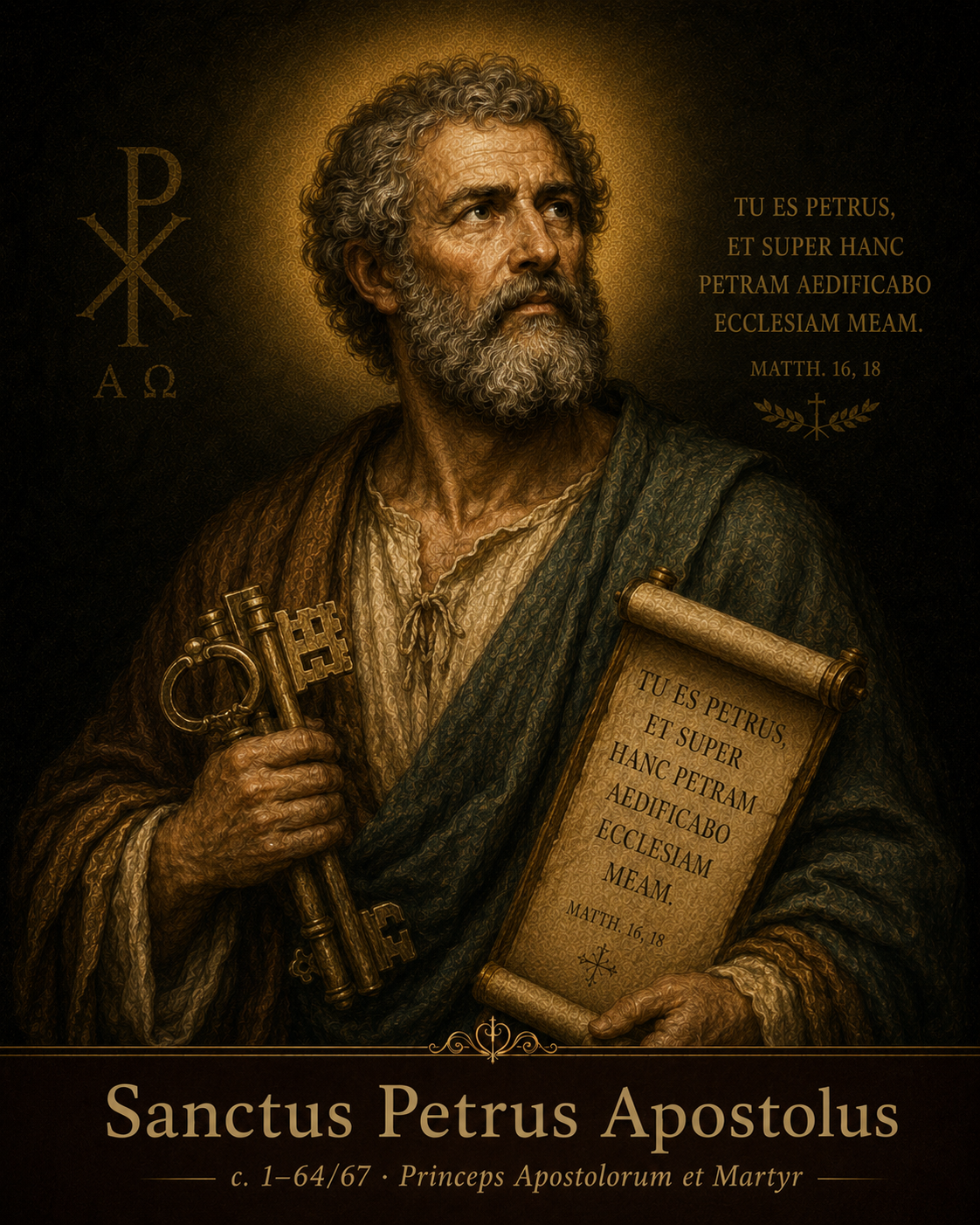
The Petrine office protects unity and public confession, not by replacing revelation, but by serving its visible continuity.
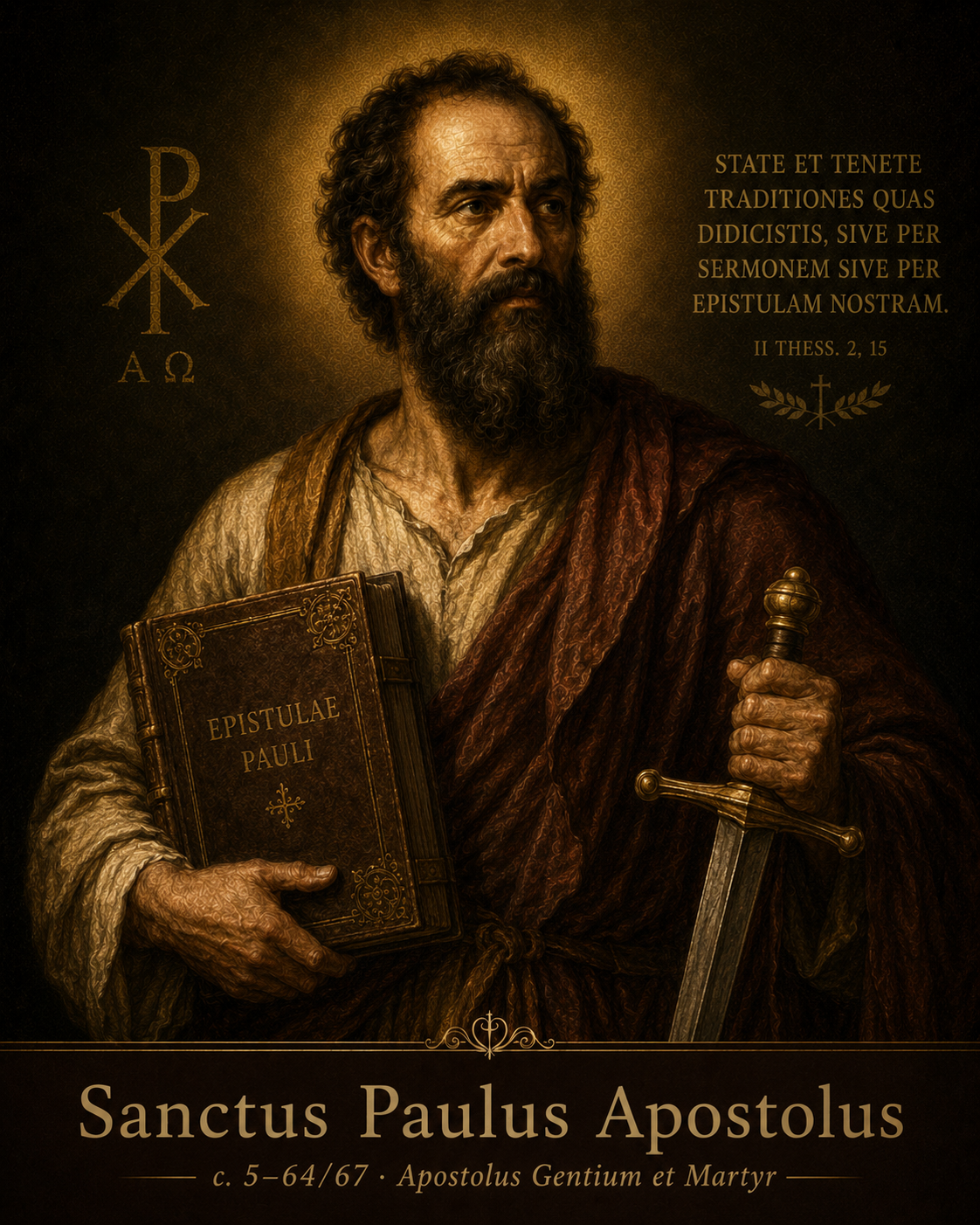
Paul’s language of receiving and handing on shows that doctrine is traditioned before it is systematised.
III · Teaching office
The Magisterium is not a machine for novelty and not a private academy. Its authority is ordered to the apostolic deposit, to the rule of faith, to the sacraments and to the salvation of souls.
The daily teaching of the Church forms the faithful in doctrine, worship and morals.
Dogmatic definitions clarify disputed truth and bind the Church to explicit confession.
Councils judge controversies, condemn errors and articulate doctrine in public ecclesial form.
Truths are ordered around the central mysteries, especially Trinity, Incarnation, grace and the Church.
IV · Main doctrinal map
Doctrine becomes clear when the mysteries are arranged according to their inner order rather than treated as detached topics.
One God in three Persons: the source of all doctrine, worship and supernatural life.
All things receive being from God and are ordered by His wisdom without collapsing into God.
The Word made flesh is the centre of revelation and the key to man’s redemption.
Grace heals, elevates and sanctifies; virtue orders the human act toward charity and beatitude.
The Church is visible, hierarchical, sacramental and missionary; the sacraments communicate Christ’s grace.
Judgment, heaven, purgatory, hell and resurrection give moral life and history their final seriousness.
V · Doctrinal judgment
Doctrine is harmed both by maximalism, which treats every recent statement as irreformable, and by minimalism, which recognises only rare solemn definitions. Catholic judgment reads the proposition inside the whole economy of Scripture, Tradition and the Magisterium.
The author, juridical form, intended audience, object, repetition and definitive intention must be identified before the act of assent is assigned.
Truth contained in the Word of God and proposed as revealed. It is believed with theological faith because of God revealing.
A proposition required for guarding or expounding revelation. It is held firmly and irreformably, though its formal motive differs from revealed dogma.
Real teaching authority calling for religious submission, proportioned to the act and open to clarification or reform.
Commands and structures ordered to ecclesial life. They can bind canonically without becoming dogmatic definitions.
A reasoned consequence drawn from revealed principles. Its certainty depends upon the premises and the necessity of the inference.
A permitted explanation that may be venerable and probable without being identical with the faith of the Church.
Inflating a reformable opinion into dogma gives opponents an easy target and burdens conscience falsely. Reducing dogma to optional opinion destroys the certainty promised by Christ. Theological notes preserve the proper firmness of each truth.
VI · Theological method
A serious doctrinal page should not begin from slogans and then search for decorative quotations. It begins from authoritative sources, establishes their meaning, identifies the controversy, and only then constructs a synthesis capable of answering objections.
Read Scripture in its literal and canonical sense, then trace the rule of faith, liturgical confession and patristic reception. The canon itself witnesses that the inspired text belongs within apostolic transmission rather than private self-authentication.
Conciliar canons, papal definitions, universal episcopal teaching and catechetical summaries do not function identically. The exact document, approving authority, date and source language determine how a passage is used.
Philosophy clarifies being, cause, person, nature, substance, relation, freedom and finality. It cannot invent a mystery, but defective philosophy can make the revealed proposition appear contradictory. Theology therefore neither despises reason nor permits a philosophical fashion to judge revelation from above.
Apologetics should state the opponent’s actual premise, acknowledge difficult evidence and distinguish abuse from doctrine. A historical failure by a churchman does not automatically refute a dogma; neither may a Catholic conceal the failure by misclassifying every criticism as hostility to the Church.
VII · Ascending formation
Catholic formation begins with revelation and the act of faith, passes through the Church’s doctrinal judgment, and then enters the principal mysteries in their classical order. The sequence makes clear how each truth depends upon what precedes it and directs Christian understanding, worship and life toward its supernatural end.
VIII · Continue
Doctrine points beyond itself to deeper study, prayer, worship and defence of the faith.
IX · Visual study
Doctrine is expressed through texts, images, liturgy, saints and typology. Visual study helps the reader see how dogmatic truth is woven into Scripture and worship.
Catholic doctrine reads Scripture inside apostolic transmission and public ecclesial witness.
Marian doctrine is read through Christ, covenant, typology and the holiness of the Church.