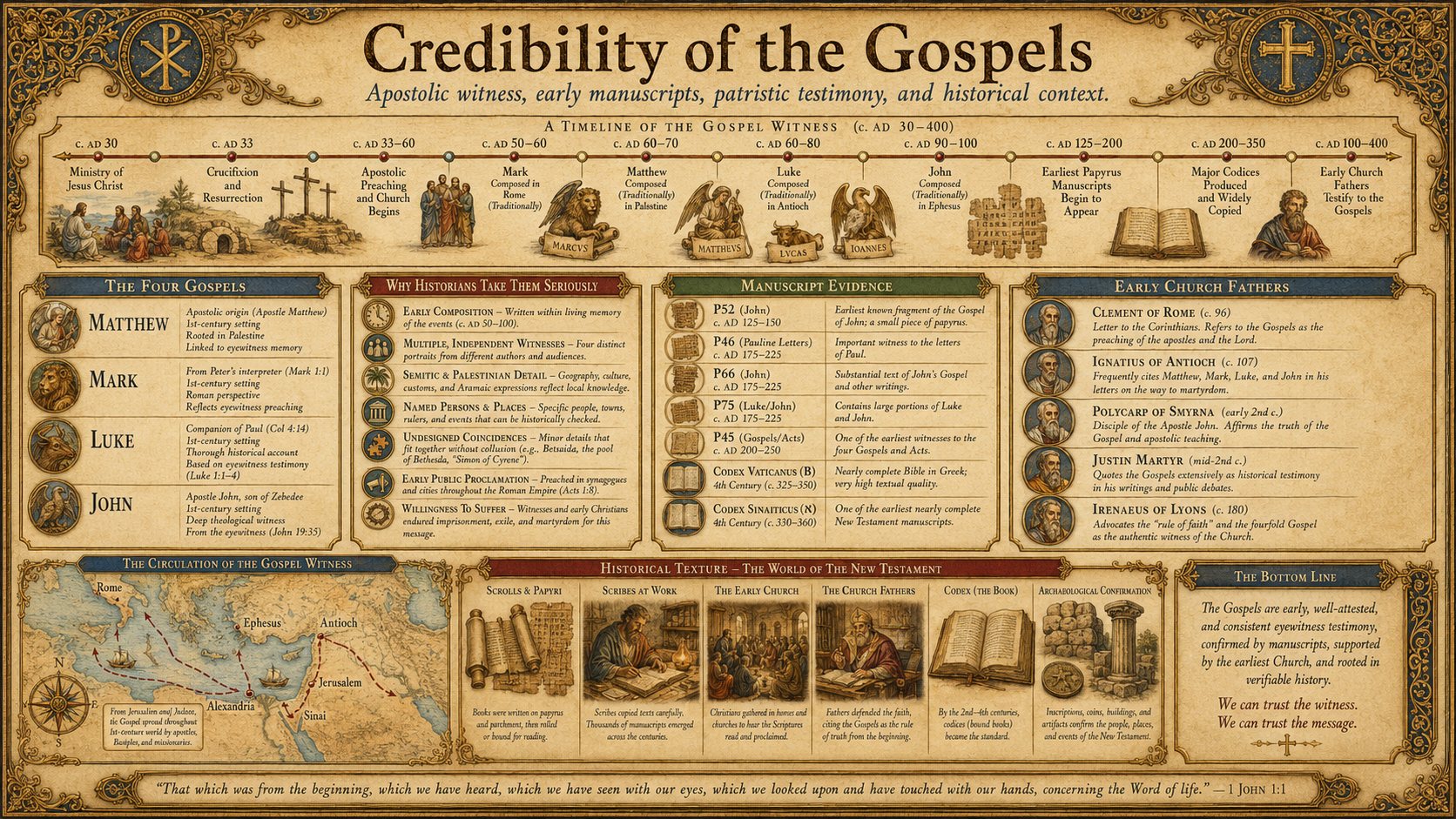
Israel · foedus, promissio et adimpletio

Prophecy and Messianic Expectation

Davidic king, servant, prophet, priest and Son of Man in the scriptural horizon.

Jerusalem, the covenant, the prophets and the fulfilment of Israel in Christ
Source-led study within Judaism: chronology, primary evidence and explicit objections.

START HERE · FOR THE SEARCHER

What does “Prophecy and Messianic Expectation” teach, and can it lead the person to the final truth about God and salvation?

This study begins with the tradition’s own texts and categories. It then tests the claim by reason and history before comparing its promised liberation or salvation with creation, revelation, Christ and eternal communion with God.

1 · UNDERSTAND

What is this teaching?

Davidic king, servant, prophet, priest and Son of Man in the scriptural horizon. No single proof text contains the whole portrait, but the converging lines of Davidic kingship, suffering servant, new covenant, divine visitation, eschatological judge and blessing of the nations form a cumulative pattern uniquely fulfilled in Jesus.

2 · WHY IT MATTERS

Why does it affect your final end?

The decisive question is whether covenant, sacrifice, prophecy and messianic promise reach their announced fulfilment in Jesus. The answer concerns fidelity to God’s prior word and the universal way of salvation.

3 · WHERE THE EVIDENCE LEADS

Where does the evidence lead?

Catholic messianic proof is cumulative and Christological. It avoids both atomized predictions and a purely political Messiah by reading the whole canon around the death, Resurrection and universal mission of Jesus. The Old Testament is divine revelation and an integral part of the Christian Bible. The Church does not approach Israel as though God had never spoken there; she receives the patriarchs, law, psalms, prophets and wisdom as her own sacred inheritance, read in the unity of God’s plan.

READ IN THIS ORDER

  1. Understand the teachingIdentify what it says about ultimate reality, the person, suffering, worship, death and salvation.
  2. Examine the evidenceDistinguish ancient source, later development, philosophical claim and devotional practice.
  3. Ask whether the promise is completeSee whether the path preserves personal identity, moral responsibility and reconciliation with the Creator.
OPTIONALSource notes and argument map · Prophecy and Messianic Expectation

This optional layer verifies the conclusion instead of merely repeating it. It identifies the controlling terms, dates the decisive witnesses, links the primary texts and states which premise the strongest contrary case must deny.

CHRONOLOGICAL CONTROL

The historical sequence behind Prophecy and Messianic Expectation

Keep the layers distinct: the inspired Old Testament, Second Temple institutions and schools, the life of Christ and apostolic witness, the destruction of the Temple in AD 70, and the later rabbinic compilations. A later commentary must be judged in relation to the earlier revelation it interprets.

Open The historical sequence behind Prophecy and Messianic Expectation

PRIMARY EVIDENCE

Sources for checking the conclusion

The routes below lead to the primary texts, official sources and Katholon readers required to verify the claims made about Prophecy and Messianic Expectation. They also place the dossier within a chain of adjacent questions so that no conclusion is detached from the evidence that qualifies it.

Open Sources for checking the conclusion

STRONGEST CONTRARY CASE

The strongest objections answered

The replies concerning Prophecy and Messianic Expectation do not answer weaker substitutes. Each objection is stated in a form an informed adherent could recognize before the premise or distinction on which the answer turns is identified.

Open The strongest objections answered

Argument map

  1. Claim to test. What does “Prophecy and Messianic Expectation” teach, and can it lead the person to the final truth about God and salvation?
  2. Why it matters. The decisive question is whether covenant, sacrifice, prophecy and messianic promise reach their announced fulfilment in Jesus. The answer concerns fidelity to God’s prior word and the universal way of salvation.
  3. Evidence-bearing step. The routes below lead to the primary texts, official sources and Katholon readers required to verify the claims made about Prophecy and Messianic Expectation. They also place the dossier within a chain of adjacent questions so that no conclusion is detached from the evidence that qualifies it.
  4. Conclusion reached. Catholic messianic proof is cumulative and Christological. It avoids both atomized predictions and a purely political Messiah by reading the whole canon around the death, Resurrection and universal mission of Jesus.

Degree of certainty. Metaphysical contradictions can be judged by reason; dates, authorship and transmission receive historical degrees of certainty. The final religious judgement is cumulative: a later claim must not contradict truths already established by reason or a prior public revelation without proportionate evidence.

Start with the question

Do the prophets yield a coherent messianic expectation fulfilled in Jesus?

No single proof text contains the whole portrait, but the converging lines of Davidic kingship, suffering servant, new covenant, divine visitation, eschatological judge and blessing of the nations form a cumulative pattern uniquely fulfilled in Jesus.

No single proof text contains the whole portrait, but the converging lines of Davidic kingship, suffering servant, new covenant, divine visitation, eschatological judge and blessing of the nations form a cumulative pattern uniquely fulfilled in Jesus.

The argument turns first upon plural expectations and davidic promise. Second Temple Jews expected variously a Davidic king, priestly figure, prophet like Moses, heavenly Son of Man, national deliverer or no individual Messiah. Diversity cautions against a simplistic checklist but does not erase scriptural convergence. 2 Samuel 7 and royal psalms establish an enduring house and sonship. Exile intensifies the question of how the promise survives the apparent end of the monarchy.

The remaining evidence—suffering and vindication, new covenant and spirit, danielic horizon, and apostolic rereading—must be read in chronological order. The Catholic conclusion follows only after the tradition’s own texts, schools and institutions have been identified, and after the philosophical premises at issue have been stated rather than assumed.

Historical setting

The historical sequence behind Prophecy and Messianic Expectation

The sources relevant to prophecy and messianic expectation belong to different periods and institutions. The sequence below prevents a late synthesis from being read back into an earlier witness.

Patriarchal and Mosaic ages

Promise, exodus, covenant and Torah

Israel’s identity is narrated through divine election, deliverance from Egypt, covenant at Sinai, priesthood, sacrifice and a land ordered to holiness. These are not detachable symbols; they establish the historical grammar in which messianic fulfilment is later announced.

Monarchy and prophets

Temple, Davidic promise and prophetic judgement

Kingship and temple worship are joined to promises concerning David, while the prophets rebuke idolatry and injustice, announce judgement and speak of restoration, a new covenant, a purified remnant and a servant through whom the nations are blessed.

Second Temple period

Plural Jewish worlds before and during Christ

Persian, Hellenistic and Roman rule, the rebuilt Temple, the Septuagint, apocalyptic hope, Pharisees, Sadducees, Essenes and other currents form the immediate world of Jesus and the apostles. “Judaism” in the first century was real but internally diverse.

After AD 70 and 135

Rabbinic reconstruction and the Christian mission

The destruction of the Temple and the failure of the Bar Kokhba revolt transformed Jewish life. Rabbinic traditions developed without sacrifice or a Davidic king, while the Church—born from Israel and rapidly including the nations—confessed the New Covenant as fulfilled in Christ.

Plain language

Key words in ordinary language

Before arguing about prophecy and messianic expectation, the principal terms must be used in the sense given by the relevant texts and schools. A definition identifies the claim; it does not settle it.

The definitions used in the question of Prophecy and Messianic Expectation are deliberately limited. They prevent equivocation while leaving the historical and metaphysical case to the sections that follow.

Where a term changes meaning between the schools or periods relevant to Prophecy and Messianic Expectation, the dossier names the difference instead of forcing every witness into one modern definition.

Israel

Depending on context: Jacob, the tribes descended from him, the covenant people, the northern kingdom, or the people addressed in the biblical and apostolic promises. The term must not be carelessly equated with every modern political category.

Covenant

A divinely initiated bond with promises and obligations. Biblical covenants form an ordered history rather than mutually exclusive religious contracts.

Messiah

The anointed one expected in relation to kingship, priesthood, prophetic fulfilment and the restoration of God’s people. Second Temple expectations were multiple; Christian faith identifies Jesus as the one in whom the scriptural lines converge.

Rabbinic Judaism

The religious civilization shaped by the Mishnah, Talmuds and later halakhic and exegetical traditions after the Temple’s destruction. It is historically related to, but not simply identical with, all forms of biblical or Second Temple Judaism.

Public evidence

What the evidence shows

Each movement in the study of prophecy and messianic expectation joins a textual witness to its historical setting and doctrinal consequence. None is treated as an isolated quotation capable of carrying the entire argument.

Evidence 01

Plural expectations

Do the prophets yield a coherent messianic expectation fulfilled in Jesus?

Second Temple Jews expected variously a Davidic king, priestly figure, prophet like Moses, heavenly Son of Man, national deliverer or no individual Messiah. Diversity cautions against a simplistic checklist but does not erase scriptural convergence. This evidence fixes the point of departure and prevents a later summary from being mistaken for the earliest witness.

Evidence 02

Davidic promise

Do the prophets yield a coherent messianic expectation fulfilled in Jesus?

2 Samuel 7 and royal psalms establish an enduring house and sonship. Exile intensifies the question of how the promise survives the apparent end of the monarchy. Its significance becomes clear only when wording, ritual setting and institutional reception are considered together.

Evidence 03

Suffering and vindication

Do the prophets yield a coherent messianic expectation fulfilled in Jesus?

Isaiah’s servant, rejected righteous figures and psalms of suffering provide categories by which apparent defeat can belong to God’s saving victory rather than disprove messiahship. The point does not by itself decide the whole controversy, but it narrows the possible explanations and excludes several popular caricatures.

Evidence 04

New covenant and Spirit

Do the prophets yield a coherent messianic expectation fulfilled in Jesus?

Jeremiah, Ezekiel and Joel promise interior law, forgiveness, a new heart and the Spirit. Political restoration alone does not exhaust these promises. Here chronology matters: a later school may develop an earlier insight, yet it may not silently be projected back into sources that use different categories.

Evidence 05

Danielic horizon

Do the prophets yield a coherent messianic expectation fulfilled in Jesus?

Daniel 7’s one like a son of man receives universal and everlasting dominion from the Ancient of Days. The text joins suffering saints, heavenly judgement and kingship in a form Jesus repeatedly invokes. The comparison with Catholic doctrine must therefore address the proposition actually asserted, not a modernized version chosen because it is easier to reconcile.

Evidence 06

Apostolic rereading

Do the prophets yield a coherent messianic expectation fulfilled in Jesus?

The Resurrection does not invent arbitrary meanings; it supplies the event in light of which previously scattered scriptural lines are seen as one divine plan. The apostolic argument remains open to textual examination. Taken with the preceding evidence, this final layer shows where historical description ends and metaphysical or theological judgement must begin.

The Catholic answer

What the Catholic faith affirms—and why

Catholic messianic proof is cumulative and Christological. It avoids both atomized predictions and a purely political Messiah by reading the whole canon around the death, Resurrection and universal mission of Jesus.

The Old Testament is divine revelation and an integral part of the Christian Bible. The Church does not approach Israel as though God had never spoken there; she receives the patriarchs, law, psalms, prophets and wisdom as her own sacred inheritance, read in the unity of God’s plan.

Jesus, Mary, the apostles and the first disciples belong to Israel. Many Jews received the Gospel; many others, including influential authorities, rejected Jesus’ messianic claim and cooperated in his condemnation. The New Testament refuses both erasure of this conflict and hereditary collective guilt.

The New Covenant does not create two independent ways of salvation. It fulfils the promises in the Messiah and gathers Jews and Gentiles into one body. Gentile Christians are warned against boasting: they are grafted into a cultivated olive tree and live from a root they did not create.

Romans 9–11 preserves a mystery that neither contempt nor indifferentism can solve. Israel remains beloved for the sake of the fathers; the gifts and calling of God are irrevocable; and the Church prays and works for the confession of Christ without political hatred or coercion.

The appropriate response to prophecy and messianic expectation is neither contempt nor vague admiration. It is accurate quotation, patient distinction, positive proof of the Catholic position and an invitation to the fullness of truth and sacramental life in Christ.

Why the conclusion follows

Why the conclusion follows

The evidence concerning Prophecy and Messianic Expectation is now rendered as explicit inferences. Formalization does not replace the sources; it shows exactly where agreement, denial or a scholastic distinction is required.

1

Argument from coherent truth

Major. If a determinate claim concerning prophecy and messianic expectation contradicts a truth established by reason or by reliable public evidence, both claims cannot be true in the same respect.

Minor. The scriptural lines concern one divine plan and converge upon a figure who reigns, suffers, forgives and gathers nations.

Therefore. A merely political or merely symbolic reading leaves major elements unintegrated.

Limit of the inference. The inference concerns the proposition examined in this study, not every practice, adherent or moral insight associated with prophecy and messianic expectation.

2

Argument from historical priority

Major. When an interpretation of prophecy and messianic expectation contradicts earlier and multiply attested sources, the later corrective claim bears a proportionately greater evidential burden.

Minor. The apostolic interpretations appear in the earliest Christian sources.

Therefore. They cannot be dismissed as a much later church invention.

Limit of the inference. Chronological priority alone does not establish the truth of prophecy and messianic expectation; it prevents a later assertion from serving as its own proof against an earlier witness.

3

Argument from adequate salvation

Major. An account of prophecy and messianic expectation can function as a sufficient path of salvation only if it diagnoses the real human predicament and preserves every genuine good of the person while healing the evil that disorders him.

Minor. The Resurrection explains how suffering and kingship coexist.

Therefore. It vindicates the rejected Messiah and inaugurates universal dominion.

Limit of the inference. This comparison concerns the objective adequacy of the claims surrounding prophecy and messianic expectation; it is not a judgement about the subjective guilt or final destiny of an individual adherent.

Questions answered

The strongest objections answered

The replies concerning Prophecy and Messianic Expectation do not answer weaker substitutes. Each objection is stated in a form an informed adherent could recognize before the premise or distinction on which the answer turns is identified.

1

Christians cherry-pick mistranslated verses

Messianic proof depends on isolated Septuagint readings.

Open reply

Objection stated at full strength. Some individual texts involve real translation debates, but the case does not rest on one word. Davidic promise, servant, covenant, Spirit, Son of Man, rejection and Gentile mission form a canonical network in Hebrew and Greek witnesses.

Catholic reply. Disputed verses should be handled individually without treating one debate as a refutation of the whole pattern.

Necessary distinction. Distinguish textual variant, legitimate fuller sense and arbitrary extraction.

2

Jesus did not bring universal peace

Therefore the messianic age did not begin.

Open reply

Objection stated at full strength. Christianity distinguishes inauguration from consummation. Through Resurrection and Spirit the kingdom truly begins; final judgement and cosmic peace await the return of the same Messiah.

Catholic reply. The two-stage fulfilment is not an ad hoc escape if the suffering and vindicated Messiah is already scripturally grounded.

Necessary distinction. Distinguish present reign, ecclesial mission and final consummation.

3

Fulfilment is merely Christian appropriation

The Church takes Jewish texts and imposes a foreign meaning upon them.

Open reply

Objection stated at full strength. The Church takes Jewish texts and imposes a foreign meaning upon them.

Catholic reply. The apostolic claim arises inside first-century Judaism and argues from patterns already present in Israel’s Scriptures: covenant, sacrifice, Davidic promise, servant, temple and resurrection. The argument must be tested textually, not dismissed by genealogy alone.

Necessary distinction. A Jewish reading can be historically intelligible without the Christian reading therefore being illegitimate; the decisive question is whether Jesus and the apostolic events fulfil the textual potential.

4

Christian mission to Jews is intrinsically hostile

Any invitation to baptism denies Jewish dignity and history.

Open reply

Objection stated at full strength. Any invitation to baptism denies Jewish dignity and history.

Catholic reply. Coercion, contempt and racial hatred contradict Christian morality. Yet the Gospel’s universal claim cannot exclude the people to whom it was first preached. Respect for conscience and witness to Christ must be held together.

Necessary distinction. Distinguish political or cultural assimilation from the theological claim that every person is called to the one Messiah.

Check the evidence

Sources for checking the conclusion

The routes below lead to the primary texts, official sources and Katholon readers required to verify the claims made about Prophecy and Messianic Expectation. They also place the dossier within a chain of adjacent questions so that no conclusion is detached from the evidence that qualifies it.

Isaiah 7–12, 42, 49, 52–53

Royal child and servant songs.

Open source

Luke 24

The risen Christ interprets the Scriptures.

Open source

Judaism main dossier

Return to the historical and doctrinal dashboard for the whole tradition.

Open source

Genesis and the patriarchs

Katholon or primary-source route for the broader question.

Open source

The Prophets

Katholon or primary-source route for the broader question.

Open source

The Gospels

Katholon or primary-source route for the broader question.

Open source

Justin, Dialogue with Trypho

Katholon or primary-source route for the broader question.

Open source

Irenaeus on fulfilment

Katholon or primary-source route for the broader question.

Open source

Pontifical Biblical Commission

Katholon or primary-source route for the broader question.

Open source

Continue the argument

Related dossiers in the same proof path

Follow the questions adjacent to Prophecy and Messianic Expectation before drawing a judgement about the whole tradition.

Related dossier

Torah, Temple, Priesthood and Sacrifice

Judaism

Continue study

The Mosaic cult as real divine pedagogy ordered beyond itself.

Related dossier

Hebrew Scripture, Septuagint and Canon

Judaism

Continue study

How Hebrew, Aramaic and Greek Jewish Scriptures entered the Christian Bible.

Related dossier

Revelation, Prophecy and Miracle

World Religions

Continue study

Criteria for distinguishing divine speech from insight, charisma, legend and political authority.

Related dossier

Christ, the One Mediator and the Religions

World Religions

Continue study

Why the Incarnation cannot be reduced to one manifestation among many.

Study in order

The question continues in the adjacent dossiers

Prophecy and Messianic Expectation cannot be judged in isolation. Its full meaning depends upon neighbouring questions of authority, the human person, salvation and the historical claim of Christ. The related studys continue one ordered inquiry rather than supplying optional background.

Return to Judaism

WHAT THIS MEANS FOR YOUR SEARCH

What does this mean for your search?

Catholic messianic proof is cumulative and Christological. It avoids both atomized predictions and a purely political Messiah by reading the whole canon around the death, Resurrection and universal mission of Jesus. The Old Testament is divine revelation and an integral part of the Christian Bible. The Church does not approach Israel as though God had never spoken there; she receives the patriarchs, law, psalms, prophets and wisdom as her own sacred inheritance, read in the unity of God’s plan.

This judgement concerns propositions and evidence, not the human worth of every person who holds them. Truth, personal culpability and pastoral charity must be distinguished without treating contradictory claims as equally true.