Catholic anthropology protects every level of human evidence: bodily unity, rational transcendence, free moral action, social nature, individual dignity and the hope of resurrection. Grace restores the created person instead of replacing nature or dissolving identity.
The comparison begins from truths already established by reason: reality is intelligible, contradiction cannot be true in the same respect, moral obligation is not created by appetite, and contingent being requires a first principle. A religious claim may deepen these truths, but it cannot reverse them without forfeiting intelligibility.
The Church recognizes rays of truth, moral seriousness and providential preparation outside her visible bounds. Recognition is not relativism. Whatever is true has one divine source; whatever contradicts the revealed identity of God, the Incarnation or the saving work of Christ cannot be received as a parallel completion.
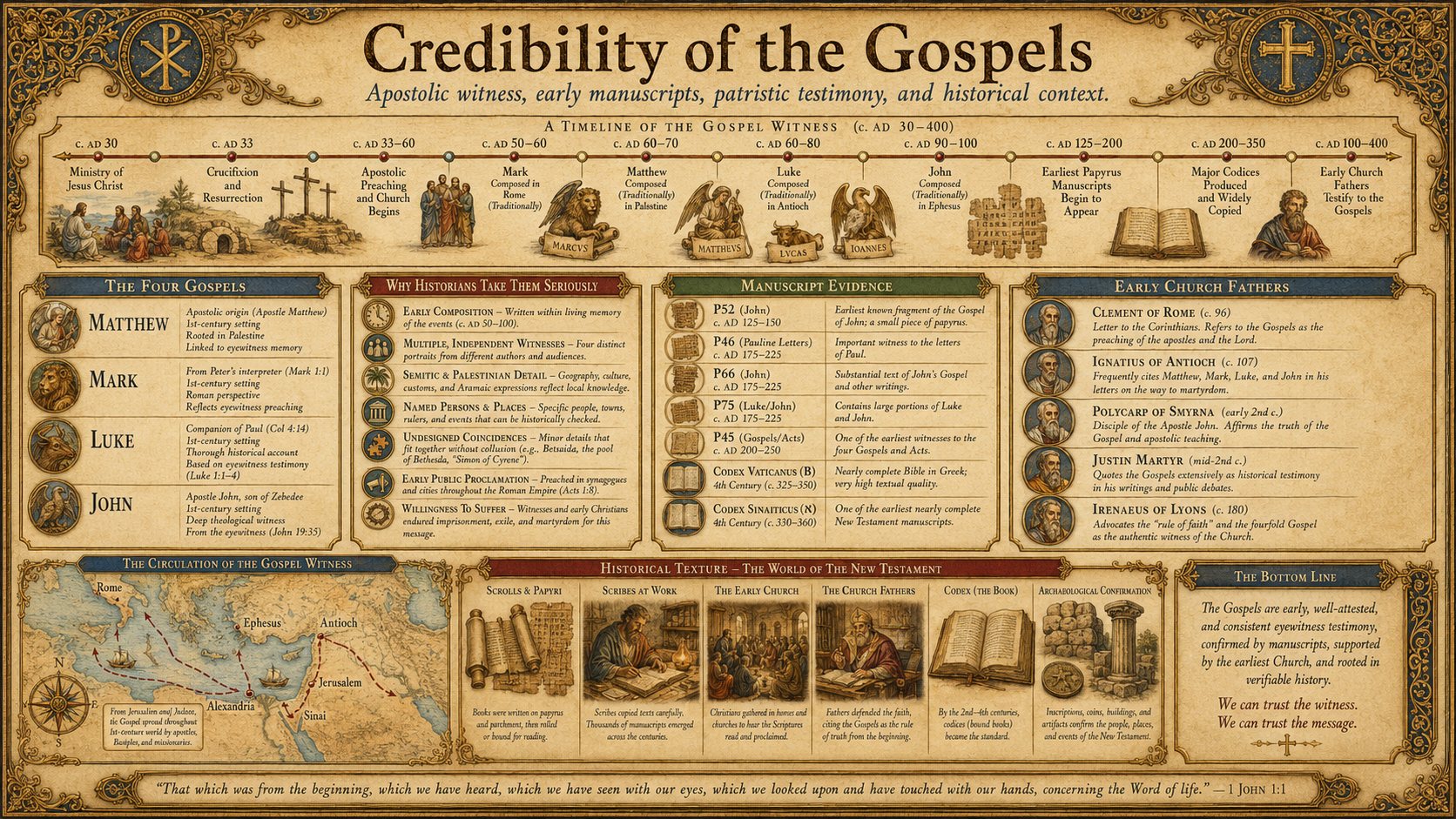
Christ is not placed at the end of a neutral catalogue as one option among many. His public life, death and resurrection are historical claims; his apostolic Church makes a visible claim of authority; and the credibility of these claims must be judged by evidence rather than by a prior rule that excludes unique revelation.
The truth about the human person cannot be reduced to a useful spiritual symbol. A complete religion must explain the enduring subject of knowledge and responsibility, bodily death, judgement and the final good without dissolving the person into a cosmic whole or a stream of momentary states.
The appropriate response to the human person, soul and final end is neither contempt nor vague admiration. It is accurate quotation, patient distinction, positive proof of the Catholic position and an invitation to the fullness of truth and sacramental life in Christ.