
Anselm of Canterbury
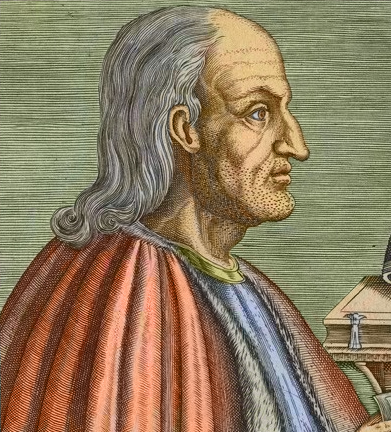
Life and witness
Monk, archbishop and philosopher whose faith sought understanding through disciplined reason and prayer.
The Lives Of The Saints: Volume 04, April · S. ANSELM, ARCHB. OF CANTERBURY.
S. ANSELM, ARCHB. OF CANTERBURY.
(a.d. 1109.)
[Roman, Anglican, and Monastic Martyrologies. Authorities : — His life by Eadmer, his friend, (d. circ. 1124.) Ordericus Vitalis (d. 1142), Florence of Worcester (d. 1x18), William of Malmesbury (d. 1141). A very full and beautiful life of S. Anselm has been written by Dean Church, from which this brief notice is condensed. ]
The scene of S. Anselm’s birth-place, Aosta, is familiar to the crowds who are yearly attracted to the neighbourhood by the love of Alpine grandeur, and the interest of Alpine adventure, and who pass through it on their way to and from the peaks and valleys of the wonderful region round it. Closely overhanging the city on the south, rises rapidly a wall of sub-Alpine mountain, for great part of the day in shadow, pierced by ravines, with woods and pastures hanging on its steep flanks, but towering up at last into the dark precipices of the Becca di Nona and the peak of Mont Emilius. At the upper end of the valley towards the west, seen over a vista of walnuts, chestnuts and vines, appear high up in the sky, resting as it were on the breast of the great hills, the white glaciers of the Ruitor, bright in sun- shine, or veiled in storms ; and from the bridge over the torrent which rushes by the city from the north, the eye goes up to the everlasting snows of the domed Velan, and the broken pikes of the Grand Combin. The legends of the valley have not forgotten Anselm; they identify the village where he lived, Gressan the tower which was the refuge of his family, the house in the suburbs of the city where he was bom ; in the sacristy of the cathedral they show his relics along with those of the local saints, S. Gratus and S. Jucundus.
The parents of Anselm were accounted noble, and had property, for which they paid homage as vassals to the
* *
Digitized by t^oosle
*
262 Lives of the Saints . [Apm «.
count of Maurienne. His father was an unthrifty and violent man; his mother a good woman and a prudent house-wife, who used to talk to her child, as mothers do, about God, and his saints, and of heaven. Anselm was born about 1033, and from his boyhood he seems to have been a student, and felt early the common attractions of the age for the monastic life. Then came a time of reac- tion ; health and youth and prosperity were pleasant, and put the thoughts of a religious life out of his mind. Even his keen love of study gave way before the gaieties and sports of his time of life. His affection for his mother was a partial restraint on him ; but when she died, “ the ship of his heart lost its anchor, and drifted off altogether into the waves of the world.”
But family disagreements sprang up. His biographer, perhaps Anselm himself too in after life, saw the hand of Providence in his father’s harshness to him, which no sub- mission could soften, and which at last drove him in despair to leave his home, and after the fashion of his countrymen to seek his fortune in strange lands. He crossed Mont Cenis with a single clerk for his attendant, and he did not forget the risk and fatigue of the passage. He spent three years in France and Burgundy, and then, following the track of another Italian, Lanfranc of Pavia, he came to Normandy, and remained for a time at Avranches, where Lanfranc had once taught Finally, he followed Lanfranc, now a famous master, to the monastery where he had be- come prior, the newly-founded monastery of Bee. Bee was a school as well, and there Anselm, along with other young men whom the growing wish to learn had drawn thither, settled himself, not as a monk but as a student, under Lanfranc. Teacher and pupil, besides both being Italians, had much to draw them together ; and a friendship began between them, which, in spite of the difference between the
Digitized by
April ».]
3 ". Anselm.
Biographical overview
Anselm of Canterbury (; 1033/4–1109), also known as Anselm of Aosta (French: Anselme d'Aoste, Italian: Anselmo d'Aosta) after his birthplace and Anselm of Bec (French: Anselme du Bec) after his monastery, was an Italian Benedictine abbot, philosopher and theologian who served as Archbishop of Canterbury from 1093 to 1109. As Archbishop of Canterbury, he defended the Church's interests in England amid the Investiture Controversy. For his resistance to the English kings William II and Henry I, he was exiled twice: once from 1097 to 1100 and then from 1105 to 1107. While in exile, he participated in the Council of Bari, where he helped convince the Greek Catholic bishops of southern Italy to adopt the Roman Rite. In England, he asserted the primacy of Canterbury over the Archbishop of York and over the bishops of Wales, and at the time of his death he appeared to have been successful in this. However, Pope Paschal II later reversed the papal decisions on the matter and restored York's earlier status. Beginning during his time at Bec, Anselm composed dialogues and treatises with both a mystical and a rational or philosophical approach, this latter aspect causing him sometimes to be credited as the founder of Scholasticism. Despite his lack of recognition in this field in his own lifetime, Anselm is famously regarded as the originator of the ontological argument for the existence of God and of the satisfaction theory of atonement. After his death, Anselm was canonized as a saint; his feast day is 21 April. He was proclaimed a Doctor of the Church by a papal bull of Pope Clement XI in 1720.