
Anthony of Padua
Life and witness
Franciscan preacher and biblical teacher whose charity and clarity made him one of the Church’s most beloved saints.
The lives of the saints · 6 · June, p. 182.] S. ANTHONY OF PADUA.
June, p. 182.] S. ANTHONY OF PADUA.
[June 13.
* — *
junex3.] S.Antony of Padua. 183
up like that of a seraph, his rich voice, sometimes swelling like an organ diapason, sometimes soft and thrilling, his easy address, flow of well-chosen words, and graceful action, surprised and electrified the audience. The as- tonished and delighted Minorites saw that they possessed a treasure, and the guardian without delay wrote to S. Francis. The great father at once sent a letter to Antony, brief and to the point. "To his very dear brother Antony, Brother Francis sends greeting in Jesus Christ. I have thought good that you should explain theology to the brethren ; but only so that, above all things, study should not blunt in you, or in them, the spirit of holy prayer, as is written in the rule which we profess. The Lord be with thee." By virtue of this patent, Antony taught in Montpellier, Bologna, Padua, and Toulouse, and he was admired greatly for the profound wisdom he displayed, and his eloquence and facility of conveying information. But his preaching was that which attracted general atten- tion. The churches were too small to hold the crowds that collected to hear him, and he preached in the churchyards and in the market-places. Shops were shut when he preached, and ladies who usually rose late got up early to hear his words. Some remained in church all night to secure places for the sermon on the morrow. On his way to the pulpit he was surrounded by a body of robust men to keep off the crowd which pressed on him to kiss his hands and touch his habit. The effects of his preaching were extraordinary. The whole congregation was swayed by him as he desired. Sometimes his voice was drowned by the sobs of those who heard him, and who were pricked to the heart. Hardened sinners were melted; his very appearance, his face radiating with fer- vour, was enough sometimes to break all the barriers about an impenitent heart. Once he only showed himself in the
* *
* — _ . -*
184 Lives of the Saints. r>nei3.
pulpit, and for some reason was prevented from preaching. But the sight of him was enough, consciences were touched, cheeks were wet with penitential tears. Wherever he went he was accompanied by a body of priests to hear the con- fessions that followed his sermons. His clear, bell-like voice, was heard through every part of the largest church, and reached the ears of the farthest in a crowd assembled in the open air. An instance is told of a woman, who had been forbidden by her husband to go to the sermon, run- ning upstairs and throwing open her bed-room window. The clear voice of the preacher was echoed back by the wall of the little room, and though she could not see him, she was able to follow the sermon. She ran and brought up her husband, and he was so astonished at what he supposed to be a miracle, that he withdrew his opposition.1
S. Antony had a most remarkable memory ; he almost knew the Holy Scriptures by heart, and was able to quote and apply it in the most surprising and original manner. His marvellous Scriptural knowledge caused Pope Gregory IX. to call him " the ark of the covenant," because just as the ark contained the tables of the law, so Antony seemed to retain the whole of Scripture in his memory.
His energy carried him from place to place with such rapidity as to astonish every one, and some thought he must be endowed with ubiquity. But one or two curious stories are told of him which cannot thus be explained. One day, at Montpelier, he was preaching in the principal church, when all at once it flashed across him that he had appointed no one to fill his place in the convent chapel, and chant the gradual, at the office which he knew was being then sung. The thought so occupied his mind that
1 The author of these "Lives of the Saints" heard a sermon preached a long way off in a field, out of sight, in the same way, the sound being reflected by the walls of an upstairs room.
£, — *
*_ . *
Biographical overview
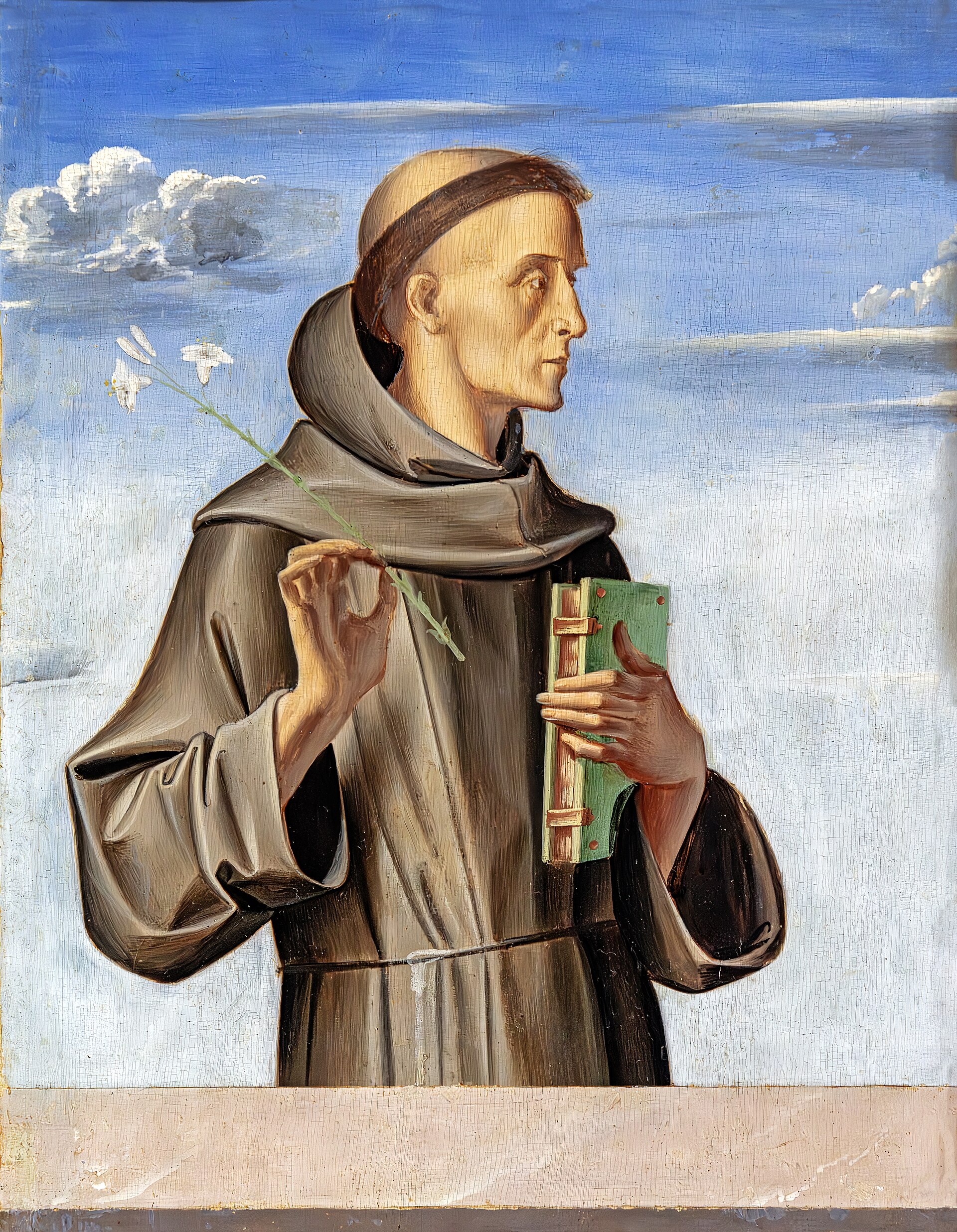
Anthony of Padua or Anthony of Lisbon (born Fernando Martins de Bulhões; 15 August 1195 – 13 June 1231) was a Portuguese Catholic priest and member of the Order of Friars Minor.