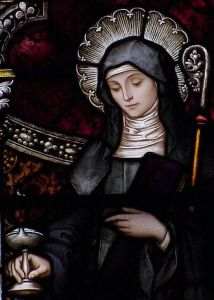
Brigid of Kildare
Life and witness
Abbess and founder associated with generous hospitality, learning and the growth of Irish monastic Christianity.
Biographical overview
Brigid of Kildare or Brigid of Ireland (Irish: Naomh Bríd; Classical Irish: Brighid; Latin: Brigida; c. 451 – c. 525) is the patroness saint (or 'mother saint') of Ireland, and one of its three national saints along with Patrick and Columba. According to medieval Irish hagiographies, she was an abbess who founded the important abbey of Kildare (Cill Dara), as well as several other convents of nuns. There is little historical evidence of her. Her hagiographies primarily focus on her miracles, and many stories about her have their basis in Irish pagan folklore. They say Brigid was the daughter of an Irish clan chief and an enslaved Christian woman, and was fostered in a druid's household before becoming a consecrated virgin. She is patroness of many things, including poetry, learning, healing, protection, blacksmithing, livestock, and dairy production. In her honour, a perpetual fire was kept burning at Kildare for centuries. Some historians suggest that Brigid is a Christianisation of the Celtic goddess Brigid. The saint's feast day is 1 February, and traditionally it involves weaving Brigid's crosses and many other folk customs. It was originally a festival called Imbolc, marking the beginning of spring. Since 2023, it has been a public holiday in the Republic of Ireland. This feast day is shared by Dar Lugdach, who tradition says was her student, close companion, and successor.