John of the Cross
Life and witness
Roman Martyrology (traditional English edition; normalized OCR transcription): At Naples, the birth-day of St. John Joseph of the Cross.
Alban Butler — Lives of the Saints, with Reflections for Every Day in the Year (1894) · St. John of the Cross, 365
St. John the Almoner, 141 St. John the Baptist, 227 St. John the Baptist, Behead- ing of, 296 B. John of Britto, 75 St. John Cantius, 340 St. John Chrysostom, 50 St. John Climacus, 130 St. John of the Cross, 365 St. John of Egypt, 127 St. John, Evangelist, 387 St. John before the Latin Gate,
170 St. John Francis Regis, 219 St. John of God, 100 St. John Gualbert, 247 St. John of Matha, 67 St. John Nepomueen, 181 St. John the Silent, 178 St. John of St. Fagondez, 215 Sts. John and Paul, Martyrs,
230 Sts. Jonas, Barachisius, and
their Companions, 129 St. Joseph, 115 St. Joseph Calasanctus, 295 St. Jovita, 74 St. Jude, 345 St. Julia, 189 St. Juliana Falconieri, 222 Sts. Julian and Basilissa, 30 St. Julius, 144 St. Justin, 200 St. Justina, 323
Biographical overview
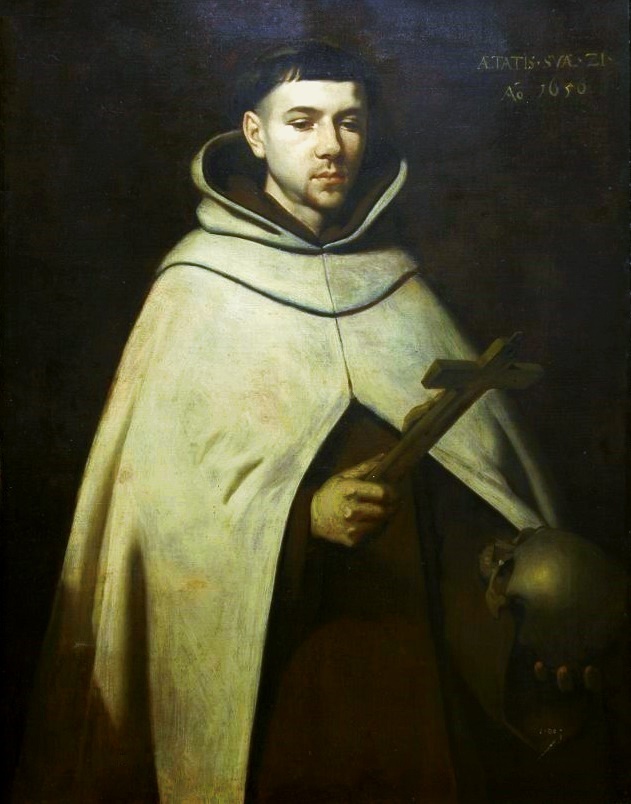
St. John of the Cross (Spanish: Juan de la Cruz; Latin: Ioannes a Cruce; né Juan de Yepes y Álvarez; 24 June 1542 – 14 December 1591) was a Spanish Catholic priest, mystic, and Carmelite friar. He is a major figure of the Counter-Reformation in Spain, and he is one of the 38 Doctors of the Church. Influenced by the older Carmelite nun Teresa of Ávila, he joined the Carmelite Order and was instrumental in the founding of the Discalced Carmelites, who wished to return to the stricter observances of the original Carmelite rule. He is also widely known for his writings. Both his poetry and his studies on the development of the soul are considered the summit of mystical Christian literature and among the greatest works of all Spanish literature. His formulation of the spiritual life into the purgative, illuminative, and unitive ways, separated by the dark nights of sense and soul, has been highly influential in the Catholic spiritual tradition. He was canonized by Pope Benedict XIII in 1726. In 1926, he was declared a Doctor of the Church by Pope Pius XI, and is also known as the "mystical doctor."