Luke the Evangelist
Life and witness
Roman Martyrology (traditional English edition; normalized OCR transcription): The birth-day of St. Luke, evangelist, who having endured many afflictions for the name of Christ, full of the Holy Ghost, died in Bithynia whose bones were brought to Constantinople, and thence translated to Padua.
Biographical overview
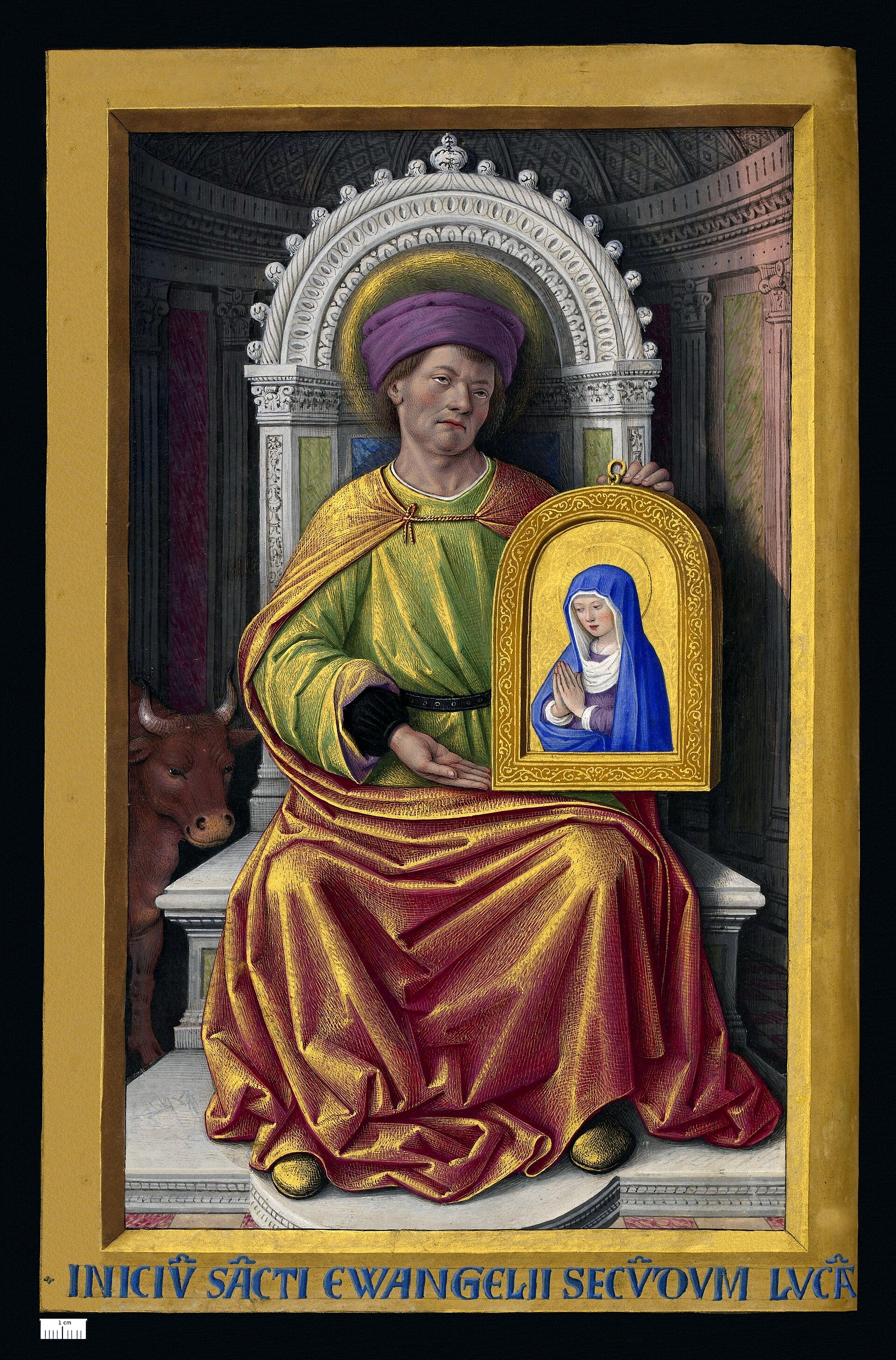
Luke the Evangelist was one of the Four Evangelists—the four traditionally ascribed authors of the canonical gospels. The Early Church Fathers ascribed to him authorship of both the Gospel of Luke and the Acts of the Apostles. Prominent figures in early Christianity such as Jerome and Eusebius later reaffirmed his authorship. Scholarly opinion on the tradition is roughly evenly divided near the end of the 20th century. The New Testament mentions Luke briefly a few times, and the Epistle to the Colossians refers to him as a physician (from Greek for 'one who heals'); thus he is thought to have been both a physician and a disciple of Paul. Since the early years of the faith, Christians have regarded him as a saint. He is believed to have been a martyr, reportedly having been hanged from an olive tree, though some believe otherwise. The Eastern Orthodox Church, the Roman Catholic church and other major denominations venerate him as Saint Luke the Evangelist and as a patron saint of artists, physicians, bachelors, notaries, butchers, brewers, and others; his feast day is 18 October. He is also described in the New Testament as a Doctor.