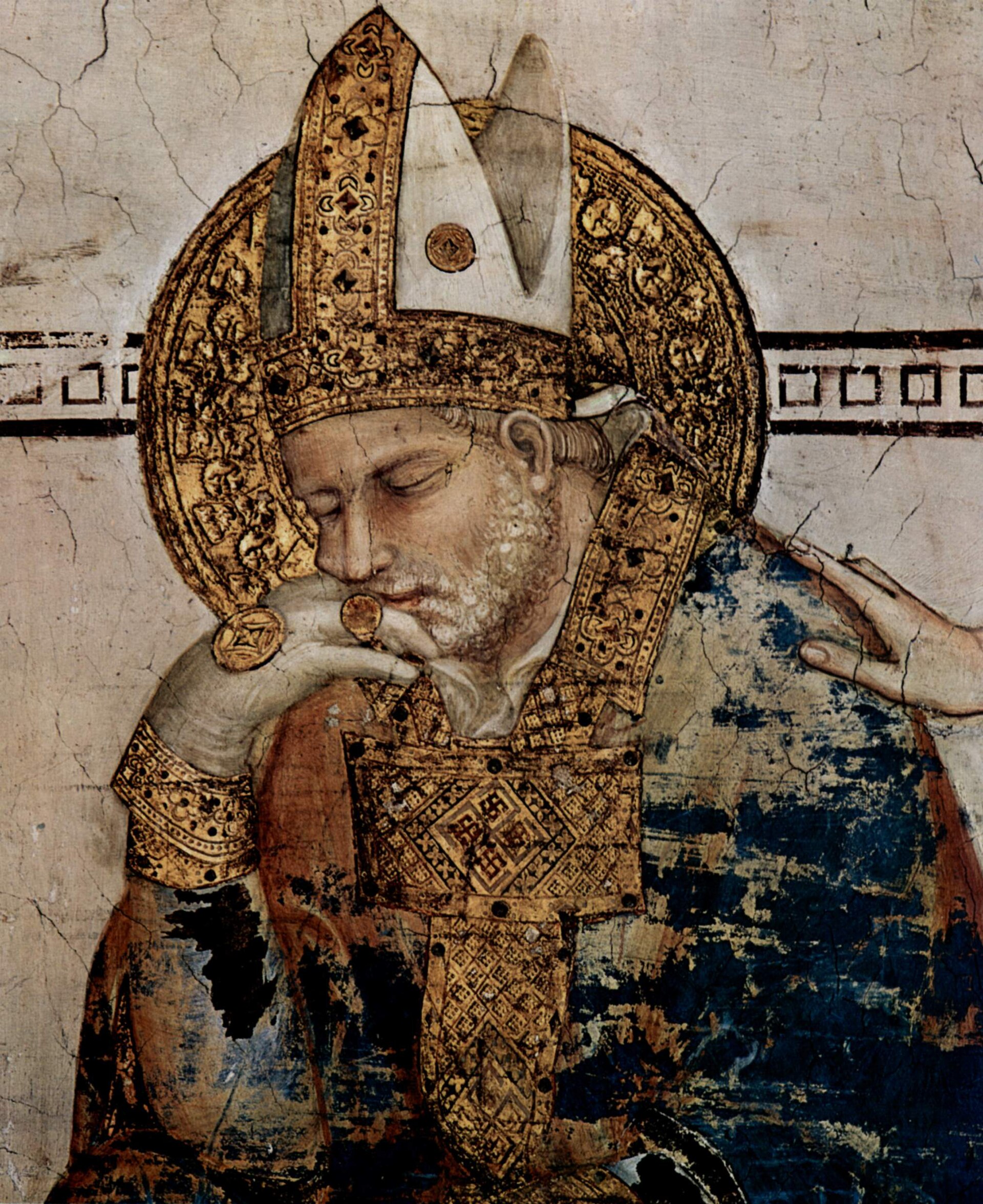
Martin of Tours
Martyrological notice
Saint Martin of Tours, of Gaul was he.
The Lives Of The Saints: Volume 13, November, Pt. 1 · S. MARTIN, R OF TOURS.
S. MARTIN, R OF TOURS.
(a.d. 401.)
[All Latin Martyrologies. Roman. Usuardns, Ado, &c. Sarum, York, Hereford, and Durham Kalendars. Anglican Reformed Kalen- dar. The Translation and Ordination of S. Martin on July 4. Autho- rities : — (1) A Life by Sulpicius Severus, an admirer of S. Martin. He died in 410.* He was the Boswell of the saint. His Life is a panegyric. A credulous, superstitious man, he has given us, however, a very valuable biography. (2) Three Letters of Sulpicius Severus about S. Martin. (3) The second and third books of his “ Dialogues.” (4) A metrical Life by S. Paulinus of Nola (d. 431). (5) The “ Hist. Eccl. Francorum ” of Gregory of Tours (d. 594). (6) A Life in hexa- meters by Fortunatus of Poitiers (d. 600), founded entirely on the work of Sulpicius Severus. (7) A Life by Alcuin (d.804). (8) “Antiphonae septem de S. Martino, ” by Odo of Clugny (d. 942). Among modem biographers, Dupuis, “Histoirede S. Martin,” Paris, 1858.]
This illustrious saint was bom at Sabaria, in Pannonia, the present town of Steinamanger 2 His father and mother were heathens, but Martin felt an early attraction towards Chris- tianity, and even towards the monastic life. His father, seeing this, enrolled him in the army at the age of fifteen. A better school for the training of the soldier of Christ could hardly have been found. In the Roman camps the old-fashioned virtues of faithfulness, straightforwardness, and hardihood were cultivated, and in them were to be found the best types of the old Roman character, which, as moralists complained, were to be found elsewhere no more. If the funds of a coun- try town had fallen into disorder, or uprightness was needed
1 This Life was written in 39a or 393, after a visit to Tours of some duration, and before S. Martin was dead. Sulpicius Severus dedicated the book to a priest, Desiderius of Cominges. He sent the book at once to S. Paulinus of Nola, who greatly admired it. According to a passage in the “ Dialogues/' it had an enormous and rapid sale in Rome, Carthage, and elsewhere.
* A late tradition has transferred his birthplace to the Holy Mount of S. Martin, in the district of Gyor in Hungary, where a large monastery was built by S. Stephen ot Hungary. But it is plain from Sulpicius that he was born at Sabaria.
Biographical overview
Martin of Tours (Latin: Martinus Turonensis; 316/336 – 8 November 397) was the third bishop of Tours. He is the patron saint of many communities and organizations across Europe, including of the former French Third Republic. A native of Pannonia (present-day Hungary), he converted to Christianity at a young age. He served in the Roman cavalry in Gaul, but left military service prior to 361, when he became a disciple of Hilary of Poitiers, establishing the monastery at Ligugé. He was consecrated as Bishop of Caesarodunum (Tours) in 371. As bishop, he was active in the suppression of the remnants of Gallo-Roman religion. The contemporary hagiographer Sulpicius Severus wrote a Life of St. Martin. He is best known for the account of his using his sword to cut his cloak in two, to give half to a beggar clad only in rags in winter. His shrine in Tours became an often-frequented stop for pilgrims on the road to Santiago de Compostela in Spain.