Abdon and Sennen
Life and witness
At Rome, of the holy martyrs Abdon and Sennen, Persians, who under Decius, emperor, being brought to Rome bound in chains, were for the faith of Christ first whipped with leaden whips, and afterward beheaded.
Alban Butler — Lives of the Fathers, Martyrs, and Other Principal Saints
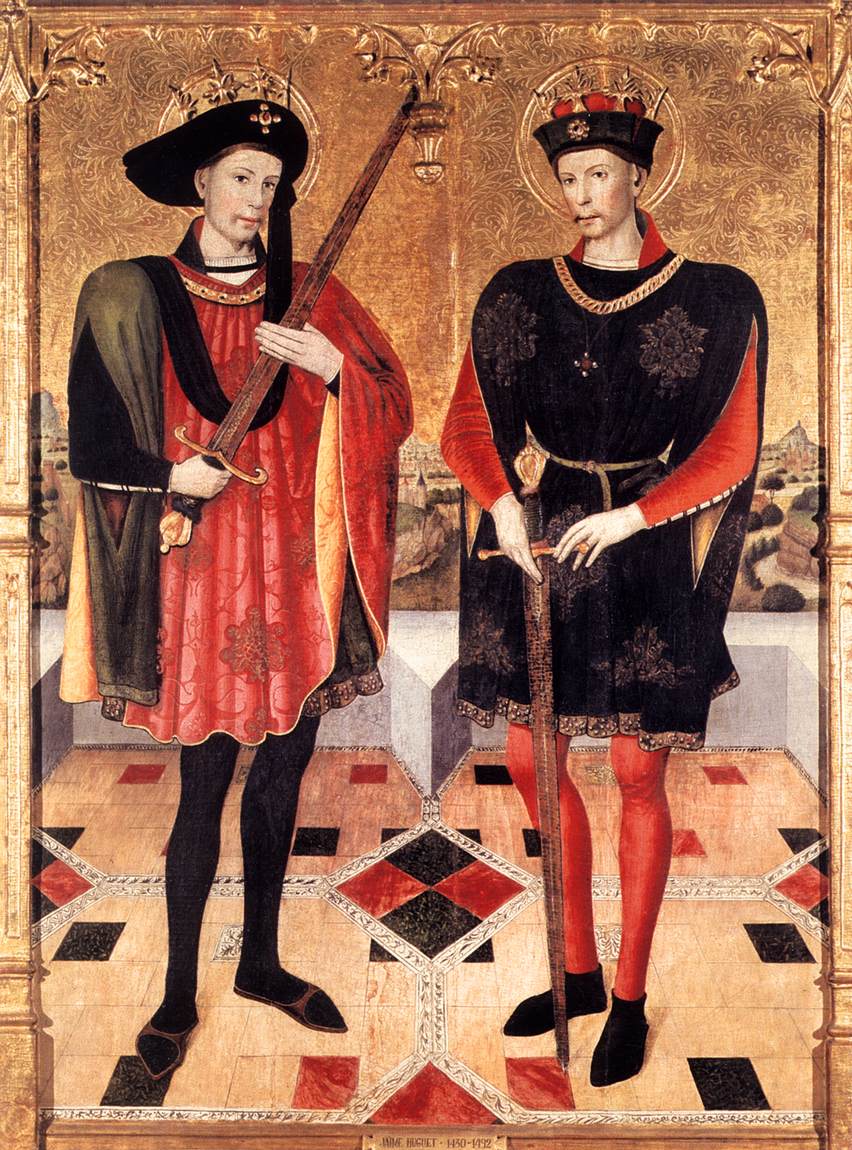
They were Persians, but coming to Rome, courageously confessed the faith of Christ in the persecution of Decius in 250. They were cruelly tormented, but the more their bodies were mangled and covered with ghastly wounds, the more were their souls adorned and beautified with divine grace, and rendered glorious in the sight of heaven. The Christians at Rome did not treat them as strangers, but as brethren united to them in the hope of the same blessed country; and after their death carefully deposited their bodies in the house of a subdeacon called Quirinus. In the reign of Constantine the Great, their relics were removed into the ancient burying place of Pontian, so called from some rich man who built it: called also, from some sign, Ad Ursum Pileatum. It afterward received its name from SS. Abdon and Sennen. It was situated near the Tiber, on the road to Porto near the gates of Rome. The images of these martyrs with Persian bonnets and crowns on their heads, and their names, are to be seen there at this day in ancient sculpture.[342] SS. Abdon and Sennen are mentioned in the ancient Liberian Calendar, and in other Martyrologies; though their modern acts deserve no notice, as cardinal Noris has demonstrated.[343]
The martyrs preferred torments and death to sin, because the love of God above all things reigned in their breasts. “We say we are Christians,” says Tertullian;[344] “we proclaim it to the whole world, even under the hands of the executioner, and in the midst of all the torments you inflict upon us to compel us to unsay it. Torn and mangled, and weltering in our blood, we cry out as loud as we are able to cry, That we are worshippers of God through Christ.” Upon which Mr. Reeves observes, that no other religion ever produced any considerable number of martyrs except the true one. Do we ever read of any generation of men so greedy of martyrdom, who thought it long till they were upon the rack, and were so patient, so cheerful and steadfast under the most intolerable torments? Socrates was the only philosopher that can be said to have died for his doctrine; and what a restless posture of mind does he betray, who was esteemed the best and the wisest of the heathens! With what misgivings, and fits of hope and fear, does he deliver himself in that most famous discourse, supposed to have been made by him a little before his death, about a future state![345] And neither Phædo, Cebes, Crito, Simmias, nor any other of his greatest friends who were present at his death, durst maintain either his innocence, or that doctrine for which he died, in the Areopagus. With what reserve did Plato himself dogmatize concerning the gods whom he worshipped in public, but denied in private! How did he dodge about, disguise himself, and say and unsay the same excellent truths! Only the Christians suffered at this rate, and they held on suffering for several hundred years together, till they had subdued the world by dying for their religion. What could engage such a number of men in such a religion, and support them in it, in defiance of death in the most shocking forms, but evident truth, and a superior grace and strength from above?
Biographical overview
Abdon and Sennen, variously written in early calendars and martyrologies Abdo, Abdus, and Sennes, Sennis, Zennen, are recognized by the Catholic Church and Eastern Orthodox Church as Christian martyrs, with a feast day on 30 July. In some places they have been honoured on 20 March, and the first Sunday of May. Nothing is known historically about Abdon and Sennen, and whether they can be verified. The Roman Martyrology indicates that they were martyred for their faith, and suggests they were buried on 30 July in the Cemetery of Pontianus on the Via Portuensis, outside Rome. Their names were subsequently removed in the twentieth century from the list in the General Roman Calendar, which is commemorated liturgically worldwide, but they may still be celebrated everywhere on their feast day unless in some locality an obligatory celebration is assigned to that day. The rank of their celebration was given as "Simple" in the Tridentine calendar and remained such until the classification was changed to that of "Commemoration" in the General Roman Calendar of 1960.