
Catherine of Alexandria
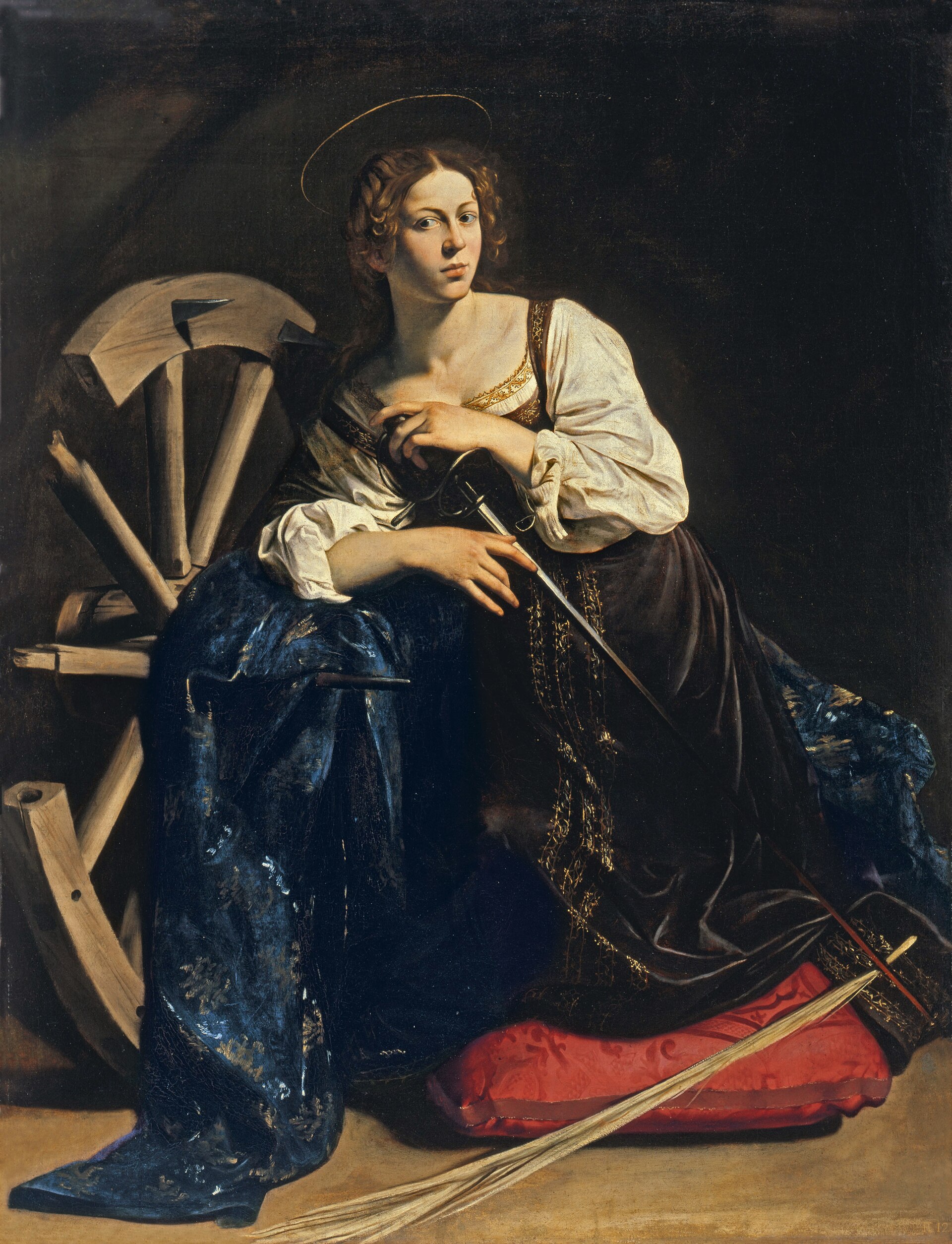
Life and witness
Catherine of Alexandria, also spelled Katherine, was, according to tradition, a Christian virgin and martyr, who suffered martyrdom in the early 4th century at the hands of the emperor Maxentius. According to her hagiography, she was both a princess and a noted scholar who became a Christian around age 14 and converted hundreds of people to Christianity. The Eastern Orthodox Church venerates her as a great martyr and celebrates her feast day on 24 or 25 November, depending on the regional tradition. In Catholicism, Catherine is traditionally revered as one of the Fourteen Holy Helpers, and she is commemorated in the Roman Martyrology on 25 November. Her feast was removed from the General Roman Calendar in 1969 but restored in 2002 as an optional memorial. In the Episcopal Church, St. Catherine is commemorated on 24 November, together with the martyrs Barbara of Nicomedia and Margaret of
Biographical overview
Catherine of Alexandria, also spelled Katherine, was, according to tradition, a Christian virgin and martyr, who suffered martyrdom in the early 4th century at the hands of the emperor Maxentius. According to her hagiography, she was both a princess and a noted scholar who became a Christian around age 14 and converted hundreds of people to Christianity. The Eastern Orthodox Church venerates her as a great martyr and celebrates her feast day on 24 or 25 November, depending on the regional tradition. In Catholicism, Catherine is traditionally revered as one of the Fourteen Holy Helpers, and she is commemorated in the Roman Martyrology on 25 November. Her feast was removed from the General Roman Calendar in 1969 but restored in 2002 as an optional memorial. In the Episcopal Church, St. Catherine is commemorated on 24 November, together with the martyrs Barbara of Nicomedia and Margaret of Antioch, while in the Church of England her feast day is 25 November. Some modern scholars consider that the legend of Catherine was probably based on the life and murder of the virgin Saint Dorothea of Alexandria and according to some sources the Greek philosopher Hypatia, despite her death occurring 110 years later, with the reversed role of a Christian and neoplatonist being suggested in the case of the latter. On the other hand, Leon Clugnet, writing in the Catholic Encyclopedia, states "although contemporary hagiographers look upon the authenticity of the various texts containing the legend of St. Catherine as more than doubtful, it is not therefore meant to cast even the shadow of a doubt around the existence of the saint".
Alban Butler — Lives of the Saints, with Reflections for Every Day in the Year (1894) · St. Catherine of Alexandria,
366 St. Catherine of Genoa, 315 St. Catherine of Ricci, 72 St. Catherine of Siena. 163 St. Catherine of Sweden, 120 St. Cecilia, 363 St. Celestine, 137 St. Celsus, 263 St. Charles Borromeo, 350 St. Christina. 260 St. Clare, 278 St. Claude, 209 St. Clement of Rome, 364 Sts. Cletus and Marcellinus,
158 St. Clotilda, 203 St. Cloud, 307 St. Colette. 98 St. Columba, or Columkille,
212 Sts. Cosmas and Damian, 324 St. Crescentia, 218 Sts. Crispin and Crispinian,
343 St. Cunegundes, 146 St. Cyprian, 315 Sts. Cyprian and Justina, Mar-
tjns, 323 St. Cyriacus and his Compan- ions, 275