Irenaeus
Life and witness
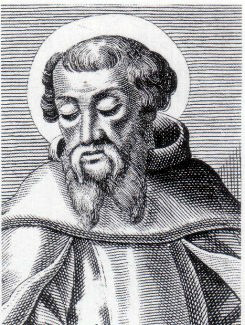
At Lyons, in France, of St. Irenaeus, bishop and martyr, who, as St. Jerom writes, was disciple to St. Polycarp, bishop of Smyrna, and lived near the time of the apostles, after he had valiantly resisted the heretics, both by word and writing, was in the persecution of Severus, together with almost all the people of his city, crowned with a glorious martyrdom.
The Lives Of The Saints: Volume 06, June · S. Irenaeus is believed to have suffered in the persecu-
S. Irenaeus is believed to have suffered in the persecu- tion of Septimius Severus. No particulars of his martyrdom are known. If the account could be believed, which speaks of the emperor himself being present when Irenaeus was put to death, we might conclude that it did not happen till the year 208, when Severus set out with his two sons to repress an insurrection in Britain, and it is not improbable that they passed through Lyons ; but the fact cannot be stated with certainty, and the evidence of Irenaeus having suffered martyrdom at all is not conclusive. According to a legend S. Irenaeus was placed betwixt a cross and an idol, and told to choose which he preferred. He had the consolation to die on a cross like his Master. His relics were scattered by the Huguenots in 1562, some of the bones were thrown into the Rhone, others into the mud. His head was kicked about the streets, till rescued by a pious surgeon, who preserved it till the restoration of tranquillity.
Digitized by Google
4io
Lives of the Saints.
[June sS.
*
*
Biographical overview
Irenaeus ( or ; Koine Greek: Εἰρηναῖος, romanized: Eirēnaîos, IPA: [i.re̝ˈnɛ.os]) was a Greek bishop in the second century, noted for his role in guiding and expanding Christian communities in the southern regions of present-day France and, more widely, for the development of Christian theology by opposing Gnostic interpretations of Christian Scripture and defending orthodoxy. Originating from Smyrna, he had seen and heard the preaching of Polycarp, who in turn was said to have heard John the Evangelist. Chosen as Bishop of Lugdunum, now Lyon, Irenaeus wrote his best-known work Against Heresies around 180 as a refutation of gnosticism, in particular that of Valentinus. To counter the doctrines of the gnostic sects claiming secret wisdom, he offered three pillars of orthodoxy: the scriptures, the tradition said to be handed down from the apostles, and the teaching of the apostles' successors. He is the earliest surviving witness to regard all four of the now-canonical gospels as essential. Irenaeus is venerated as a saint in the Catholic Church, Anglican Church, Lutheran Churches, the Eastern Orthodox Church, the Oriental Orthodox Churches, and the Assyrian Church of the East. He was declared a Doctor of the Church in the Catholic Church by Pope Francis in 2022.
Martyrologium Romanum · Latin witness
Lugduni, in Gallia, sancti Irenaei, Episcopi et Martyris; qui (ut scribit sanctus Hieronymus) beati Polycarpi, Smyrnensis Episcopi, discipulus fuit, et Apostolicorum temporum vicinus. Is, cum adversus haereticos verbis ac scriptis plurimum decertasset, tandem, in persecutione Severi, cum omni fere civitatis suae populo, coronatus est glorioso martyrio.