
John and Paul
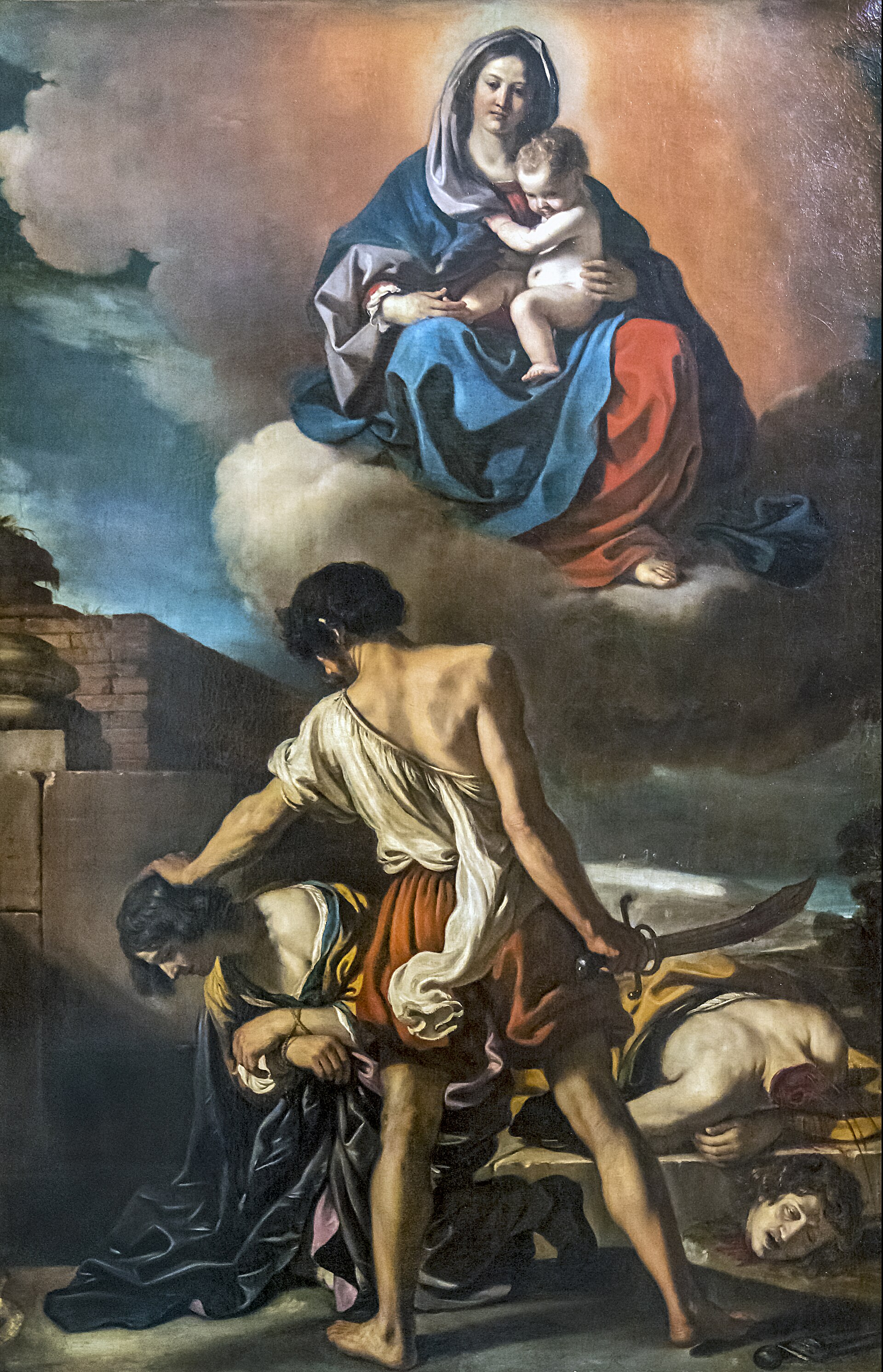
Life and witness
At Rome, in Mount Coelius, of the holy martyrs John and Paul, brothers, of whom the former being steward, the other chief secretary to Condaughter to Constantine the emstantia, virgin, peror: were under Julian the apostate both beheaded, and so obtained the palm of martyrdom.
The lives of the saints · 6 · SS. JOHN AND PAUL, MM.
SS. JOHN AND PAUL, MM. (a.d. 362.)
[Roman Martyrology. That attributed to S. Jerome, and Latin Martyrologies. Authority: — The Acts which are certainly ancient, but not at all trustworthy. They pretend to have been written from the account of Terrentianus himself. But there are so many gross chronologi- cal blunders that this cannot be admitted. Gallicanus is said in the Acts to have been consul of Rome. In the consular lists appear Ovinius Gallicanus, and Septimius Bassus, in 318; and in 330, Gallicanus and Symmachus. The former is probably not the same as Ovinius. In the Life of S. Silvester, by Anastasius Bibliothecarius, we are told that Gallicanus gave to the church of SS. Peter and Paul, and S. John the Baptist at Ostia, which had been erected by Constantine, various costly gifts. So far the Acts can be confirmed ; but no writer who was con- temporary by a century, at least, would have made such blunders as the following : — He asserts that the Emperor Constantius was the nephew of Constantine the Great, and the successor of Constantine II. and Constans, whereas he was the son of Constantine the Great, and he divided the empire with his brothers Constantine II. and Constans. The Emperor Julian is represented as being at Rome, where he held a dis- cussion with SS. John and Paul, whereas Julian, as emperor, was never at Rome at all. Gallicanus is said to have gone to the Scythian war as
1 His relics are preserved at S. Maur-des-Fosses over the high altar. His acts are fabulous.
*"
i
j«uea6.] .S.S'. John and Paul. 367
general of Constantine the Great, who is represented as reigning in Rome, whereas Constantine was only twice in Rome after his defeat of Maxentius, and then only for a very brief period. The author, who makes such mistakes, cannot be trusted when he says of S. Constantia, the daughter of Constantine : "We heard Constantia herself relate this, and indeed have seen it in her own writing, how Attica and Artemia (the daughters of Gallicanus) were converted." Higuera converted these saints and S. Gallicanus into Spanish saints in his forged Chronicle of Dexter, and was followed by Tamayus Salazar. But the Portuguese Martyrologist, Cardosus, appropriates them to Portugal.]
|HE following story must not be regarded as history, though possibly it is based on some tradition of events which really took place. The story, as it comes to us, is a deliberate forgery, pretending to be written by Terrentianus, or on his authority, whereas it cannot have been composed till long subsequent, and is repugnant to true history in many points.
When, says the story, the daughter of Constantine, the pious Constantia (Feb. 18th) set up an establishment for herself at Rome, the emperor gave her John and Paul, two brothers, to be her household officers. John was steward, and Paul the master of the palace. Their virtue rendered them dear to their mistress, who had daily proof of their integrity.
The Persians having made an inroad into Syria in the reign of Constantine, his general, Gallicanus, marched against them and totally routed them,1 and on his return, asked the emperor as his reward, the hand of Constantia, his daughter.8 Constantine hesitated ; when an irruption
1 1 am at a loss to know when this took place. The Persian* threatened, but there was no serious war, and no snch victory in the reign of Constantine I.
* As it happens, this virgin saint, Constantia, was married to Hannibalianus, and afterwards to Gallus Caesar, and was so wicked that she was popularly called Megera, Ammianus Marcellinus, Lib. xiv. It is, however, just possible that; there may have been another daughter of the same name ; but it is not probable. Marcellinus tells us that the wicked, licentious Constantia was buried at Rome, so was the virgin saint, Constantia, a suspicious coincidence.
*-
►p — — >J«
The Lives Of The Saints: Volume 06, June · SS. JOHN AND PAUL, MM.
SS. JOHN AND PAUL, MM.
(a.d. 362.)
[Roman Martyrology. That attributed to S. Jerome, and Latin Martyrologies. Authority: — The Acts which are certainly ancient, but not at all trustworthy. They pretend to have been written from the account of Terrentianus himself. But there are so many gross chronologi- cal blunders that this cannot be admitted. Gallicanus is said in the Acts to have been consul of Rome. In the consular lists appear Ovinius Gallicanus, and Septimius Bassus, in 318; and in 330, Gallicanus and Symmachus. The former is probably not the same as Ovinius. In the Life of S. Silvester, by Anastasius Bibliothecarius, we are told that Gallicanus gave to the church of SS. Peter and Paul, and S. John the Baptist at Ostia, which had been erected by Constantine, various costly gifts. So far the Acts can be confirmed; but no writer who was con- temporary by a century, at least, would have made such blunders as the following: — He asserts that the Emperor Constantius was the nephew of Constantine the Great, and the successor of Constantine II. and Constans, whereas he was the son of Constantine the Great, and he divided the empire with his brothers Constantine II. and Constans. The Emperor Julian is represented as being at Rome, where he held a dis- cussion with SS. John and Paul, whereas Julian, as emperor, was never at Rome at all. Gallicanus is said to have gone to the Scythian war as
1 His relics are preserved at S. Maur-des- Fosses over the high altar. His acts are fabulous.
Digitized by Google
*-
*
i.ue >6.) .StS". John and Paul. 367
general of Constantine ihe Great, who is represented as reigning in Rome, whereas Constantine was only twice in Rome after his de eat oi Maxentius, and then only for a very brief period. The author, who makes such mistakes, cannot be trusted when he says of S. Constantia, the daughter of Constantine : 11 We heard Constantia herself relate this, and indeed
have seen it in h-r own writing, how Attica and Artemia (the daughters of Gallicanus) were converted." Higuera converted thise saints and S. Gallicanus into Spanish saints in his forged Chronicle of Dexter, and was followed by Tamayus Salazar. But the Portuguese Martyrologist, Cardosus, appropriates them to Portugal.]
JHE following story must not be regarded as history, though possibly it is based on some tradition of events which really took place. The story, as it comes to us, is a deliberate forgery, pretending to be written by Terrentianus, or on his
authority, whereas it cannot have been composed till long subsequent, and is repugnant to true history in many points.
When, says the story, the daughter of Constantine, the pious Constantia (Fek 18th) set up an establishment for herself at Rome, the emperor gave her John and Paul, two brothers, to be her household officers. John was steward, and Paul the master of the palace. Their virtue rendered them dear to their mistress, who had daily proof of their integrity.
The Persians having made an inroad into Syria in the reign of Constantine, his general, Gallicanus, marched against them and totally routed them,1 and on his return, asked the emperor as his reward, the hand of Constantia, his daughter.9 Constantine hesitated ; when an irruption
Biographical overview
John and Paul (Latin: Ioannes, Paulus) are saints who lived during the fourth century in the Roman Empire. They were martyred at Rome on 26 June. The year of their martyrdom is uncertain according to their Acts; it occurred under Julian the Apostate (361–363).
The lives of the Fathers, martyrs, and other principal saints · 2 · SS. JOHN AND PAUL, MM.
They were both officers in the army under Julian the Apostate, and re- ceived the crown of martyrdom, probably in 362, under Apronianus, prefecl of Rome, a great enemy of the Christians. These saints glorified God by a double victory : they despised the honors of the world, and triumphed ovei its threats and torments. They saw many wicked men prosper in their im- piety, but were not dazzled by their example. They considered that world l\ prosperity which attends impunity in sin is the most dreadful of all judg ments ; and how false and short-lived was this glittering prosperity of Julian, who in a moment fell into the pit which he himself had dug ! But the mar- tyrs, by the momentary labor of their conflict, purchased an immense weight of never-fading glory: their torments were, by their heroic patience and in- vincible virtue and fidelity, a spectacle worthy of God, who looked down upon them from the throne of his glory, and held his arm stretched out to strengthen them, and to put on their heads immortal crowns in the happy moment of their victory. An old church in Rome, near that of SS. Peter and Paul, bore the name of SS. John and Paul, as appears by the calendar published by F. Fronto. They have a proper office and mass in the sacra- mentaries of St. Gelasius and St. Gregory the Great ; also in the ancient Gallican Liturgy. In England the council of Oxford, in 1222, ordered their festival to be kept of the third class ; that is, with an obligation of hearing mass before work. How famous the names of SS. John and Paul have been in the church ever since the fifth century, is set forth at large by Rondiuinus.'
The saints always accounted that they ha/1 done nothing for Christ so long as they had .jot resisted to Hood, and by pouring forth the last drop completed their sacrifice. Every action of our lives ought to spring from this fervent motive, and consecration of ourselves to the divine service with our whole strength ; we must always bear in mind, that we owe to God by innumerable titles all that we are ; and after all we can do, are unprofitable servants, and do only what we are bound to do. But how base is our sloth and ingratitude, who in every action fall so much short of this fervor and iuty ! How does the blood of the martyrs reproach our lukewarmness !