
John Francis Regis
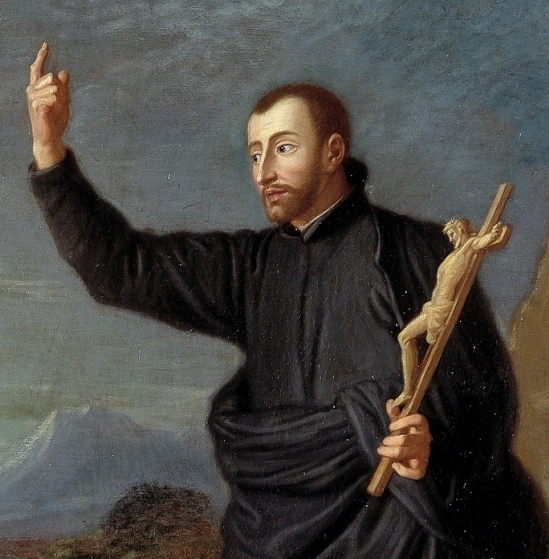
Martyrological notice
At La Louvese, the birth-day of St. John Francis Regis, confessor, of the society of Jesus.
The lives of the saints · 6 · S. JOHN FRANCIS REGIS, C, S.J.
S. JOHN FRANCIS REGIS, C, S.J. (a.d. 1640.)
[Roman Martyrology. Beatified by Clement XI. in 1716, and canonized by Clement XII. in 1737. Authority : — A life by the Pere Daubenton.]
John Francis Regis was born on the 31st of January, in the year 1597, at Font-couverte, in the diocese of Narbonne. He was a grave pious child, with the fear of God ever before his eyes. In 1616, when he was aged nineteen, he entered on his noviciate in the Jesuit College at Toulouse, and his saintliness was manifest to all his fellow students. In 161 8 he was sent to Cahors and in the following year to Tournon, where he was commissioned to preach a mission in the adjacent village of Audance. His success was remarkable, and a general amelioration of morals was the result. There he established for the first time a confraternity of the Blessed Sacrament, and drew up the rules for it himself. In 1625 he was sent to teach literature in the city of Le Puy. In 1628 he was sent to Toulouse to study theology. Every night he was wont to steal softly to the chapel, and fling himself before the Blessed Sacra- ment in long prayer and rapture of devotion. The superior was told of the conduct of Regis. "Trouble not the communion of that angelic soul with God," was his answer.
VOL. VI. ic
*-
226 Lives of the Saints. [jm*i6
Regis was ordained priest in 1630. Shortly after, the plague broke out in Toulouse, and he devoted himself to the sick with absolute self-forgetfulness.
The affairs of his family having required his presence at Font-couverte, he obtained leave of absence, and went to his native place. There he occupied himself with instructing the children, preaching, and hearing con- fessions. His brothers were much offended at the man- ner in which he placed himself at the service of the poor, begging for them, carrying food or fuel on his back to the hovels of the necessitous, and on one occasion he was hooted at by the soldiers. His success at Font- couverte in converting the impenitent, and arousing the careless, determined his superiors to destine him entirely to the work of missions. In the summer he evangelized the towns, in the winter the villages. His style was extremely simple. An eloquent and renowned preacher having heard him, said, " All our oratorical efforts are thrown away ! The simple words of that man convert souls, our eloquence tickles ears."
Though persons of all ranks crowded to hear him, and to make their confessions to him, he always pre- ferred an audience of poor people, and to become the director of the simple and unlettered. His confessional was so thronged, that sometimes he had not time to leave it for his meals. " I cannot remember my dinner when I am ministering to these poor wounded souls," he said once when remonstrated with. He established at Toulouse some houses of refuge for sinful women, under the supervision of nuns ; and afterwards another at Le Puy. His apostolic career lasted ten years, during which he had made religion flourish again in Montpellier, the Lavonaye, the Vivarais, and in Le Puy and all Velay. Irreligion and dissolution of morals was very great at
* %
junei6.] S. John Francis Regis. 227
Sommieres, the capital of Lavonaye. A mission of S. John Francis there was crowned with fruit so surpassing his expectations that he wrote to his superior a letter expressing his thankfulness to God for the transformation which had taken place. He founded there also a con- fraternity of the Blessed Sacrament. In the Vivarais, a province devastated by Calvinism, he laboured for three years, and reaped an abundant harvest of souls. The churches were re-built, converts were made, and the Catholics were stimulated to become models of virtue. Amongst his conversions one of the most remarkable was a wealthy lady of rank at Usez, who had been a prominent and active fomentor of heresy. When she saw the saint and heard him speak, her rebellious will yielded, the Holy Spirit broke down the hard crust which Calvinism had formed over all her better and holier feelings, and she placed herself in his hands, meek and zealous, to be taught the truth as it is in Jesus.
Another of his conversions was the Count of La Mothe, who was so filled with zeal that he called the saint to Cheylard, which was for the most part Calvinist, to labour for the restoration of the lost sheep to the fold of Christ. There Regis preached and taught with his usual success. He did not confine his efforts to the town, but traversed the mountains to seek out and con- vert the peasants who had been ensnared by heresy. Often he lost his way, and was obliged to sleep in the forests. His indefatigable energy his devotion, kindled the fire of faith throughout the district. One day he was leaving the church exhausted with his labours, when he found a group of travel-worn peasants at the gate. " Oh, father ! we have walked all night, we have come twelve leagues to hear you, and now we are too late ! "
* — — *
Biographical overview
John Francis Regis, SJ, commonly known Saint Regis (French: Jean-François Régis; 31 January 1597 – 31 December 1640), was a French Jesuit priest who was canonized in 1737. A tireless preacher and social reformer, Regis is best known for his work with at-risk women and orphans.
The lives of the saints · 6 · S. JOHN FRANCIS REGIS, C, S.J.
[Roman Martyrology. Beatified by Clement XI. in 1716, and canonized by Clement XII. in 1737. Authority : — A life by the Pere Daubenton.]
John Francis Regis was born on the 31st of January, in the year 1597, at Font-couverte, in the diocese of Narbonne. He was a grave pious child, with the fear of God ever before his eyes. In 1616, when he was aged nineteen, he entered on his noviciate in the Jesuit College at Toulouse, and his saintliness was manifest to all his fellow students. In 161 8 he was sent to Cahors and in the following year to Tournon, where he was commissioned to preach a mission in the adjacent village of Audance. His success was remarkable, and a general amelioration of morals was the result. There he established for the first time a confraternity of the Blessed Sacrament, and drew up the rules for it himself. In 1625 he was sent to teach literature in the city of Le Puy. In 1628 he was sent to Toulouse to study theology. Every night he was wont to steal softly to the chapel, and fling himself before the Blessed Sacra- ment in long prayer and rapture of devotion. The superior was told of the conduct of Regis. "Trouble not the communion of that angelic soul with God," was his answer.
VOL. VI. ic
*-
226 Lives of the Saints. [jm*i6
Regis was ordained priest in 1630. Shortly after, the plague broke out in Toulouse, and he devoted himself to the sick with absolute self-forgetfulness.
The affairs of his family having required his presence at Font-couverte, he obtained leave of absence, and went to his native place. There he occupied himself with instructing the children, preaching, and hearing con- fessions. His brothers were much offended at the man- ner in which he placed himself at the service of the poor, begging for them, carrying food or fuel on his back to the hovels of the necessitous, and on one occasion he was hooted at by the soldiers. His success at Font- couverte in converting the impenitent, and arousing the careless, determined his superiors to destine him entirely to the work of missions. In the summer he evangelized the towns, in the winter the villages. His style was extremely simple. An eloquent and renowned preacher having heard him, said, " All our oratorical efforts are thrown away ! The simple words of that man convert souls, our eloquence tickles ears."
Though persons of all ranks crowded to hear him, and to make their confessions to him, he always pre- ferred an audience of poor people, and to become the director of the simple and unlettered. His confessional was so thronged, that sometimes he had not time to leave it for his meals. " I cannot remember my dinner when I am ministering to these poor wounded souls," he said once when remonstrated with. He established at Toulouse some houses of refuge for sinful women, under the supervision of nuns ; and afterwards another at Le Puy. His apostolic career lasted ten years, during which he had made religion flourish again in Montpellier, the Lavonaye, the Vivarais, and in Le Puy and all Velay. Irreligion and dissolution of morals was very great at
* %
junei6.] S. John Francis Regis. 227
Sommieres, the capital of Lavonaye. A mission of S. John Francis there was crowned with fruit so surpassing his expectations that he wrote to his superior a letter expressing his thankfulness to God for the transformation which had taken place. He founded there also a con- fraternity of the Blessed Sacrament. In the Vivarais, a province devastated by Calvinism, he laboured for three years, and reaped an abundant harvest of souls. The churches were re-built, converts were made, and the Catholics were stimulated to become models of virtue. Amongst his conversions one of the most remarkable was a wealthy lady of rank at Usez, who had been a prominent and active fomentor of heresy. When she saw the saint and heard him speak, her rebellious will yielded, the Holy Spirit broke down the hard crust which Calvinism had formed over all her better and holier feelings, and she placed herself in his hands, meek and zealous, to be taught the truth as it is in Jesus.
Another of his conversions was the Count of La Mothe, who was so filled with zeal that he called the saint to Cheylard, which was for the most part Calvinist, to labour for the restoration of the lost sheep to the fold of Christ. There Regis preached and taught with his usual success. He did not confine his efforts to the town, but traversed the mountains to seek out and con- vert the peasants who had been ensnared by heresy. Often he lost his way, and was obliged to sleep in the forests. His indefatigable energy his devotion, kindled the fire of faith throughout the district. One day he was leaving the church exhausted with his labours, when he found a group of travel-worn peasants at the gate. " Oh, father ! we have walked all night, we have come twelve leagues to hear you, and now we are too late ! "
* — — *
The lives of the Fathers, martyrs, and other principal saints · 2 · ST. JOHN FRANCIS REGIS, C,
OF THE SOCIETY OF JESUS.
True virtue, or Christian perfection, consists not in great or shining ac- tions, but resides in the heart, and appears to great edification, though in the usual train of common and religious duties constantly performed with
1 Pe» on the Muscovites. I'apebroke ante Maium, t. 1, p. 36, and Jos. Assnnani. Calend. Univ., t. 0.
8 Jot. Assematii, Bibl. Orient., t. 3, pp. i)47, tio-2. s [hid. I 4. p. 3;><>.
* See the Abyssinian Calendar in Ludoli also that in the Journal of Bern, ad nan. 1761, t. 1, p- 146
Junk 16.] s. john francis regis, c. 581
fidelity and fervor. Such a life has its trials, and often a severer martyr- dom than that which stands the test of the flames. This we find in the lifa of the holy servant of God, John Francis Regis. He was born on the 31st of January, in 1597, at Foncouverte, a village in the diocese of Narbonne in Languedoc. His parents, John Regis, who was descended from a younger branch of the noble house of Deplas, in Rovergue, and Magdalen Darcis, daughter to the lord of Segur, were distinguished amongs he no- bility of Lower Languedoc by their virtue. Their eldest son was killed in the siege of Villemur, in a sally made by the Huguenot garrison. Francis was one of the youngest brothers. At five years of age he fainted away hearing his mother speak of the horrible misfortune of being eternally damned ; which discourse made a lasting impression on his tender heart. In his childhood he never discovered any inclination to the amusements of that age. The same disposition made him refuse at his school to join his companions in the innocent diversions of an age generally too eager for play. His first master was one of a. morose, hasty temper, under whom this modest and bashful child had much to suffer ; all which he bore without the least complaint. The Jesuits having opened a public school at Beziers, he was one of the first whom the reputation of its professors drew to the new college. His gravity increased with his years, nor was he to be seen in the beautiful walks which were chiefly crowded by his schoolfellows. Ava- ricious of his time, he scarcely allowed himself any for necessary relaxa- tion. Sundays and holidays were a most precious time to him, and he divided them entirely between pious reading and devotions at home and in the church. He was often seen on those days retired in a chapel and bathed in tears in the presence of Jesus Christ, the tender object of his af- fections. His conduct made him for some time the subject of his young companions' scorn and railleries ; which his constancy changed at last into veneration. He performed many exercises in honor of the Blessed Virgin, with a particular confidence in her patronage, especially after he was en- rolled in a confraternity under her name erected in the Jesuits' college. He had a singular devotion to his good angel, and improved every escape from any danger into a motive of redoubling his fervor and gratitude tow ards God. By the influence of his holy example, and by his religious dis courses, which were animated with a peculiar unction and divine fire, he inflamed many of his companions with the love of virtue, and reclaimed several from dangerous courses. Six of the most fervent associated them- selves with him in the same lodgings, and formed a kind of regular seminary, looking upon him as their living rule, and honoring him as a saint and their master in a spiritual life.
In the eighteenth year of his age he was visited with a dangerous sick- ness, under which his patience and piety moved exceedingly all that camo to see him. Soon after his recovery he made a spiritual retreat to deliber- ate on the choice of a state of life; and finding in his heart a strong impulse to devote himself to labor in procuring the salvation of souls in the Society of Jesus, and being confirmed by the advice of his confessor that this desire was a call of God, he earnestly begged to be admitted, and was readily re- ceived by F Francis Suarez, provincial of the Jesuits, then at Beziers, upon his visitation of that college. The postulant entered his noviceship with great joy at Toulouse, in the nineteenth year of his age, on the 8th of December," 1616. Here being no longer divided between study and prayer, he ga*e himself -to so close a union with God as to seem to be never with- out attention to his presence. His punctual exactness and fervor in the minutest actions and duties, raised them all to a great value : and by the excellence and purity of his motives, they became steps to an eminent tnte