
John the Silent
Martyrological notice
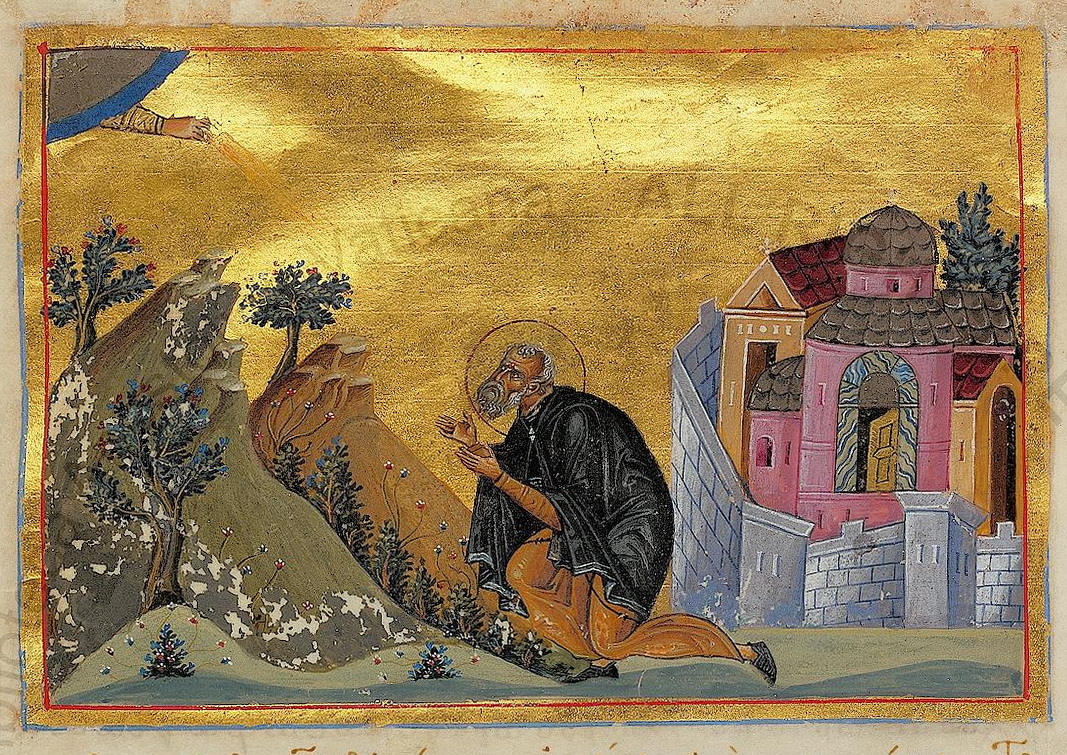
John had his surname given him from his love of silence and recollection. He was born at Nicopolis in Armenia, in the year 454. His descent by both parents was from the most illustrious generals and governors of that part of the empire ; but he derived from their virtue a much more illustrious nobility than that of their pedigree. They were solicitous above all things to give their son the most holy education. After their death, he, with part of his estate, built at Nicopolis a church in honor of the Blessed Virgin, as also a monastery, in which, with ten fervent companions, he shut himself up when only eighteen years of age, with a view of making the salvation and most perfect sanctincation of his soul his only and earnest pursuit, di- recting to this end all his thoughts and endeavors. As humility is the foun- dation and guardian of all virtue, this he labored in the first place to obtain. Accordingly he made it his earnest petition to God ; and, by assiduous med- itation on his own nothingness, his absolute insufficiency, numberless mise- ries, and baseness, and on the infinite majesty and adorable perfections of God, he studied to know God and himself. He learned sincerely to look upon all manner of humiliations as his due, and to receive them with joy from whatever quarter they were sent ; and cheerfully to exercise himself in those which appeared most repugnant to flesh and blood, and most proper to beat down all secret sentiments of pride. To kill the seeds of all other vices, he practised the most constant and severe denial of his own will, and he added corporal austerities to subdue his flesh, and to fit his soul for the .spiritual functions of contemplation and prayer. Not only to shun the danger of sin by the tongue, but also out of a sense of sincere humility and contempt of himself, and the love of interior recollection and prayer, he very seldom spoke; and if necessity obliged him to open his mouth, it was alway» in very few words, and with great discretion. He banished sloth out of his little community as a fruitful source of vice, and the poison of all virtue. Some humbling, painful, and useful labor, filled up in his house all the in- tervals of time which public prayer and other necessary duties left vacant His mildness, prudence, and piety, won him the esteem and affection of til his brethren, who strove in every virtue to be the copies of their holy abbot But, to his extreme affliction, when he was only twenty-eight years old, the archbishop of Sebaste obliged him to quit his retreat, and ordained him bishop of Colonian in Armenia in 482.
The lives of the Fathers, martyrs, and other principal saints · 2 · ST. JOHN THE SILENT, B. C.
ST. JOHN THE SILENT, B. C.
Prom his excellent life, written by Cyril the monk, his disciple, a little before the death »f the saint. S«4 Godeau, Eloges des Eveques lllustres, $50, p. 330.
A. D. 559.
John had his surname given him from his love of silence and recollection. He was born at Nicopolis in Armenia, in the year 454. His descent by both parents was from the most illustrious generals and governors of that part of the empire ; but he derived from their virtue a much more illustrious nobility than that of their pedigree. They were solicitous above all things to give their son the most holy education. After their death, he, with part of his estate, built at Nicopolis a church in honor of the Blessed Virgin, as also a monastery, in which, with ten fervent companions, he shut himself up when only eighteen years of age, with a view of making the salvation and most perfect sanctincation of his soul his only and earnest pursuit, di- recting to this end all his thoughts and endeavors. As humility is the foun- dation and guardian of all virtue, this he labored in the first place to obtain. Accordingly he made it his earnest petition to God ; and, by assiduous med- itation on his own nothingness, his absolute insufficiency, numberless mise- ries, and baseness, and on the infinite majesty and adorable perfections of God, he studied to know God and himself. He learned sincerely to look upon all manner of humiliations as his due, and to receive them with joy from whatever quarter they were sent ; and cheerfully to exercise himself in those which appeared most repugnant to flesh and blood, and most proper to beat down all secret sentiments of pride. To kill the seeds of all other vices, he practised the most constant and severe denial of his own will, and he added corporal austerities to subdue his flesh, and to fit his soul for the .spiritual functions of contemplation and prayer. Not only to shun the danger of sin by the tongue, but also out of a sense of sincere humility and contempt of himself, and the love of interior recollection and prayer, he very seldom spoke; and if necessity obliged him to open his mouth, it was alway» in very few words, and with great discretion. He banished sloth out of his little community as a fruitful source of vice, and the poison of all virtue. Some humbling, painful, and useful labor, filled up in his house all the in- tervals of time which public prayer and other necessary duties left vacant His mildness, prudence, and piety, won him the esteem and affection of til his brethren, who strove in every virtue to be the copies of their holy abbot But, to his extreme affliction, when he was only twenty-eight years old, the archbishop of Sebaste obliged him to quit his retreat, and ordained him bishop of Colonian in Armenia in 482.
In this dignity John preserved always the same spirit, and, as much as was compatible with the duties of his charge, continued his monastic auster- ities and exercises. His brother and nephew, who enjoyed honorable places in the emperor's palace, were moved by h's example to contemn the world in the very midst of its honors , and the same grace which sanctifies an- chorets in their deserts, made them saints in the court. But he found not the same comfort in a brother-in-law, who was governor of Armenia, against whose oppressions of his church the saint was obliged to have recourse to the emperor Zeno, and readily obtained his protection. St. Job-, had ful-
The lives of the Fathers, martyrs, and other principal saints · 2 · ST. JOHN THE SILENT, B. C.
Prom his excellent life, written by Cyril the monk, his disciple, a little before the death »f the saint. S«4 Godeau, Eloges des Eveques lllustres, $50, p. 330.
A. D. 559.
John had his surname given him from his love of silence and recollection. He was born at Nicopolis in Armenia, in the year 454. His descent by both parents was from the most illustrious generals and governors of that part of the empire ; but he derived from their virtue a much more illustrious nobility than that of their pedigree. They were solicitous above all things to give their son the most holy education. After their death, he, with part of his estate, built at Nicopolis a church in honor of the Blessed Virgin, as also a monastery, in which, with ten fervent companions, he shut himself up when only eighteen years of age, with a view of making the salvation and most perfect sanctincation of his soul his only and earnest pursuit, di- recting to this end all his thoughts and endeavors. As humility is the foun- dation and guardian of all virtue, this he labored in the first place to obtain. Accordingly he made it his earnest petition to God ; and, by assiduous med- itation on his own nothingness, his absolute insufficiency, numberless mise- ries, and baseness, and on the infinite majesty and adorable perfections of God, he studied to know God and himself. He learned sincerely to look upon all manner of humiliations as his due, and to receive them with joy from whatever quarter they were sent ; and cheerfully to exercise himself in those which appeared most repugnant to flesh and blood, and most proper to beat down all secret sentiments of pride. To kill the seeds of all other vices, he practised the most constant and severe denial of his own will, and he added corporal austerities to subdue his flesh, and to fit his soul for the .spiritual functions of contemplation and prayer. Not only to shun the danger of sin by the tongue, but also out of a sense of sincere humility and contempt of himself, and the love of interior recollection and prayer, he very seldom spoke; and if necessity obliged him to open his mouth, it was alway» in very few words, and with great discretion. He banished sloth out of his little community as a fruitful source of vice, and the poison of all virtue. Some humbling, painful, and useful labor, filled up in his house all the in- tervals of time which public prayer and other necessary duties left vacant His mildness, prudence, and piety, won him the esteem and affection of til his brethren, who strove in every virtue to be the copies of their holy abbot But, to his extreme affliction, when he was only twenty-eight years old, the archbishop of Sebaste obliged him to quit his retreat, and ordained him bishop of Colonian in Armenia in 482.
In this dignity John preserved always the same spirit, and, as much as was compatible with the duties of his charge, continued his monastic auster- ities and exercises. His brother and nephew, who enjoyed honorable places in the emperor's palace, were moved by h's example to contemn the world in the very midst of its honors , and the same grace which sanctifies an- chorets in their deserts, made them saints in the court. But he found not the same comfort in a brother-in-law, who was governor of Armenia, against whose oppressions of his church the saint was obliged to have recourse to the emperor Zeno, and readily obtained his protection. St. Job-, had ful-