
Kilian
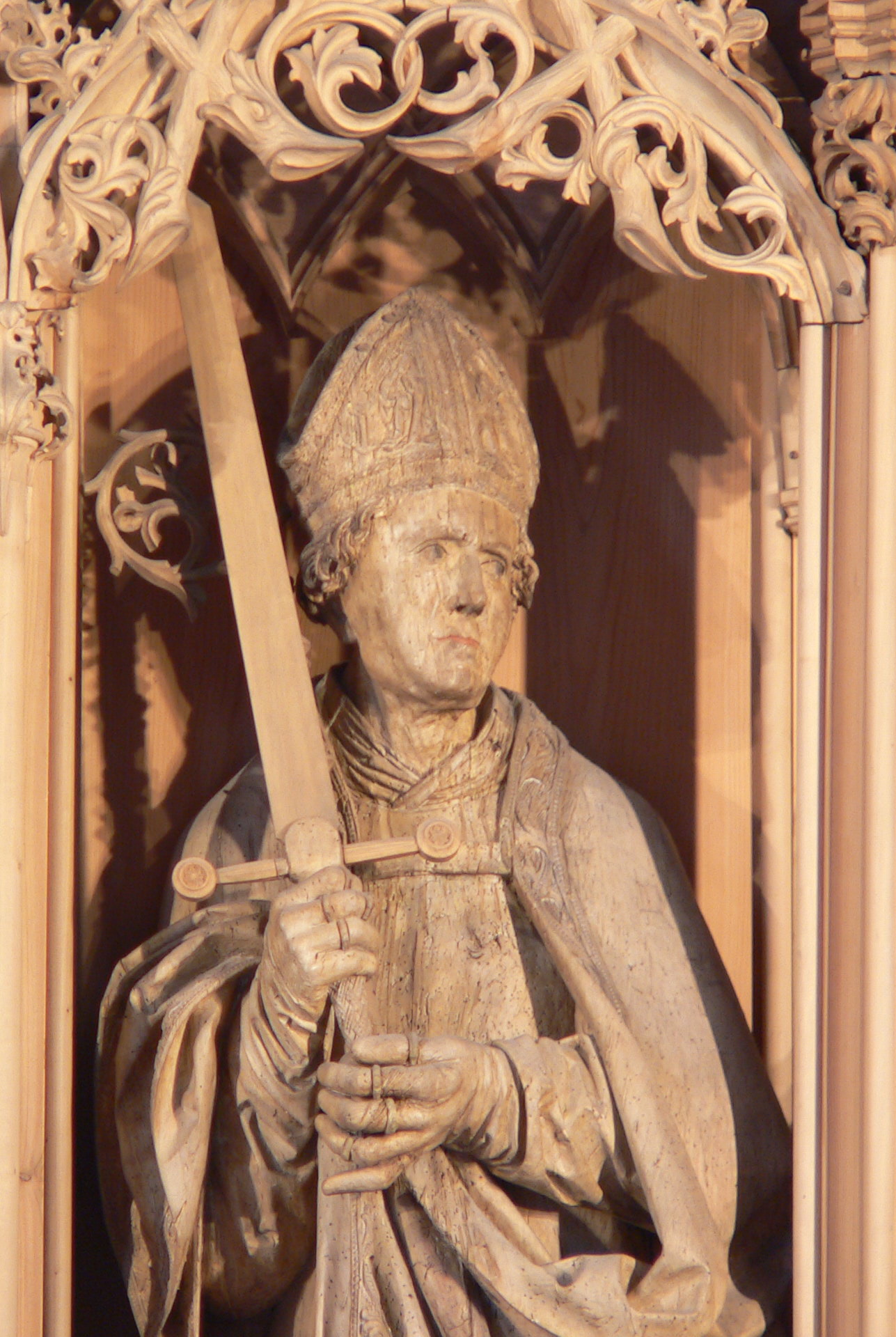
Life and witness
At Wirtzburge, in Germany, of St. Kilian, who being sent thither by the bishop, bishop of Rome to preach the Gospel, and having brought many to the faith of Christ, was there, together with his companions Colman, priest, and Totnan, deacon, killed.
Alban Butler: July · SS. KILIAN BISHOP, COLMAN PRIEST, AND TOTNAN DEACON, MM.
Kilian or Kuln was a holy Irish monk, of noble Scottish extraction. With two zealous companions he travelled to Rome in 686, and obtained of pope Conon a commission to preach the gospel to the German idolaters in Franconia; upon which occasion Kilian was invested with episcopal authority. The missionaries converted and baptized great numbers at Wurtzburg, and among others Gosbert, the duke of that name. This prince had taken to wife Geilana, the relict of his deceased brother; and though he loved her tenderly, being put in mind by St. Kilian that such a marriage was condemned and void by the law of the gospel, he promised to dismiss her, saying that we are bound to love God above father, mother, or wife. Geilana was tormented in mind beyond measure at this resolution; jealousy and ambition equally inflamed her breast; and, as the vengeance of a wicked woman has no bounds, during the absence of the duke in a military expedition, she sent assassins, who privately murdered the three holy missionaries in 688. The ruffians were themselves pursued by divine vengeance, and all perished miserably. St. Burchard, who, in the following century, was placed by St. Boniface in the episcopal see of Wurtzburg, translated their relics into his cathedral. A portion of those of St. Kilian, in a rich shrine, was preserved in the treasury of the elector of Brunswic-Lunenburg in 1713, as appears from the printed description of that cabinet. See the acts of these martyrs compiled by Egilward, monk of St. Burchard’s at Wurtzburg, extant imperfect in the eleventh century, in Surius, t. 4, entire in Canisius, t. 4, par. 2, p. 628, and t. 3, ed. Basn., p. 174. Also among the Opuscula of Serrarius, printed at Mentz in 1611, in the collection of the writers of Wurtzburg published by Ludewig, p. 966, and in Mabillon and the Bollandists. See also Thesaurus reliquiarum Electoralis Brunsvico-Luneburgicus. Hanoveræ, 1713, and Solier, t. 2, Julij, p. 600.
Biographical overview
Kilian, also spelled Cillian or Killian (or alternatively Irish: Cillín; Latin: Kilianus, original Gaelic form Ceallach), was an Irish missionary bishop and the Apostle of Franconia (now the northern part of Bavaria), where he began his labours in the latter half of the 7th century. His feast day is 8 July.