
Osmund
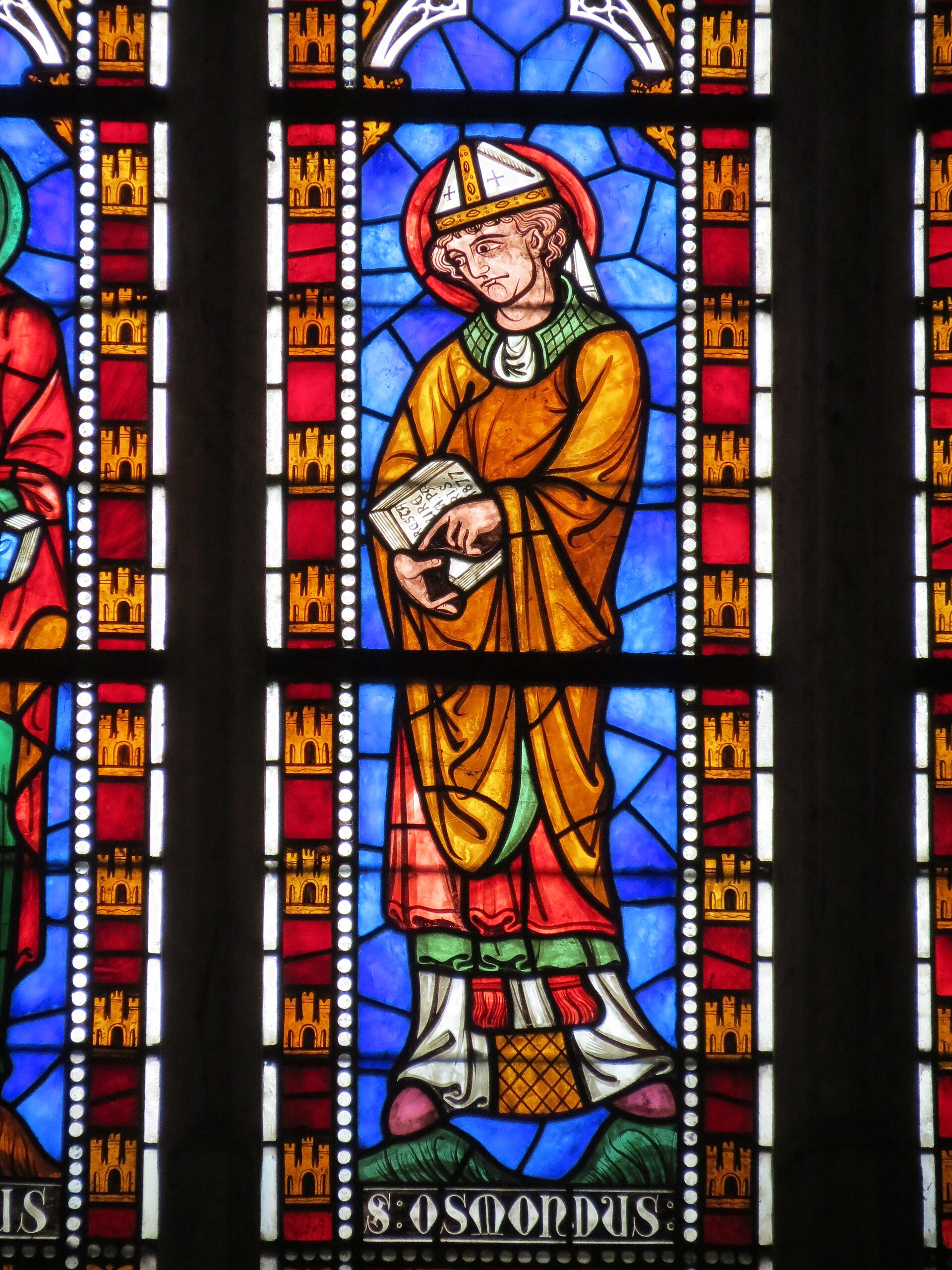
Life and witness
In Eno-- land, of St. Osmund, bishop and confessor.
The Lives Of The Saints: Volume 15, December · S. Osmund, B. of Salisbury; a.d. 1099.
S. Osmund, B. of Salisbury; a.d. 1099.
S. CLEMENT OF ALEXANDRIA.
(ABOUT A.D. 217.)
[Martyrology of Usuardus. Withdrawn from Roman Martyrology the reasons given in the preface to the Martyrology of 1751. Au- thorities : — Eusebius, Jerome, and his own writings.]
ITUS FLAVIUS CLEMENS, commonly called Clement of Alexandria, to distinguish him from Clement of Rome, was one of the most distin- guished Christian fathers of the third century. The ancients were not agreed as to the place of his birth ; some placed it at Alexandria, others at Athens, and say that he only obtained his title from the fact of his having made a long stay and taught in Alexandria.1 His parents were pagans, and he did not become a Christian till he had reached the ripe age of manhood. On this account he classed him- self with those who abandoned the sinful service of paganism for faith in the Redeemer, and received from Him the forgive- ness of their sins.* By free inquiry he convinced himself of the truth of Christianity, after he had acquired an extensive
• Epiphan. H*r. xxiii. 6. * Psedagog. u. A
*-
Digitized by ^ooQle
-*
24
Lives of the Saints.
[Dec 4.
knowledge of the system of religion, and of the philosophy of Divine things known at his time in the enlightened world. This free spirit of inquiry, which had conducted him to Christianity, led him, moreover, after he had become a Chris- tian, to seek the society of eminent Christian teachers of different mental tendencies in different countries. He in- forms us that he had had various distinguished men as his. teachers : an Ionian in Greece, one from Ccelo-Syria, one in Magna Grsecia (Lower Italy), who came originally from Egypt, an Assyrian in Eastern Asia (doubtless Syria), and one of Jewish descent in Palestine. He finally took up his abode in Egypt, where he met with a great Gnosticus, who had penetrated most profoundly into the spirit of Scripture. This last was doubtless Pantaenus. Eusebius not only ex- plains it so, but refers also to a passage in the Hypotyposes of Clement, where he has named him as his instructor.1 Clement was ordained priest of the church of Alexandria, and was appointed by Demetrius, the bishop, to succeed Pantaenus as president of the catechetical school, about a.d. 189. It was from this date that he became famous as a doctor and writer. His vast erudition, his thorough know- ledge of Greek literature, his philosophic education, and his glowing eloquence, commanded the respect of the heathen, and drew them to his lectures. The most famous of his pupils were Origen and S. Alexander of Jerusalem.
Clement had occupied his position at Alexandria in the school for twelve years, when, in 202, the persecution broke out under Septimius Severus. He retired from Alexandria, and probably took refuge with his disciple Alexander, then bishop of Flaviades in Cappadocia. When Alexander was appointed coadjutor to Narcissus, bishop of Jerusalem, in 209, he followed him to that city and opened in it a school. In 21 1 Alexander sent him to Antioch to assist in the
Biographical overview
Osmund (died 3 December 1099), Count of Sées, was a Norman noble and clergyman. Following the Norman conquest of England, he served as Lord Chancellor (c. 1070–1078) and as the second bishop of Salisbury, or Old Sarum.
Martyrologium Romanum · Latin witness
In Anglia sancti Osmundi, Episcopi et Confessoris.
The Lives Of The Saints: Volume 15, December · S. Osmund, B. of Salisbury; a.d. 1099.
S. CLEMENT OF ALEXANDRIA.
(ABOUT A.D. 217.)
[Martyrology of Usuardus. Withdrawn from Roman Martyrology the reasons given in the preface to the Martyrology of 1751. Au- thorities : — Eusebius, Jerome, and his own writings.]
ITUS FLAVIUS CLEMENS, commonly called Clement of Alexandria, to distinguish him from Clement of Rome, was one of the most distin- guished Christian fathers of the third century. The ancients were not agreed as to the place of his birth ; some placed it at Alexandria, others at Athens, and say that he only obtained his title from the fact of his having made a long stay and taught in Alexandria.1 His parents were pagans, and he did not become a Christian till he had reached the ripe age of manhood. On this account he classed him- self with those who abandoned the sinful service of paganism for faith in the Redeemer, and received from Him the forgive- ness of their sins.* By free inquiry he convinced himself of the truth of Christianity, after he had acquired an extensive
• Epiphan. H*r. xxiii. 6. * Psedagog. u. A
*-
Digitized by ^ooQle
-*
24
Lives of the Saints.
[Dec 4.
knowledge of the system of religion, and of the philosophy of Divine things known at his time in the enlightened world. This free spirit of inquiry, which had conducted him to Christianity, led him, moreover, after he had become a Chris- tian, to seek the society of eminent Christian teachers of different mental tendencies in different countries. He in- forms us that he had had various distinguished men as his. teachers : an Ionian in Greece, one from Ccelo-Syria, one in Magna Grsecia (Lower Italy), who came originally from Egypt, an Assyrian in Eastern Asia (doubtless Syria), and one of Jewish descent in Palestine. He finally took up his abode in Egypt, where he met with a great Gnosticus, who had penetrated most profoundly into the spirit of Scripture. This last was doubtless Pantaenus. Eusebius not only ex- plains it so, but refers also to a passage in the Hypotyposes of Clement, where he has named him as his instructor.1 Clement was ordained priest of the church of Alexandria, and was appointed by Demetrius, the bishop, to succeed Pantaenus as president of the catechetical school, about a.d. 189. It was from this date that he became famous as a doctor and writer. His vast erudition, his thorough know- ledge of Greek literature, his philosophic education, and his glowing eloquence, commanded the respect of the heathen, and drew them to his lectures. The most famous of his pupils were Origen and S. Alexander of Jerusalem.
Clement had occupied his position at Alexandria in the school for twelve years, when, in 202, the persecution broke out under Septimius Severus. He retired from Alexandria, and probably took refuge with his disciple Alexander, then bishop of Flaviades in Cappadocia. When Alexander was appointed coadjutor to Narcissus, bishop of Jerusalem, in 209, he followed him to that city and opened in it a school. In 21 1 Alexander sent him to Antioch to assist in the