
Quiteria
Life and witness
In Spain, of St. Quiteria, virgin and martyr.
The Lives Of The Saints: Volume 05, May · S. Quiteria, V.M. at Aire in Gascony.
S. Quiteria, V.M. at Aire in Gascony.
S. Agulf, Archb. of Bourses, a.d. 835.
S. JULIA, V.M.
(6th OR 7TH CENT.)
[Roman Martyrology ; also the ancient Roman Martyrology called by the name of S. Jerome, Ado, Notker, Usuardus, &c. The Acts, as the writer' says in his prologue, are derived from tradition.]
— AINT JULIA was a Christian maiden, a slave to a Syrian merchant at Carthage, named Eusebius. Her master treated her kindly, having learned to respect her strict integrity and diligence in exactly discharging her duties in his house. His business having called him from home, he took Julia with him; and the vessel anchored off the modern Cape Corso of Corsica. Julia and her master went on shore, and found that a pagan sacrifice was being offered. Julia was invited to share in the festival, but indignantly refused, denouncing the sacrifice as idolatrous. Upon this she was dragged before the ruler Felix, who had her beaten on the mouth and then crucified. Her body was carried to the island of Gorgone, whence it was transported to Brescia by Ariza, wife of Didier, king of the Lombards, who built a magnificent church to contain it.
Biographical overview
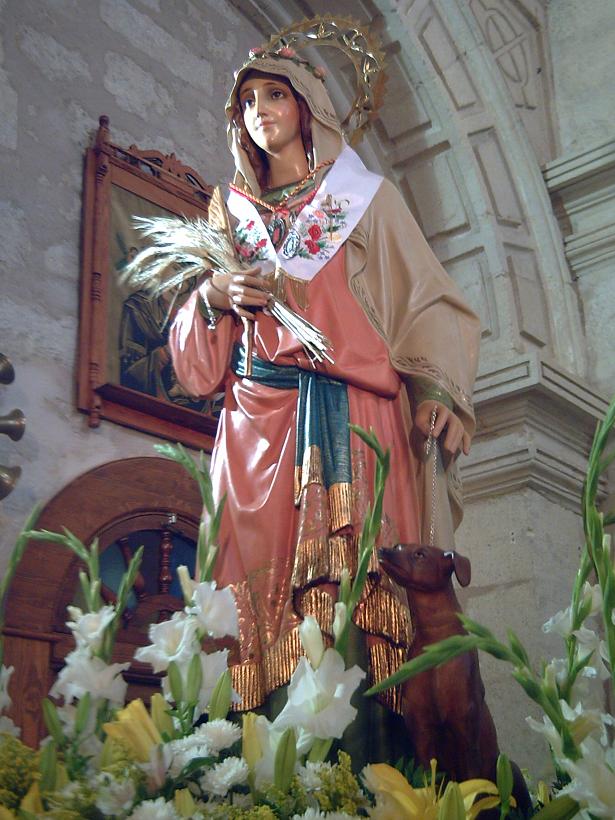
Quiteria was a fifth-century saint and virgin martyr about whom little is certain except her name, the date, place, and cause of her death, and existence of her cult. She is listed under the date of 22 May in the Roman Martyrology. She is one of the patron saints of Toledo, Spain. Accounts of her life include refusal to marry, protection for the vulnerable, and waging a guerilla war against the Roman Empire.
Martyrologium Romanum · Latin witness
In Hispania sanctae Quiteriae, Virginis et Martyris.
The Lives Of The Saints: Volume 05, May · S. Quiteria, V.M. at Aire in Gascony.
S. Agulf, Archb. of Bourses, a.d. 835.
S. JULIA, V.M.
(6th OR 7TH CENT.)
[Roman Martyrology ; also the ancient Roman Martyrology called by the name of S. Jerome, Ado, Notker, Usuardus, &c. The Acts, as the writer' says in his prologue, are derived from tradition.]
— AINT JULIA was a Christian maiden, a slave to a Syrian merchant at Carthage, named Eusebius. Her master treated her kindly, having learned to respect her strict integrity and diligence in exactly discharging her duties in his house. His business having called him from home, he took Julia with him; and the vessel anchored off the modern Cape Corso of Corsica. Julia and her master went on shore, and found that a pagan sacrifice was being offered. Julia was invited to share in the festival, but indignantly refused, denouncing the sacrifice as idolatrous. Upon this she was dragged before the ruler Felix, who had her beaten on the mouth and then crucified. Her body was carried to the island of Gorgone, whence it was transported to Brescia by Ariza, wife of Didier, king of the Lombards, who built a magnificent church to contain it.