
Serapia
Life and witness
At Rome, of St. Serapia, virgin, who under Adrian, emperor, being delivered over unto two lascivious young men, and could not be corrupted by them, nor yet burned with flaming torches, by the command of Berillus, judge, beaten with cudgels, was lastly beheaded. She suffered upon the twentyninth day of July, and was interred by St. Sabina, in her own sepulchre, joining to the place called Vindician; but her memory is kept more solemnly on this day, when their tomb was finished and adorned, and the place itself dedicated to God for prayer.
Biographical overview
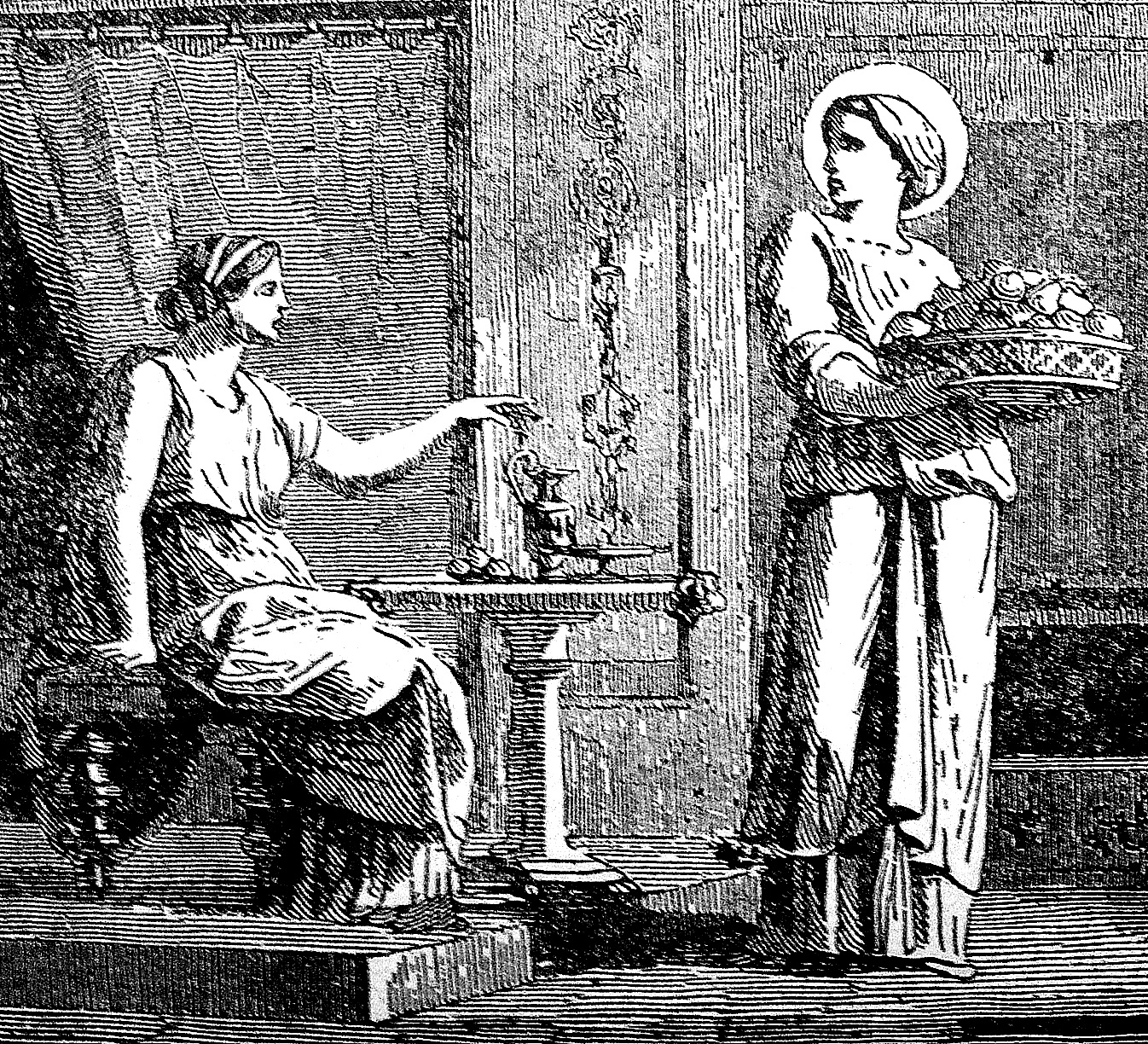
Serapia was a Roman saint, a slave and martyr, also called Seraphia or Seraphima of Syria. Serapia was born at Antioch in the late 1st century, of Christian parents. Fleeing the persecution of Emperor Hadrian, she went to Italy and settled there. Having taken a vow of chastity, she disposed of her property, distributed the proceeds to the poor, and entered the service of a wealthy Roman widow named Sabina, whom she converted to the faith. Sabina then withdrew with a few devout friends to one of her country seats near Vendina in Umbria, where they employed themselves in acts of devotion and charity. During the reign of Hadrian, Serapia was commanded to do homage to the gods of Rome. She refused and was handed over to two men so they could defile her, but her would-be assailants fell unconscious. The governor attributed her deliverance to sorcery. They then tried to burn her with torches. By command of the judge Virilus, she was beaten with rods and then beheaded by sword. Sabina buried Serapia in her own family tomb. Sabina met a similar fate not long after. The Basilica of Saint Sabina on the Aventine Hill originally bore a dedication to both saints.
Martyrologium Romanum · Latin witness
Romae Translatio sanctae Serapiae, Virginis et Martyris; quae passa est quarto Kalendas Augusti.