Philip Neri
Life and witness
Roman Martyrology (traditional English edition; normalized OCR transcription): At Rome, of St. Philip Neri, founder of the congregation of the Oratorians, renowned for the virginal purity and prophecy. gift of Also at Rome, of St. Eleutherius, pope and martyr, who converted many of the Roman nobility to the faith of Christ, and sent the Saints Damian and Fugatius into Brittany, who baptized king Lucius with his queen, and almost all his people.
The Lives Of The Saints: Volume 05, May · S. Philip Neri. Founder of the Oratorians, at Rome, a.d. 1595.
S. Philip Neri. Founder of the Oratorians, at Rome, a.d. 1595.
B. Marianna of Jesus, V., commonly called the Lily of Quito, at Quito, in Peru, a.d. 1645.
S. QUADRATUS, B. OF ATHENS.
(about a.d. 130.)
[Roman Martyrology. In the Greek Mensea, on Sept. 22nd, he is venerated as a martyr ; but probably this is a mistake, Quadratus, bishop of Magnesia, and the menology of the Emperor Basil so styles him. There is no evidence that he was a martyr. Authority : — Eusebius, Hist. Eccl., lib. iii., c. 36, and iv., c. 3, 25.]
AINT QUADRATUS, disciple of the apostles, succeeded Publius in the bishopric of Athens, about the year 125. He composed a defence of the Christian religion, or an “Apology/' which he presented to the Emperor Hadrian, and this work induced the emperor to abate the persecution of the Church. S. Jerome speaks highly of this apology.
1 Greek Mencea. Nothing known of him except his name as mentioned in the Gospels,
1
*■
■*
384
Lives of the Saints.
[May 2 6.
*-
Biographical overview
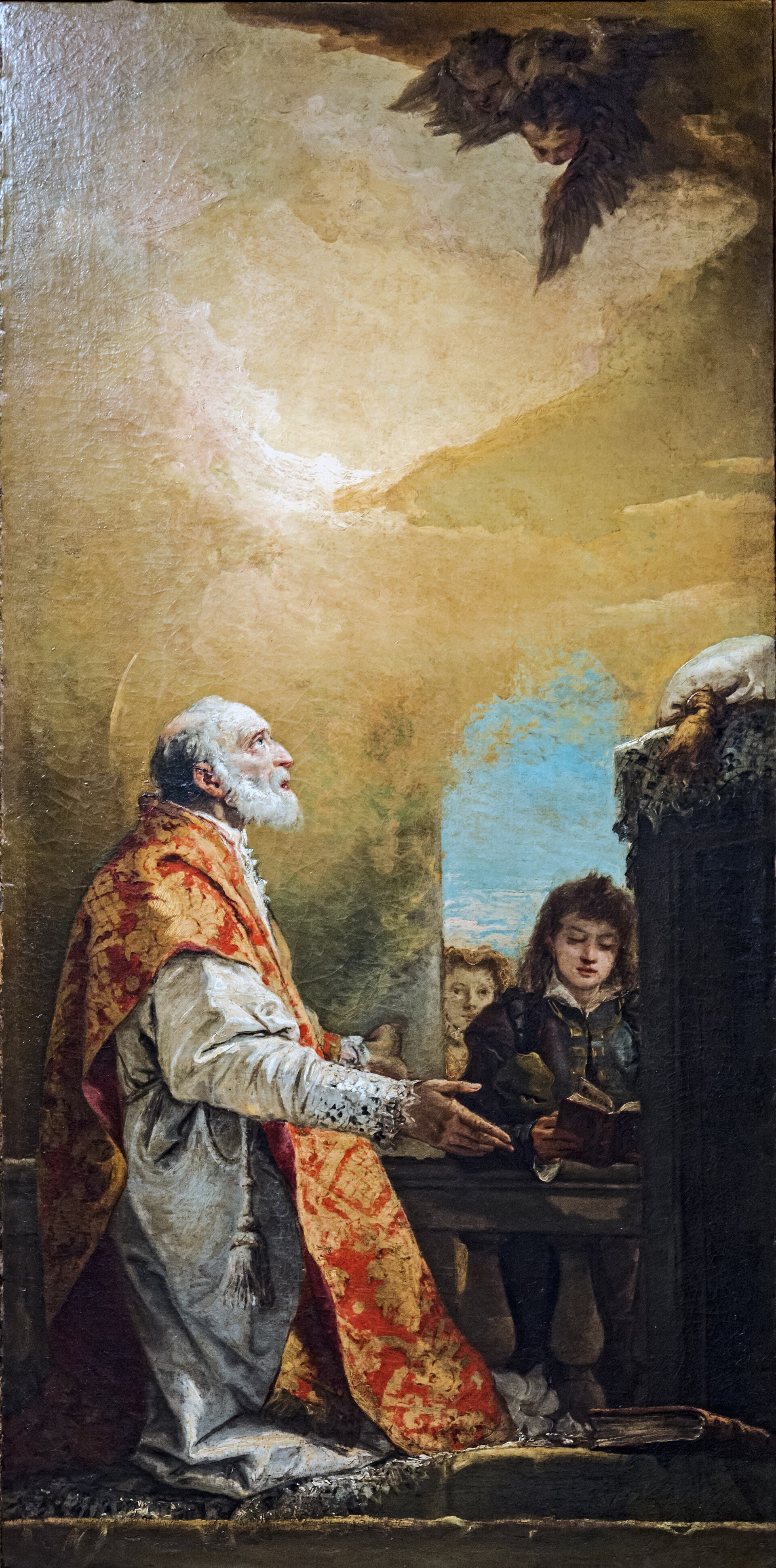
Philip Neri , born Filippo Romolo Neri, pronounced [fiˈlippo ˈrɔːmolo ˈneːri] (21 July 1515 – 26 May 1595) was an Italian Catholic priest who founded the Congregation of the Oratory, a society of secular clergy dedicated to pastoral care and charitable work. He is sometimes referred to as the "Second Apostle of Rome" after Peter the Apostle, and sometimes as the "Third Apostle of Rome", after Peter and Paul the Apostle. Neri's spiritual mission emphasised personal holiness and direct service to others, particularly through the education of young people and care for the poor and sick. His work played a significant role in the Counter-Reformation, especially within the city of Rome. Neri's early life in Florence and later move to Rome in 1533 marked the beginning of his dedication to missionary work. He initially gained prominence for his pastoral care and efforts to minister to marginalised communities, including prostitutes and the destitute. His passion for reform and personal holiness drew many followers, leading to the formation of the Church of the Most Holy Trinity of the Pilgrims and the Congregation of the Oratory. The Oratory became a centre of spiritual renewal and pastoral innovation, focusing on prayer, music, and informal spiritual gatherings that combined religious instruction with personal reflection. As a spiritual leader, Neri was noted for his humility, humour, piety, and ability to inspire deep devotion among both clergy and laypeople. His friendship with figures such as Ignatius of Loyola and influence over the Society of Jesus played a role in the broader movement of Church reform. Neri also engaged in limited political activity, most notably when he intervened to secure the reconciliation of Henry IV of France with the Church. Canonised in 1622, Philip Neri remains a significant figure in Catholic tradition. His feast day is celebrated on 26 May, and he is venerated for his contributions to personal spirituality and the Catholic Church. His legacy is associated with the Seven Churches Walk, a pilgrimage he initiated, and his promotion of musical forms such as the "laude" and oratorios, which had lasting impacts on sacred music.
Martyrologium Romanum · Latin witness
Romae sancti Philippi Nerii, Presbyteri et Confessoris, qui Congregationis Oratorii Fundator fuit, ac virginitate, prophetiae dono, et miraculis extitit insignis.
The Lives Of The Saints: Volume 05, May · S. Philip Neri. Founder of the Oratorians, at Rome, a.d. 1595.
B. Marianna of Jesus, V., commonly called the Lily of Quito, at Quito, in Peru, a.d. 1645.
S. QUADRATUS, B. OF ATHENS.
(about a.d. 130.)
[Roman Martyrology. In the Greek Mensea, on Sept. 22nd, he is venerated as a martyr ; but probably this is a mistake, Quadratus, bishop of Magnesia, and the menology of the Emperor Basil so styles him. There is no evidence that he was a martyr. Authority : — Eusebius, Hist. Eccl., lib. iii., c. 36, and iv., c. 3, 25.]
AINT QUADRATUS, disciple of the apostles, succeeded Publius in the bishopric of Athens, about the year 125. He composed a defence of the Christian religion, or an “Apology/' which he presented to the Emperor Hadrian, and this work induced the emperor to abate the persecution of the Church. S. Jerome speaks highly of this apology.
1 Greek Mencea. Nothing known of him except his name as mentioned in the Gospels,
1
*■
■*
384
Lives of the Saints.
[May 2 6.
*-