
Chapter 01
Reform and the freedom to appoint pastors
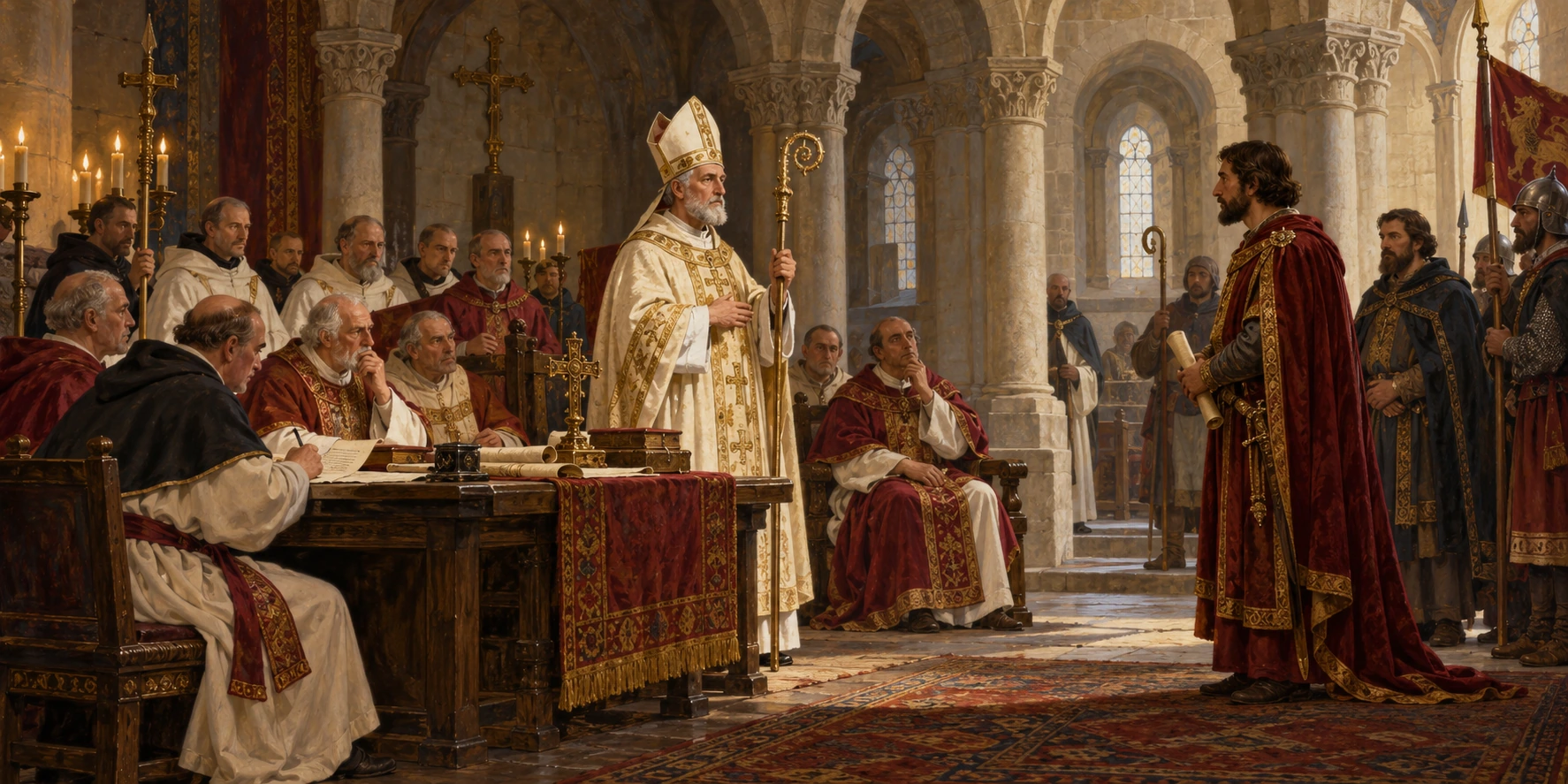
In 1046 Henry III intervened in a Roman situation disfigured by rival claims to the papacy. The synod of Sutri and the ensuing accession of Clement II illustrate why later Gregorian reform cannot be described as the awakening of an institution that had always regarded imperial intervention in exactly the same way. An emperor could appear to rescue ecclesiastical order from aristocratic faction. Yet the remedy contained a constitutional danger: if rescue became a permanent right of appointment, the spiritual office would remain dependent on the ruler who claimed to protect it. The subsequent reform developed in response to that dependence, not through a discovery that bishops had previously possessed no religious authority.
The practical problem extended far beyond Rome. A bishop administered ecclesiastical property, exercised jurisdiction and could owe significant public services. Rulers consequently wanted reliable bishops. Noble families regarded a wealthy see as a means of extending their position, while some candidates approached an office through money, patronage or promises. Reformers condemned simony because a spiritual gift could not be bought. Their objection was not simply that a purchaser might administer badly. Even a capable administrator could enter through a transaction whose object contradicted the nature of the office. The Gospel's account of Simon's attempt to purchase spiritual power supplied a vocabulary that contemporaries could apply to their own institutions.
The conflict concerned appointments that shaped ordinary Christian life. A ruler who selected a bishop primarily for loyalty or revenue could weaken preaching, discipline and the administration of the diocese. Simony compounded the problem by treating ecclesiastical office as a commodity. Reform required more than denouncing a greedy individual: the process of selection had to recognise that spiritual authority belonged to the Church.
Gregory VII’s programme challenged lay investiture because the ring and staff signified an ecclesiastical charge. Bishops did not cease to owe lawful temporal duties, but those duties could not be the source of their pastoral office. The controversy thus helped distinguish two kinds of authority which medieval society often placed in the same person. A church free to select and discipline its ministers could resist being reduced to the personnel department of a dynasty.
01“The Investiture Controversy was only a struggle for wealth.”+
The historical evidence
The instruments of Worms distinguish investiture by ring and staff from delivery of temporal regalia. The distinction concerns the source of an ecclesiastical office, not simply which side receives its income. Canonical election and consecration were recognised while temporal obligations remained.
Answer to the objection
Wealth made appointments attractive to rulers, but the settlement cannot be explained by wealth alone. It secured a public distinction between a spiritual ministry and a temporal charge. The text therefore establishes a principle beyond the personal advantage of pope or emperor.