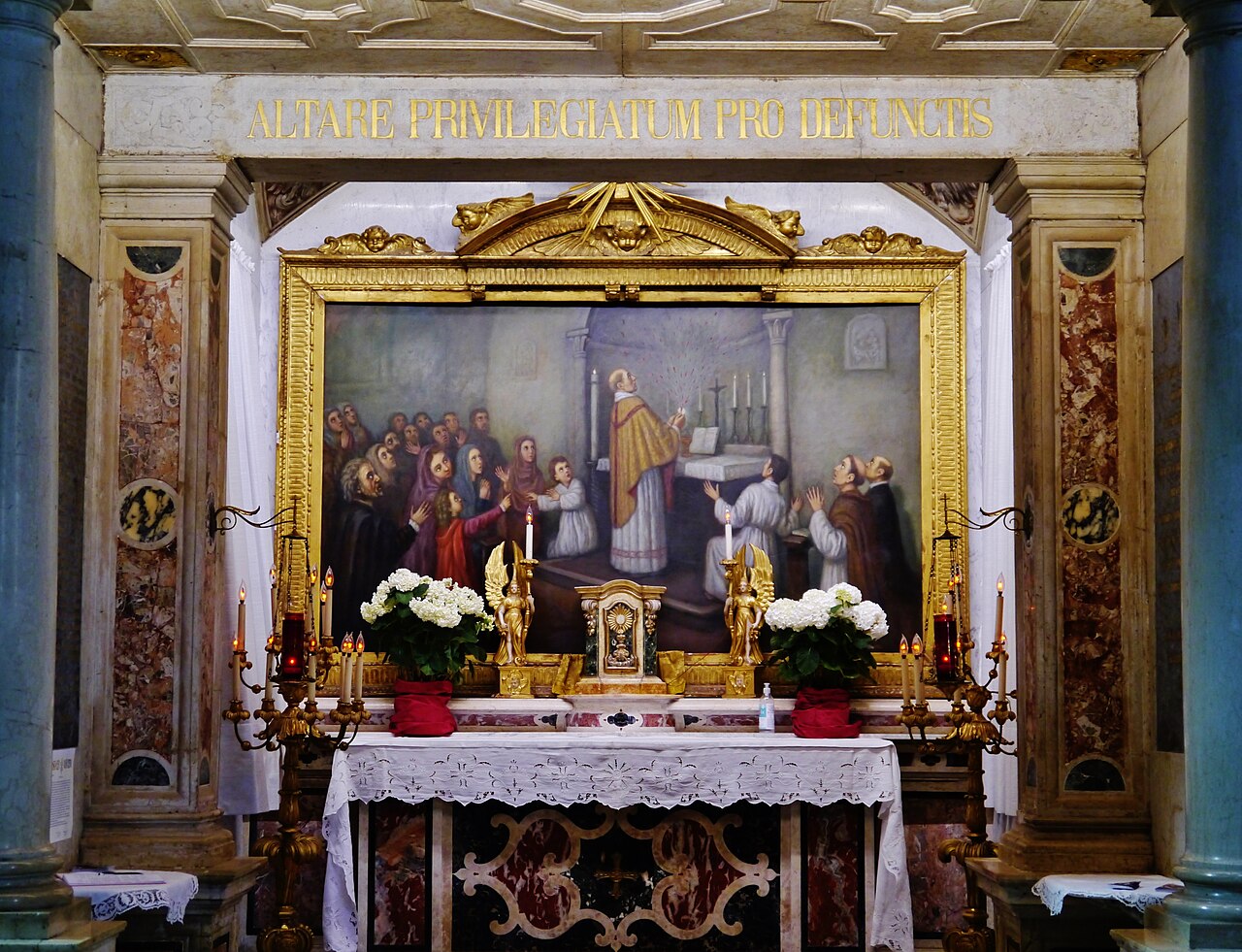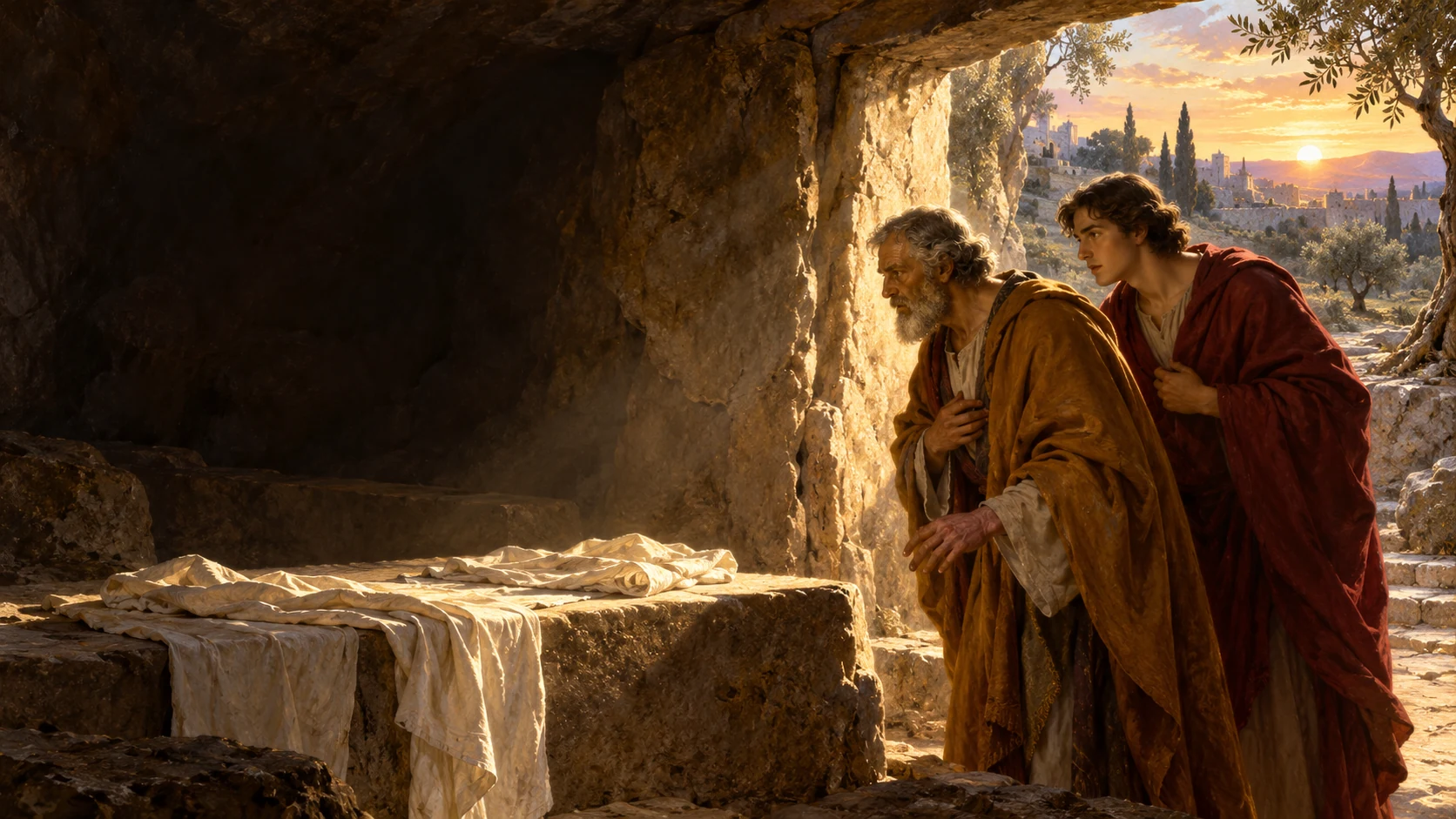
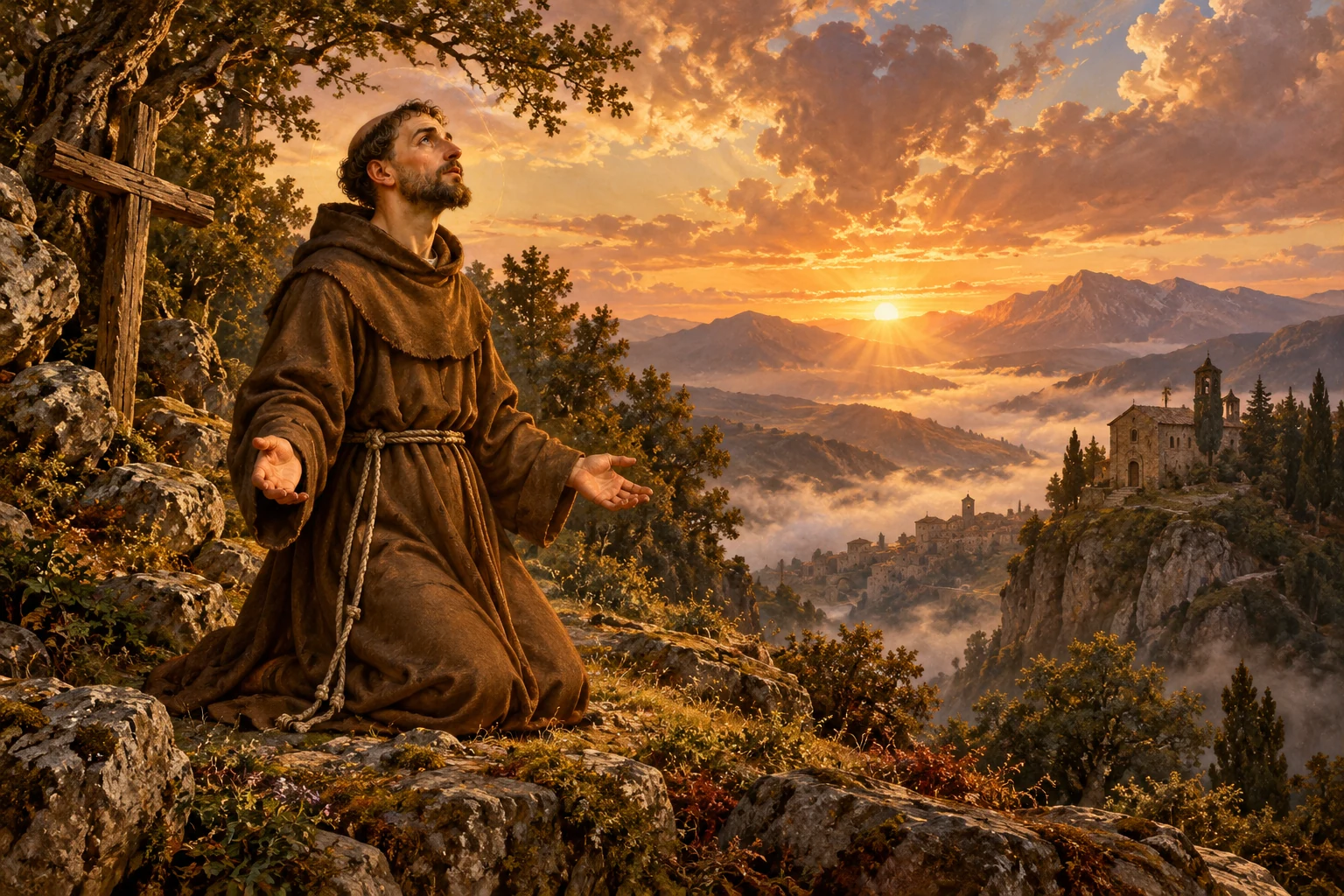
Peter and John at the empty tomb – artistic depiction
Miracles · Signs of Faith

He Saw and Believed

God's work in Holy Scripture and in the history of the Church. Discover miracles, their witnesses, and the findings of their examination.

John 20,8

See the signs.
Trust the Lord.

“Blessed are those who have not seen and yet believe.”John 20,29

Miracles make God's work visible, strengthen faith, and call to conversion. Their goal is an encounter with Christ.

At the empty tomb, the disciple sees and believes. Later, Jesus speaks to Thomas of those who believe without seeing for themselves. Both belong together: faith may seek reasons and trust reliable testimony.

Here you encounter biblical miracles and miracles from the Church's history: the deeds of Christ, Eucharistic miracles, healings, Marian apparitions, and extraordinary testimony from the lives of the saints. We present the events, their witnesses, and the investigations in detail. The sources lead you to the transmitted accounts and documented findings.

What a miracle is and how we examine it →
83Individual and investigative dossiers
7Categories to explore
385distinct source references
The categories

Traces of the extraordinary.

Discover Christ's miracles and the testimony to his work through the centuries.

Three ways into the collection

Where would you like to begin?

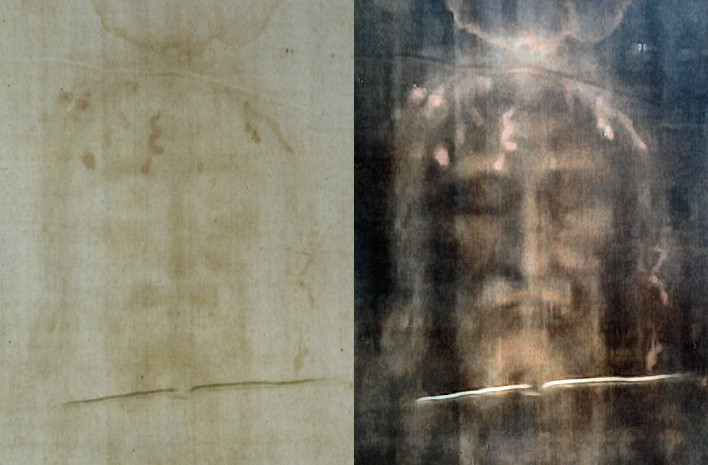
The face on the Shroud in positive and negative reproductions
In Focus · The Shroud of Turin

A reasoned case for authenticity.

The whole story in one dossier: the face, the evidence of blood, the traces of the Passion, and the cloth's journey through the centuries. View the photographs and follow the Bible passages; objections and their answers appear at the end.

The comprehensive Shroud dossier →
Discover · compare · read further

Miracles and Their Witnesses.

Choose a place, period, or subject. Explore the same selection as dossiers, on the map, or in the timeline.

Investigative approach and ecclesiastical judgment →

Dossiers: 83

Images and Relics of the Passion
Miraculous image

The Shroud of Turin

Cathedral of Saint John the Baptist, Turin · Relic of the Passion · securely documented since the 14th century

The Shroud of Turin shows a scourged and crucified body from the front and back: blood on the head, wounds at the hands and feet, an opened side, and traces of burial. These features lead directly to the Passion of Jesus Christ. Chemical evidence of blood, optical measurements, microscopic findings, and the image's distinctive spatial ordering give the surviving cloth extraordinary weight. For decades, specialists from various disciplines have examined its fibers, traces, and history. Views of the whole cloth and the corresponding Gospel passages unfold this connection step by step.

Relic of the Passion Venerated by the ChurchRead →
Images and Relics of the Passion
Miraculous image

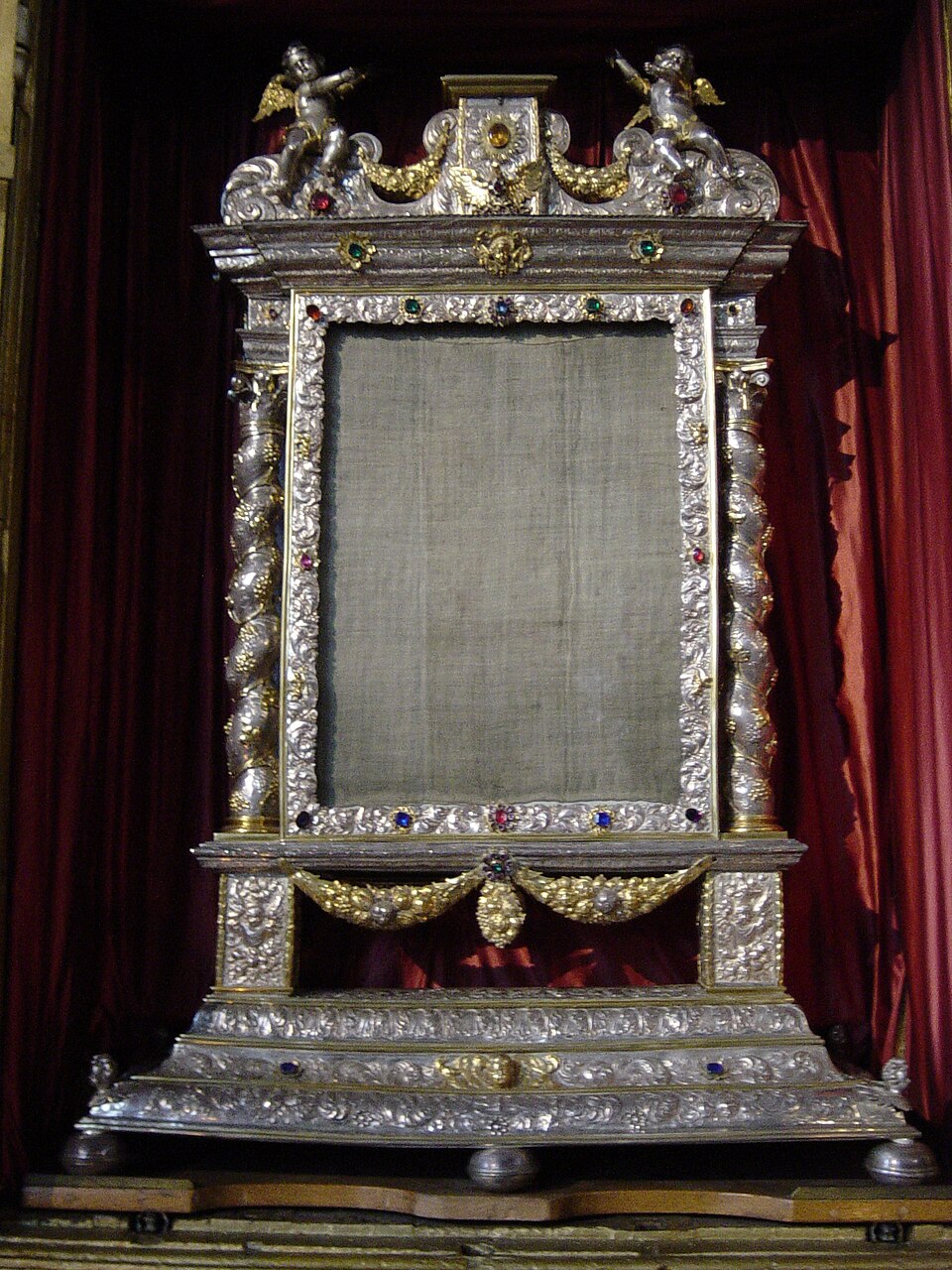
The Holy Face of Manoppello

Basilica of the Volto Santo, Manoppello · Veneration documented since the 17th century

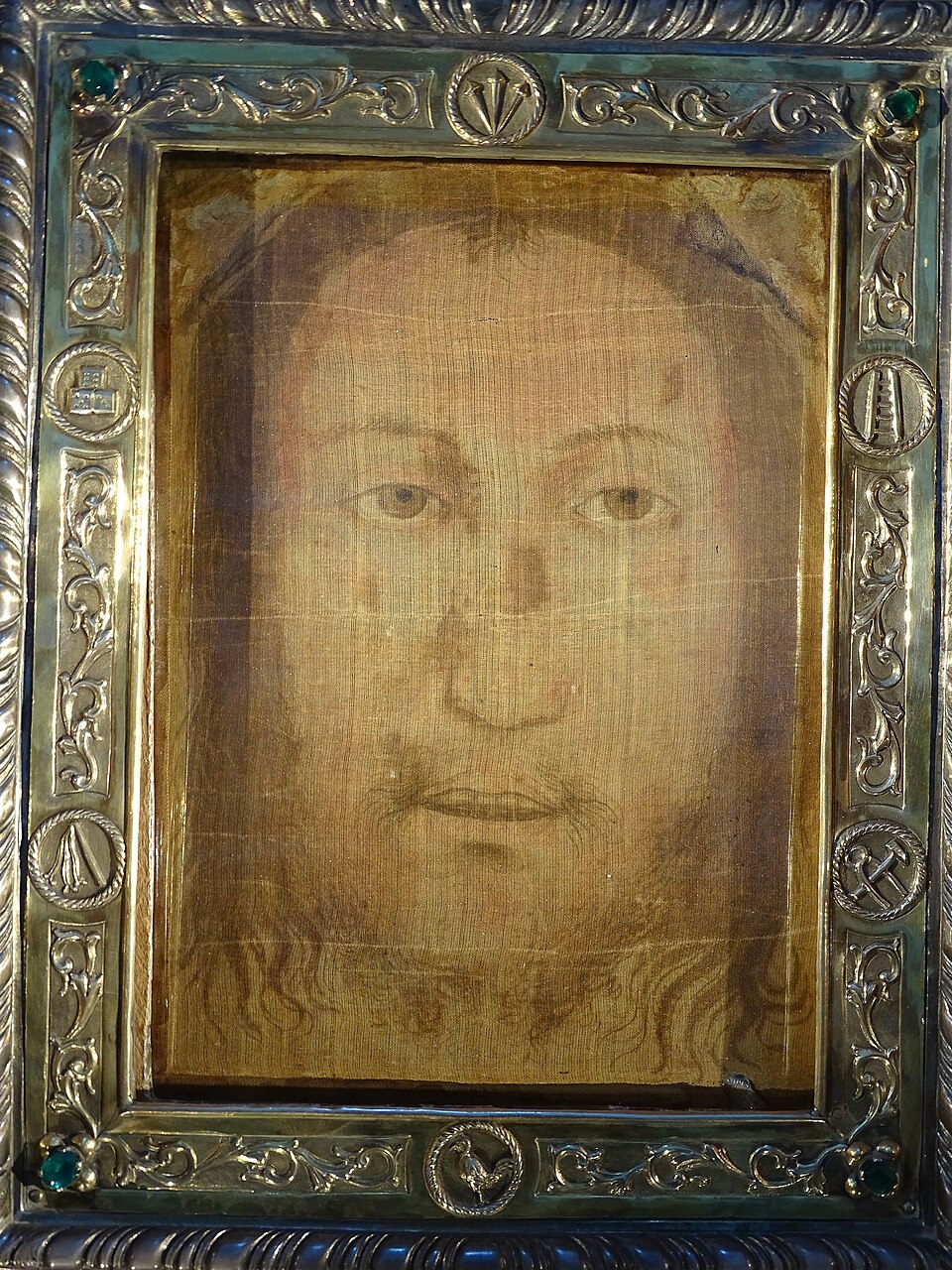
On a small translucent veil in Manoppello appears the face of a bearded man with open eyes. Viewing angle and lighting change its effect; the image can be perceived from both sides. It has been guarded by the Capuchins since the 17th century. Historical research connects it with the Veronica tradition, while optical studies examine fibers, light, and image proportions. Benedict XVI made a pilgrimage to the shrine in 2006 and spoke about seeking the face of Christ. Here, contemplation of an image, research, and living devotion to Christ meet.

Image of Christ Venerated by the ChurchRead →
Images and Relics of the Passion
Passion relic

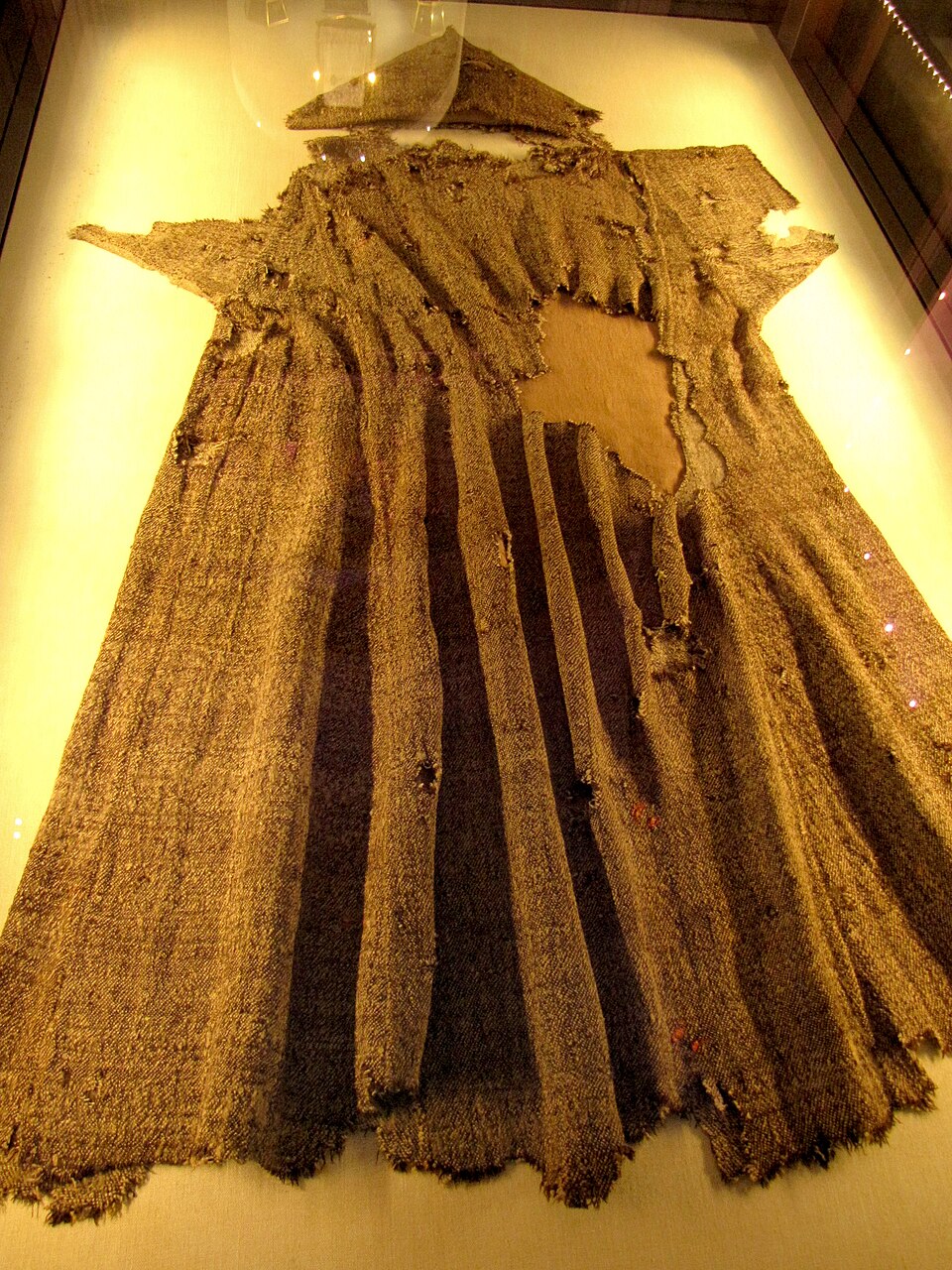
The Holy Robe of Trier

Trier Cathedral · Securely documented since 1196; first public display in 1512

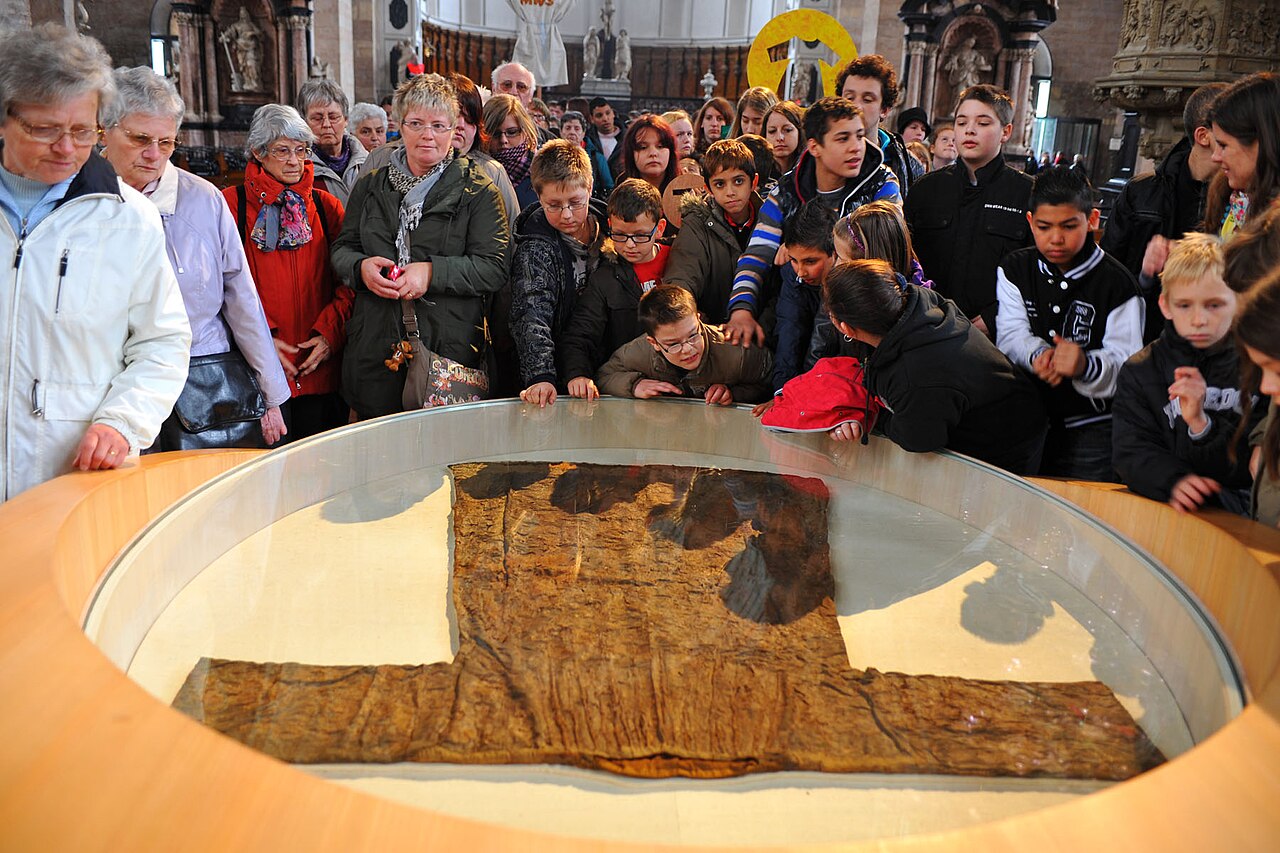
The Holy Robe is among the most important relics of the Passion in the German-speaking world. Within its traditional garment form, it preserves an ancient woolen textile core. Trier's tradition connects it with Saint Helena and with Christ's tunic, for which the soldiers cast lots beneath the cross. Its veneration has been documented since the Middle Ages; the public display of 1512 established a pilgrimage with a wide reach. The textile's history and Saint Cyprian's interpretation together lead to the image of the undivided garment and the unity of the Church.

Relic of the Passion Venerated in Trier CathedralRead →
Images and Relics of the Passion
Passion relic

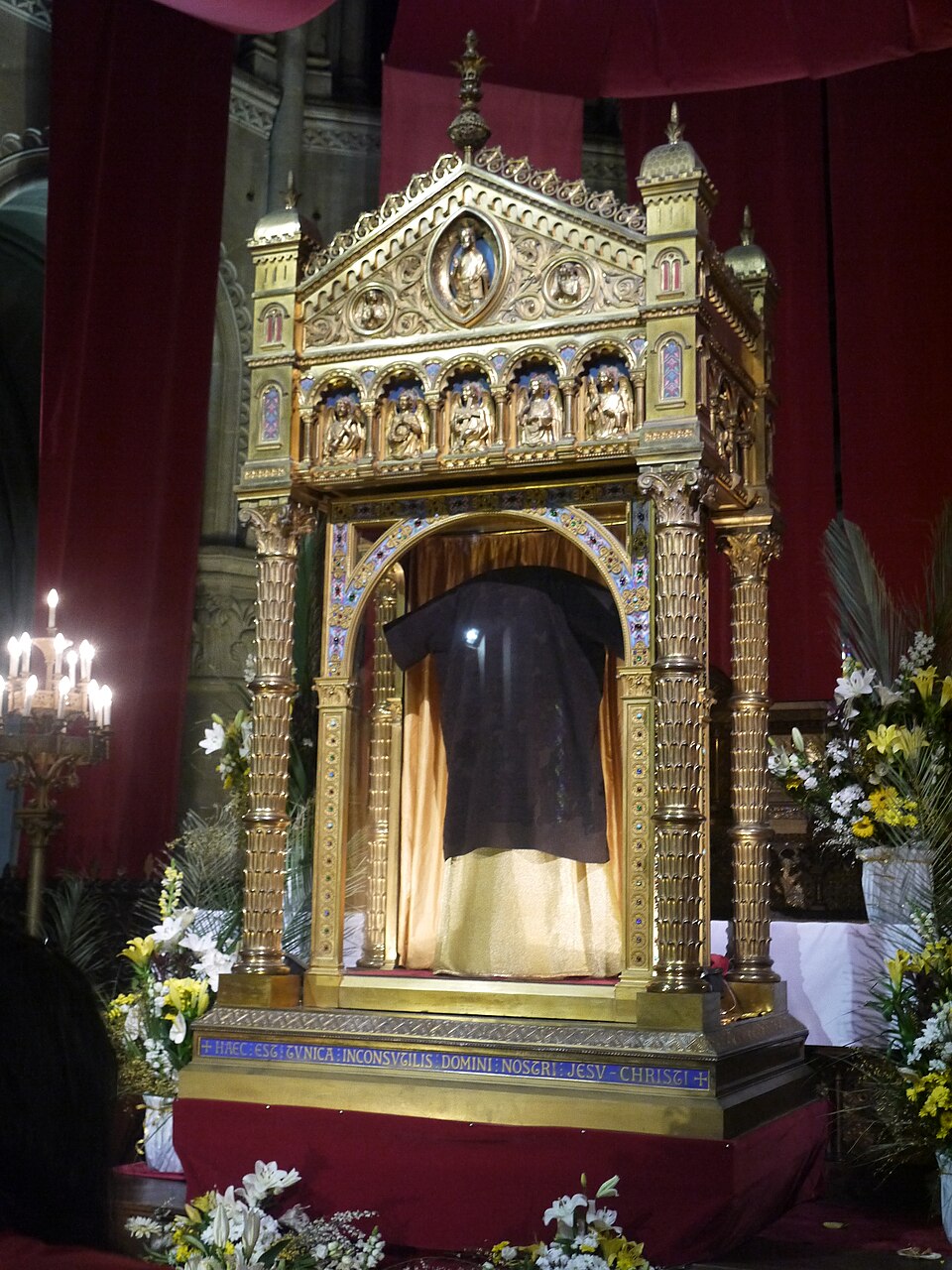
The Holy Tunic of Argenteuil

Basilica of Saint-Denys, Argenteuil · Public veneration since the Middle Ages; public display in 2025

In Argenteuil near Paris, an old woolen garment is venerated as Christ's tunic. Its fragments bear traces of an eventful history: hidden storage, medieval pilgrimage, rescue during the French Revolution, and careful restoration. The shrine connects the tradition with examinations of fabric, bloodstains, and pollen. Solemn public displays continue into the present; the tunic was shown publicly again in 2025. At the center stands remembrance of Christ's bodily self-giving and the undivided garment beneath the cross.

Relic of the Passion Venerated by the ChurchRead →
Images and Relics of the Passion
Passion relic

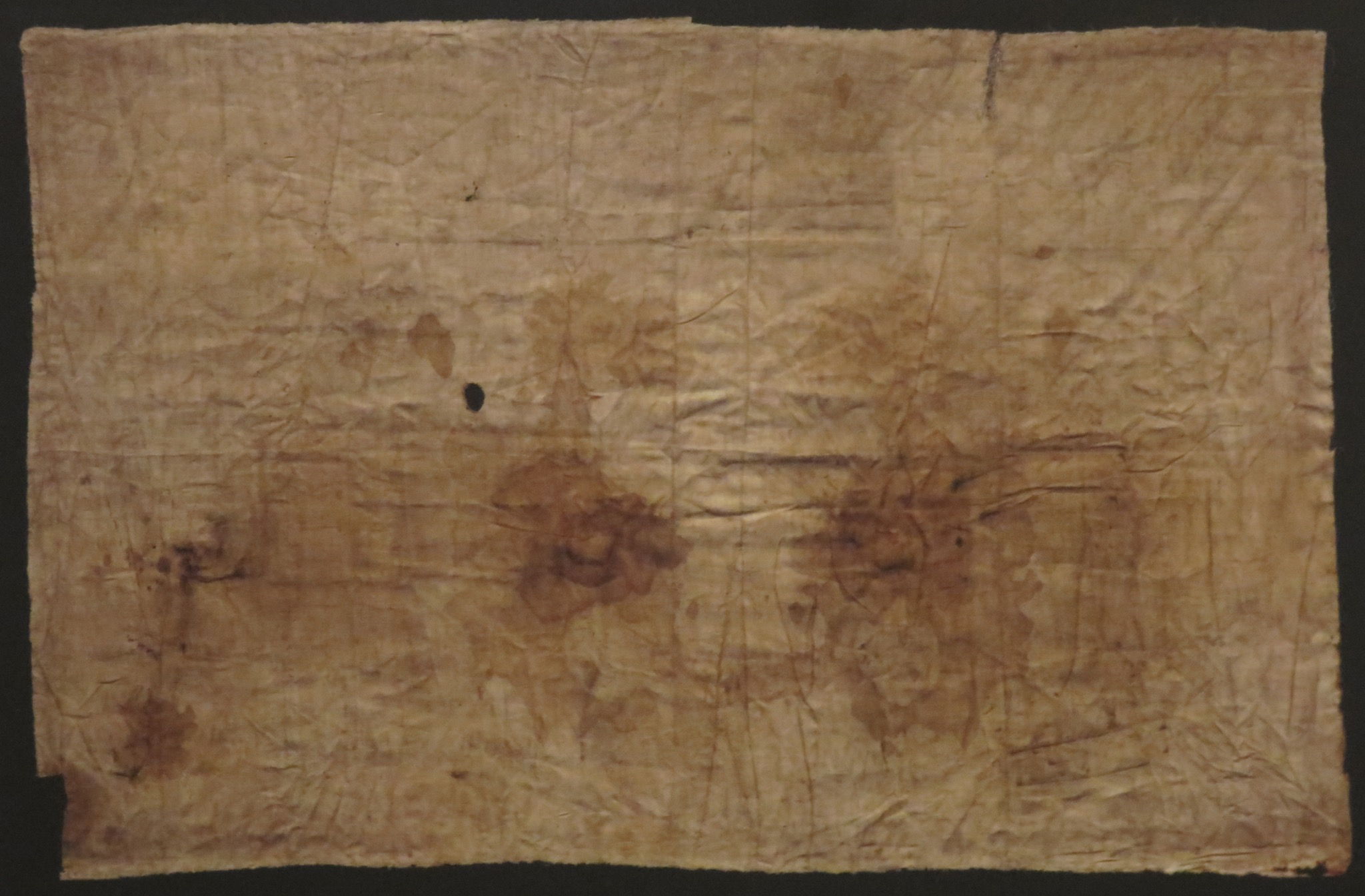
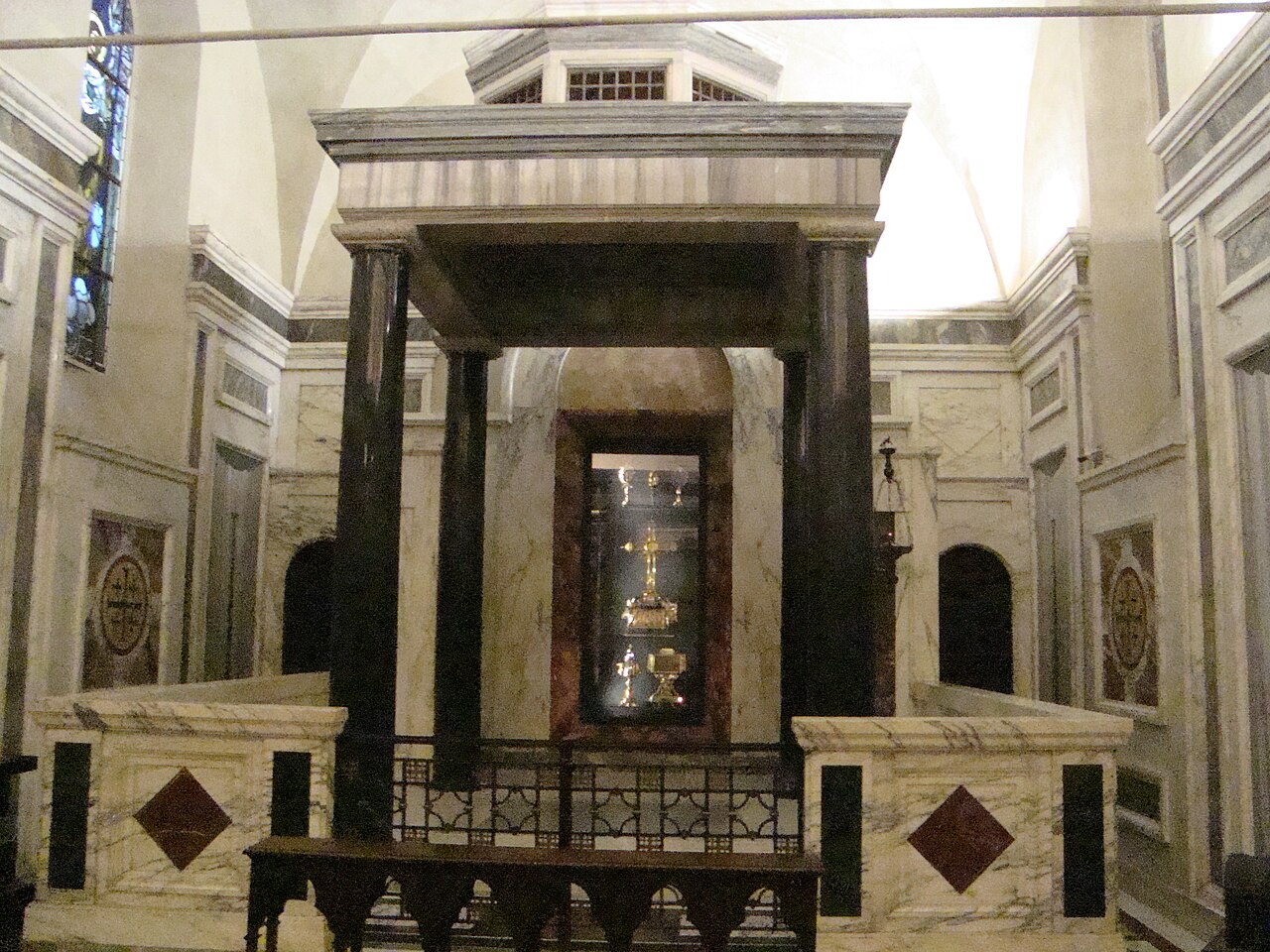
The Sudarium of Oviedo

Cámara Santa, Cathedral of Oviedo · Medieval veneration; modern studies since 1965

A small linen cloth is venerated as Christ's head cloth in the Cámara Santa of Oviedo. Its folds and stains allow a vivid reconstruction of care for a deceased person. Giulio Ricci, the Spanish EDICES team, and other researchers examined the fabric, bloodstains, and connections to the Shroud of Turin. Comparisons at the nose, mouth, and back of the head, and the possible sequence in which the two cloths were used, are particularly revealing. Its history leads from the Arca Santa and medieval pilgrims to present-day forensic and microscopic investigations.

Relic of the Passion Venerated in the CathedralRead →
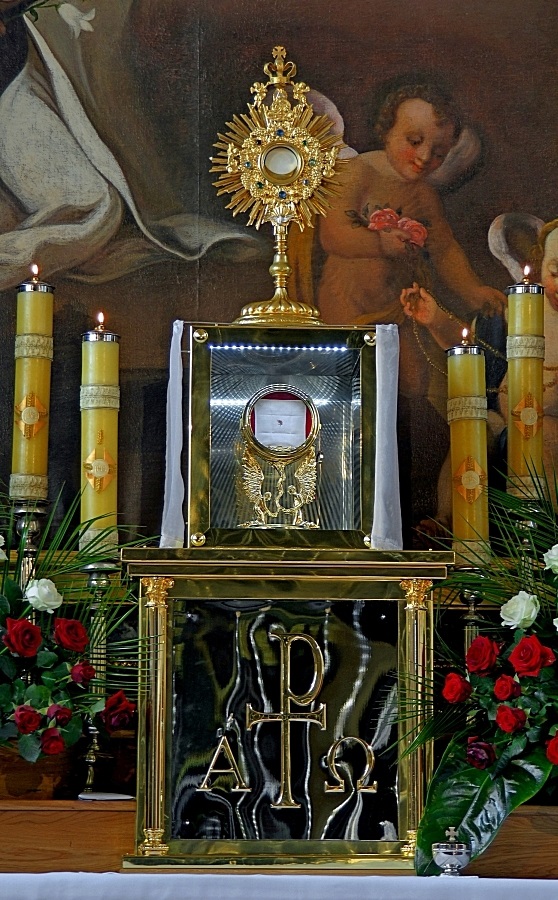
Eucharistic Miracles

Alatri: The Host Made Flesh and Gregory IX's Letter

Alatri, Co-Cathedral of San Paolo · 1227/1228; papal letter of March 13, 1228

In Alatri, a young woman retained a consecrated Host to win someone back through a love spell. After three days, she found flesh in the hidden cloth. Frightened, she confessed to the bishop what had happened; the instigator also came forward. Gregory IX's letter of March 13, 1228, close to the event, takes up the matter, honors it as a divine miracle, and regulates the penance. With this papal response, Alatri possesses a particularly weighty early written testimony.

Favorable Papal Assessment of 1228 Close to the EventRead →
Eucharistic Miracles

Amsterdam: The Intact Host in the Fire

Amsterdam, Kalverstraat and Begijnhof · March 1345

In March 1345, a seriously ill man received Holy Communion in a house on the Kalverstraat. When he vomited afterward, the contents were placed in the fire. A woman found the Host intact within it. This testimony preserved by the Church gave rise to a major pilgrimage. Its memory survived the Reformation and prohibitions and continues to this day in the Silent Procession: the faithful walk in prayer through the city at night and venerate Christ in the Eucharist.

Historical pilgrimage with continuing ecclesiastical careRead →
Eucharistic Miracles

Blanot: The Particle of the Host and the Bloodstained Cloth

Blanot, Côte-d’Or · March 31, 1331

On March 31, 1331, the assistant Thomas Caillot noticed a fallen particle of the Host during Easter Communion in Blanot. He called the priest Hugues de la Baume back. At that spot on the Communion cloth, the priest saw blood. The tradition also names the communicant Jacquette and connects the event with an investigation under Bishop Pierre Bertrand and his official, Jean Jarossier. The venerated cloth preserves the memory of a miracle that sets before our eyes the whole presence of Christ even in the smallest Eucharistic species.

Historical Eucharistic miracle associated with an ecclesiastical investigationRead →
Eucharistic Miracles

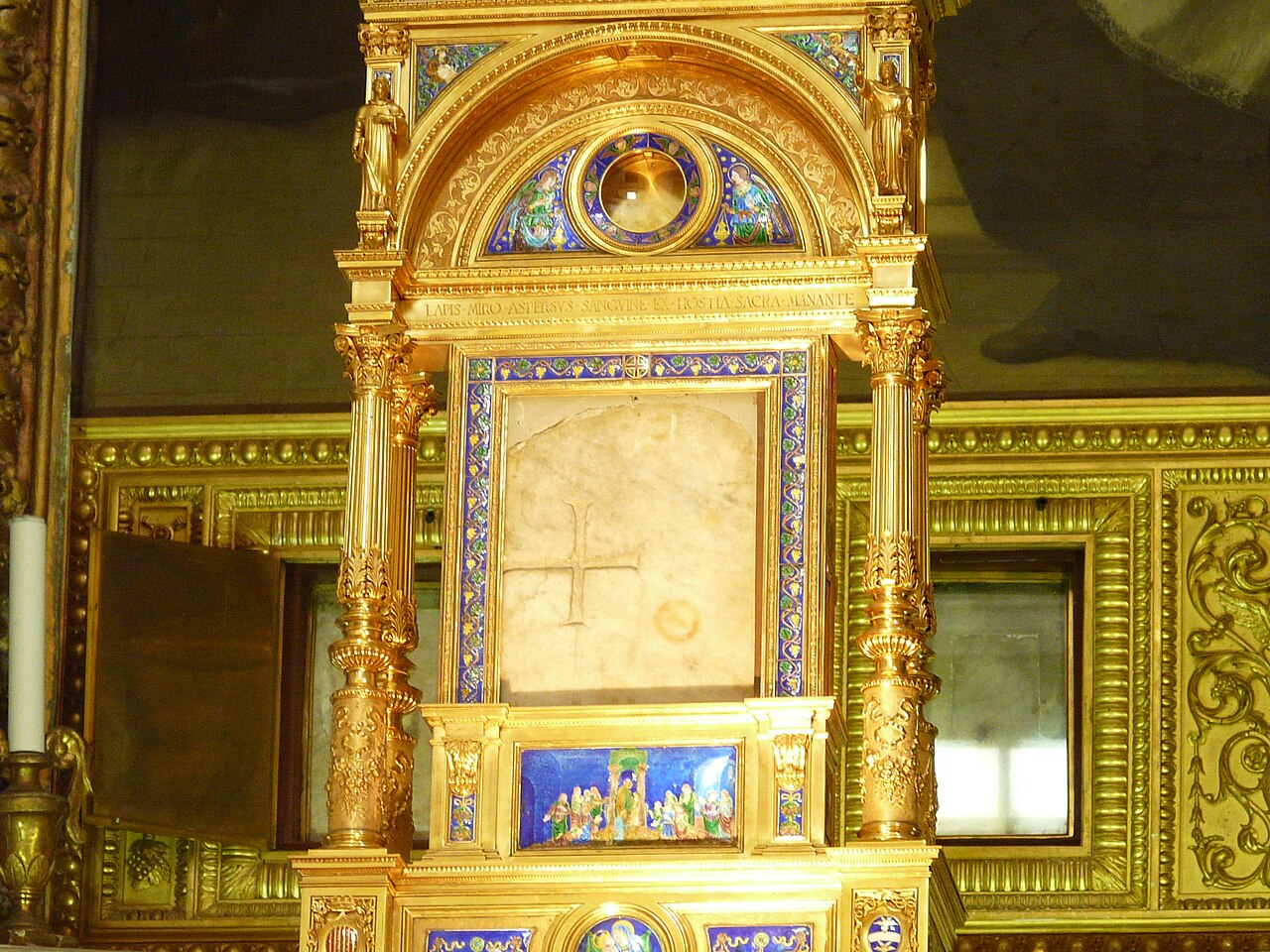
Bolsena and Orvieto: The Bloodstained Corporal

Bolsena, Santa Cristina; Orvieto, Cathedral · 1263; local sources also give 1264

The Eucharistic miracle whose corporal is still venerated in Orvieto occurred in Santa Cristina at Bolsena: during Mass, drops of blood emerged from the Host and stained the linen cloth. The priest's journey to Urban IV, the solemn transfer, and the surviving relics connect the two cities. The medieval testimonies, introduction of the feast of Corpus Christi, and documented examination of the cloth in 2015 belong to the historical picture.

Eucharistic Shrine with Centuries of Ecclesiastical VenerationRead →
Eucharistic Miracles

Buenos Aires: The Eucharistic Miracles of Santa María

Buenos Aires, Santa María Parish, Avenida La Plata · 1992, 1994, and 1996

At Santa María parish, changes described as flesh and blood were observed on consecrated Hosts and Host fragments. The priest involved, Eduardo Pérez Dal Lago, attests to the beginning in May 1992 and names the other priests and the physician called in. The events of 1992, 1994, and 1996 led to investigations and to Eucharistic veneration maintained to this day. In 2024, Archbishop Jorge García Cuerva regulated their shared custody and presentation at Santa María.

Veneration Regulated by the Church at Santa MaríaRead →
Eucharistic Miracles

Cascia: The Bloodstained Breviary Pages

Siena; today Cascia, lower church of Saint Rita's Basilica · 1330

In 1330, a priest near Siena brought a consecrated Host to a sick person. He had placed it between the pages of his breviary. On opening the book, he found blood and the Host adhering to it. The frightened priest sought out the Augustinian Simon Fidati, who took charge of the leaves. The order's tradition and Simon's historical biography trace their journey to Perugia and Cascia. The relic is still preserved and venerated at Saint Rita's shrine.

Veneration at the Shrine of CasciaRead →
Eucharistic Miracles

Douai: Christ Appears in the Holy Host

Douai, formerly Saint-Amé; now venerated in Saint-Pierre · Easter 1254

At Easter 1254, priests and canons in Saint-Amé in Douai experienced an appearance of Christ in the Host. The news brought the Dominican Thomas of Cantimpré to the site. He attests that at first he saw only the white Host, then the thorn-crowned face of the suffering Lord, and finally a radiant face. His own account gives Douai a special historical standing: a named author describes his visit, his conversation with the dean, and what he perceived.

Veneration maintained by the Church with a medieval eyewitness accountRead →
Eucharistic Miracles

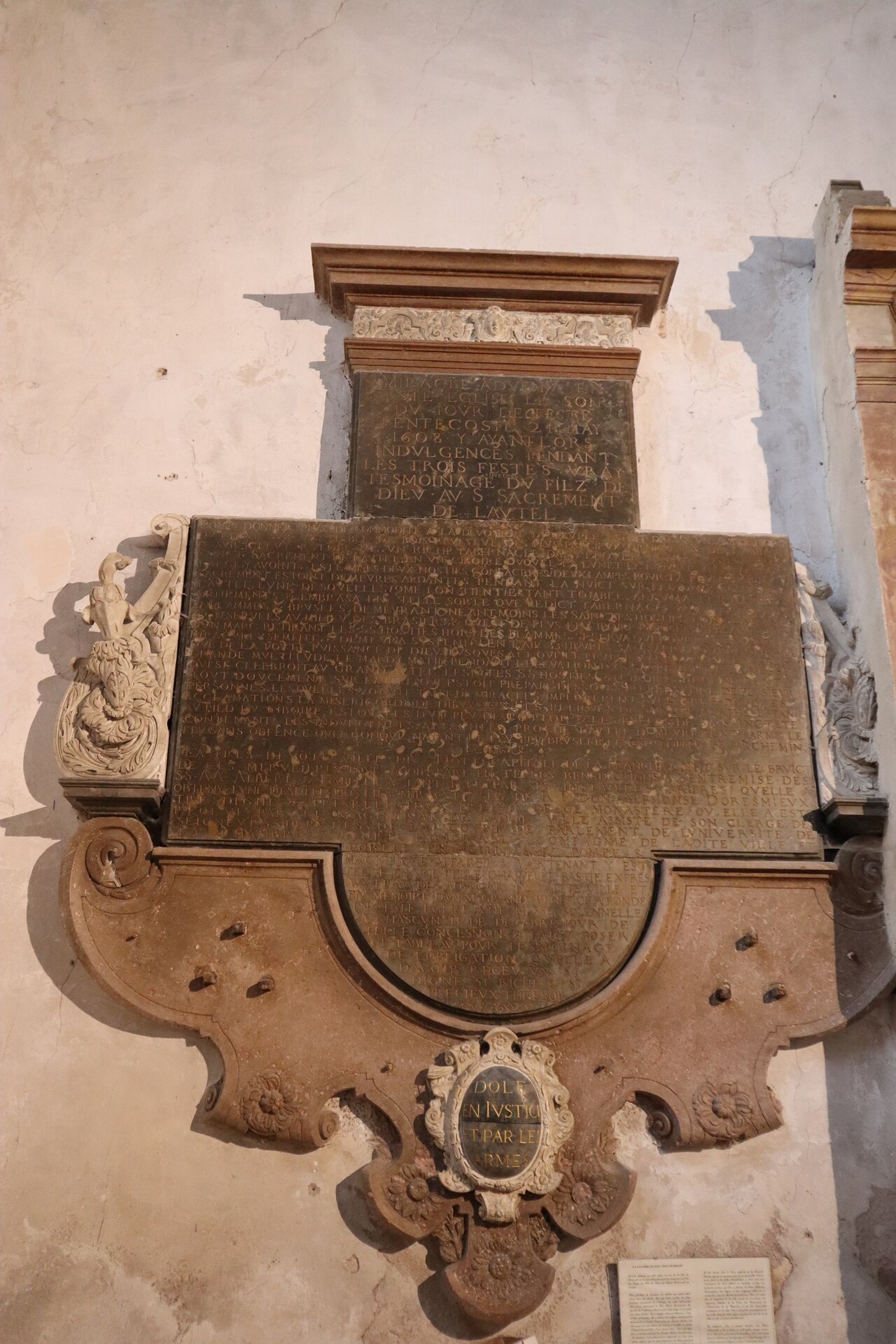
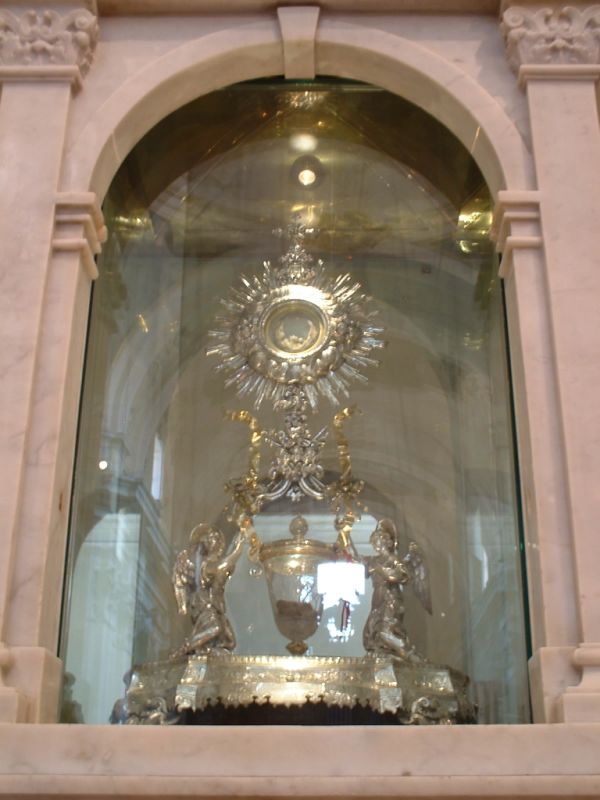
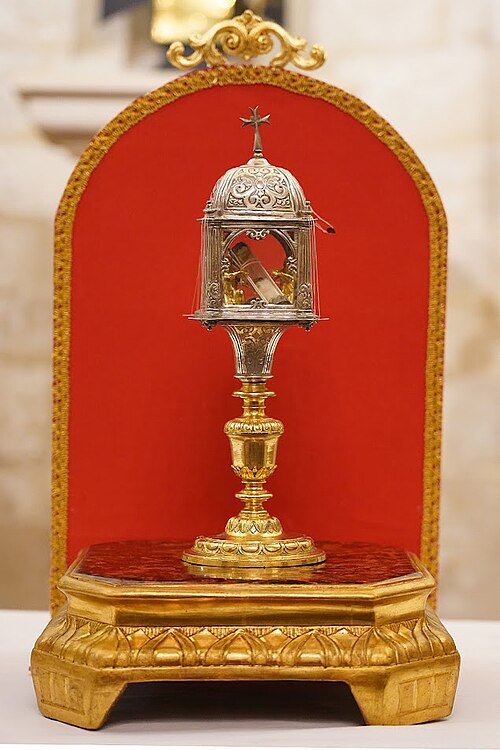
Faverney: The Monstrance Above the Burned Altar

Faverney, former abbey church · Pentecost 1608

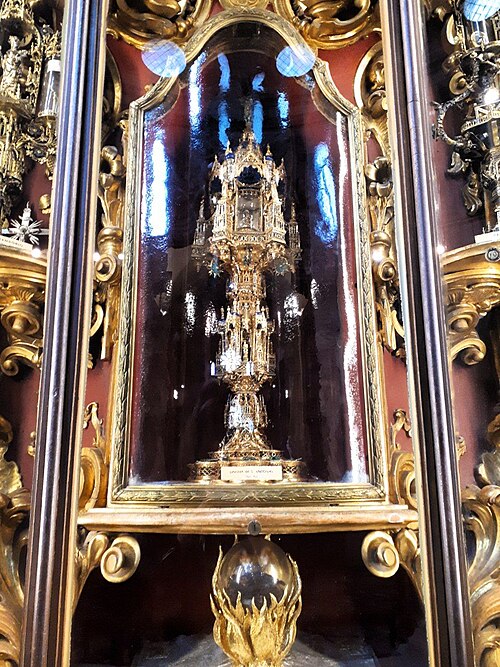
At Pentecost 1608, a fire destroyed the wooden structure for Eucharistic exposition in Faverney. According to the preserved testimonies, the monstrance containing two consecrated Hosts remained above the charred remains without visible support for approximately 33 hours. Monks, clergy, and laypeople observed the event. The investigation began that same May and led to ecclesiastical recognition on June 9, 1608. Its transmitted records can be traced in the public archive.

Prompt ecclesiastical recognition in 1608 documentedRead →
Eucharistic Miracles

Ferrara: The Blood Miracle in Santa Maria in Vado

Ferrara, Santa Maria in Vado · March 28, 1171

On Easter Sunday, March 28, 1171, Prior Pietro da Verona celebrated Holy Mass in Santa Maria in Vado. When he broke the consecrated Host, according to the testimony preserved by the archdiocese, blood emerged and struck the vault. Priests and the faithful witnessed the event. The affected area of the church was preserved even during its later rebuilding and given a special architectural setting. To this day, the archdiocese venerates the Precious Blood there and commemorates the Eucharistic miracle.

Continuing diocesan veneration of the Prodigioso SangueRead →
Eucharistic Miracles

Lanciano: Flesh and Blood in the Eucharistic Miracle

Lanciano, shrine in San Francesco · Tradition: eighth century; investigation: 1970–1971

A monk in Lanciano doubted Christ's real presence during Holy Mass. According to the testimony preserved at the shrine, flesh and blood appeared at the consecration in place of the previous visible species. The flesh and five blood clots are venerated to this day. Odoardo Linoli's medical examination produced a significant positive finding: he identified human heart muscle tissue and human blood of group AB. His work, published in 1971, includes methods and illustrations; the anatomist Ruggero Bertelli confirmed the histological assessment.

Ecclesiastical veneration and published medical findingsRead →
Eucharistic Miracles

Legnica: The Host of Christmas 2013

Legnica, Saint Hyacinth (św. Jacek) · December 25, 2013; communiqué 2016

On Christmas Day 2013, a consecrated Host fell to the floor in Saint Hyacinth's in Legnica. It was placed in water; reddish areas later appeared. An episcopal commission arranged material examinations. The published result describes fragments of striated muscle whose overall structure most closely resembled heart muscle, together with genetic indications of human origin. In 2016, after the involvement of the Congregation for the Doctrine of the Faith, Bishop Zbigniew Kiernikowski ordered the establishment of a fitting place for public veneration.

Public veneration ordered by the bishopRead →
Eucharistic Miracles

Ludbreg: The Holy Blood and the Priest's Doubt

Ludbreg, Shrine of the Precious Blood of Christ · Tradition: early fifteenth century; bull 1513

A priest in Ludbreg doubted during Holy Mass. According to the testimony of the shrine's tradition, the consecrated wine in the chalice visibly took on the form of blood. He initially concealed the extraordinary contents of the chalice and revealed the event only before his death. The ampulla containing the Holy Blood became the center of far-reaching veneration. Pope Julius II ordered an investigation; Leo X promoted the pilgrimage with his bull of 1513. Ludbreg remains a major shrine of the Precious Blood of Christ.

Pilgrimage to the Precious Blood promoted by the papacyRead →
Eucharistic Miracles

Offida: The Bleeding Host and Ricciarella's Confession

Lanciano; now Offida, Sant’Agostino · 1273–1280

In 1273, Ricciarella took a consecrated Host home in Lanciano in order to use it to restore peace in her marriage. When she heated the Host on a brick, blood emerged. She hid the objects until, seven years later, she confessed her deed to the Augustinian Giacomo Diotallevi. He recovered the relics and brought them to Offida in 1280. This event, preserved in local tradition, established the veneration there of the Holy Cross and the Eucharistic miracle.

Historical Eucharistic miracle in the diocesan shrineRead →
Eucharistic Miracles

Santarém: The Santíssimo Milagre

Santarém, Igreja de Santo Estêvão · Thirteenth century; 1247 often cited

A woman in Santarém, distressed by her marriage, took a consecrated Host home for a magical purpose. According to the locally preserved account, blood appeared on its wrapping; at night, light shone from its hiding place. The woman confessed to her husband and the parish priest what had happened. The Host was returned to the church and venerated thereafter. The shrine in Santo Estêvão has preserved this memory since the Middle Ages; its episcopal statutes of 2024 place prayer, the sacraments, and careful custody at the center.

Diocesan shrine with episcopal statutesRead →
Eucharistic Miracles

Seefeld: The Miracle of the Host and Oswald Milser's Conversion

Seefeld in Tyrol, Saint Oswald · Tradition: 1384

In 1384, Oswald Milser demanded a larger Host than the other faithful in Seefeld. According to the account preserved by the parish, the ground gave way beneath him when he received it. The altar stone on which he sought support also yielded. Only when the priest took the Host back did the event end; traces of blood appeared on it. Milser converted. The miracle established a major Tyrolean pilgrimage and was transmitted in images, architecture, and writing.

Historical pilgrimage with ecclesiastical, pictorial, and written traditionsRead →
Eucharistic Miracles

Siena: The Sacred Hosts Preserved since 1730

Siena, Basilica of San Francesco · Since August 1730

In August 1730, around 350 consecrated Hosts were stolen with their ciborium from San Francesco in Siena. Three days later, the Hosts were found in an offering box at Santa Maria in Provenzano and solemnly returned. Their extraordinary preservation has since been venerated as a Eucharistic miracle. Repeated inspections have described the collection. The examination of 2014 also confirmed its good state of preservation; the microbiological cultures prepared showed no growth after seven and fourteen days.

Eucharistic Miracle Venerated by the ArchdioceseRead →
Eucharistic Miracles

Sokółka: The Host and the Finding of Heart Muscle Tissue

Sokółka, Saint Anthony of Padua · October 12, 2008; ecclesiastical statement in 2009

On October 12, 2008, a consecrated Host fell to the floor in Sokółka. It was reverently placed in water. A week later, Sister Julia Dubowska discovered an intensely red area. The subsequent examination produced a remarkable finding: two pathologists independently assessed the material as heart muscle or as most closely corresponding to that tissue. The ecclesiastical commission confirmed that the sample came from the preserved Host and found no indications of outside interference. It has been publicly venerated since 2011.

Veneration Affirmed by the Church at the ShrineRead →
Eucharistic Miracles

Tixtla: The Blood on the Consecrated Host

Tixtla, San Martín de Tours Parish · October 21, 2006

On October 21, 2006, during the distribution of Communion in Tixtla, a religious sister noticed a reddish substance on a Host. The account names the priests involved, Leopoldo Roque and Raymundo Reyna Esteban. Subsequent examinations were summarized as detecting human blood and blood group AB. Bishop Alejo Zavala Castro assessed the event as a divine miracle in 2013. The observation, published investigative details, and later ecclesiastical procedural steps are presented in sequence below.

Favorable Assessment in 2013; Renewed Examination Confirmed in 2022Read →
Eucharistic Miracles

Trani: The Bleeding Host in Hot Oil

Trani, Sant’Andrea and the Chapel of the Miracle · Traditionally around 1000; early tradition requires closer examination

In Trani, a Host is venerated that, according to the account preserved by the Church, took on the form of flesh and blood when heated in oil. The woman involved was frightened; ecclesiastical authorities were called in. The relic, chapel, and local veneration keep the memory of this event alive. Written versions extend from the Adornos' travel account of 1470 to Bartolomeo Campi's detailed account of 1625. They reveal the common event and the details of its transmission.

Ecclesiastical veneration with a historical textual traditionRead →
Eucharistic Miracles

Walldürn: The Blood Image on the Corporal

Walldürn, Pilgrimage Basilica of Saint George · Tradition: around 1330; early examination 1408

Around 1330, the priest Heinrich Otto knocked over the chalice during Mass. Its consecrated contents spilled onto the corporal. According to the account preserved by the pilgrimage, the Crucified One and further images of Christ appeared on the cloth. The priest initially hid the corporal and revealed the event only before his death. His confession gave rise to the pilgrimage to the Holy Blood. An ecclesiastical investigation in 1408 and Eugene IV's indulgence privilege of 1445 are among its early documented milestones.

Ecclesiastical pilgrimage with early evidence of proceedings and privilegesRead →
Healings

Anna Santaniello

Salerno / Lourdes · August 19, 1952 · recognized September 21, 2005

Forty-one-year-old Anna Santaniello came to Lourdes on a stretcher in 1952 because of severe rheumatic heart disease. After bathing on August 19, she could walk independently again and regained her capacity for exertion. Physicians examined the change. The Church's recognition came on September 21, 2005, through Archbishop Gerardo Pierro of Salerno.

67th Recognized Healing of LourdesRead →
Healings

Antonia Raco

Lourdes; Diocese of Tursi-Lagonegro · 2009 · recognized on April 16, 2025

Antonia Raco came to Lourdes in 2009 with severe neurological limitations. During her visit to the baths, her mobility returned; subsequent examinations confirmed that her symptoms had disappeared. Her earlier diagnosis of primary lateral sclerosis was reviewed repeatedly. After many years of observation and a favorable medical opinion, Bishop Vincenzo Carmine Orofino recognized the healing as the 72nd miracle of Lourdes on April 16, 2025.

72nd Recognized Healing of LourdesRead →
Healings

Catherine Latapie

Loubajac / Lourdes · March 1, 1858 · recognized January 18, 1862

After a fall, Catherine Latapie could use her right hand only to a limited extent. In the early morning of March 1, 1858, the pregnant mother from Loubajac went to the grotto at Lourdes. When she dipped her hand into the spring water, mobility returned. Later that same day, she gave birth to a child at home. Her healing was among the first seven cases recognized by Bishop Laurence in 1862.

First Recognized Healing of LourdesRead →
Healings

Danila Castelli

Lourdes / Bereguardo · May 4, 1989 · recognized June 20, 2013

Danila Castelli suffered for years from severe, recurring hypertensive crises. Several operations did not end her symptoms. After bathing in Lourdes on May 4, 1989, she experienced a lasting recovery. Its course was examined over more than two decades; the CMIL assessed it as medically unexplained in 2011. Bishop Giovanni Giudici of Pavia recognized the healing as a miracle in 2013.

69th Recognized Healing of LourdesRead →
Healings

How a Healing Is Examined

Lourdes · medical and ecclesiastical examination · Procedure and Assessment of Evidence

The examination of a healing begins with the specific medical history: what was diagnosed, what treatment took place, and what changed permanently? In Lourdes, the Medical Bureau and the international medical committee examine these questions; the responsible bishop decides on the Church's recognition. Nonbelieving physicians also participate in the medical examination. Beatifications and canonizations have their own Roman procedural rules.

Procedure and Assessment of EvidenceRead →
Healings

Jack Sullivan and Newman's Intercession

Boston / Marshfield, Massachusetts · August 15, 2001 · recognized in 2009

Jack Sullivan's severe spinal condition threatened his training for the diaconate. After a temporary improvement in 2000, his symptoms returned; he underwent surgery in August 2001. On August 15, he again prayed in the hospital for John Henry Newman's intercession, became free of pain, and walked along the corridor. He was able to continue his training. In 2009, the Church recognized this particular course of recovery for Newman's beatification.

Recognized for Newman's BeatificationRead →
Healings

Jean-Pierre Bély

Lourdes / La Couronne · October 9, 1987 · recognition in 1999

Jean-Pierre Bély was 51 years old and severely disabled by advanced multiple sclerosis when he came to Lourdes for the Rosary Pilgrimage in 1987. There he received the sacraments and regained his mobility. The recovery remained complete and lasting. After many years of medical examinations, Bishop Claude Dagens confirmed the authentic nature of the healing in 1999 and honored it as a gift of God and a sign of Christ.

66th Healing in the Official Lourdes SeriesRead →
Healings

Jeanne Frétel

Rennes / Lourdes · October 8, 1948 · recognized November 20, 1950

Jeanne Frétel came to Lourdes seriously ill in October 1948. She could barely retain food and could no longer walk. After receiving Communion on October 8, she tolerated milk and later full meals; her severely swollen abdomen returned to normal, and she walked independently again. Cardinal Clément Roques of Rennes recognized the healing as a miracle on November 20, 1950. Frétel later helped sick pilgrims herself.

52nd Recognized Healing of LourdesRead →
Healings

John “Jack” Traynor

Lourdes / Liverpool · July 25, 1923 · recognized December 8, 2024

After severe wounds in the First World War, John “Jack” Traynor had lost the use of his right arm and suffered from epileptic seizures and limited mobility in his legs. On July 25, 1923, he was healed during the first Liverpool pilgrimage to Lourdes. Later, he carried sick pilgrims himself. The Church's recognition followed in 2024 after historical medical documents had been brought together again and examined.

71st Recognized Healing of LourdesRead →
Healings

Matheus Vianna

Campo Grande, Mato Grosso do Sul · October 12, 2013 · recognized in 2020

Matheus Vianna had suffered vomiting and malnutrition since early childhood. Examinations had revealed a narrowing of the duodenum associated with ring-shaped pancreatic tissue. At a celebration with a relic of Carlo Acutis on October 12, 2013, he asked that he no longer have to vomit. Afterward, he could retain food and develop normally. Later examinations no longer showed the previously diagnosed malformation. The case was recognized in 2020 for Acutis's beatification.

Miracle for the Beatification of Carlo AcutisRead →
Healings

Melissa Villalobos and Her Child Gemma

Greater Chicago area, Illinois · May 15, 2013 · recognized in 2019

Melissa Villalobos suffered severe bleeding in May 2013 during pregnancy with her fifth child. When she asked for Newman's intercession at home on May 15, the bleeding stopped. An examination later that same day confirmed her recovery. She was able to continue the pregnancy and gave birth to her healthy daughter Gemma on December 27. The event was recognized in 2019 for the canonization of John Henry Newman.

Miracle for Newman's CanonizationRead →
Healings

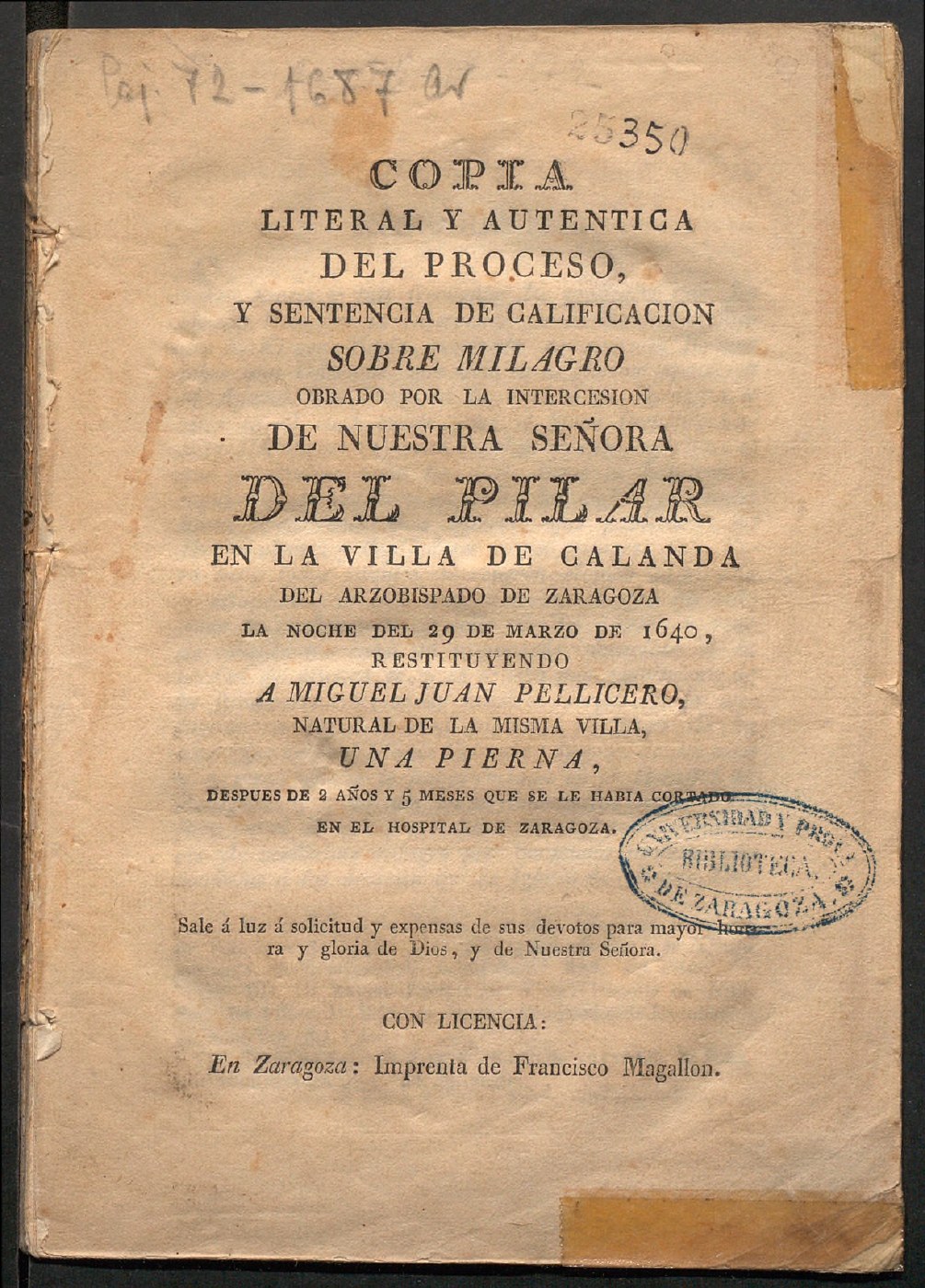
Miguel Juan Pellicer of Calanda

Calanda / Zaragoza · March 29, 1640 · ecclesiastical judgment April 27, 1641

According to the historical trial tradition, Miguel Juan Pellicer received back his previously amputated right leg in Calanda on March 29, 1640. He had lost it in 1637 after a cart accident and had traveled with a wooden leg and crutch. The event was recorded by a notary a few days later and subsequently investigated by the Church. The witnesses included the surgeons involved in the amputation. Archbishop Pedro Apaolaza recognized the miracle on April 27, 1641.

Historical Healing Account Recognized by the ChurchRead →
Healings

Sister Bernadette Moriau

Bresles; pilgrimage to Lourdes · July 11, 2008 · recognized in 2018

On July 11, 2008, after a pilgrimage to Lourdes, Sister Bernadette Moriau removed her corset and leg brace and could walk freely again. Behind her lay decades of back and nerve pain, four operations, and increasingly severe limitations. Her regained mobility endured. Following medical examinations and the judgment of the international medical committee, Bishop Jacques Benoit-Gonnin recognized the healing as a miracle on February 11, 2018.

70th Recognized Healing of LourdesRead →
Incorruption

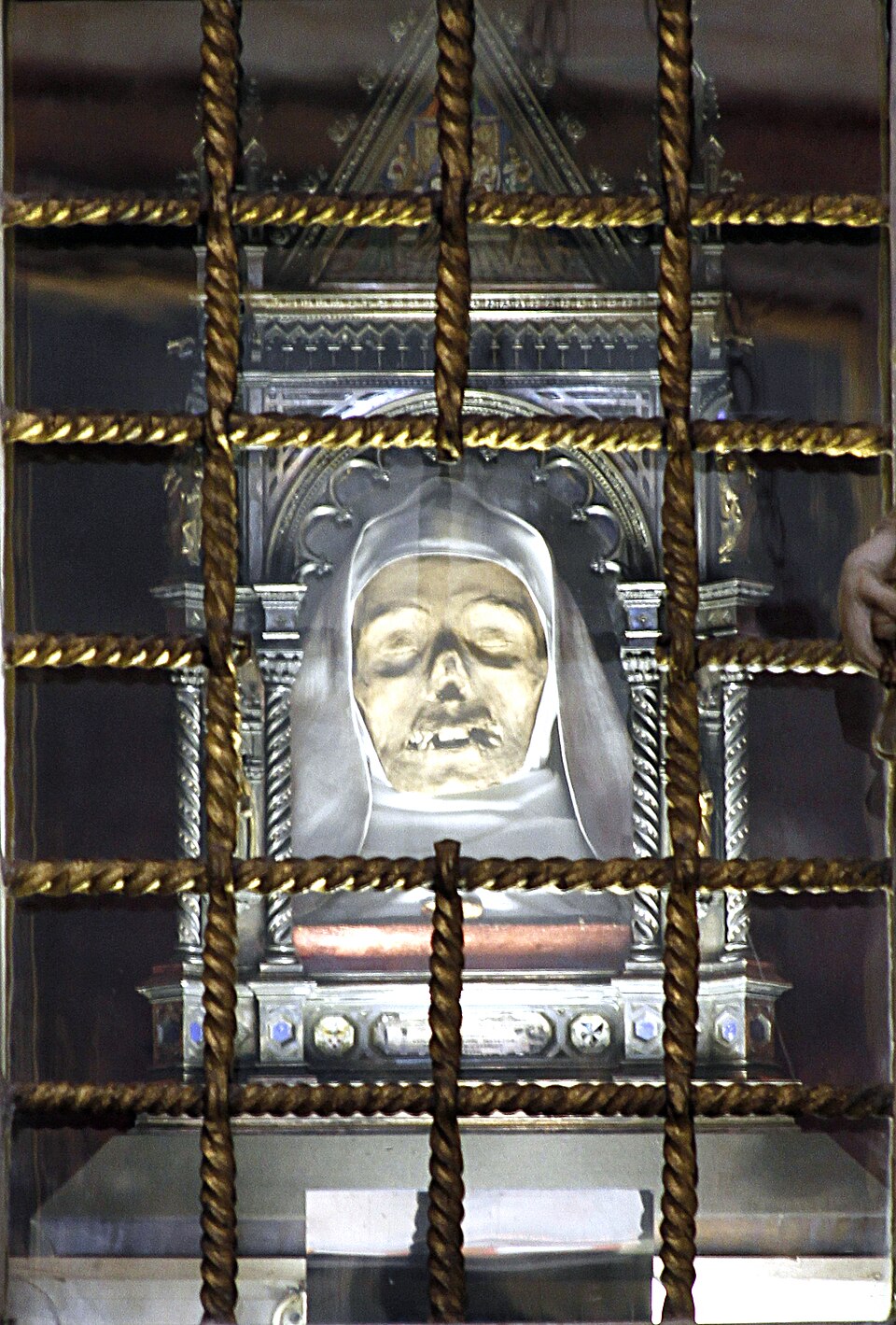
Bernadette Soubirous: The Body in the Shrine at Nevers

Nevers, former Convent of Saint-Gildard · 1879–1925; shrine since 1925

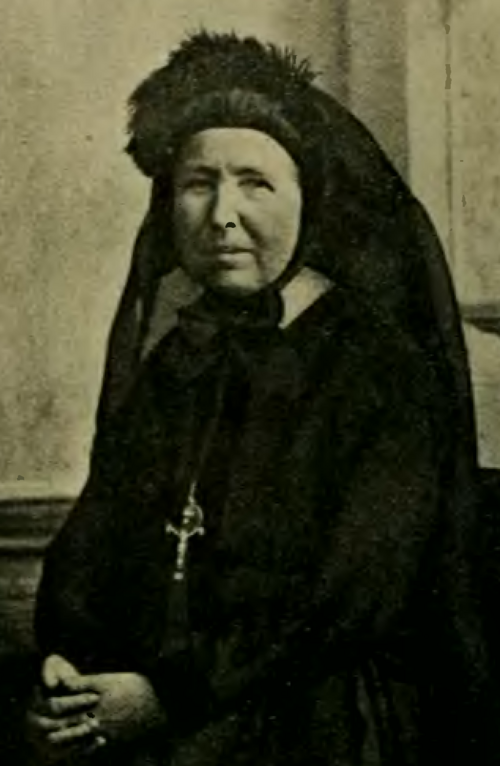
On 22 September 1909, physicians Charles David and Antoine Jourdan opened Bernadette's coffin in Nevers. After around thirty years, they found the body with its parts preserved. Further canonical examinations in 1919 and 1925 also documented internal tissues. The later wax coverings on the face and hands belong to the history of the public display; the first medical findings were recorded long before.

Medically documented bodily preservationRead →
Incorruption

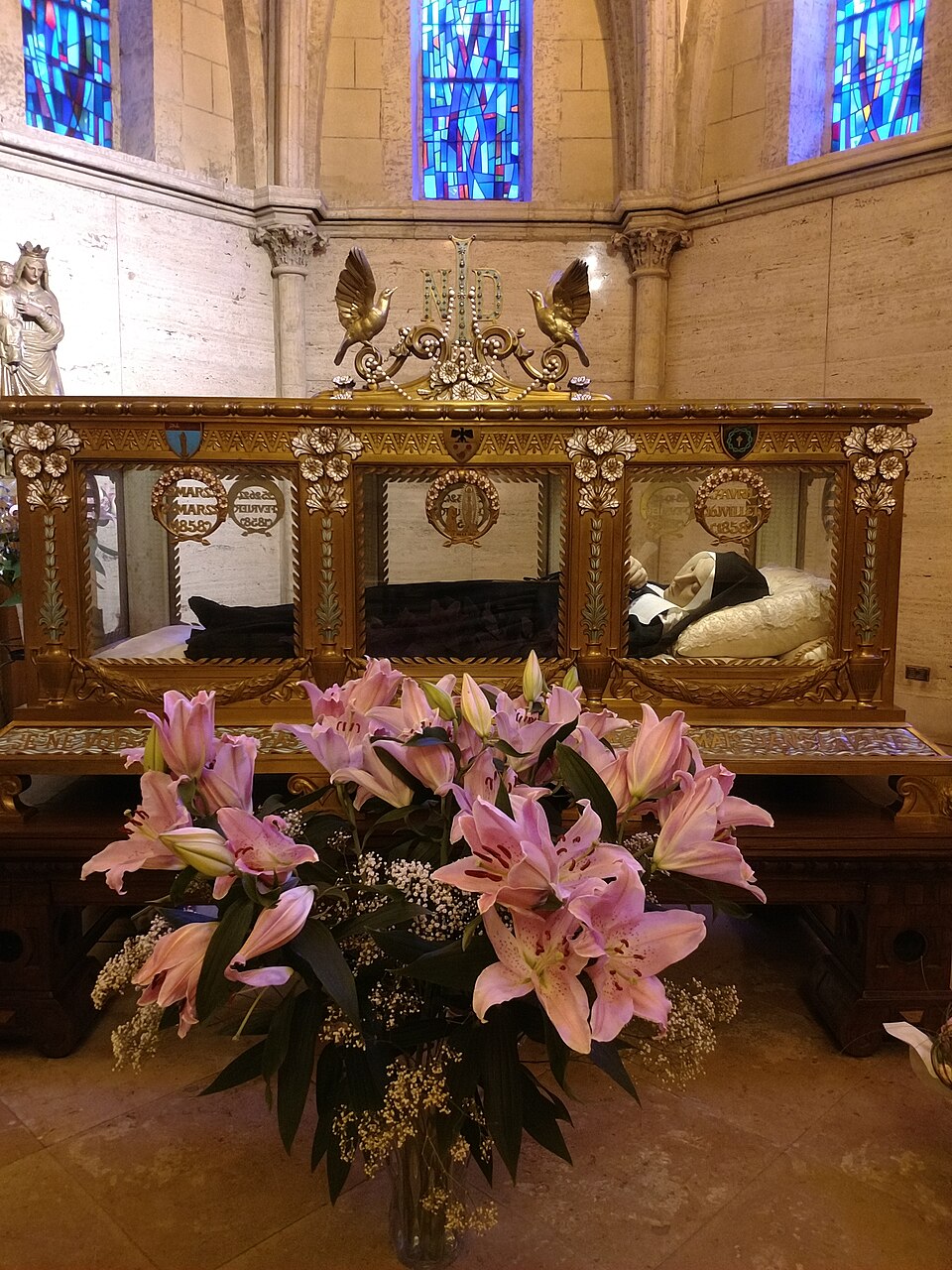
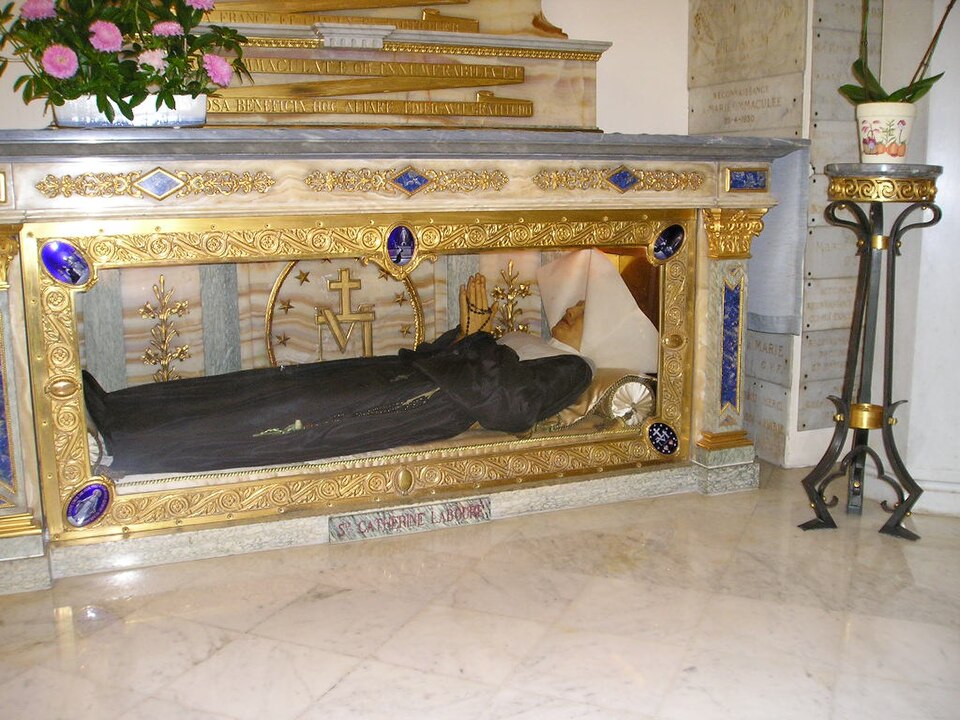
Catherine Labouré: The Sister Behind the Miraculous Medal

Paris, chapel on the Rue du Bac · 1933: Opening of the tomb

At the tomb opening on 21 March 1933, physicians, clergy, and sisters found Catherine Labouré's body preserved after around 56 years. Fr. Baeteman's account names the very damp crypt in Reuilly and also describes the preserved eyes and clothing. Cardinal Jean Verdier attended the ecclesiastical identification. The body was then transferred to the chapel on the Rue du Bac.

Preservation findings of 1933 transmitted by the ChurchRead →
Incorruption

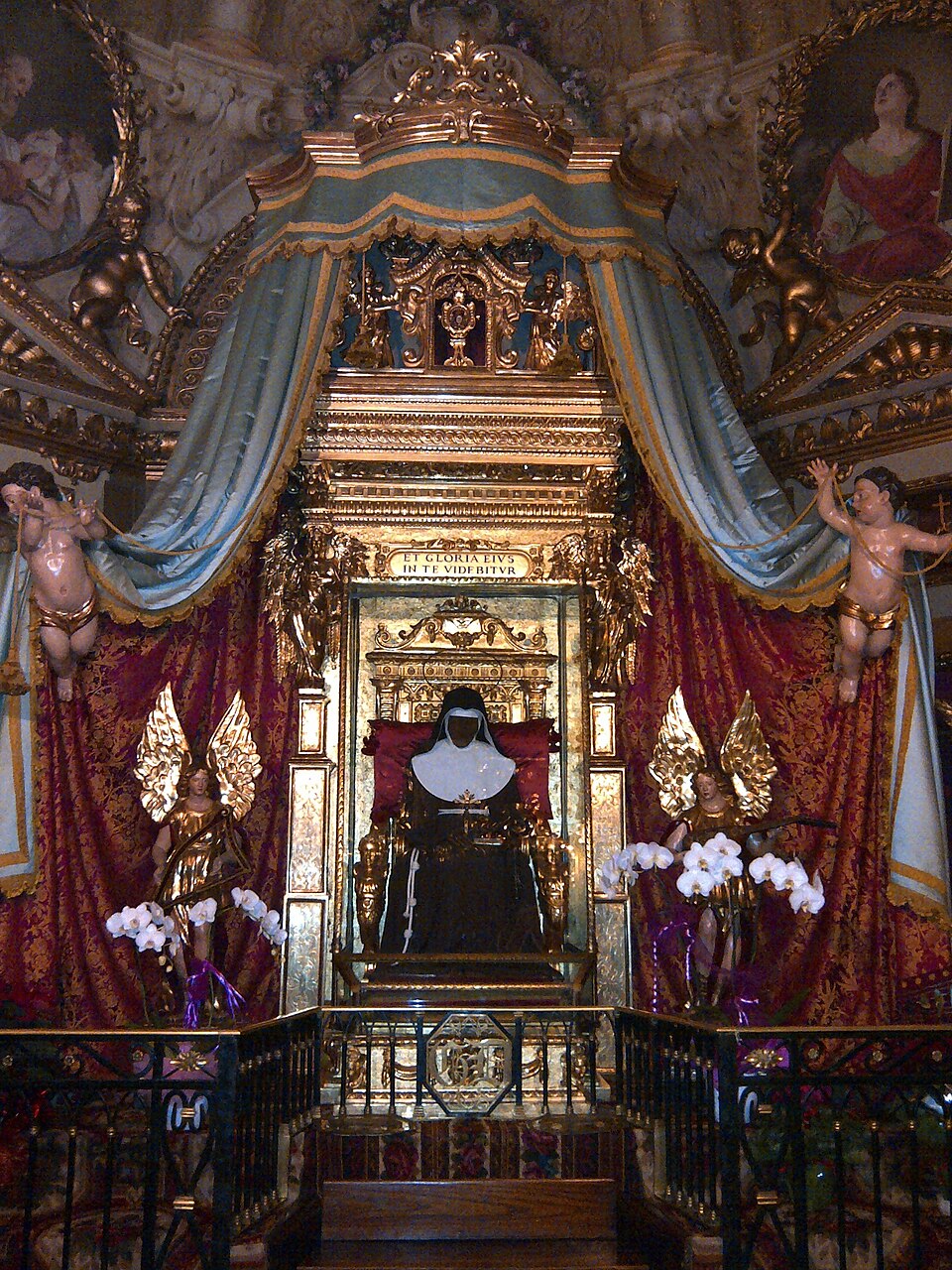
Catherine of Bologna: The Seated Saint

Bologna, Santuario Corpus Domini · 1463 and the subsequent veneration

The Poor Clares found Catherine's body preserved and fragrant eighteen days after her burial in March 1463. She had been buried in the earth without a coffin. Her fellow sister Illuminata Bembo preserved the memory of the exhumation and the extraordinary events that followed. The body now venerated in a seated position and the later descriptions of its changes belong to the subsequent history of the Shrine of Corpus Domini.

Preservation at the first exhumation attested by the monasteryRead →
Incorruption

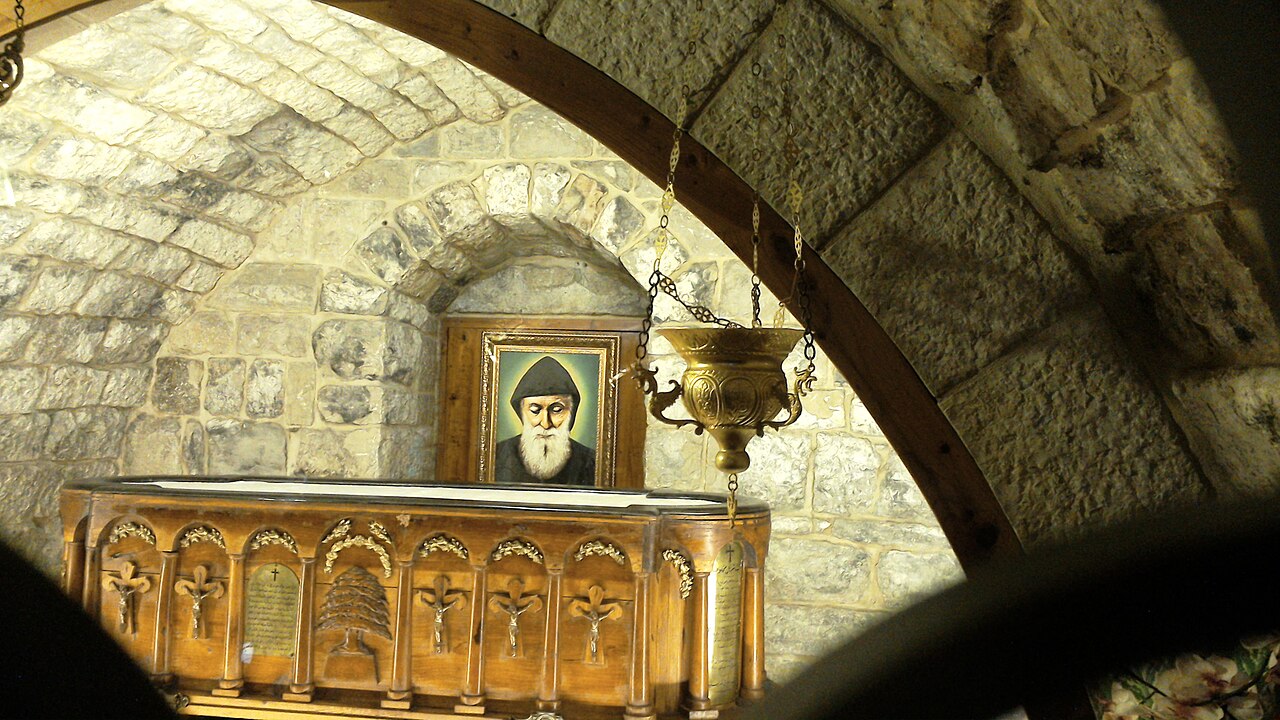
Charbel Makhlouf: The Accounts from the Tomb in Annaya

Annaya, Saint Maron Monastery · First exhumation April 15, 1899; later examinations and transfers

On April 15, 1899, at the first opening of Charbel's tomb, the monks and witnesses found a preserved, soft, and flexible body. Water and mud had entered the burial vault. Statements subsequently recorded for the ecclesiastical proceedings describe this initial discovery and the discharge of fluid. Treatments, further examinations, and changes followed over the next decades.

First Finding of Preservation in the Monastery's TraditionRead →
Incorruption

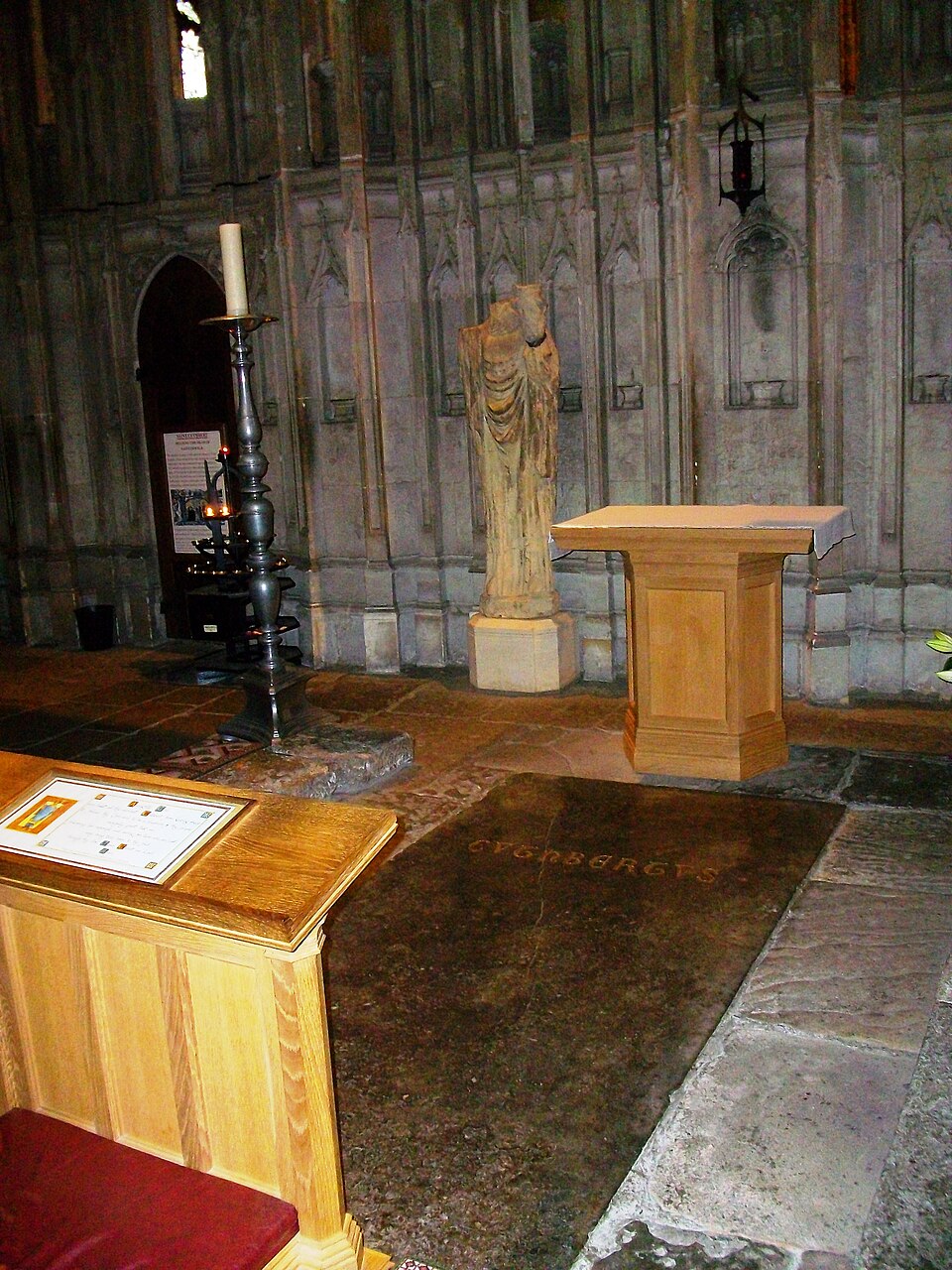
Cuthbert of Lindisfarne: Bede's Account and the Tomb in Durham

Lindisfarne and Durham · First exhumation March 20, 698; later examinations in 1827 and 1899

On March 20, 698, the monks of Lindisfarne opened Cuthbert's grave to transfer his bones. Bede's account describes their surprising discovery after eleven years: a preserved body with flexible joints and preserved garments. The brothers informed Bishop Eadbert and clothed the body anew at his instruction. The much later examinations in Durham form further stages in its history.

Early Exhumation Account in BedeRead →
Incorruption

Sister Wilhelmina Lancaster: The Preservation Findings at Gower

Gower, Missouri; Abbey of Our Lady of Ephesus · 2019–2024

On 28 April 2023, the Benedictine sisters of Gower found their foundress's body unexpectedly preserved after just under four years. She had been buried without embalming in a simple, unsealed wooden coffin. While the coffin lining had decayed, the body and religious habit remained preserved. Abbess Cecilia Snell and Prioress Scholastica Radel described the recovery; the medical team commissioned by the bishop examined the discovery.

Preservation at the first exhumation medically examinedRead →
Marian Apparitions

Banneux: The Virgin of the Poor

Banneux, Province of Liège · January 15 to March 2, 1933

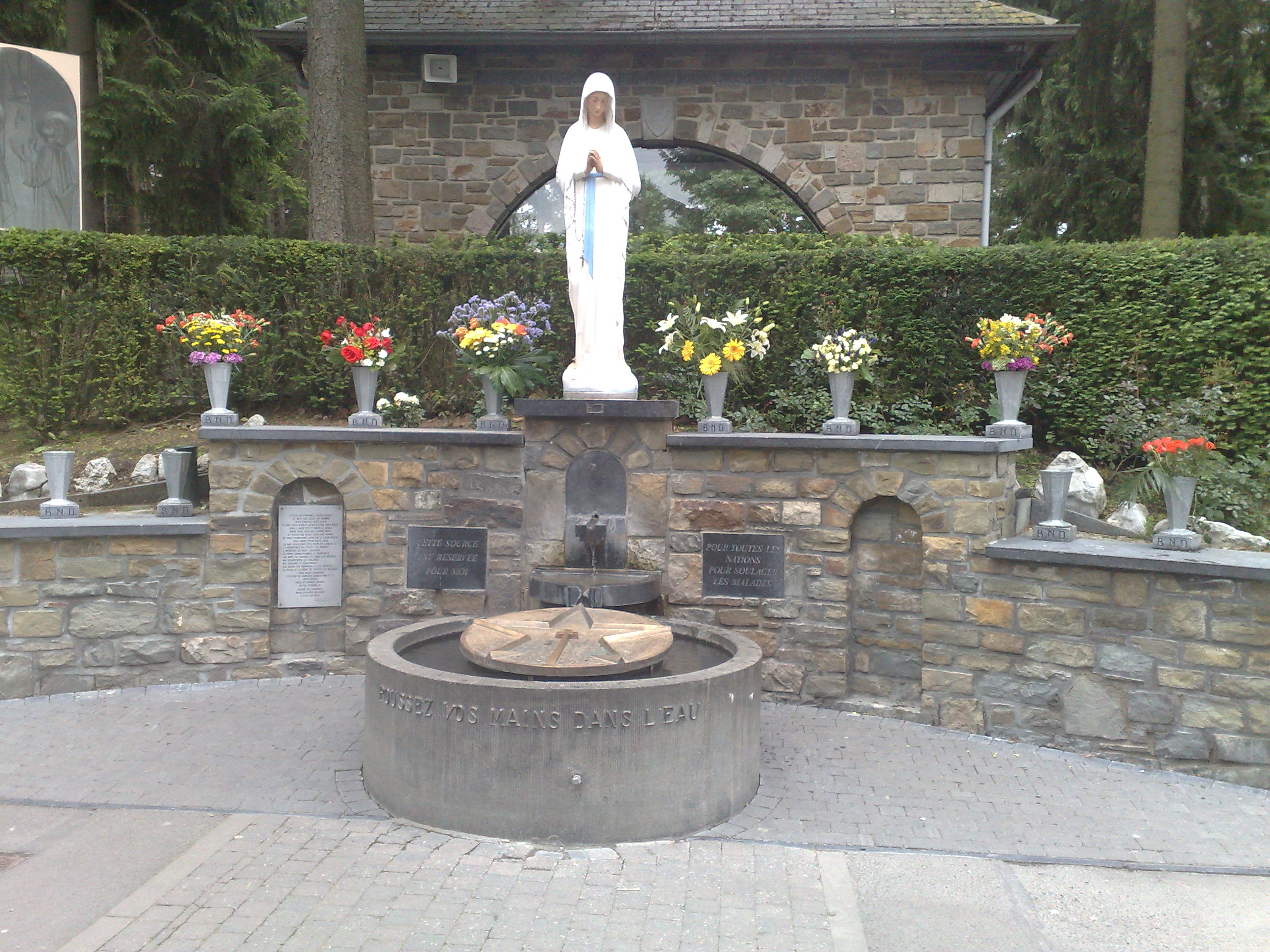
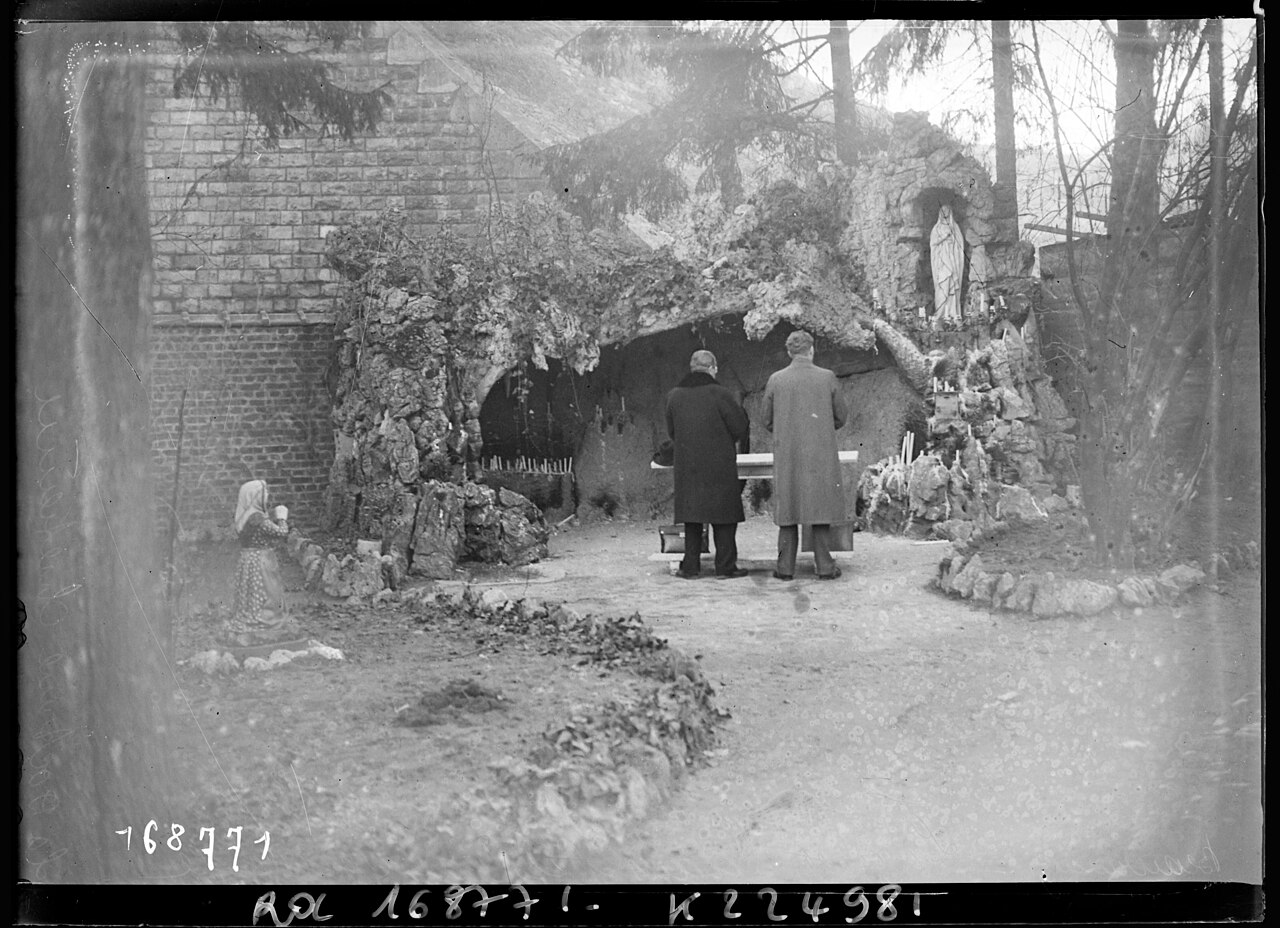
On January 15, 1933, the Mother of God appeared to eleven-year-old Mariette Beco outside her family home in Banneux. In a total of eight encounters, she led the girl to a spring, called herself the Virgin of the Poor, and asked for prayer and a small chapel. She dedicated the spring to all nations and the relief of suffering. Bishop Louis-Joseph Kerkhofs had the events investigated over years and, in 1949, recognized the reality of the eight apparitions without reservation. Banneux thus became a pilgrimage site especially devoted to the poor and the sick.

Eight Apparitions Recognized in 1949Read →
Marian Apparitions

Beauraing: The Mother with the Golden Heart

Beauraing · November 29, 1932, to January 3, 1933

Between November 29, 1932, and January 3, 1933, the Mother of God appeared to five children from Beauraing a total of 33 times. Albert, Fernande, and Gilberte Voisin, along with Andrée and Gilberte Degeimbre, first saw her near the school and later by the hawthorn in the garden. Mary showed her golden heart and called for prayer, pilgrimage, and conversion. After years of investigation, the Church first permitted veneration. In 1949, Bishop André-Marie Charue expressly recognized the supernatural character of the apparitions; two examined healings also entered into his judgment.

Veneration Permitted in 1943; Recognized in 1949Read →
Marian Apparitions

Champion: Mary and the Children of the New Land

Champion, Wisconsin · October 1859; recognition December 8, 2010

In 1859, Belgian immigrant Adele Brise encountered the Mother of God three times in Wisconsin. Mary gave her a concrete mission: to instruct the children of settler families in the faith and pray for the conversion of sinners. Adele accepted the task. From her service grew instruction, a chapel, and a lasting pilgrimage. The shrine survived the great Peshtigo Fire of 1871 and became a place of special gratitude for the people. Following specialist examination, Bishop David Ricken recognized the supernatural character of the essential apparition events of 1859 in 2010.

Apparition Events of 1859 Recognized in 2010Read →
Marian Apparitions

Fátima: The Children and the Sign of the Sun

Cova da Iria near Fátima · May 13 to October 13, 1917

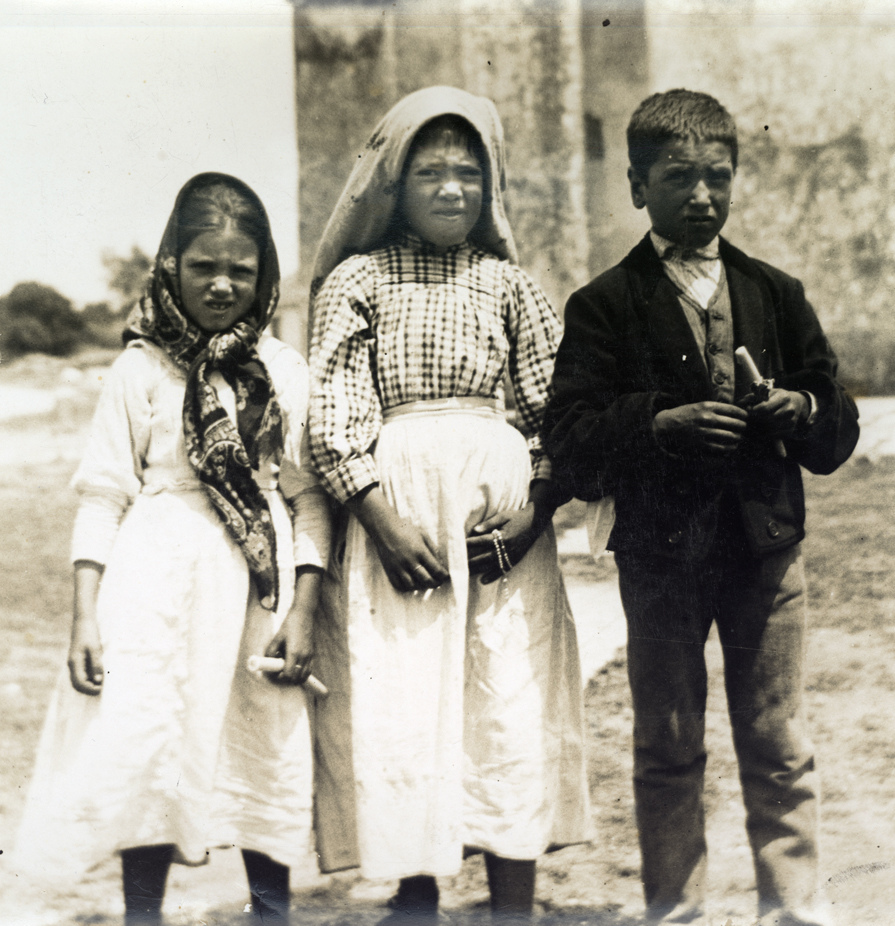
On May 13, 1917, the Mother of God appeared to the shepherd children Lúcia, Francisco, and Jacinta near Fátima. She called for prayer and conversion. For the conclusion of the encounters, she announced a public miracle. On October 13, many people gathered in the Cova da Iria and experienced the miracle of the sun: the striking colors and movements of the sun, also described by witnesses outside the children's circle. Questioning close to the events, press reports, and the subsequent ecclesiastical proceedings give Fátima an especially rich foundation of sources. In 1930, the responsible bishop declared the visions worthy of belief.

Visions Declared Worthy of Belief in 1930Read →
Marian Apparitions

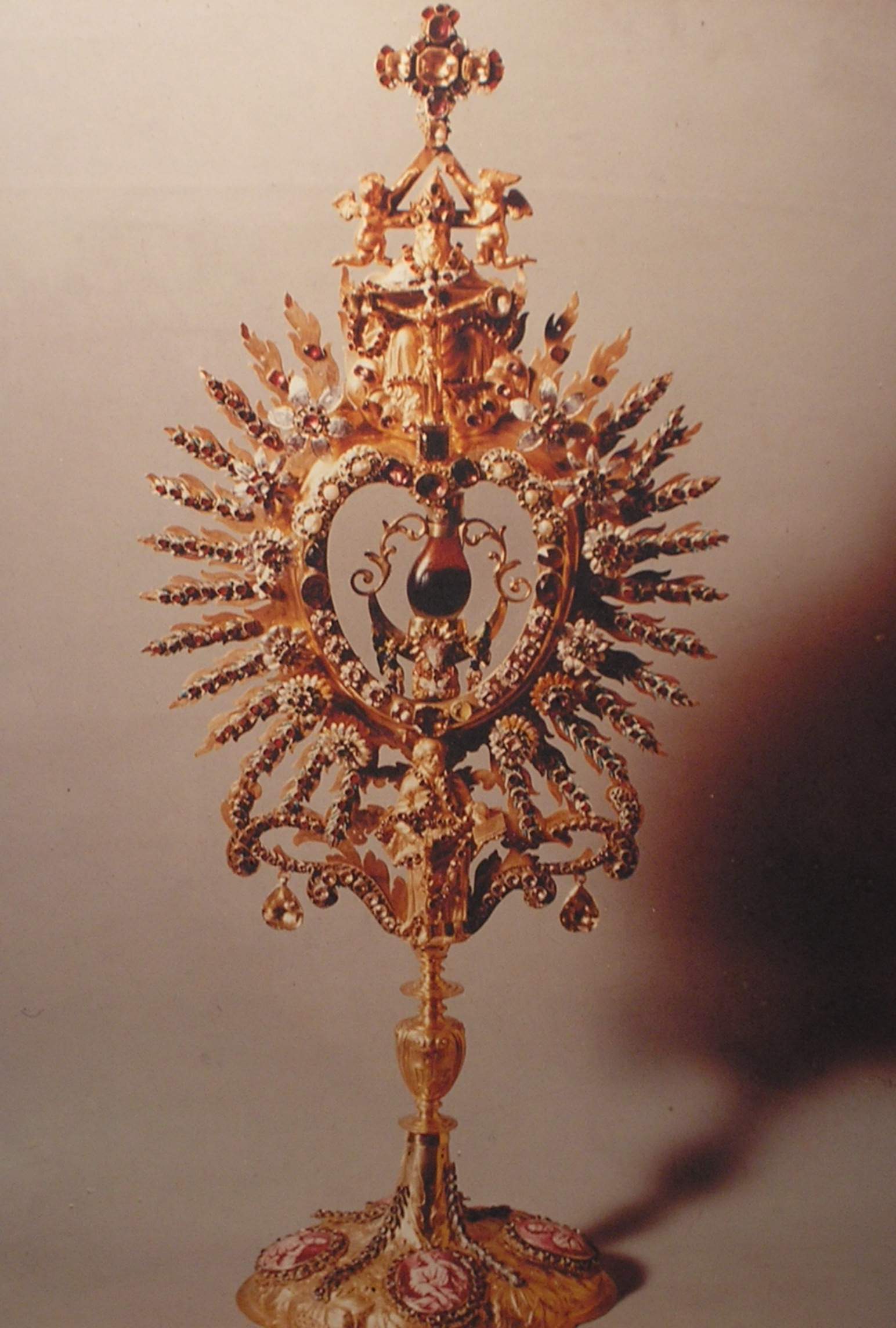
Guadalupe: Juan Diego and the Image on the Tilma

Tepeyac, Mexico City · December 9–12, 1531

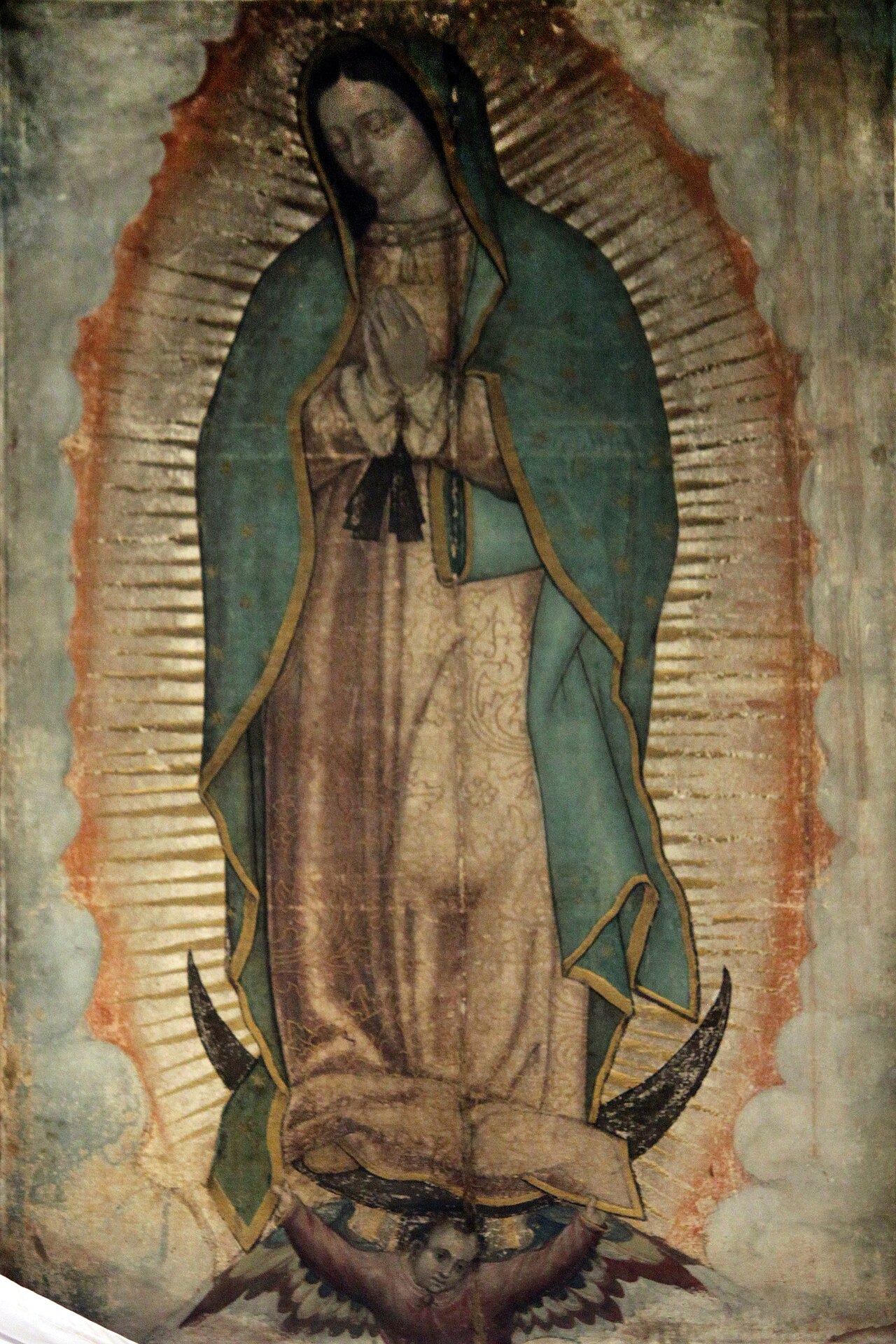
From December 9 to 12, 1531, Mary encounters Juan Diego at Tepeyac and charges him with asking Bishop Juan de Zumárraga for a shrine. When the bishop requests confirmation, Juan Diego brings him flowers; when he opens his cloak, the image of Mary appears on it. His uncle Juan Bernardino experiences healing at the same time. Juan Diego's testimony, the surviving tilma, and the history of its veneration stand at the center of this dossier.

Marian Shrine Venerated by the ChurchRead →
Marian Apparitions

Knock: The Silent Sign of the Lamb

Knock, County Mayo · August 21, 1879

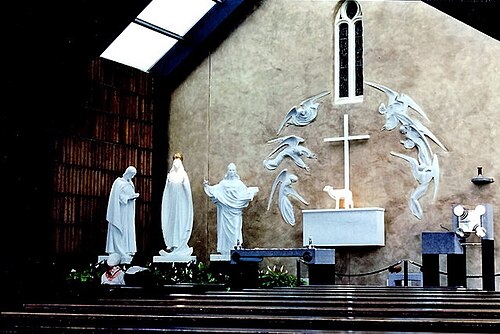
On the rainy evening of August 21, 1879, a bright, silent image appeared at the gable wall of Knock's parish church: Mary, Joseph, and John the Evangelist, alongside an altar with the Lamb, the cross, and angels. Villagers observed the event for about two hours. Only a few weeks later, their statements were recorded by the Church and judged credible. A further investigation questioned the surviving witnesses. From this shared testimony grew the pilgrimage to what is now an international Marian and Eucharistic shrine.

Favorable Assessments of Witnesses; International ShrineRead →
Marian Apparitions

La Salette: The Weeping Mother and the Call to Conversion

La Salette-Fallavaux, Dauphiné · September 19, 1846

On September 19, 1846, the Mother of God appeared to the shepherd children Mélanie Calvat and Maximin Giraud above La Salette. She wept, wore a crucifix, and called for conversion: to honor God's name, keep Sunday holy, pray, and fast. The children were to convey her message to the people. After five years of investigation, Bishop Philibert de Bruillard recognized the apparition in 1851; his successor confirmed the judgment after further examination in 1855. Mary's tears and the cross on her breast belong together: the call to conversion leads to the crucified Redeemer.

Recognized in 1851, Confirmed in 1855Read →
Marian Apparitions

Lourdes: Bernadette and the Immaculate Conception

Massabielle, Lourdes · February 11 to July 16, 1858

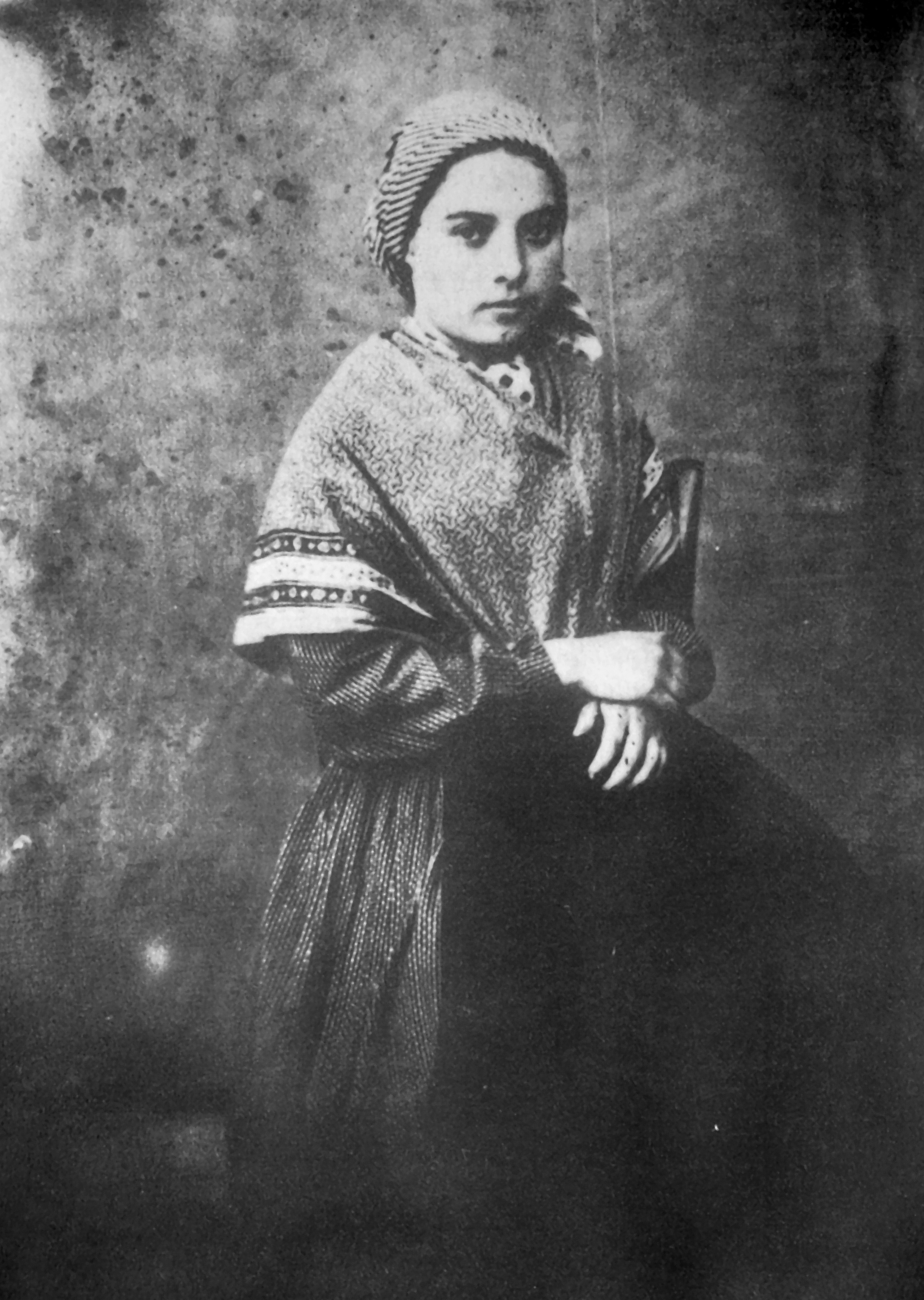
On February 11, 1858, the Mother of God appeared to fourteen-year-old Bernadette Soubirous in the grotto of Massabielle. Eighteen encounters took place through July 16. Mary called for prayer and penance, led Bernadette to the spring, and asked for a chapel and processions. On March 25, she gave her name: the Immaculate Conception. Bernadette remained faithful to her testimony under questioning and opposition. After several years of investigation, Bishop Bertrand-Sévère Laurence recognized the apparitions in 1862. From the place of encounter grew a shrine of prayer, conversion, and help for the sick.

Eighteen Apparitions Recognized in 1862Read →
Marian Apparitions

Notre-Dame du Laus: A Shrine of Reconciliation

Saint-Étienne-le-Laus, Hautes-Alpes · Apparition tradition 1664–1718; recognition in 2008

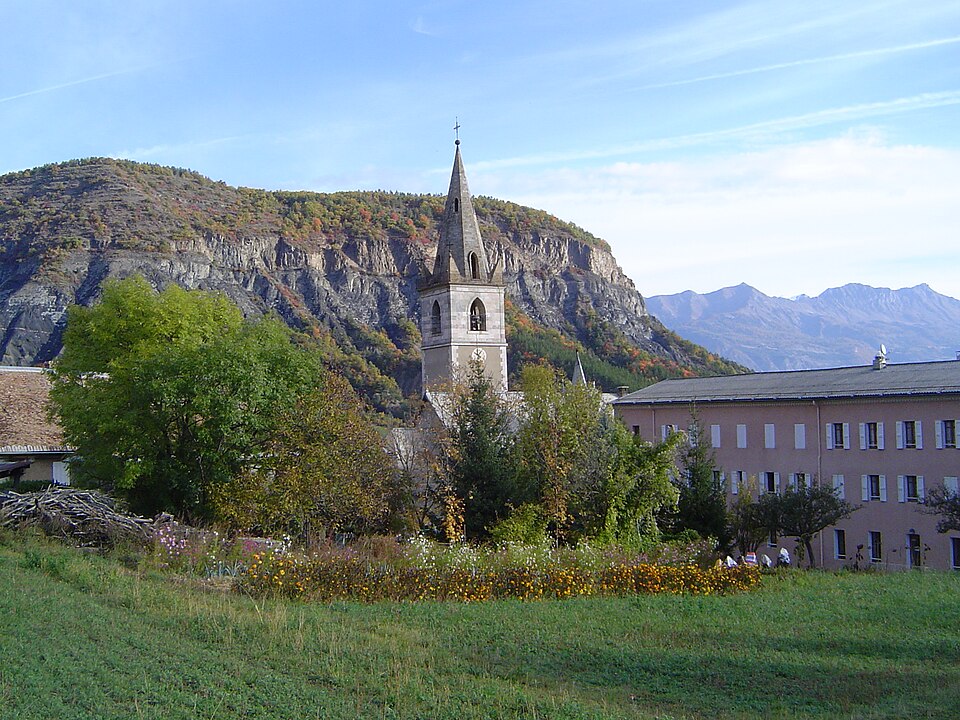
In May 1664, the young shepherdess Benoîte Rencurel encountered the Mother of God in the Vallon des Fours. Mary led her to the Bon Rencontre chapel, which became the center of a shrine of reconciliation. Benoîte accompanied pilgrims, encouraged them toward conversion, and led them to the Sacrament of Confession. Contemporary clergy and other companions recorded her life and statements in an extensive written tradition. The Church permitted pilgrimage as early as 1665. After renewed specialist investigation, Bishop Jean-Michel di Falco Léandri expressly recognized the supernatural character of the apparitions in 2008.

Apparitions Expressly Recognized in 2008Read →
Marian Apparitions

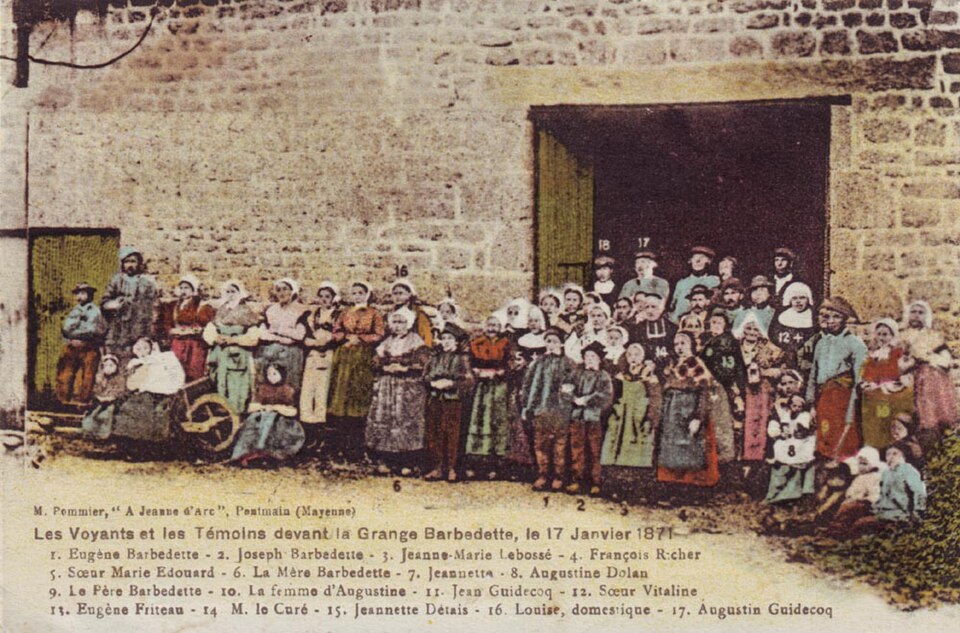
Pontmain: Hope on a Night of War

Pontmain, Mayenne · January 17, 1871

On the evening of January 17, 1871, the Mother of God appeared to four children above the village of Pontmain. France was at war; families feared for their relatives. While parish priest Michel Guérin prayed with the villagers, the children read the message on a banner: to pray perseveringly and trust that God would hear them. Eugène and Joseph Barbedette, Françoise Richer, and Jeanne-Marie Lebossé attest to the event. Following investigation, Bishop Casimir Wicart expressly recognized the apparition on February 2, 1872. Pontmain became a place of hope and intercession.

Recognized by the Bishop on February 2, 1872Read →
Marian Apparitions

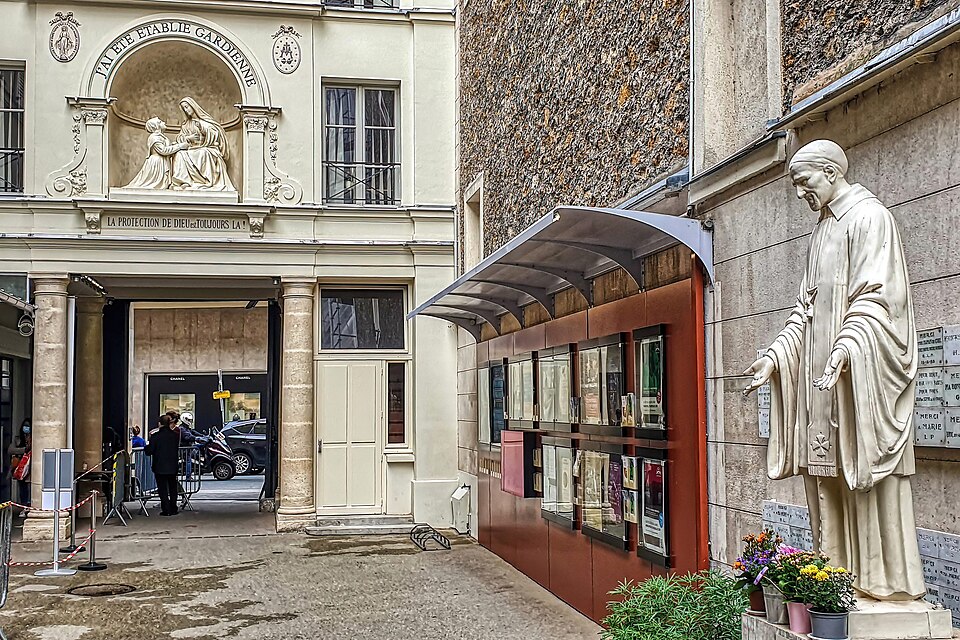
Rue du Bac: The Apparitions and the Miraculous Medal

Rue du Bac, Paris · July to December 1830

In the Rue du Bac in Paris, the Mother of God encountered the young religious sister Catherine Labouré in 1830. During the night of July 18–19, she spoke with her in the chapel; on November 27, she showed her the image for the later Miraculous Medal. Catherine entrusted the encounters to her confessor Jean-Marie Aladel. With ecclesiastical permission, the first medals were struck in 1832. They spread rapidly as prayerful signs of trust in God's grace. Catherine herself remained in hidden service to the elderly. Her canonization and the liturgical reception of devotion to the medal anchored this history in the Church's life.

Veneration and Medal Devotion Supported by the ChurchRead →
Marian Apparitions

San Nicolás: The Mother of the Rosary on the Paraná

San Nicolás de los Arroyos · Since September 25, 1983; judgment of May 22, 2016

On September 25, 1983, the Mother of God encountered Gladys Quiroga de Motta in San Nicolás. The mother of two daughters confided in a priest and passed on the messages received: praying the Rosary, conversion, and fidelity to Christ. In an older statue of Our Lady of the Rosary, she recognized the figure from her encounters. From the events grew a major pilgrimage with its own shrine. After many years of ecclesiastical accompaniment and consultation with specialists and witnesses, Bishop Héctor Cardelli recognized the supernatural character of the Marian events in his diocese in 2016.

Diocesan Recognition of May 22, 2016Read →
Signs in the Lives of the Saints

Alphonsus Liguori at the Pope's Deathbed

Arienzo; reported presence in Rome · September 21–22, 1774

On September 21, 1774, after Mass, Bishop Alphonsus Liguori sat silent and motionless in his armchair in Arienzo. The state lasted until the following day. He then called the household members and declared that he had assisted Pope Clement XIV, who had now died. Only the news from Rome made the significance of his words clear to those present. Antonio Maria Tannoia preserved the account with named participants; it was explicitly discussed in the later ecclesiastical proceedings. The episode attests to a special spiritual assistance to the dying pope and the saint's deep bond with the Church.

Account discussed in the canonization proceedingsRead →
Signs in the Lives of the Saints

Anthony of Padua and the Sermon to the Fish

Rimini, river mouth by the sea · During the saint's lifetime; recorded in writing from around 1300

When the people of Rimini rejected Anthony's preaching, he turned to the fish at the shore. The Fioretti preserve the sequence: small and large fish gathered in order before him as he praised the gifts of their Creator. The people came, recognized their own closed hearts, and now listened to his teaching. Only after his blessing did the fish swim away. The medieval tradition shows God's action through an unusual call to conversion. The Shrine of Saint Anthony still receives the sermon to the fish as an invitation to listen attentively to Christ.

Medieval hagiographical traditionRead →
Signs in the Lives of the Saints

Benedict and the Shattered Poisoned Cup

Subiaco and surrounding area · Early sixth century; written down around 593/594

When monks sought to poison their abbot Benedict, the cup shattered at the sign of the cross. Gregory the Great records the incident in his early life of the saint and names four informants from Benedict's monastic circle for his accounts. The monks had themselves asked Benedict to be their abbot but resisted his spiritual discipline. At a meal, they offered him poisoned wine. Benedict blessed the vessel; it shattered, and the plot was exposed. He responded with forgiveness and returned to solitude. God's protection and the Christian response to hatred form the unity of this miracle.

Early hagiographical traditionRead →
Signs in the Lives of the Saints

Catherine of Siena: Hidden Stigmata

Santa Cristina, Pisa · April 1, 1375

On April 1, 1375, after Holy Communion in Santa Cristina in Pisa, Catherine of Siena received the wounds of Christ. Her confessor Raymond of Capua was present and recorded the sequence. Catherine saw the Crucified One in great light; five rays struck her hands, feet, and heart. At her request, the wounds remained hidden. She continued to bear their pain while her life belonged to prayer, the sick, and service to the Church. Raymond's account preserves both his observations and the subsequent conversation in which Catherine explained the grace she had received.

Traditional mystical grace of a Doctor of the ChurchRead →
Signs in the Lives of the Saints

Don Bosco: The Multiplication of the Hosts

Turin, Oratory of Valdocco · Around 1848; confirmation recorded for October 18, 1863

At a festive Mass in the Turin Oratory, the newly prepared Hosts were missing: Giuseppe Buzzetti had forgotten to place them on the altar in time. When Don Bosco noticed the small supply in the ciborium, he looked toward heaven and continued distributing Communion. All the young people received a whole consecrated Host. Buzzetti later testified repeatedly to the event; Lemoyne also transmits Don Bosco's explicit confirmation from 1863. The multiplication of the Hosts led the saint himself to the greater mystery of consecration. The miracle served the young people he had prepared for Holy Communion.

Salesian tradition of testimonyRead →
Signs in the Lives of the Saints

Francis on La Verna: The Wounds of Christ

La Verna, Tuscany · September 1224

In September 1224, Francis received the wounds of Christ on Mount La Verna. During a period of prayer and fasting, he saw a crucified seraph. Afterward, he bore the signs on his hands, feet, and right side. The early Franciscan sources name observers of the wounds during his lifetime and on his body after death; Brother Leo's note and Thomas of Celano's early life anchor the event in the very first generation. Bonaventure collected further statements from companions still alive. The Church venerates the stigmata as a visible expression of the saint's conformity to the crucified Christ.

Stigmatization received ecclesiastically and liturgicallyRead →
Signs in the Lives of the Saints

Helena and the Finding of the Holy Cross

Jerusalem, Golgotha and the Church of the Holy Sepulchre · Constantinian period; testimonies of the fourth and fifth centuries

Saint Helena ordered a search for Christ's cross in Jerusalem. The ecclesiastical historian Socrates records the discovery of three crosses and the healing of a dying woman: when she touched the Lord's cross, she immediately became well. Bishop Macarius recognized in this the answer to the question of which cross Christ had carried. Already in the fourth century, Cyril of Jerusalem attests to the distribution of wood of the cross; the pilgrim Egeria describes its public veneration. These early testimonies anchor devotion to the cross in the ancient Church. Veneration is directed toward the Redeemer who died for humanity on this wood.

Ancient ecclesiastical traditionRead →
Signs in the Lives of the Saints

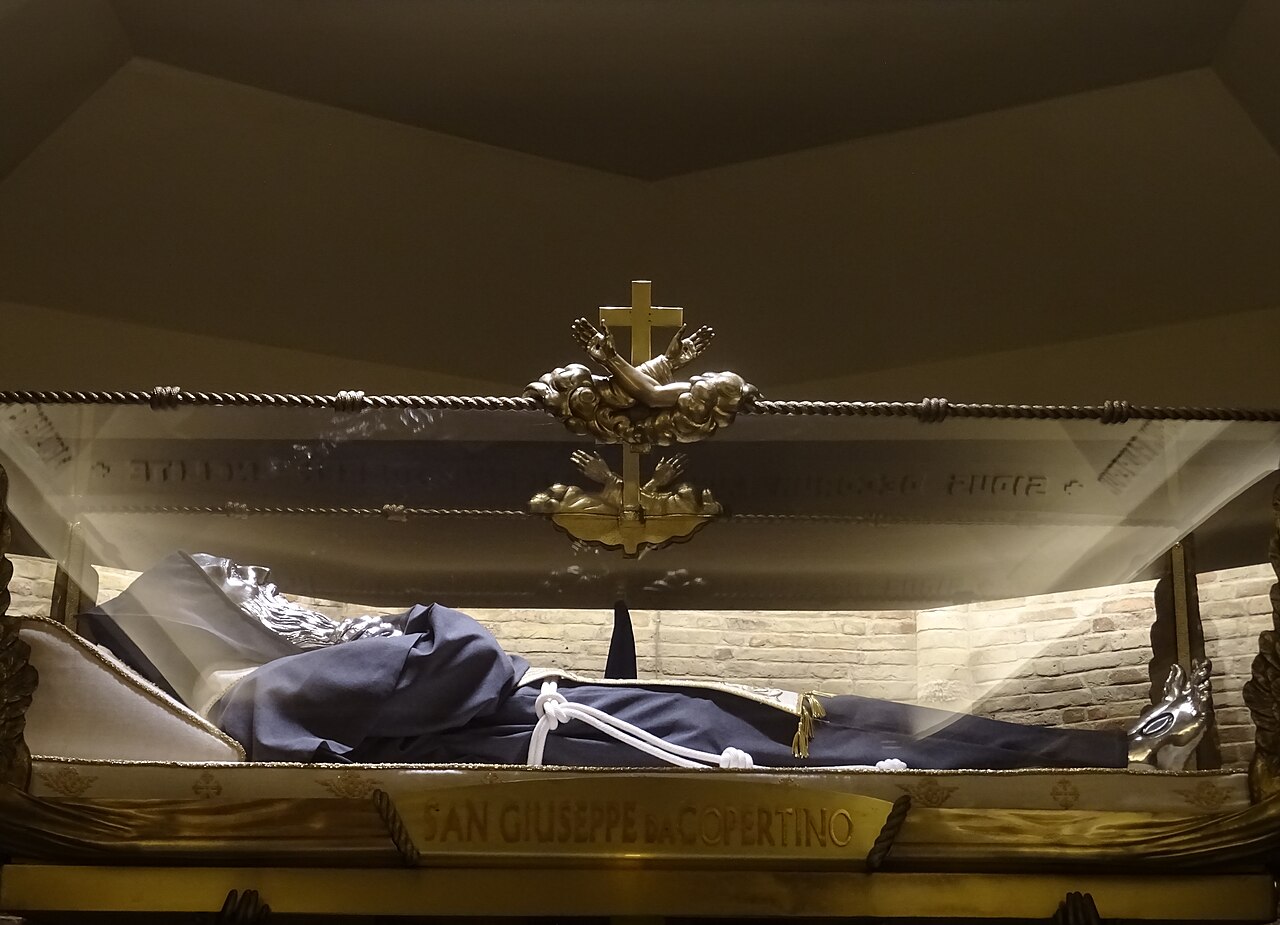
Joseph of Copertino: Accounts of Levitation

Copertino, Assisi, and Osimo · Seventeenth century, especially after 1628

Joseph of Copertino was repeatedly raised from the ground during prayer. People from his circle testified to this in ecclesiastical proceedings. The elevations were associated with profound ecstatic states that could be triggered by religious words, music, or Holy Mass. The Franciscan did not seek public attention; the events also led to investigations, transfers, and restrictions. His humility and obedience shaped his response. The surviving body of testimony makes the levitations a historical case open to concrete investigation.

Extraordinary phenomena attested in early proceedingsRead →
Signs in the Lives of the Saints

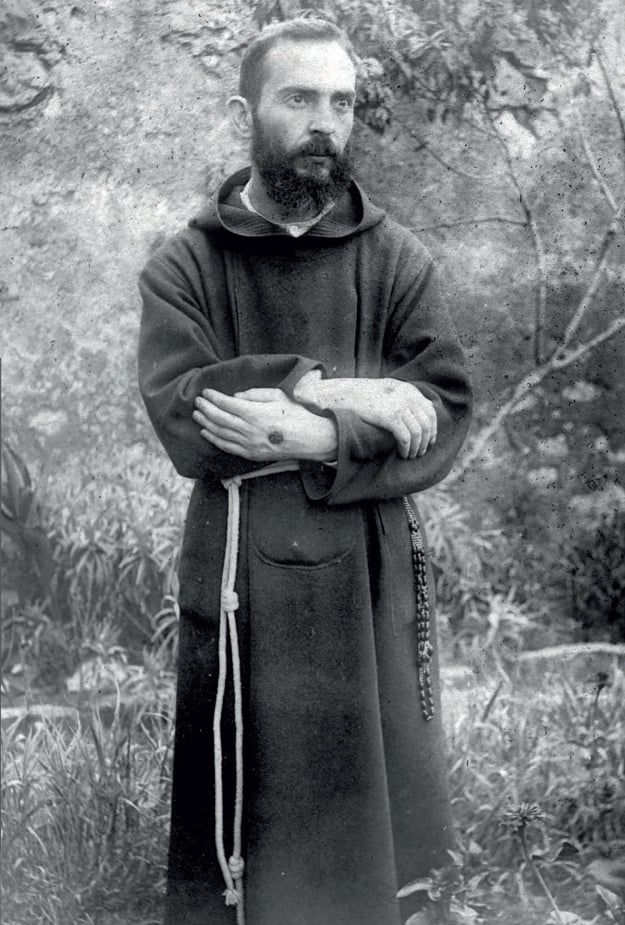
Padre Pio: The Wounds and Their Examination

San Giovanni Rotondo · 1918–1968; canonization 2002

On September 20, 1918, after Holy Mass, Padre Pio received the wounds on his hands, feet, and side. A month later, he described the event to his superior, Father Benedetto: the vision of a bleeding figure, the wounds on his own body, and his desire to conceal the outward signs. Several physicians examined the injuries. Luigi Romanelli and Giorgio Festa reached positive judgments concerning their extraordinary character. The surviving letters and reports give the case unusually close documentation. Pio's life connected suffering with confession, prayer, and practical help for the sick.

Saint; stigmata historically examinedRead →
Signs in the Lives of the Saints

Philip Neri: A Heart in the Fire of Love

Catacombs of San Sebastiano, Rome · Around Pentecost 1544

Around Pentecost 1544, Philip Neri prayed in the Roman catacombs for the gifts of the Holy Spirit. The early biographer Pietro Giacomo Bacci recounts how a ball of fire entered his chest and filled him with burning love for God. A conspicuous swelling and later powerful heartbeats accompanied the experience. After his death, physicians described changes to two ribs and the heart region. The grace stands at the beginning of his long work as the Apostle of Rome. Prayer, visits to the sick, spiritual guidance, and community life gave rise to the Oratory.

Traditionally venerated mystical Pentecost experienceRead →
Signs in the Lives of the Saints

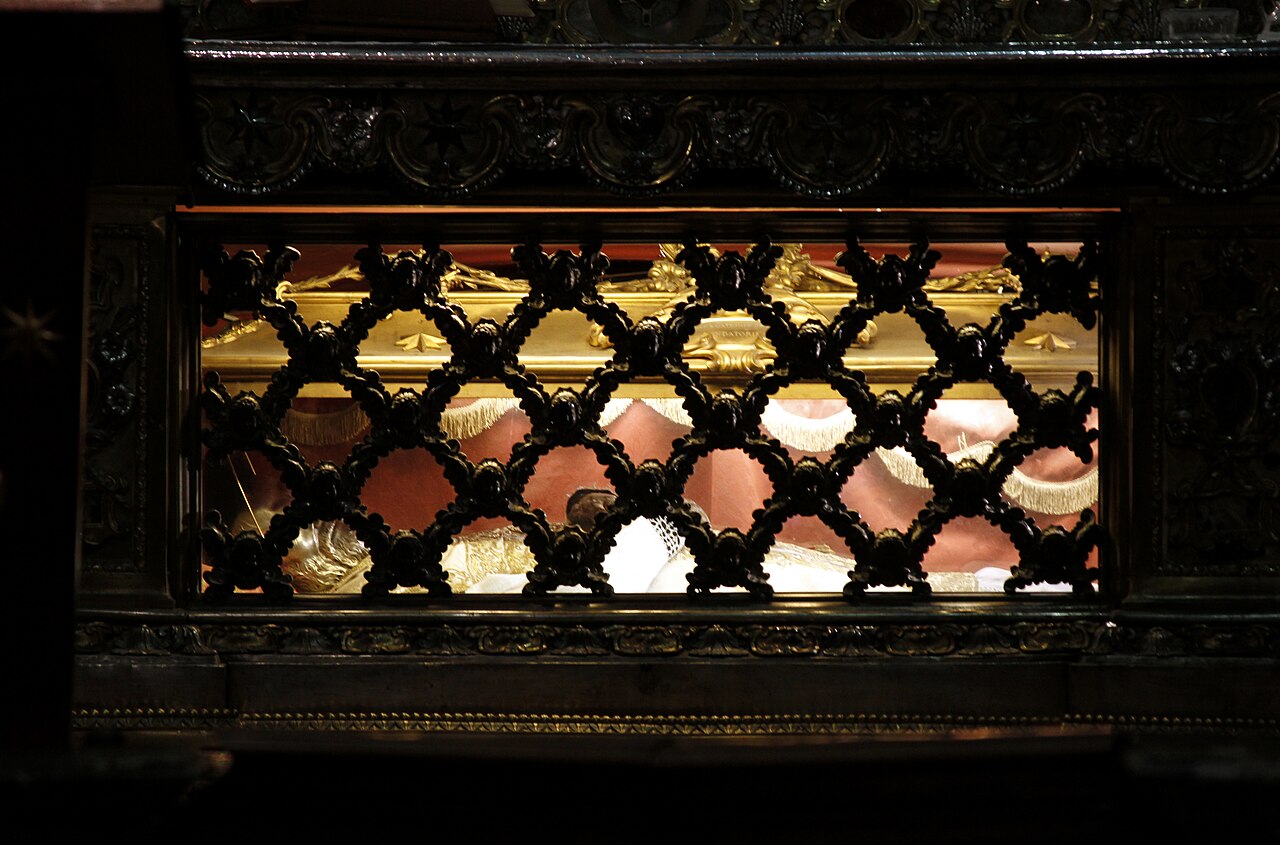
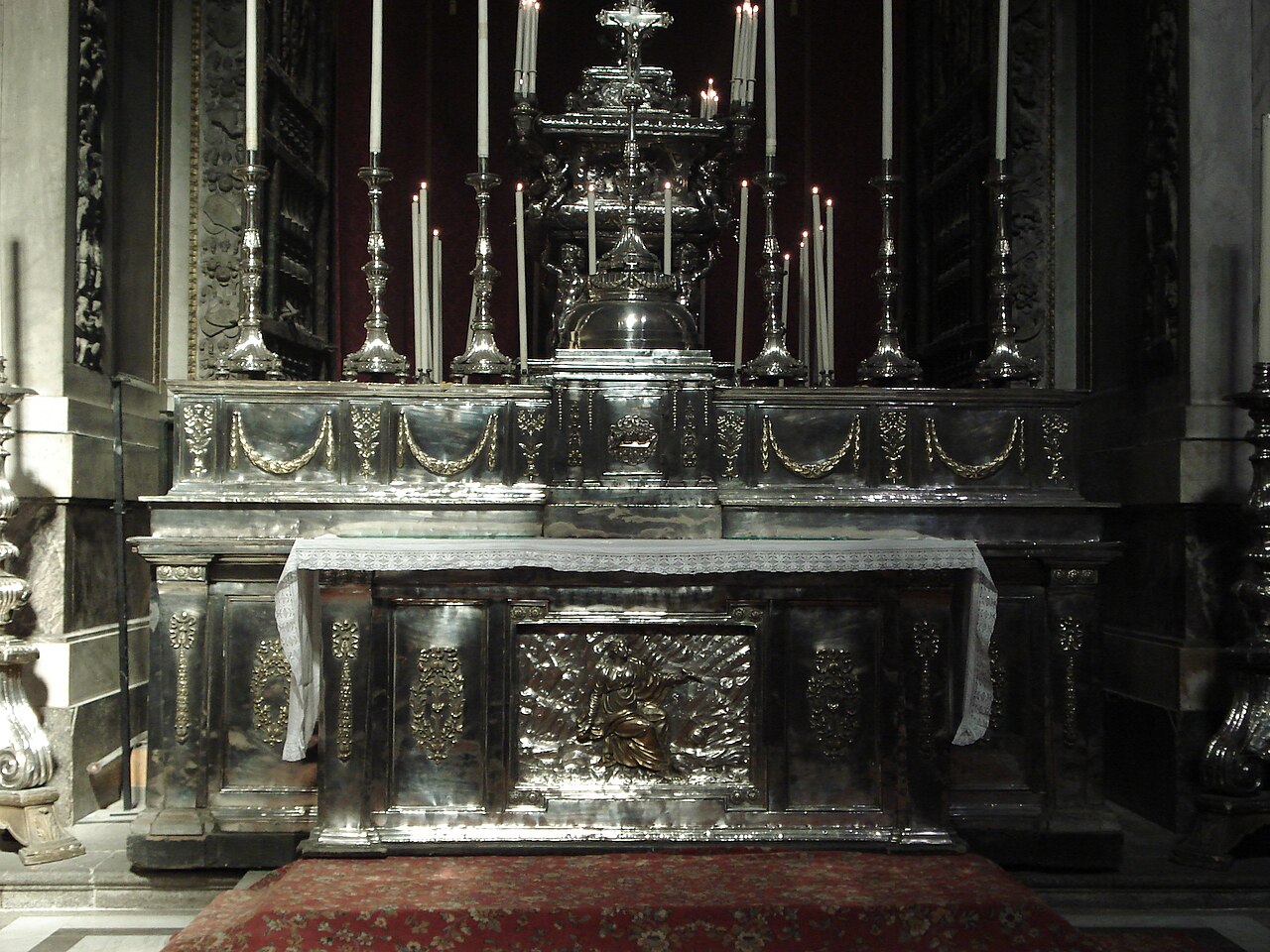
Rosalia and Palermo's Deliverance from the Plague

Palermo and Monte Pellegrino · 1624–1625

When plague struck Palermo in 1624, the people turned to Saint Rosalia. The tradition preserves her appearance to Girolama La Gattuta, the discovery of the bones on Monte Pellegrino, and the later instruction for a procession received by Vincenzo Bonello. Cardinal Giannettino Doria had the relics examined; their handover is precisely documented by a notarial deed of 1625. On June 9, the great procession passed through the city. Palermo connects deliverance from the plague and the reported healings with Rosalia's intercession. Gratitude continues to shape veneration of its patron saint.

Tradition of deliverance maintained by the ChurchRead →
Signs in the Lives of the Saints

San Gennaro: The Liquefaction of the Blood Relic

Naples Cathedral · Attested since the late fourteenth century; recurring

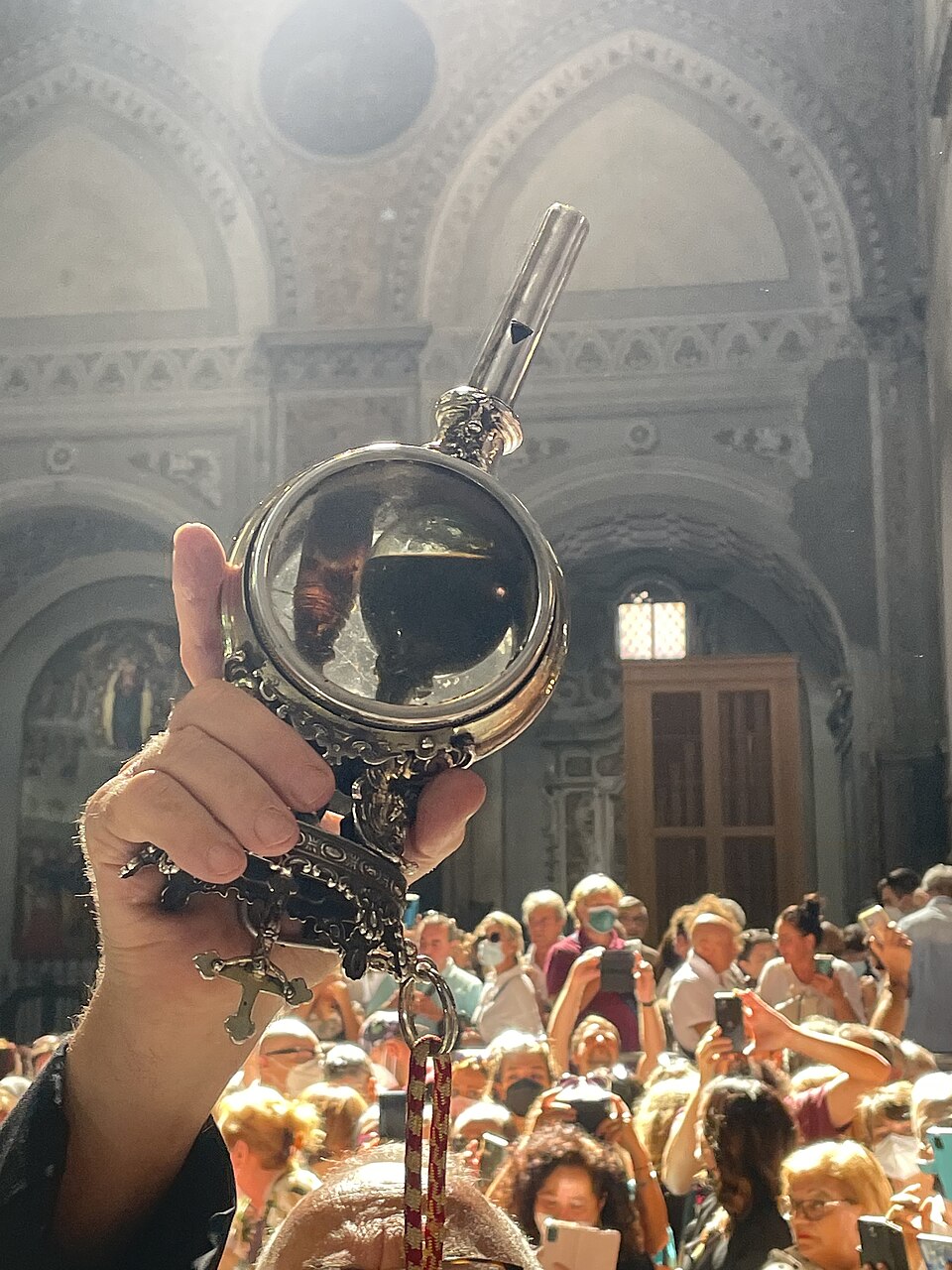
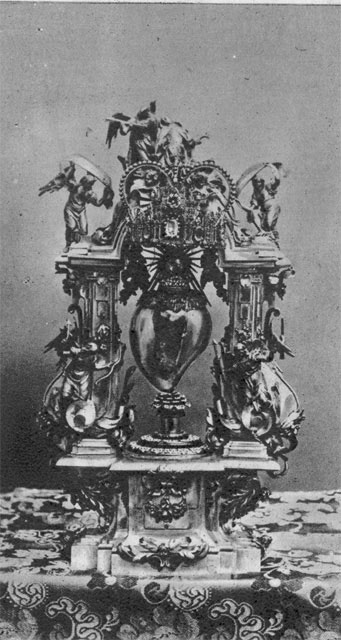
At the public celebrations of Saint Januarius in Naples, the mass preserved in the reliquary repeatedly becomes liquid. The faithful observe the change in the sealed vessel and thank God for the event venerated as a blood miracle. This tradition of observation reaches back to the late Middle Ages. The Church of Naples connects it with Holy Mass, prayer, and veneration of its martyr patron. The liquefaction is a real, publicly observable phenomenon. Explaining it requires close consideration of the relic itself; a reproduced model material cannot replace examination of the original.

Venerated and publicly observed phenomenonRead →
Signs in the Lives of the Saints

Teresa of Ávila: The Piercing of the Heart

Ávila; heart relic in Alba de Tormes · Around 1560; described in the Book of Her Life

In the Book of Her Life, Teresa of Ávila attests to a special grace of divine love: an angel appeared with a golden, fiery point and pierced her heart to its innermost depths. The experience filled her with intense pain and, at the same time, a love for God from which she did not wish to be released. Teresa herself describes how spirit and body shared in it. She submitted her experiences to spiritual advisers for examination and carried their fruits into the reform of Carmel. The Church venerates the transverberation as a special grace in the saint's life; it is commemorated liturgically in Carmel.

Mystical grace venerated by the ChurchRead →
Signs in the Lives of the Saints

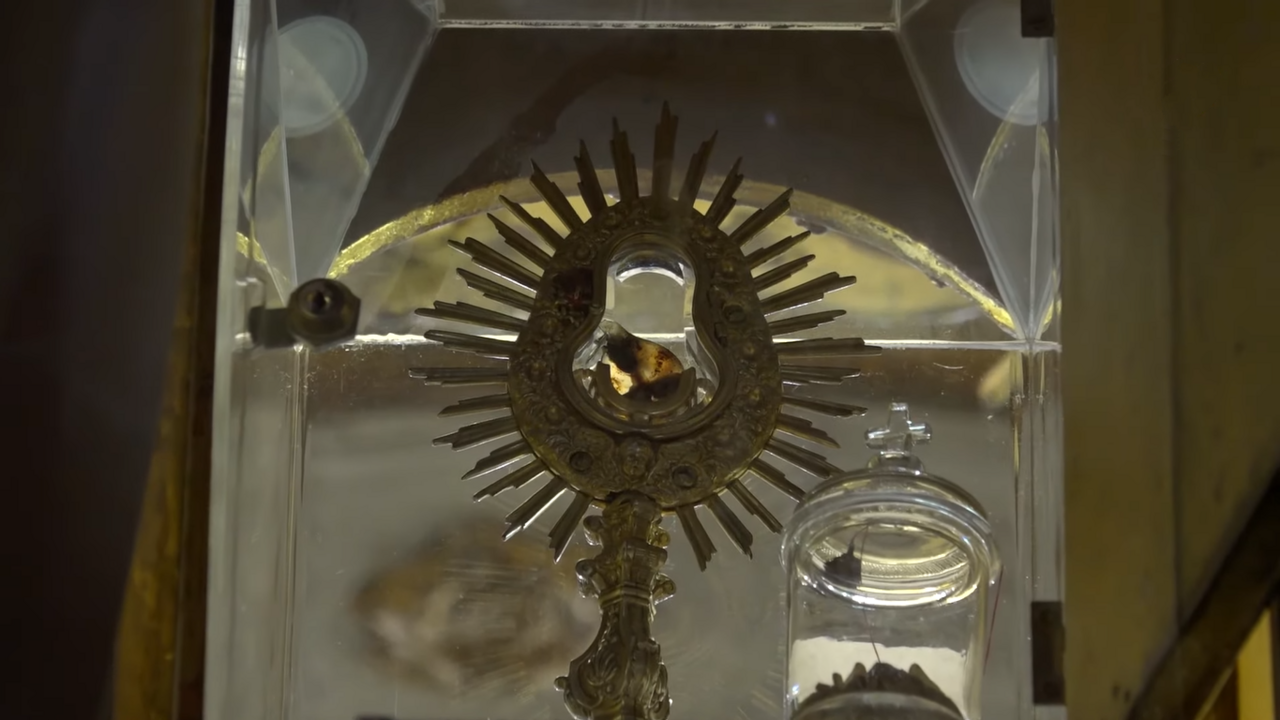
The Manna of Saint Nicholas in Bari

Basilica of San Nicola, Bari · Medieval tradition; investigations 1925

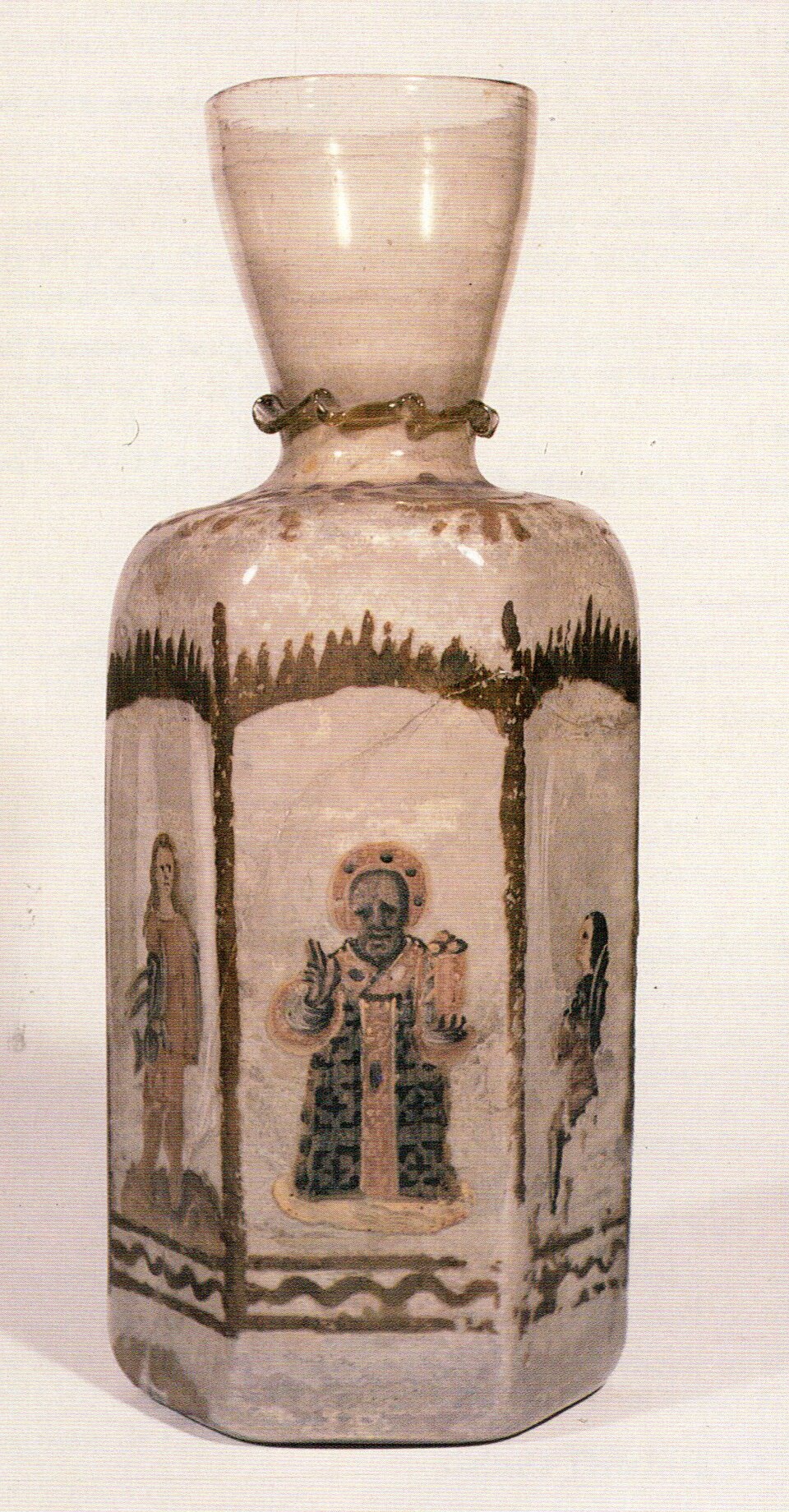
A small amount of water still collects at Saint Nicholas's tomb in Bari and is venerated as manna or myron. The tradition reaches back to his burial place in Myra and continued in Bari after the transfer of the relics in 1087. The liquid is collected annually on May 9. Investigations by the University of Bari in 1925 found nearly pure water and clear differences from an external comparison sample of that time. The published reports preserve the measurements. The manna connects the saint's memory with prayer for his intercession; the precise physical origin of the water remains a subject of separate questions.

Venerated relic fluid; origin debatedRead →
The Miracles of Jesus

Jesus Stills the Storm

Sea of Galilee · Jesus' public ministry in the 1st century

In the evening, Jesus and his disciples cross the Sea of Galilee. A fierce storm arises; waves strike into the boat while Jesus sleeps in the stern. The disciples wake him and call for rescue. He stands, commands the wind and sea, and a great calm follows. Filled with awe, those rescued ask who this is, whom even wind and water obey. Matthew, Mark, and Luke attest to the miracle. It reveals Christ's power over creation and shows how he leads people in their fear to recognition of his person and trust in him.

Synoptic Gospel testimonyRead →
The Miracles of Jesus

Jesus Walks on Water

Sea of Galilee · After the feeding of the five thousand

After the feeding of the five thousand, the disciples cross the lake while Jesus stays behind to pray. A headwind makes the crossing difficult. In the night, he comes to them across the water. The disciples are frightened, but he encourages them. Matthew also attests to Peter's step: at Jesus' call, he walks toward him, begins to sink when he sees the wind, and is immediately grasped by his hand. When they enter the boat, the wind subsides. The disciples worship Jesus as God's Son. Attested in three Gospels, the miracle reveals Christ's dominion over creation and his saving nearness to his own.

Attested in three GospelsRead →
The Miracles of Jesus

The Centurion of Capernaum

Capernaum on the Sea of Galilee · Jesus' public ministry · 1st century

In Capernaum, a centurion's servant lies seriously ill. The officer intercedes for him and asks Jesus for help. He trusts his authority so deeply that he does not request a visit to the sickbed: one word from Christ is enough. Jesus praises this extraordinary faith, and the servant recovers. Matthew attests to healing in that very hour; Luke reports that the returning messengers find him well. Care for the sick man, the intercession of Jewish elders, and the centurion's humble confidence shape this miracle. His plea lives on in the Church's prayer before Holy Communion.

Biblical miracle in the testimony of the GospelsRead →
The Miracles of Jesus

The Daughter of Jairus

By the Sea of Galilee; the passages do not precisely locate Jairus's house · Jesus' public ministry · 1st century

Jairus, a synagogue leader, falls at Jesus' feet and pleads for the life of his dying daughter. Jesus goes with him. When news of her death arrives along the way, he urges the father to keep believing. In the house, he takes the twelve-year-old girl by the hand and calls her to life: Talitha kum. Immediately she gets up and walks about. Her parents and Peter, James, and John are present. Christ, who commands death, then sees to it that the child is given food. Mark, Matthew, and Luke attest to this miracle; their accounts and the interpretation of the Church Fathers reveal its course and meaning.

Biblical miracle in the testimony of the GospelsRead →
The Miracles of Jesus

The Feeding of the Five Thousand

By the Sea of Galilee; the exact place is not unambiguously established · Jesus' public ministry in the 1st century

A large crowd gathers around Jesus by the Sea of Galilee. As it grows late, the available provisions fall far short: five loaves and two fish. Jesus has the people sit down, blesses the food, and gives it to be distributed. Everyone eats and is satisfied. Afterwards, the disciples gather twelve baskets of leftovers. All four Gospels attest to this miracle. John names the boy with the barley loaves, as well as Philip and Andrew, and connects the event with the ensuing discourse on the Bread of Life. Christ satisfies real hunger and reveals himself as the generous Lord who, beyond food, will give himself.

Attested in all four GospelsRead →
The Miracles of Jesus

The Healing of the Leper

Galilee; the exact place is not named in the passages · Jesus' public ministry · 1st century

A man with leprosy prostrates himself before Jesus and asks to be cleansed. He trusts in his power: if Christ wills it, he can heal him. Jesus stretches out his hand, touches him, and speaks his effective word. Immediately the leprosy leaves him. Afterwards, he sends the healed man to present himself to the priest and offer the gift prescribed by Moses. The man makes the miracle widely known; more and more people seek Jesus out. Mark, Matthew, and Luke attest to this encounter, in which the Lord touches the man in his severe suffering, heals his body, and opens the way for his full return to Israel's communal life.

Biblical miracle in the testimony of the GospelsRead →
The Miracles of Jesus

The Healing of the Man Born Blind

Jerusalem; Pool of Siloam · Jesus' public ministry · Joh 9

In Jerusalem, Jesus encounters a man who has been blind from birth. He anoints his eyes with clay and sends him to the Pool of Siloam. The man washes and returns able to see. Neighbors recognize the change, his parents confirm his identity and congenital blindness, and the religious questioners repeatedly investigate the event. Despite pressure, the healed man holds to what he knows: he was blind and now sees. When he has been cast out, Jesus seeks him out. The healing leads to confession and worship of Christ. John 9 preserves the miracle together with the detailed questioning of its witnesses.

Canonical healing accountRead →
The Miracles of Jesus

The Healing of the Woman with a Hemorrhage

By the Sea of Galilee, on the way to Jairus's house · Jesus' public ministry · 1st century

A woman has suffered from bleeding for twelve years. Many treatments have failed to help her; her resources are exhausted and her condition has worsened. As Jesus walks through the crowd on his way to Jairus's house, she approaches from behind and touches his garment. Immediately her affliction ends. Jesus stops, calls her out of concealment, and has her tell those present what has happened. He calls her daughter, honors her faith, and sends her away in peace. The three Synoptic Gospels attest to a healing that restores the body and leads the previously timid woman into a personal encounter with Christ.

Biblical miracle in the testimony of the GospelsRead →
The Miracles of Jesus

The Paralytic of Capernaum

Capernaum on the Sea of Galilee · Jesus' public ministry in the 1st century

In Capernaum, four men bring a paralytic to Jesus. The house is overcrowded, so they open the roof and lower the sick man on his stretcher. Jesus sees their faith and pronounces forgiveness of sins over him. When scribes take offense at his authority, he answers with a visible miracle: he commands the paralytic to rise, take his bed, and go home. Immediately, the man stands before everyone, carries his stretcher, and goes home praising God. The people marvel and glorify God. Mark, Matthew, and Luke attest to the healing as a revelation of the Son of Man's authority.

Canonical testimony to healingRead →
The Miracles of Jesus

The Raising of Lazarus

Bethany near Jerusalem · Before Jesus' final Passover · Joh 11–12

Lazarus has died and has lain in the tomb for four days when Jesus reaches Bethany. Martha confesses her faith in him as the Christ and Son of God; Mary falls before him in grief. At the tomb, Jesus weeps. Then he has the stone removed, thanks the Father, and calls his friend out. Lazarus comes alive from the tomb, still bound in the burial linens. Those present are to unbind him. Many witnesses now believe in Jesus; others report the event to his opponents. John connects this powerful miracle with the approaching Cross: the Lord gives his friend life and himself advances toward his Passion.

Canonical account of a raising from the deadRead →
The Miracles of Jesus

The Resurrection of Jesus Christ

Jerusalem; further encounters in Galilee · On the third day after the Crucifixion · New Testament Easter testimonies

Jesus Christ, who died on the Cross and was buried, rises bodily from the dead on the third day. The women find the tomb open; Peter and the other disciple see the cloths left behind. Mary Magdalene encounters the Lord. He appears to the disciples, speaks with them, makes his wounds recognizable, and leads Thomas to confess his divinity. The Gospels preserve these encounters in Jerusalem and Galilee. Paul passes on the Easter testimony he has received and names individual witnesses, the apostolic circle, and more than five hundred brothers at once. Easter is Christ's real victory over death and the foundation of Christian hope.

Central truth of the Christian faithRead →
The Miracles of Jesus

The Wedding at Cana

Cana in Galilee; precise identification of the site disputed · At the beginning of Jesus' public ministry · Joh 2,1–11

At a wedding in Cana, the wine runs out. Mary notices the need and brings it to her Son. Jesus has six stone jars filled to the brim with water. When the servants take some to the steward, he tastes excellent wine. The servants know they poured in water; the steward attests to the wine's quality without knowing its source. Christ thus performs his first public miracle and reveals his glory. His disciples believe in him. John preserves the precise sequence of this gift, in which Mary's intercession, the servants' obedience, and their Lord's creative authority work together.

Canonical miracle accountRead →
The Miracles of Jesus

The Young Man of Nain

Nain in Galilee · Jesus' public ministry · 1st century

Outside the gate of Nain, Jesus encounters a widow's funeral procession: her only son is being carried out for burial. Jesus sees the mother, takes pity on her, and stops the procession. He touches the bier and commands the dead man to arise. The young man sits up, begins to speak, and is returned to his mother. The disciples and many people witness the miracle; they praise God, who has visited his people. Luke preserves the account of this public raising from the dead. It reveals Christ's divine authority and his compassion for a mother who has already lost her husband and now her only son.

Biblical miracle in the testimony of the GospelsRead →
Miracles · Catholon · EnglishExamining & Understanding Miracles · Image credits